


⏲️ Estimated reading time: 5 min
Table of Contents
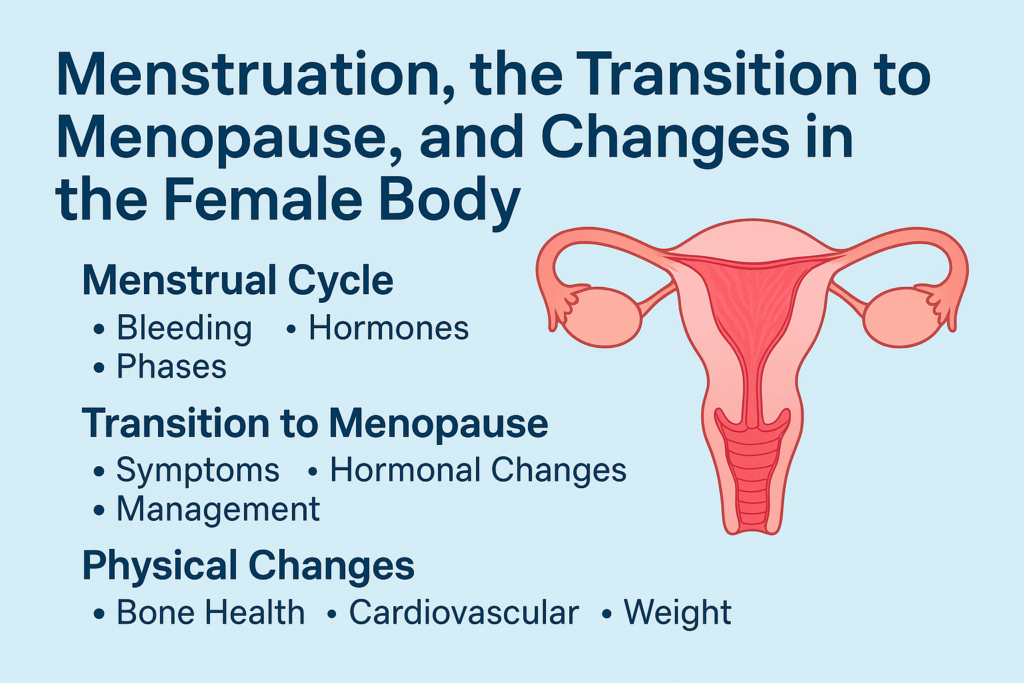
Menstruation, the Transition to Menopause, and the Changes in the Female Body. Menstruation and menopause are key stages in a woman’s life. This medical guide explains the menstrual cycle, hormonal changes, and the transition to menopause, highlighting how the female body adapts and offering practical recommendations for maintaining health and well-being.
The female body undergoes profound biological changes throughout life, largely influenced by hormonal variations that affect not only the reproductive system but also the cardiovascular, skeletal, and nervous systems. Menstruation and menopause are two major processes, both natural yet often misunderstood or surrounded by myths.
Menstruation represents the beginning of reproductive maturity, while menopause marks the end of fertility and the start of a new stage in which balance and adaptation play a central role.
This article will explore in detail:
- what menstruation is and how the menstrual cycle functions,
- the hormonal and physical changes during the transition to menopause,
- the medical risks associated with menopause,
- how to manage symptoms and maintain health through medical treatment and lifestyle choices.
1. Menstruation – A Key Biological Mechanism
1.1. Medical Definition
Menstruation is the cyclical shedding of the endometrium (the uterine lining) through vaginal bleeding in the absence of pregnancy. It is regulated by the hypothalamic-pituitary-ovarian axis, a complex hormonal system that controls ovulation and prepares the uterus for possible implantation.
1.2. Menarche and Early Cycles
The menarche (first period) typically occurs between ages 10 and 15, with an average of 12–13 years. The initial cycles are often irregular until hormonal balance is achieved.
1.3. Phases of the Menstrual Cycle
A cycle averages 28 days, though 21–35 days is considered normal. It includes:
See also: Venom vs. Hemolymph Which Is More Expensive and Why?
- Menstrual phase (days 1–5) – shedding of the uterine lining.
- Follicular phase (days 1–13) – follicle growth under FSH stimulation.
- Ovulation (around day 14) – release of the mature egg under LH influence.
- Luteal phase (days 15–28) – progesterone prepares the uterus for pregnancy.
If fertilization does not occur, estrogen and progesterone levels drop, triggering menstruation.
2. Hormones of the Menstrual Cycle
2.1. Estrogens
- Stimulate endometrial growth.
- Maintain bone density and skin elasticity.
- Positively affect mood.
2.2. Progesterone
- Prepares the uterus for implantation.
- Reduces uterine contractions.
- Has a calming effect on the nervous system.
2.3. Hormonal Imbalances
- Excess estrogen → heavy bleeding, uterine fibroids.
- Low progesterone → short cycles, infertility.
- Premenstrual syndrome (PMS) → irritability, pain, fatigue.
3. The Transition to Menopause
3.1. Definition
Menopause is the permanent cessation of menstruation, diagnosed retrospectively after 12 consecutive months without a period.
3.2. Age of Onset
- Average: 50–52 years.
- Early menopause: before 40.
- Late menopause: after 55.
3.3. Stages of Transition
- Perimenopause – several years before menopause, marked by irregular cycles and hot flashes.
- Menopause – cessation of periods.
- Postmenopause – after menopause, when the risk of osteoporosis and heart disease increases.
4. Symptoms of Menopause
4.1. Vasomotor Symptoms
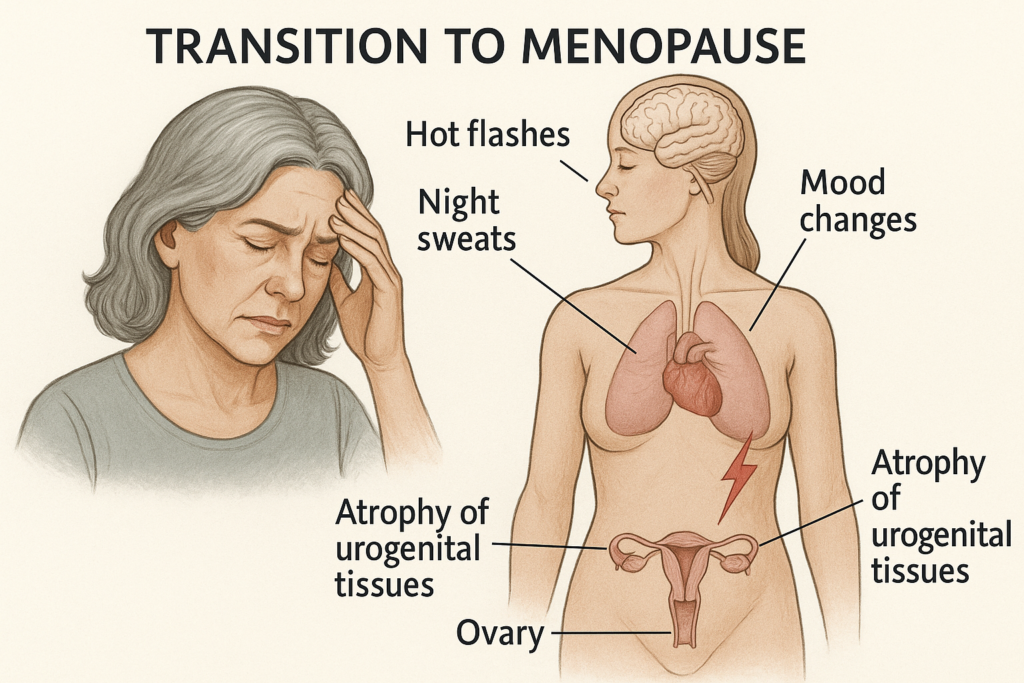
- Hot flashes, night sweats, sudden flushing.
4.2. Psychological Symptoms
- Sleep disturbances, anxiety, depression, memory decline.
4.3. Urogenital Symptoms
- Vaginal dryness, painful intercourse, urinary incontinence.
4.4. Metabolic Changes
- Weight gain, abdominal fat distribution, insulin resistance.
4.5. Bone and Skin Changes
- Skin thinning, dryness, wrinkles, osteoporosis risk.
5. Medical Risks Associated with Menopause
- Osteoporosis – accelerated bone loss increases fracture risk.
- Cardiovascular disease – higher risk of heart attack and stroke.
- Metabolic syndrome – obesity, high blood pressure, high cholesterol.
- Cognitive decline – some women may face increased dementia risk.
6. Medical Evaluation and Diagnosis
6.1. Blood Tests
- High FSH and LH, low estradiol.
6.2. Imaging
- Transvaginal ultrasound for ovaries and endometrium.
- Bone density scan for osteoporosis risk.
7. Managing Menopause
7.1. Hormone Replacement Therapy (HRT)
- Relieves hot flashes, protects bone density.
- Risks: breast cancer, blood clots, stroke.
7.2. Non-Hormonal Treatments
- Herbal remedies (soy isoflavones, red clover).
- Antidepressants for mood swings.
- Vaginal lubricants for dryness.
7.3. Lifestyle Adjustments
- Regular exercise (150 minutes/week).
- Diet rich in calcium, vitamin D, and protein.
- Avoid smoking and excessive alcohol.
- Stress management (yoga, mindfulness).
8. Myths and Facts about Menopause
- ❌ “Menopause happens suddenly.”
✔️ False. The transition is gradual. - ❌ “Menopause means the end of femininity.”
✔️ False. Women can remain active, healthy, and fulfilled. - ❌ “Nothing can help with hot flashes.”
✔️ False. Effective hormonal and non-hormonal options exist.
9. Practical Tips for Women in Transition
- Schedule annual gynecological checkups.
- Monitor weight and blood pressure.
- Eat dairy, leafy greens, and fish.
- Exercise at least 30 minutes daily.
- Discuss personalized therapy options with your doctor.
Conclusion
Menstruation and menopause are natural biological milestones that shape a woman’s health and well-being. While menstruation signals reproductive maturity, menopause represents the beginning of a new stage of life, one that requires careful health management and adaptation.
By understanding the processes behind these transitions, women can better manage symptoms, prevent complications, and embrace each stage of life with confidence and balance.
🔔 For more medical and educational tutorials, consider subscribing to our blog.
📩 Do you have questions or suggestions? Leave a comment or contact us!
🏷️ Tags: menstruation, menopause, menstrual cycle, women’s health, hormones, estrogen, progesterone, osteoporosis, hot flashes, gynecology
📢 Hashtags: #menstruation, #menopause, #womenshealth, #hormones, #gynecology, #menopausetransition, #menstrualcycle, #estrogen, #progesterone, #healthyaging
