


⏲️ Estimated reading time: 6 min
Table of Contents
Many people believe that vitamin B supplements cause neuropathy, but the truth is more complex. Learn which vitamin deficiencies and excesses affect nerve health, what causes peripheral neuropathy, and how to protect your nervous system with evidence-based advice.
Understanding the Myth About Vitamin B and Neuropathy
Peripheral neuropathy affects millions of people worldwide. It can cause numbness, tingling, burning pain, muscle weakness, and loss of sensation, usually beginning in the hands or feet.
One persistent myth is that vitamin B supplements cause neuropathy. This misunderstanding often discourages people from taking vitamins that are actually essential for healthy nerve function.
The truth is that most B vitamins protect nerves rather than damage them. However, there is one important exception that everyone should know.
What Is Peripheral Neuropathy?
Peripheral neuropathy is damage to the peripheral nerves that connect the brain and spinal cord to the rest of the body.
Common symptoms include:
- Tingling sensations
- Burning pain
- Numbness
- Weak muscles
- Loss of coordination
- Increased sensitivity to touch
- Difficulty walking
- Sharp or stabbing pain
Symptoms often develop gradually and may worsen over time if the underlying cause is not treated.
The Essential Role of Vitamin B for Healthy Nerves
The vitamin B family plays a critical role in maintaining the nervous system.
Vitamin B1 (Thiamine)
Vitamin B1 helps convert food into energy while supporting nerve communication.
A deficiency may lead to:
- Nerve pain
- Weakness
- Difficulty walking
- Memory problems
Vitamin B6 (Pyridoxine)
Vitamin B6 is necessary for:
- Neurotransmitter production
- Brain development
- Healthy nerve signaling
Most people obtain enough B6 through a balanced diet.
However, very high doses taken for long periods can damage nerves.
Vitamin B12 (Cobalamin)
Vitamin B12 is one of the most important vitamins for nerve protection.
It helps:
- Maintain the protective myelin sheath
- Produce healthy red blood cells
- Support DNA synthesis
A deficiency can cause severe neurological damage if left untreated.
The Real Culprit: Too Much Vitamin B6
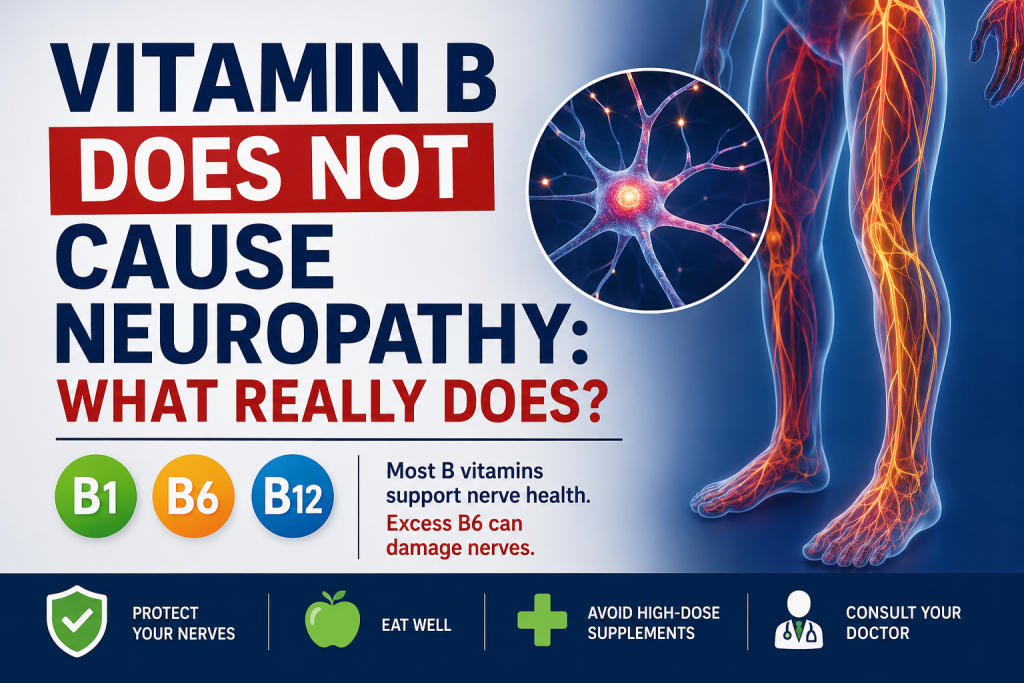
The statement shown in the image is largely referring to vitamin B6 toxicity, not vitamin B vitamins in general.
Taking extremely high doses of vitamin B6 supplements over many months may cause:
- Tingling
- Numbness
- Balance problems
- Difficulty walking
- Sensory neuropathy
This usually occurs from large supplemental doses, not from food.
Vitamin B12 Deficiency Is a Common Cause of Neuropathy
Ironically, one of the most common vitamin-related causes of neuropathy is not taking enough vitamin B12.
People at higher risk include:
- Older adults
- Vegetarians
- Vegans
- People with Crohn’s disease
- Individuals with celiac disease
- Patients taking metformin
- Long-term users of acid-reducing medications
Symptoms may include:
- Pins and needles
- Memory problems
- Fatigue
- Difficulty walking
- Loss of balance
Early treatment can prevent permanent nerve damage.
Other Common Causes of Peripheral Neuropathy
Vitamin problems are only one possible cause.
Other major causes include:
Diabetes
Diabetes remains the leading cause of peripheral neuropathy worldwide.
High blood sugar gradually damages nerves over time.
Alcohol Abuse
Excessive alcohol consumption can:
- Damage nerves directly
- Reduce vitamin absorption
- Cause nutritional deficiencies
Autoimmune Diseases
Conditions such as:
- Lupus
- Rheumatoid arthritis
- Sjögren syndrome
may attack peripheral nerves.
Kidney Disease
Poor kidney function allows toxins to accumulate in the body, potentially damaging nerves.
Certain Medications
Some chemotherapy drugs and other medications may cause neuropathy as a side effect.
Infections
Examples include:
- Lyme disease
- HIV
- Shingles
Inherited Disorders
Some people inherit genetic conditions that affect nerve function.
Can Neuropathy Be Reversed?
Recovery depends on the cause.
If diagnosed early, neuropathy caused by:
- Vitamin deficiencies
- Certain medications
- Mild vitamin B6 toxicity
may improve significantly after treatment.
Long-standing nerve damage may be permanent.
Early diagnosis is extremely important.
Foods Rich in B Vitamins
Instead of relying solely on supplements, many people can meet their vitamin needs through food.
Good sources include:
Vitamin B1
- Whole grains
- Pork
- Beans
- Sunflower seeds
Vitamin B6
- Chicken
- Salmon
- Potatoes
- Bananas
- Chickpeas
Vitamin B12
- Fish
- Eggs
- Dairy products
- Beef
- Liver
Vegans often require fortified foods or supplements.
Should You Take Vitamin B Supplements?
Supplements can be helpful when recommended by a healthcare professional.
They may be appropriate for:
- Confirmed vitamin deficiencies
- Older adults
- People with digestive disorders
- Vegans and vegetarians
- Certain medical conditions
Avoid taking high-dose vitamin supplements without medical advice.
More is not always better.
When Should You See a Doctor?
Seek medical attention if you experience:
- Persistent numbness
- Burning pain
- Muscle weakness
- Difficulty walking
- Loss of balance
- Symptoms that rapidly worsen
Early evaluation can identify the underlying cause before permanent damage develops.
Frequently Asked Questions
Can vitamin B cause neuropathy?
Most B vitamins protect nerve health. Only excessive vitamin B6 supplementation may cause neuropathy.
Can vitamin B12 deficiency damage nerves?
Yes. Vitamin B12 deficiency is a well-known cause of peripheral neuropathy.
Is vitamin B6 dangerous?
Only when taken in excessive supplemental doses over a prolonged period.
Can neuropathy heal?
Some cases improve after treating the underlying cause, while others may be permanent.
What is the most common cause of neuropathy?
Diabetes is the leading cause worldwide.
Can food cause vitamin B6 toxicity?
No. Toxicity almost always results from high-dose supplements.
Who is most likely to have vitamin B12 deficiency?
Older adults, vegans, vegetarians, and people with certain digestive disorders.
Should I stop taking vitamin B supplements?
Do not stop prescribed supplements without consulting your healthcare provider.
Vitamin B neuropathy
Vitamin B vitamins are essential for healthy nerves. While excessive vitamin B6 supplementation can contribute to neuropathy, deficiencies especially of vitamin B12 are far more common causes of nerve damage. Maintaining a balanced diet, avoiding unnecessary high-dose supplements, and seeking medical advice when symptoms appear are the best ways to protect your nervous system.
⚠️ Disclaimer and Source Hygiene
This article is for educational purposes only and should not replace professional medical advice, diagnosis, or treatment. Always consult a qualified healthcare provider before starting or stopping any vitamin supplements or if you experience symptoms of neuropathy.
🔔 For more tutorials like this, consider subscribing to our blog.
📩 Do you have questions or suggestions? Leave a comment or contact us!
🏷️ Tags: Vitamin B, Vitamin B6, Vitamin B12, Peripheral Neuropathy, Nerve Damage, Vitamin Deficiency, Healthy Nervous System, Neuropathy Symptoms, Health Tips, Medical Education
📢 Hashtags: VitaminB #VitaminB6 #VitaminB12 #Neuropathy #NerveHealth #HealthyLiving #Nutrition #MedicalFacts #HealthEducation #Wellness
Sources and References
- National Institute of Neurological Disorders and Stroke (NINDS)
- National Institutes of Health (NIH) Office of Dietary Supplements
- Mayo Clinic
- Cleveland Clinic
- Merck Manual Professional Edition
- World Health Organization (WHO)
Secondary Sources and Testimonials
Healthcare guidance from neurologists, registered dietitians, and evidence-based clinical reviews consistently emphasizes that vitamin B deficiencies particularly vitamin B12 are much more commonly associated with neuropathy than vitamin toxicity. Excess vitamin B6 is recognized as a rare but preventable cause when high-dose supplements are used for extended periods.
Read also: Paris Knife Attack Leaves Three Women Injured: Investigation
