


⏲️ Estimated reading time: 12 min
Table of Contents
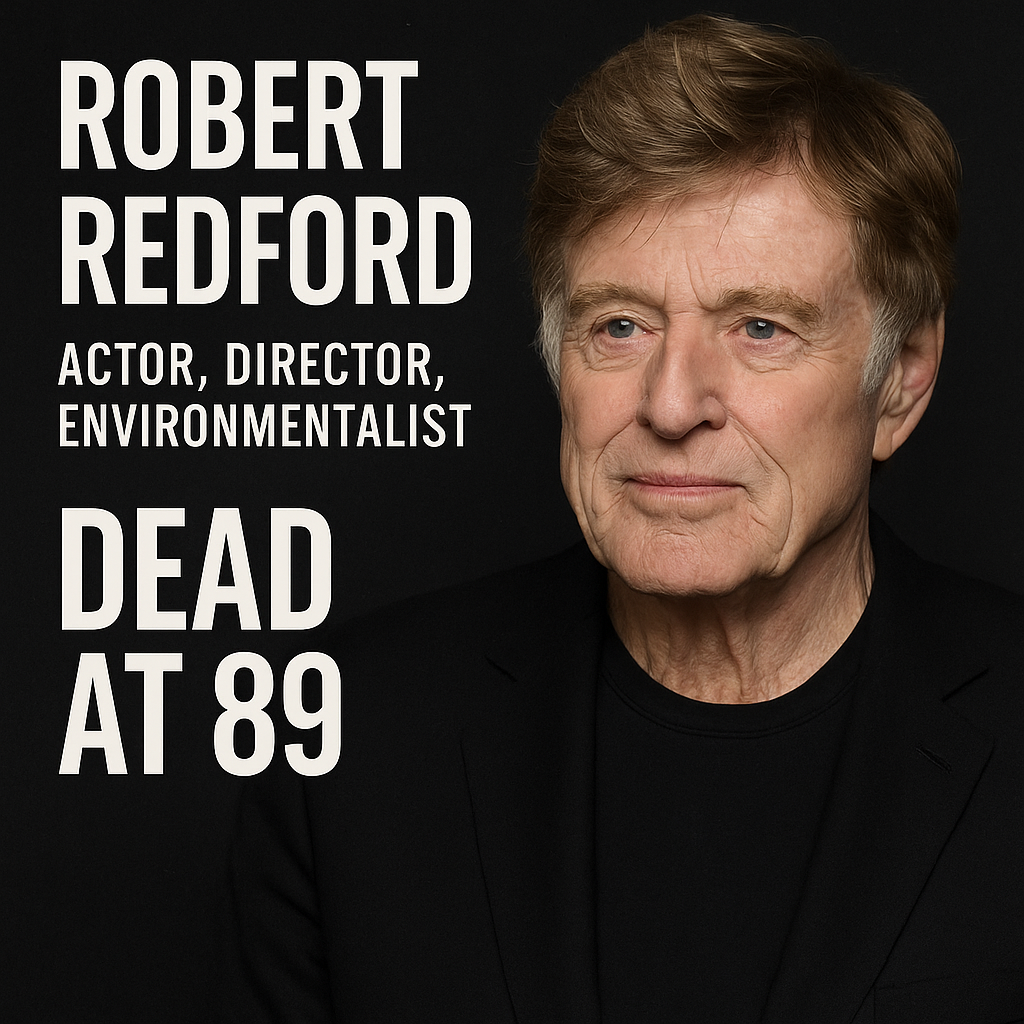
Robert Redford Tribute: Actor, Director & Environmentalist Remembered at 89. Robert Redford magnetic actor, Oscar-winning director, Sundance founder, and tireless environmentalist has died at 89. This tribute revisits the artistry, integrity, and activism that defined his life, from Butch Cassidy to Sundance, and the legacy he leaves behind.
A Legend Bows Out
Robert Redford, an icon of American cinema and a beacon for independent film, has passed away at the age of 89. His publicist confirmed he died peacefully at home in Utah, where he spent decades nurturing art and artists through the Sundance Institute and Film Festival. (AP News)
Across six decades, Redford built a career that fused movie-star charisma with a director’s curiosity and a citizen’s conscience. He was beloved for his roles in Butch Cassidy and the Sundance Kid, The Sting, The Way We Were, All the President’s Men, and Out of Africa. He also directed modern classics like Ordinary People, A River Runs Through It, and Quiz Show, winning the Academy Award for Best Director in 1981 and later receiving an Honorary Oscar for lifetime achievement. (New York Post)
This tribute is not only an obituary; it’s a guided walk through the values that animated Redford’s life: independence, authenticity, and stewardship of the natural world.
The Making of “Bob”: Early Life and First Steps on Stage
Born Charles Robert Redford Jr. on August 18, 1936, in Santa Monica, California, he grew up between California sun and occasional bouts of restlessness that would later become a kind of creative engine. He studied art, traveled, and flirted with the idea of becoming a painter before finding his way to acting classes. Those early years sharpened his eye for composition and mood instincts that later shaped his directing.
Broadway noticed first. Redford’s stage performances in the late 1950s culminated in Barefoot in the Park (1963), Neil Simon’s fizzy romantic comedy that he later translated to the screen. The theater taught him timing, restraint, and how to listen lessons that stayed with him through a lifetime in front of and behind the camera.
Stardom Without Cynicism: The Screen Persona
Redford’s star was not merely the product of golden hair and a quick smile; it rested on a paradox he played beautifully: the idealist who knows the world is compromised. In Butch Cassidy and the Sundance Kid (1969), his Sundance was witty but wary; in The Candidate (1972), he embodied political charisma besieged by image-making; in All the President’s Men (1976), he gave shape to dogged curiosity as investigative journalist Bob Woodward.
Even romantic roles had moral undertones. The Way We Were (1973) paired him with Barbra Streisand in a love story about value clashes not just chemistry. Three Days of the Condor (1975) transformed the thriller into a critique of surveillance and power. He diverted expectations later in life with All Is Lost (2013), a nearly wordless survival drama that dared a minimalist performance, and The Old Man & the Gun (2018), a valedictory wink that savored craftsmanship over spectacle. (AP News)
The Director’s Eye: Craft, Compassion, and Quiet Courage
Redford’s directing career showed how rigor and empathy can coexist. Ordinary People (1980) dismantled suburban serenity to reveal grief and miscommunication; A River Runs Through It (1992) captured memory flowing like water inevitable, glistening, and sometimes perilous; Quiz Show (1994) dissected media ethics without contempt for the people caught in its gears.
As a director, Redford favored long looks and patient reveals. He believed audiences could handle complexity without hand-holding. He liked natural light, unforced performances, and the quiet courage of characters who try to do right even when they fail. If acting made him a star, directing proved him a humanist.
Sundance: A Home for Independent Voices
In 1981, Redford founded the Sundance Institute as a lab for storytellers writers, directors, composers who needed room to experiment without commercial pressure. What grew from that seed changed global film culture. The Sundance Film Festival became a launchpad for independent auteurs and a place where new voices women, artists of color, queer storytellers, international filmmakers could meet audiences and the industry on their own terms. The festival helped usher works by Quentin Tarantino, Steven Soderbergh, Ava DuVernay, Ryan Coogler, Chloé Zhao, and many more into the mainstream. (AP News)
Sundance didn’t just “discover talent”; it reframed success. It told a generation that small budgets and local stories could travel the world if they were honest and well made. Redford, often allergic to grandstanding, pushed one clear idea: independence is not isolation. It’s community, sustained. (Reuters)
Environmental Stewardship: The Canyon as Cathedral
Long before “climate” became an industry buzzword, Redford folded environmental protection into his public life. He spoke up for wilderness preservation, clean energy, and tribal sovereignty across the American West. Through the Redford Center and numerous campaigns, he advocated policies that treated rivers, deserts, and forests not as backdrops, but as living systems we are morally bound to respect. His environmentalism wasn’t sermonizing; it was storytelling and policy advocacy designed to help people see what’s already there and what might vanish if we look away.
Politics Without Partisanship: The Citizen-Artist
While Redford supported progressive causes, he resisted easy labels. The throughline of his public engagement was less about party and more about process: transparent government, a free press, and the right of citizens to hold power accountable. That sensibility powered All the President’s Men, animated the Institute’s mission statements, and informed his comments over the years about arts funding and education. He believed democracy is a collaborative craft and artists have a role to play in keeping its tools sharp.
Collaborations, Friendships, and the Newman Bond
Redford’s lifelong friendship and on-screen partnership with Paul Newman gave us two of cinema’s most delightful capers: Butch Cassidy and the Sundance Kid and The Sting. Their rapport was effortless: Newman’s puckish warmth met Redford’s cool vigilance, producing a chemistry that sparkled without overshadowing the story. It’s rare for a pairing to define an era; rarer still for it to age into myth. Their off-screen charity work, including Newman’s philanthropic ventures, showed a generosity engineered for scale.
The Craft Behind the Charm: Technique and Discipline
Beneath Redford’s natural presence was a meticulous craft. He was famous for preparation, for knowing not just his lines but the emotional architecture of a scene. As a director, he storyboarded with the sensitivity of a painter, and as an actor he edited with his eyes. Watch how he holds silence in All Is Lost, how he calibrates charm in The Sting, how he lets doubt creep across his face in Condor. What feels effortless is the residue of discipline.
Loss and Resilience: The Private Man
Redford knew personal grief he lost two of his children in different chapters of his life and carried that experience into a sober understanding of human fragility. He often declined to discuss private matters in detail, not out of aloofness but respect. That reserve, coupled with a sturdy marriage in later years, created a sense of sanctuary that enabled his public work. He protected the people he loved the same way he protected the stories he shepherded: with patience, boundaries, and care.
Awards Are Footnotes – The Work Is the Story
It’s easy to list trophies: Academy Awards (including Best Director and an Honorary Oscar), Golden Globes, the Kennedy Center Honors, the Presidential Medal of Freedom, a SAG Life Achievement Award. But to Redford, awards were markers, not destinations. The destination was a better film culture one where risk wasn’t a liability and where audiences could find themselves in stories unconstrained by formula. (New York Post)
What Redford Taught Filmmakers (and the Rest of Us)
- Protect the rehearsal space. Creativity flowers where people can fail safely.
- Let landscapes speak. Place is character; treat it with respect.
- Interrogate power without hating people. Systems can be criticized while individuals are treated humanely.
- Trust the audience. Quiet choices often land the loudest.
- Build institutions, not just careers. Legacies that last are shared.
These principles matter beyond cinema. They apply to classrooms, startups, nonprofits, newsrooms any place where stories shape decisions.
A Guided Tour of Essential Performances
- Sundance Kid – Butch Cassidy and the Sundance Kid (1969): Droll, agile, and loyal, Redford’s Sundance incarnates the romance and the limits of outlaw freedom.
- Johnny Hooker – The Sting (1973): A study in charm as strategy; watch the micro-timing in his grifts.
- Joe Turner – Three Days of the Condor (1975): Paranoia with a conscience; a thriller that thinks.
- Bob Woodward – All the President’s Men (1976): The anatomy of attention how to listen and look.
- Denys Finch Hatton – Out of Africa (1985): A restless spirit framed by grand skies; romance as landscape.
- Our Man – All Is Lost (2013): Nearly wordless transcendence; survival rendered as ritual.
Essential Works as Director
- Ordinary People (1980): The courage of naming grief; performances tuned to a breath.
- A River Runs Through It (1992): Memory as water; family as current.
- Quiz Show (1994): The price of complicity in a culture of spectacle.
- The Horse Whisperer (1998): Healing across species and silence; a film about listening.
Mentoring the Future: Sundance’s Ripple Effect
Ask alumni what Sundance offered and you’ll hear variations on a theme: validation, mentorship, and an ecosystem that didn’t collapse after opening weekend. Filmmakers learned how to navigate financing, distribution, and the festival circuit without surrendering their voices. Redford kept the doors propped open and the conversation honest, even when critics said Sundance risked becoming “too big.” His answer was to keep widening the circle and reinvesting in labs, grants, and education. (AP News)
The Environmental Imprint: Story as Conservation
Redford’s environmental advocacy was never a side hustle; it was braided into his art. Narratives about land use, water rights, and air quality threaded through his public statements and projects. He believed that if you can get people to care about a character, you can get them to care about a canyon; if you can render a river sacred on screen, you can help keep it wild in life.
Farewell, But Not Goodbye: Why Redford Still Matters
We live in an age of fast cuts in media, in politics, in climate time. Redford stands for the opposite: duration. The long look. The patient build. The multi-decade institution. He showed that beauty and responsibility are not rivals, and that success is most meaningful when it multiplies opportunity for others.
He also showed that optimism is not naiveté; it is craft. It must be made, revised, defended, and taught. That is his lingering gift to artists and audiences alike.
Memorials, Tributes, and How to Revisit the Work
Studios, festivals, and environmental organizations are preparing tributes that will roll out in the coming days. To honor him now:
- Rewatch All the President’s Men and marvel at journalism’s quiet heroism.
- Show A River Runs Through It to someone who thinks movies can’t be poetry.
- Find an indie film from a first-time director and buy a ticket, leave a review, tell a friend. That ripple is the Sundance way.
Newsrooms worldwide from AP and Reuters to ABC News have celebrated Redford’s life and cataloged his achievements, underscoring the rare breadth of his influence: movie star, master director, founder, mentor, environmentalist. (AP News)
In Memoriam
You may also be interested in: Happy Birthday Chuck Norris: The Legend Turns 85
Robert Redford didn’t just make movies; he made room for risk, for quiet, for new voices, for the land. The best thank-you we can offer is to keep that room open. Support emerging artists. Defend transparent institutions. Steward the wild places that hold our stories.
If you’ve ever felt seen by a film that didn’t fit the mold, you’re part of his legacy. If you’ve ever left a theater wanting to live more attentively to listen better, look longer, and act with care you’ve already accepted his invitation.
Goodnight, Bob. The reel keeps turning, and so does the river.
⚠️ Disclaimer and Source Hygiene
This article, “Robert Redford Tribute: Actor, Director Remembered at 89,” is a journalistic tribute and editorial reflection created for informational and commemorative purposes. While we strive to ensure accuracy, some details regarding events, timelines, and public statements are based on publicly available news sources at the time of writing.
References to external media outlets such as AP News, Reuters, ABC News, and others are included for contextual credibility. We do not claim affiliation with, endorsement by, or official partnership with these organizations.
All film titles, public figures, awards, and institutions mentioned in this article remain the property of their respective owners and rights holders. This tribute is not intended to infringe upon copyrights or intellectual property rights.
The views expressed in this piece reflect an editorial appreciation of Robert Redford’s life, artistic legacy, and environmental advocacy. Readers are encouraged to consult official statements and primary news sources for verified announcements and updates.
If any information requires correction or clarification, please contact us so we can review and update the content accordingly.
🔔 For more tutorials like this, consider subscribing to our blog.
📩 Do you have questions or suggestions? Leave a comment or contact us!
🏷️ Tags: Robert Redford, Sundance Film Festival, Ordinary People, Butch Cassidy and the Sundance Kid, The Sting, All the President’s Men, A River Runs Through It, Quiz Show, Environmentalism, Film Tribute
📢 Hashtags: #RobertRedford, #Sundance, #IndependentFilm, #CinemaLegend, #FilmHistory, #Environmentalism, #OrdinaryPeople, #ButchCassidy, #AllThePresidentsMen, #InMemoriam
