

⏲️ Estimated reading time: 25 min
Table of Contents
Excerpt: A 36-year-old Brazilian woman reportedly living in Cascavel, Paraná, was arrested at Bali’s Ngurah Rai International Airport on October 6 after authorities allegedly discovered 3.6 kilograms of liquid cocaine. The case highlights Indonesia’s strict drug laws, serious legal consequences, and the importance of distinguishing allegations from convictions.
Brazilian Woman From Paraná Reportedly Arrested in Bali
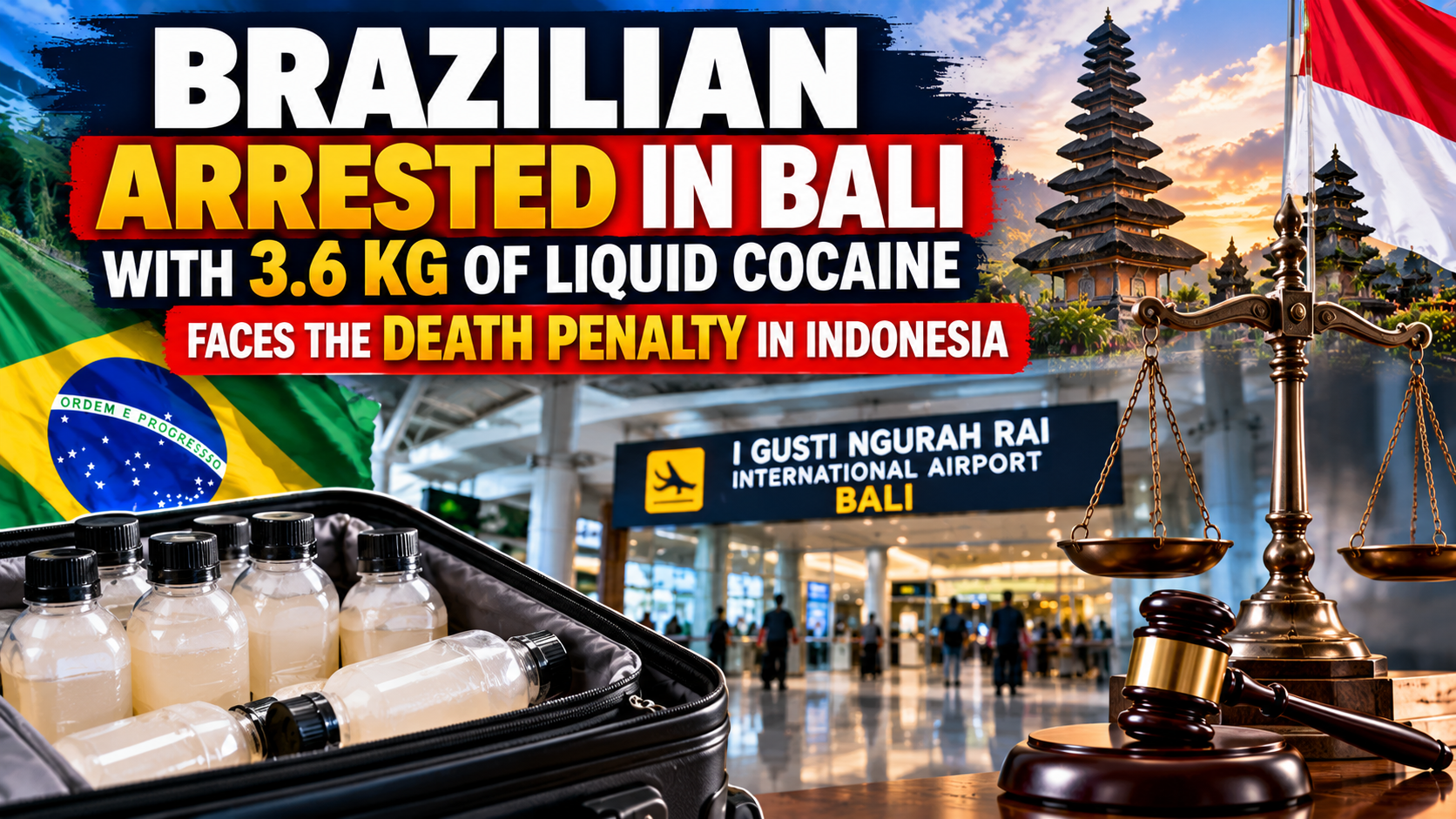
A 36-year-old Brazilian woman, identified by the initials T.C.d.S., was reportedly arrested on October 6, 2026, after arriving at Ngurah Rai International Airport in Bali, Indonesia. According to the initial information about the incident, authorities allegedly discovered approximately 3.6 kilograms of liquid cocaine connected to the traveler. The woman reportedly lived in Cascavel, a city in the western part of Paraná, Brazil.
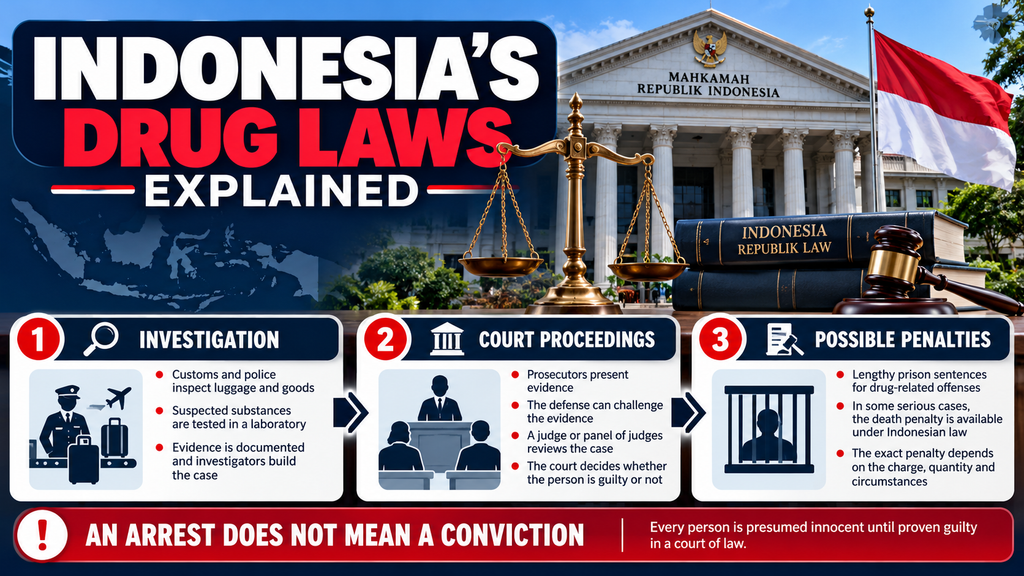
The arrest has attracted attention because Indonesia maintains some of the world’s strictest drug-trafficking laws. Foreign nationals accused of transporting illegal drugs into the country can face lengthy prison sentences and, in certain circumstances, the death penalty. However, an arrest does not establish guilt, and the legal outcome of this particular case has not been independently confirmed.
The available account identifies the Brazilian traveler only by his initials. His full identity, the precise circumstances of the alleged discovery, and any subsequent court proceedings should not be assumed without reliable official confirmation. These distinctions are especially important when reporting on criminal allegations involving potentially severe penalties.
What Happened at Bali’s Ngurah Rai International Airport?
The Reported Arrest on October 6
The incident reportedly occurred on October 6, 2026, when the Brazilian traveler landed at Bali’s Ngurah Rai International Airport. This international airport, located near Denpasar, serves as one of Indonesia’s main gateways for visitors arriving from overseas. Travelers entering Indonesia must pass through immigration and customs procedures, which may include luggage inspections and additional security checks.
According to the initial report, Indonesian authorities arrested the 36-year-old woman in connection with an alleged quantity of 3.6 kilograms of liquid cocaine. The information provided does not establish which flight he took, where his journey began, or how authorities initially identified the suspected substance. Those details would require confirmation from customs officials, police records, or credible reporting.
Airport inspections can involve several different procedures, depending on the circumstances. Customs officers may examine baggage, review declarations, or request additional checks when they identify a possible violation. In suspected drug cases, laboratory testing and documented evidence are important for determining the nature of a seized substance.
What Is Known About the Brazilian Traveler?
The person involved was described as a Brazilian national from Paraná who had been living in Cascavel. The reported age was 36, and the identification provided was T.C.d.S. No verified information has been supplied about his occupation, personal background, reason for traveling to Indonesia, or whether he had previously visited the country.
Cascavel is an important city in western Paraná, known for its regional economic activity and connections to surrounding communities. The reported residence of the arrested traveler explains the Brazilian regional interest in the case. It does not, by itself, establish anything about the alleged offense or the circumstances surrounding the international journey.
For readers following this story, the distinction between residence, nationality, and legal responsibility matters. A person’s hometown does not determine guilt, and criminal investigations must focus on evidence relating to the individual case. Any future updates should rely on official statements, verified court records, or established news organizations.

Understanding the Reported 3.6 Kilograms of Liquid Cocaine
What Does Liquid Cocaine Mean?
Cocaine is a controlled stimulant drug derived from coca plants. It is commonly associated with powdered forms, but the term liquid cocaine may be used in news reports to describe cocaine dissolved or suspended in a liquid substance. The precise chemical composition and concentration cannot be determined simply from the term used in a headline.
In this reported case, the figure of 3.6 kilograms is particularly significant. However, the available information does not clarify whether that measurement refers to the entire seized liquid mixture or the amount of cocaine determined through forensic testing. Those are different measurements, and the distinction can matter when investigators document evidence and prosecutors evaluate a case.
For example, a laboratory may analyze a seized sample to establish whether a controlled substance is present. The results can help authorities describe the evidence accurately. Without an official laboratory report, readers should avoid assuming the substance’s purity, concentration, or eventual quantity of recoverable cocaine.
Why Accurate Laboratory Evidence Matters
Drug investigations depend on more than an initial suspicion. Investigators generally need to document the collection, handling, storage, and analysis of material they believe may contain an illegal substance. Proper evidence management helps establish what was seized and whether it can be reliably connected to a particular investigation.
The chain of custody is an important part of this process. It records how evidence moves between authorized personnel and facilities. Forensic laboratories may then perform chemical analyses to identify substances and report their findings. These procedures support the integrity of an investigation, although the precise legal requirements vary between jurisdictions.
In the Bali case, no laboratory certificate or detailed forensic report was included in the initial account. Therefore, the alleged quantity should be presented as a reported figure rather than an independently verified scientific finding. Responsible reporting should also avoid publishing speculative descriptions of how the substance was prepared or concealed.
Why Indonesia Treats Drug Trafficking So Seriously
Indonesia’s Strict Drug Legislation
Indonesia has long maintained a severe legal framework for offenses involving narcotics. Its principal narcotics legislation, Law No. 35 of 2009, provides substantial penalties for various drug-related crimes. These penalties depend on factors such as the substance involved, the alleged conduct, the quantity, and the legal provisions applied to the case.
Cocaine is a tightly controlled narcotic under Indonesian law. Serious offenses involving the unlawful importation, distribution, or trafficking of certain narcotics can lead to very lengthy imprisonment. Indonesian legislation also allows capital punishment for particular narcotics offenses, subject to the applicable legal requirements and judicial process.
This does not mean that every person arrested with an illegal drug automatically faces a death sentence. Courts must consider the specific charge, evidence, legal thresholds, and circumstances of each case. The difference between an investigation, a criminal charge, a conviction, and a final sentence is essential when interpreting reports about Indonesia’s justice system.
Does Indonesia Still Have the Death Penalty?
Yes. Indonesia retains the death penalty in its legal system, including for certain serious drug offenses. The country has also introduced changes to its broader criminal law framework, including provisions affecting how capital punishment may be imposed and reviewed. These developments make it important to examine the law applicable at the time of any particular prosecution.
Indonesia’s new Criminal Code, Law No. 1 of 2023, entered into force in January 2026. It treats capital punishment as a special criminal penalty and includes provisions concerning a probationary period in certain death-sentence cases. Nevertheless, the availability of capital punishment remains a serious concern for defendants accused of qualifying offenses.
In the case of T.C.d.S., there is no verified information in the supplied account indicating that prosecutors have requested the death penalty, that a court has convicted him, or that a sentence has been imposed. The existence of a severe legal penalty should not be confused with a confirmed outcome for this individual.
Why Foreign Travelers Must Understand Local Laws
International travelers sometimes assume that legal standards and penalties are similar across countries. In reality, drug laws vary significantly, and conduct treated one way in a person’s home country may carry much more severe consequences abroad. Indonesia is a particularly important example because its narcotics legislation applies to foreign visitors as well as Indonesian citizens.
A tourist, business traveler, or transit passenger cannot rely on nationality as an exemption from local criminal law. People arriving at Indonesian airports must comply with customs and immigration requirements, including rules governing controlled substances. Even where a traveler claims to have been unaware of an item in their possession, investigators and courts must examine the relevant facts under applicable law.
The practical lesson is straightforward: travelers should understand the rules of their destination, retain control of their belongings, and never agree to transport unknown items for another person. These precautions are relevant to international travel generally and should not be interpreted as an assumption about what happened in the reported Bali case.
Verified Update: Police Identify the Suspect as a Woman
Important editorial correction – October 22, 2026: Indonesian National Police and ANTARA News identify TCDS as a 36-year-old Brazilian woman. Her reported connection to Cascavel has not been independently established by the Indonesian sources reviewed. Indonesian National Police
The official police account also provides more information about the arrest. Authorities report that the operation took place at approximately 6:00 p.m. local time on October 6, at the international arrivals terminal. Officers from the Bali Regional Police and Ngurah Rai Customs and Excise worked together during the inspection. They reported finding seven containers of personal care products and shampoo holding suspected liquid cocaine.
The gross weight of the seized material was reported as 3,659.9 grams, approximately 3.66 kilograms. This is slightly more precise than the 3.6-kilogram figure used in headlines. Police said the woman was detained at Bali Police Headquarters while investigators continued examining the suspected trafficking network. Indonesian National Police
The Reported $50,000 Payment and the Investigation
What Investigators Said About the Alleged Arrangement
On October 12, Indonesian news agency ANTARA reported additional allegations disclosed by Bali Police. According to police spokesperson Rina Isriana Dewi, the woman allegedly told investigators that someone identified only as “G” had arranged the transportation and promised her $50,000 if she delivered the cocaine successfully to another person in Bali.
Authorities also reported that the alleged organizer had arranged or financed transportation and accommodation. Investigators said the woman had a journey from Brazil scheduled to depart on October 5, 2026, and a return flight planned for November 3. The reported travel arrangements are relevant to the investigation, but they do not independently prove every allegation concerning the accused woman’s knowledge, intentions, or involvement. ANTARA News
A payment promise of this size may attract public attention, especially when compared with the serious consequences of drug-trafficking convictions in Indonesia. Nevertheless, the amount should be described as an allegation attributed to investigators, not as a verified payment. The available reports do not establish that the money was transferred or received.
Why Police Are Investigating a Wider Network
Police said they were examining the origin of the narcotics, the people who supplied them, and the intended recipient in Bali. Investigators were also looking into whether other individuals were connected to the alleged transportation. Such inquiries are common in international trafficking investigations because authorities often need to establish whether an incident involves one person or several coordinated participants.
For example, investigators may compare travel documentation, communications, and legally obtained financial evidence. Each type of evidence must be assessed in context and under applicable procedural rules. The existence of an alleged organizer does not automatically establish the guilt of another person, nor does it establish the complete structure of a criminal network.
As of the police updates published on October 11 and 12, the broader investigation remained active. The official accounts did not establish the final destination of the seized material beyond the alleged planned handover in Bali. Readers should therefore distinguish the police’s investigative theory from facts that have been tested in court. Jendela Informasi Divisi Humas Polri
What Criminal Charges Have Been Reported?
Indonesian Criminal Code Articles 609 and 610
According to ANTARA’s October 12 report, investigators applied Article 609(2) and Article 610(2) of Indonesia’s Criminal Code. The agency described these provisions as relating to cocaine possession and importation, respectively. This is a more precise description of the reported legal proceedings than simply saying that the suspect faces a drug-trafficking investigation.
The difference between possession and importation can be important. A possession allegation concerns unlawful control of a prohibited substance, while an importation allegation concerns bringing the substance into a country’s territory in violation of the law. Prosecutors must establish the elements required by the applicable offense, and the defense has the opportunity to challenge evidence through the legal process.
The fact that police have identified criminal provisions does not mean a court has reached a verdict. The information reviewed does not establish a conviction, a final sentence, or a confirmed death-penalty request in this case. The exact sentencing exposure should be assessed by a qualified Indonesian criminal-law professional using the current legislation and the formal charges.
How Indonesia’s 2026 Legal Reforms Affect the Discussion
Indonesia’s criminal justice system underwent significant changes in January 2026. The new Criminal Code came into effect, accompanied by legislation adjusting criminal penalties. Among the changes, the death penalty is treated as a special punishment rather than an ordinary sentence, with provisions for a ten-year probationary period and potential sentence conversion.
According to information published by the Indonesian National Police, Law No. 1 of 2026 introduced sentencing adjustments that include the possibility of converting a death sentence to life imprisonment when relevant rehabilitation conditions are satisfied. These reforms do not abolish capital punishment, but they affect how it is imposed and reviewed.
For the Brazilian woman arrested in Bali, these legal developments provide essential context. They do not establish that she will receive any particular sentence. The outcome depends on the charges pursued, admissible evidence, judicial findings, and the applicable law. Presenting the death penalty as an automatic consequence would therefore be inaccurate.
Why the Case Has Drawn International Attention
A Brazilian National Facing Proceedings Abroad
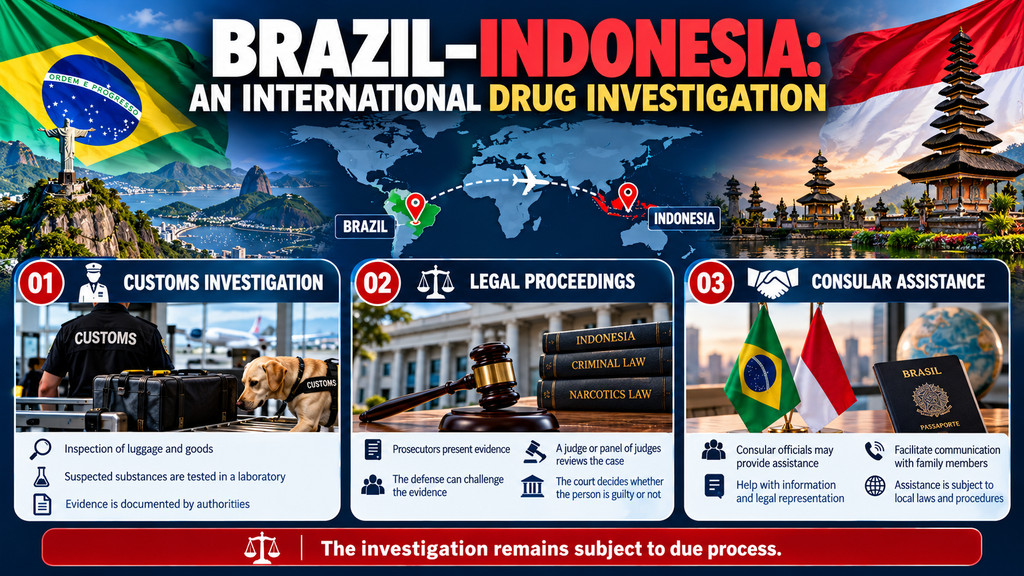
When a citizen is detained in another country, the situation can become more complicated because two different national systems are involved. Indonesian authorities retain responsibility for investigating alleged offenses committed within their jurisdiction, while Brazilian diplomatic officials may provide consular assistance to eligible nationals under applicable international agreements.
Consular assistance can include helping a detained citizen understand how to contact family members, obtain information about local legal representation, and communicate with relevant authorities. It does not ordinarily allow diplomats to cancel criminal charges, overrule local courts, or guarantee release from detention.
In this particular case, the available police reports do not confirm whether Brazilian consular representatives have met with the detained woman. They also do not establish whether she has appointed a defense lawyer or made a formal statement through legal counsel. Those details should be reported only when supported by reliable documentation.
The Role of Brazil and Indonesia in the Investigation
International cases can involve cooperation between police, customs agencies, prosecutors, and diplomatic institutions. Where evidence or witnesses are located in different countries, investigators may need to follow formal procedures for requesting information. Such processes are governed by domestic laws, international agreements, and applicable privacy safeguards.
The reported itinerary between Brazil and Indonesia raises questions about the source of the seized material and the alleged organizers. However, it would be inappropriate to identify additional people or locations as part of a criminal network without evidence. A person’s nationality, city of residence, or travel history alone cannot establish participation in drug trafficking.
For Brazilian readers, the most relevant confirmed developments are the arrest, the reported seizure, the police allegations, and the continuing investigation. Any future announcement from Brazil’s Ministry of Foreign Affairs, Indonesian authorities, or a court should be evaluated separately and incorporated with its publication date.
How Airport Customs Inspections Help Detect Illegal Narcotics
Why International Airports Conduct Security Checks
International airports process thousands of travelers and large quantities of baggage every day. Customs agencies must balance efficient passenger movement with the responsibility to enforce national laws. Their work includes checking imported goods, reviewing customs declarations, and investigating potential violations involving prohibited or restricted materials.
Security and customs procedures are not identical. Aviation security focuses primarily on threats to aircraft and passengers, while customs authorities examine the movement of goods across borders. Police may become involved when an inspection produces evidence of a suspected criminal offense. In the Bali case, authorities described cooperation between customs officers and the police narcotics investigation directorate.
This cooperation helps agencies share information and respond appropriately when potentially illegal substances are discovered. However, an initial inspection is only the beginning of a criminal investigation. Officers must document their findings, preserve evidence, and follow legal procedures before prosecutors can present a case in court.
What Happens After Authorities Discover a Suspicious Substance?
When officers discover material they suspect may contain illegal narcotics, they may secure the evidence and request specialized examination. The next steps depend on national law and the circumstances of the discovery. Investigators generally need to establish what the substance is, where it was found, and how it relates to the person under investigation.
Forensic analysis is particularly important when a substance is mixed with other materials. A reported gross weight may include packaging, containers, or substances other than the controlled drug, depending on the measurement method. This is why news reports should identify whether a figure represents the gross seized weight or a laboratory-confirmed quantity of narcotics.
The Brazilian woman’s case illustrates the importance of precise reporting. Indonesian authorities specified a gross weight of 3,659.9 grams. The available public information does not justify presenting that figure as the weight of pure cocaine. The distinction protects the accuracy of the report and helps readers understand what investigators have actually disclosed.
The Importance of Fair Reporting in Criminal Cases
Why Arrested Individuals Must Not Be Presented as Convicted
Criminal allegations can have lasting effects on the people involved, their families, and their communities. News organizations therefore have a responsibility to distinguish verified facts from police allegations, witness statements, and unconfirmed claims. An arrest establishes that authorities have taken a person into custody; it does not establish criminal guilt.
In this case, the police have identified a suspect and described the evidence they say was seized. They have also reported allegations about a proposed payment and a person allegedly involved in arranging the journey. These details are newsworthy, but they remain part of an ongoing legal process until tested and resolved through the appropriate procedures.
Using careful language is not about minimizing the seriousness of drug trafficking. It is about ensuring that readers receive accurate information. Terms such as allegedly, according to investigators, and police reported clarify the source and status of a claim without weakening the article’s factual value.
Why Publishing Only Initials Can Be Appropriate
The Indonesian authorities and major news outlets have identified the detained woman using the initials TCDS. Retaining those initials respects the level of identification provided in the official reports and avoids unnecessary speculation about her full name or private life.
Readers may be curious about the suspect’s family, employment, or social media profiles. However, none of those details should be included without a clear public-interest justification and reliable verification. Speculative identification can harm innocent people, particularly when several individuals share similar names or personal characteristics.
A responsible news article focuses on the verified incident, the investigation, applicable legal procedures, and developments that materially affect the case. It does not need personal photographs, private addresses, or unrelated biographical details to explain why the story matters.
Practical Travel Lessons From the Bali Arrest
Keep Control of Your Own Luggage
One practical lesson from international customs cases is the importance of knowing what you are carrying. Travelers should pack their own bags whenever possible and avoid transporting items whose contents or ownership they cannot verify. This precaution applies to checked luggage, carry-on bags, packages, and items provided by acquaintances.
For example, imagine someone asks a traveler to deliver a sealed package to a person in another country. Even if the request sounds harmless, accepting responsibility for an unknown item can create serious legal risks. The safer decision is to decline until the contents and applicable transport rules are fully understood.
These general precautions do not establish what the Brazilian woman knew or intended in the Bali case. Those questions belong to the investigation and judicial proceedings. Nevertheless, the situation provides an opportunity to explain why personal responsibility and awareness of customs regulations are essential during international travel.
Research the Laws of Your Destination
Before traveling abroad, people should consult official government travel guidance, customs information, and airline requirements. Regulations can differ significantly between countries, especially for medicines, controlled substances, agricultural products, and restricted goods. What is permitted in one country may require documentation or be prohibited in another.
Travelers carrying prescription medication should check whether the medicine is legally permitted at their destination and whether a prescription, medical certificate, or advance authorization is required. They should also verify the rules for countries where they will transit, because connecting flights can create additional legal considerations.
For Indonesia, visitors can consult official Indonesian government and customs resources before departure. Brazilian nationals can also review travel and consular information provided by Brazil’s Ministry of Foreign Affairs. These sources are more reliable than assumptions based on previous journeys or informal advice from social media.
Be Careful With Offers That Seem Too Good to Be True
Offers of unusually large payments for carrying luggage or delivering goods internationally should raise immediate concerns. Criminal organizations may attempt to recruit couriers through financial incentives, misleading promises, or pressure. However, each situation is different, and no general pattern should be used to presume the guilt of an individual.
Consider a hypothetical offer in which someone promises a traveler thousands of dollars for delivering a suitcase abroad. If the person cannot explain the contents, refuses inspection, or insists on secrecy, those are reasons to reject the arrangement. A legitimate travel or delivery request should not require someone to ignore basic legal and safety precautions.
In the Bali investigation, police reported an alleged promise of $50,000. That claim provides context for the inquiry but remains attributed to investigators. The public should avoid assuming that the payment was made or that every aspect of the reported arrangement has been established.
Frequently Asked Questions
1. Who was arrested in Bali on October 6, 2026?
Indonesian authorities reported arresting a 36-year-old Brazilian woman identified by the initials TCDS. The arrest took place at I Gusti Ngurah Rai International Airport in Bali. She is suspected of involvement in an attempt to import liquid cocaine, but the available information does not establish a conviction.
2. How much liquid cocaine was reportedly seized?
Police reported a gross seized weight of 3,659.9 grams, or approximately 3.66 kilograms. Most news reports rounded the quantity to 3.6 kilograms. The gross weight should not automatically be interpreted as the quantity of pure cocaine.
3. Where was the suspected cocaine discovered?
According to Indonesian authorities, officers found the suspected narcotics in seven bottles presented as personal care or shampoo products. The bottles were reportedly inside the woman’s suitcase during the airport inspection.
4. Was the arrested Brazilian woman living in Cascavel?
The initial information associated with the story describes her as a resident of Cascavel, Paraná, Brazil. However, the Indonesian police reports and ANTARA articles reviewed for this publication do not independently confirm that detail. It should therefore remain attributed to the initial account until verified.
5. Was the woman allegedly promised $50,000?
Yes. According to statements attributed to Bali Police by ANTARA, investigators reported that the suspect described an alleged arrangement involving a $50,000 payment. This remains a police-reported allegation rather than a judicial finding.
6. Does Indonesia have the death penalty for drug trafficking?
Yes. Indonesia retains capital punishment for certain serious offenses, including qualifying narcotics crimes. Its legal framework has undergone reforms, including provisions involving a ten-year probationary period for death sentences. The death penalty is not an automatic outcome for every drug-related arrest.
7. Has the Brazilian woman been sentenced to death?
No death sentence has been established in the official and news reports reviewed for this article as of October 22, 2026. Those reports describe an arrest, detention, criminal allegations, and an investigation. Readers should not confuse the possible penalties under Indonesian law with an actual court judgment.
8. What charges have investigators reported?
ANTARA reported that investigators applied Articles 609(2) and 610(2) of Indonesia’s Criminal Code, concerning cocaine possession and importation. The final legal outcome will depend on the proceedings and the evidence considered by the competent authorities.
9. Can the Brazilian government help someone arrested in Indonesia?
Brazilian consular officials may be able to provide assistance within the limits of international law and Indonesian procedures. Such assistance can include information about legal representation and communication with relatives. Consular officials cannot simply cancel a criminal prosecution or override a court decision.
10. What is the latest confirmed development in this case?
The official Indonesian police and ANTARA reports published in October 2026 confirmed the woman’s detention and described the continuing investigation into the alleged supply network. No verified final court judgment was identified in the sources reviewed for this article.
A Case That Highlights the Risks of International Drug Trafficking
The October 6 arrest at Bali’s Ngurah Rai International Airport illustrates the seriousness of international narcotics investigations and the legal consequences that can follow allegations of drug importation. Indonesian authorities reported finding approximately 3.6 kilograms of liquid cocaine in seven personal care containers associated with a Brazilian woman traveling from Brazil.
The case also shows why accurate reporting matters. Police have disclosed details about an alleged payment, travel arrangements, and possible involvement of other individuals. Yet those allegations must remain separate from proven facts, and the accused woman’s legal rights must be respected throughout the proceedings.
Indonesia’s strict narcotics laws make the case particularly significant, but severe penalties should never be presented as guaranteed outcomes. Until reliable information about a court judgment becomes available, the most accurate description remains that of an ongoing criminal case involving serious allegations.
For international travelers, the broader lesson is to understand destination laws, maintain control of personal belongings, and avoid transporting unknown items. For readers, the most important principle is to follow verified developments rather than speculation.
⚠️ Disclaimer and Source Hygiene
This article is provided for general news, educational, and public-information purposes. It is not legal advice and should not be interpreted as a determination of criminal responsibility. All individuals accused of criminal offenses must be treated in accordance with applicable law and the principles of due process.
Information about the arrest, seized material, alleged payment, and investigation is based on statements attributed to Indonesian authorities and reports published by established news organizations. The reported connection to Cascavel has not been independently verified in the Indonesian sources cited.
Legal provisions, investigative findings, and court proceedings may change. Readers seeking legal guidance should consult a qualified professional familiar with Indonesian criminal law. Official government publications and court records should be prioritized when assessing future developments.
Stay Informed and Join the Conversation
For more tutorials like this, consider subscribing to our blog.
Do you have questions or suggestions? Leave a comment or contact us!
Sources and References
Official and Primary Sources
Indonesian National Police – October 12, 2026. Official account of the arrest, reported seizure, and continuing investigation.
Brazilian Woman Arrested for Smuggling 3.6 Kg of Liquid Cocaine to Bali.
Indonesian National Police – January 3, 2026. Information concerning Indonesia’s criminal sentencing adjustments and death-penalty provisions.
Criminal Sentencing Adjustment Law.
Government of Indonesia – Law No. 35 of 2009. Official legislation concerning narcotics.
Indonesia Narcotics Law No. 35 of 2009.
Secondary Sources and Testimonials
ANTARA News – October 12, 2026. Reporting on the alleged $50,000 offer, reported charges, and travel arrangements.
Police Arrest Brazilian Offered US$50,000 to Smuggle Cocaine to Bali.
ANTARA News Bali – October 11, 2026. Reporting on the reported seizure and ongoing investigation.
Bali Police Investigate Liquid Cocaine Smuggling.
The Jakarta Post – October 14, 2026. Additional reporting on the arrest and the suspected narcotics.
Brazilian Woman Arrested for Smuggling Liquid Cocaine into Bali.
Editorial note: No independent eyewitness testimony or verified statement from the accused woman’s legal representative was available in the reviewed material. Police statements are attributed to the relevant authorities rather than presented as independent testimony.
