


⏲️ Estimated reading time: 8 min
Table of Contents
Japanese Massage Techniques – The Ancient Healing Arts That Balance Body and Mind.
Discover the most popular Japanese massage techniques that combine ancient healing, mindfulness, and touch therapy. Learn how Shiatsu, Anma, and other Japanese practices restore balance, energy, and relaxation in body and mind.
The Origin of Japanese Massage
Japanese massage is more than a method to relax muscles it’s a philosophy rooted in harmony and balance.
Its origins trace back over a thousand years, influenced by Chinese medicine, Buddhist healing, and Zen philosophy. Early practitioners studied how the body’s energy or Ki flows through invisible channels called meridians.
By stimulating pressure points along these pathways, they believed illness could be prevented and the body’s natural healing power could be restored. Over time, these principles evolved into unique Japanese therapies, each emphasizing touch, flow, and awareness.
Shiatsu (指圧) – The Finger Pressure Art
Perhaps the most famous Japanese massage, Shiatsu literally means “finger pressure.”
It was developed in the early 20th century by Tokujiro Namikoshi, who combined traditional acupressure concepts with modern anatomy.
How Shiatsu Works
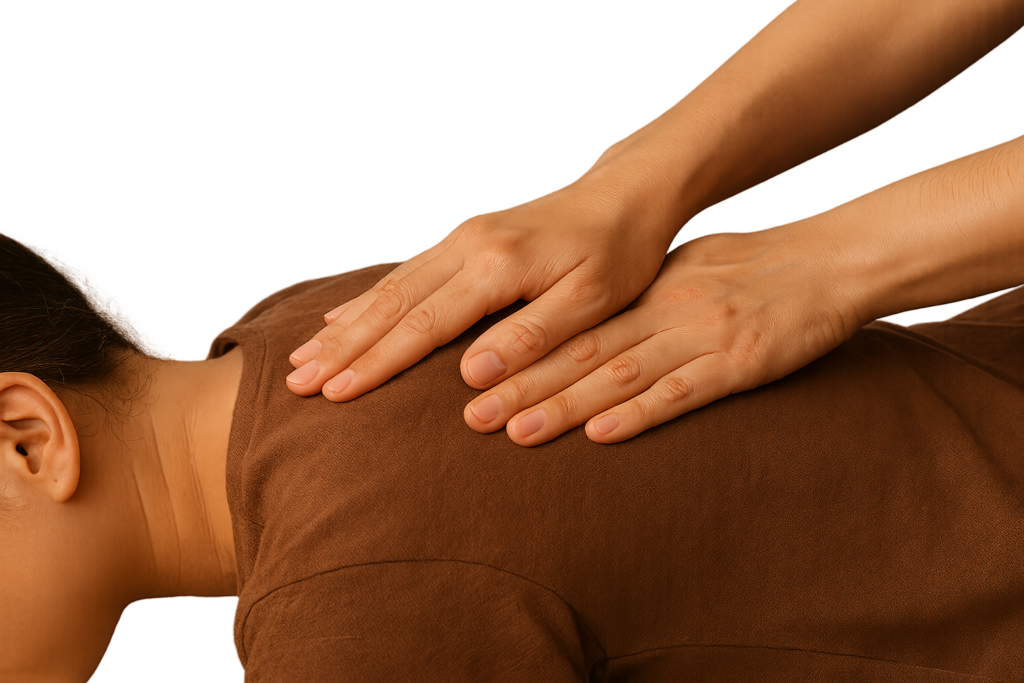
Shiatsu therapists use thumbs, palms, and elbows to apply rhythmic pressure along the body’s meridians.
This technique doesn’t rely on oils or lotions. Instead, the therapist focuses on balancing energy flow and easing muscular tension.
Benefits of Shiatsu
- Relieves stress and fatigue
- Enhances circulation
- Promotes deep relaxation
- Supports digestive and immune functions
- Reduces anxiety and insomnia
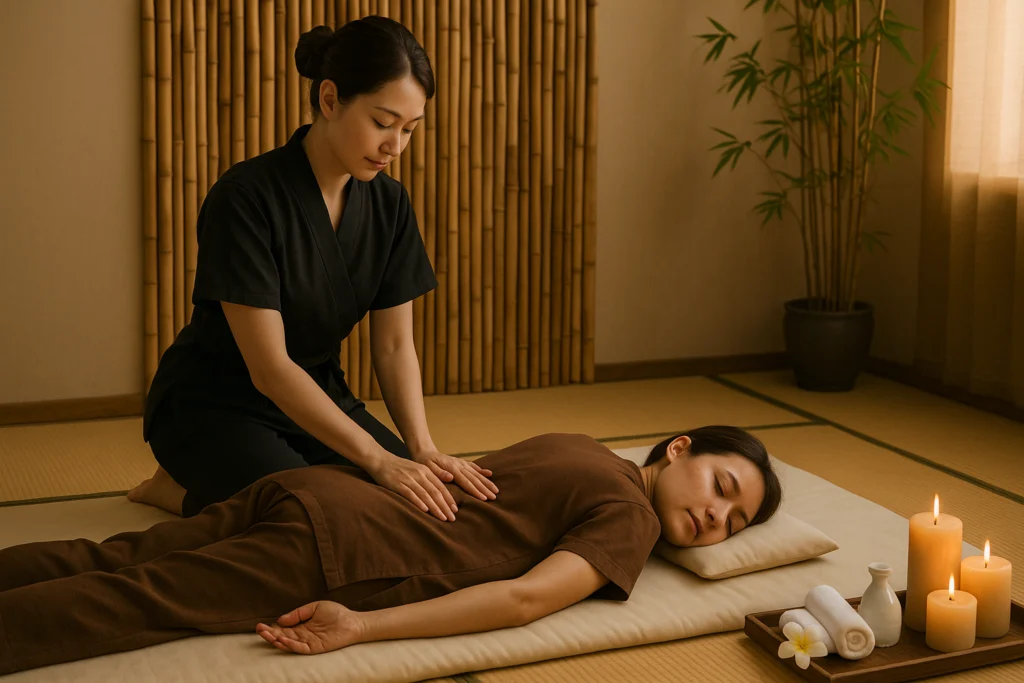
Shiatsu is often practiced with the client fully clothed, lying on a mat. The experience feels both meditative and invigorating.
Anma (按摩) – The Traditional Japanese Massage
Before Shiatsu, there was Anma, Japan’s oldest known form of massage.
Brought from China around the 7th century, Anma evolved into a distinctly Japanese art, practiced by blind healers and monks for centuries.
The Technique
Anma focuses on kneading, tapping, pressing, and rolling motions along muscles and joints.
Therapists use flowing hand movements that encourage circulation and release blockages in the body’s energy system.
Health Benefits
- Relieves muscle stiffness
- Improves joint flexibility
- Stimulates lymphatic drainage
- Calms the nervous system
Anma is often described as a dance between relaxation and stimulation balancing yin and yang within the body.
Japanese Facial Massage (Kobido)
Kobido, meaning “the ancient way of beauty,” dates back to the 15th century.
It was originally a luxury reserved for Japanese royalty and geishas. Today, it’s a favorite worldwide for natural facial rejuvenation.
The Art of Kobido
This facial massage blends acupressure, lymphatic drainage, and rhythmic strokes to improve skin elasticity and brightness.
Therapists use precise, gentle movements to lift facial muscles, promote collagen production, and stimulate microcirculation.
Kobido Benefits
- Reduces wrinkles naturally
- Tones facial muscles
- Promotes radiant skin
- Releases jaw tension and headaches
- Induces deep relaxation
Kobido is sometimes called the “Japanese facelift” because of its rejuvenating power without any surgery.
Ampuku – The Abdominal Healing Massage
Another lesser-known but powerful Japanese massage is Ampuku.
This ancient practice focuses on the abdomen, considered the center of emotion and energy in Japanese tradition.
How It’s Done
Practitioners apply gentle pressure and circular movements around the stomach area, encouraging healthy digestion and emotional release.
They believe the abdomen stores not only food but also stress, fear, and anxiety.
Benefits of Ampuku
- Relieves bloating and constipation
- Improves digestion and organ function
- Reduces anxiety and emotional tension
- Promotes energy flow in the lower body
Ampuku connects physical well-being with emotional healing making it a holistic therapy for both gut and soul.
Seitai – Body Alignment and Energy Flow
Seitai, meaning “properly aligned body,” is not just massage it’s a philosophy of natural body balance.
Developed in the 20th century by Haruchika Noguchi, Seitai combines movement, touch, and breathing techniques.
How Seitai Works
Instead of pressing on muscles, Seitai practitioners guide the body’s spontaneous adjustments. They encourage natural movement that restores postural alignment and energy flow.
Effects on the Body
- Improves posture and flexibility
- Enhances energy levels
- Relieves chronic tension
- Stimulates the body’s self-healing mechanisms
Seitai is both preventive and therapeutic ideal for those seeking balance rather than deep pressure.
Reiki – Energy Healing through Hands
Though technically different from massage, Reiki is often included among Japanese healing techniques.
Created by Mikao Usui in the early 1900s, Reiki is based on transferring universal life energy through the practitioner’s hands.
The Healing Process
The therapist lightly places their hands on or just above the client’s body.
Energy flows naturally to the areas that need it most, promoting harmony on a physical, emotional, and spiritual level.
Benefits of Reiki
- Promotes deep calmness
- Reduces pain and fatigue
- Strengthens emotional resilience
- Supports mental clarity and self-healing
Reiki sessions often feel like gentle warmth or subtle vibration an experience that rejuvenates from the inside out.
Japanese Hot Stone Therapy (Ganbanyoku)
Ganbanyoku, or “stone bathing,” is another fascinating Japanese technique.
Unlike Western hot stone massages, Ganbanyoku doesn’t involve placing stones on the body.
Instead, the person lies on a heated natural stone bed often made of black silica or granite while fully clothed.
Read also: Vitamin B Does Not Cause Neuropathy: What Really Does?
What Happens During Ganbanyoku
The heat gently warms the body, promoting detoxification and improved circulation.
It’s similar to a sauna but with more subtle, soothing warmth that relaxes muscles and clears the mind.
Benefits
- Enhances blood flow
- Detoxifies through sweat
- Reduces fatigue and stiffness
- Promotes restful sleep
Many Japanese spas combine Ganbanyoku with aromatherapy or meditation for complete relaxation.
Watsu – Japanese Water Massage
Though modern, Watsu draws inspiration from Zen Shiatsu.
It was created by Harold Dull in Japan in the 1980s and combines Shiatsu principles with warm water therapy.
The Experience
During Watsu, the client floats in a warm pool while the therapist supports, stretches, and moves their body in gentle, rhythmic patterns.
Why It’s Special
Water allows weightless movement, relieving pressure on joints and muscles.
It’s deeply meditative, connecting breath, body, and fluid motion.
Benefits
- Soothes chronic pain
- Improves flexibility
- Reduces anxiety and insomnia
- Encourages emotional release
Watsu is now popular in wellness resorts worldwide for its peaceful, almost womb-like comfort.
Japanese Reflexology (Ashiyu and Zubari)
Japanese reflexology, known as Ashiyu (foot soaking) and Zubari (foot pressure), focuses on stimulating reflex zones on the feet.
Method
The session usually begins with a warm herbal foot bath, followed by acupressure on key foot points using thumbs or wooden sticks.
Benefits
- Boosts metabolism
- Improves circulation
- Relieves headaches and tension
- Encourages better sleep
Reflexology reflects the Japanese principle that small touches can influence the entire body’s health.
Integrating Japanese Massage in Modern Life
Japanese massage traditions continue to inspire today’s wellness industry.
Whether through Shiatsu studios, spa rituals, or yoga retreats, people worldwide embrace these methods for their mindful connection between body and spirit.
Even short self-massage routines at home like pressing acupoints on hands or face can help reduce tension after a long day.
Adding a few minutes of deep breathing turns it into a mindful ritual.
Choosing the Right Technique for You
Each Japanese massage style serves a unique purpose.
Here’s a quick summary to help you decide:
| Technique | Focus Area | Experience | Ideal For |
|---|---|---|---|
| Shiatsu | Whole body | Rhythmic pressure | Stress, fatigue, tension |
| Anma | Muscles and joints | Kneading, tapping | Stiffness, poor circulation |
| Kobido | Face | Gentle lifting | Anti-aging, relaxation |
| Ampuku | Abdomen | Soft pressure | Digestion, emotional balance |
| Seitai | Posture | Natural movement | Alignment, energy flow |
| Reiki | Energy field | Non-touch healing | Emotional stress, fatigue |
| Ganbanyoku | Whole body | Heated stones | Detox, relaxation |
| Watsu | Water | Floating stretches | Joint pain, anxiety |
The Spiritual Core of Japanese Massage
Japanese massage is not just about relaxation it’s about awareness.
Every session is a reminder that healing begins with stillness.
Practitioners often say that true touch comes from the heart, not the hands.
The goal is not to fix the body but to listen to it to restore balance through empathy, rhythm, and presence.
This mindful philosophy is what sets Japanese massage apart from Western therapies focused solely on muscle relief.
Frequently Asked Questions
What makes Japanese massage unique?
Japanese massage emphasizes balance and energy flow, combining physical touch with mindfulness and breath awareness.
Is Japanese massage painful?
Most techniques are gentle and rhythmic. Even when pressure is applied, it’s intended to release tension, not cause pain.
Can I learn Japanese massage at home?
Basic Shiatsu or facial self-massage can be practiced at home, but professional training is needed for full-body techniques.
How often should I get a massage?
Once a week is ideal for ongoing stress relief, while once or twice a month helps maintain general wellness.
Does Japanese massage use oils?
Most traditional techniques, like Shiatsu and Anma, are performed without oils clients usually remain clothed.
The Touch That Heals Beyond Muscles
Japanese massage stands as a bridge between science and spirituality.
It teaches that true wellness isn’t only physical it’s the art of aligning body, mind, and energy.
Whether you choose Shiatsu for stress relief or Kobido for facial glow, these techniques remind us that healing begins with presence.
Every touch, every breath, and every pause is a conversation between the body and the soul.
🔔 For more tutorials like this, consider subscribing to our blog.
📩 Do you have questions or suggestions? Leave a comment or contact us!
🏷️ Tags: Japanese massage, Shiatsu, Anma, Kobido, Reiki, Seitai, Ganbanyoku, Watsu, Japanese wellness, holistic healing
📢 Hashtags: #JapaneseMassage #Shiatsu #Wellness #Kobido #ReikiHealing #Relaxation #HolisticTherapy #MindBodyBalance #MassageTechniques #ZenHealing
