


⏲️ Estimated reading time: 11 min
Table of Contents
🌌 The Only Island of Meaning: Why Humanity May Be the Rarest Civilization in the Galaxy. Among 400 billion stars in our galaxy and two trillion galaxies in the universe, humanity may be the only intelligent civilization alive today a fragile, brilliant island of meaning floating in the cosmic ocean.
Read also: The Definition of the Person Who Strengthens the Family Foundation
The Only Island of Meaning: Why Humanity May Be the Rarest Civilization in the Galaxy
We live on one small planet orbiting one star, in a galaxy with 400 billion others, floating among two trillion galaxies in the observable universe. The scale is almost incomprehensible. Yet amid this vastness, there is something deeply meaningful about our existence.
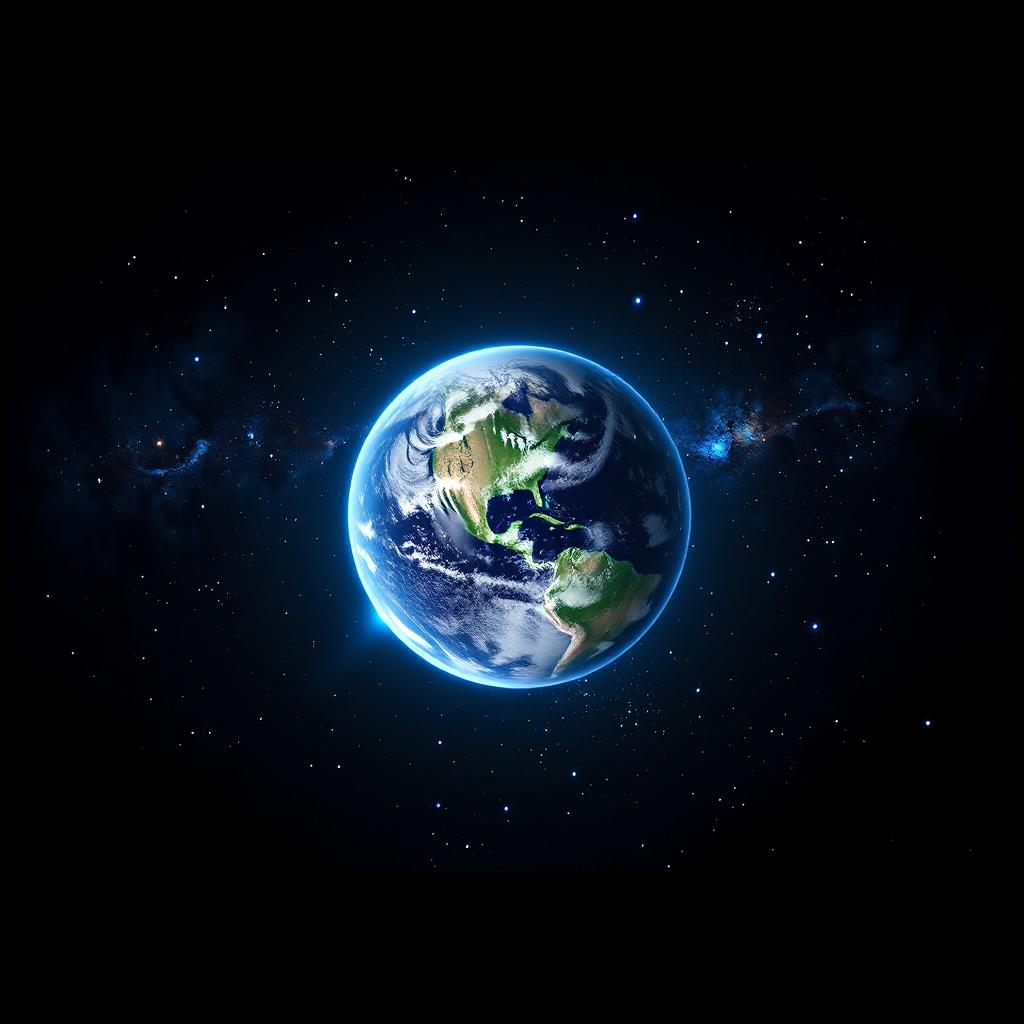
Many people look up at the stars and feel insignificant. How can a small creature on a blue marble matter in a cosmos this enormous? But perhaps that feeling is wrong. Perhaps our rarity and maybe even our solitude gives us an extraordinary importance.
Let’s explore why, despite our physical smallness, humanity might be one of the most precious things in the universe.
The Vastness That Humbles Us
When we look at the night sky, every point of light is a star. Many of those stars have planets. Some of those planets might be like ours rocky, temperate, with atmospheres rich in chemistry. Our galaxy, the Milky Way, has about 400 billion stars. Multiply that by roughly two trillion galaxies in the observable universe, and you have a number so vast it erases intuition.
Astronomers call the observable universe “observable” because it’s the part we can see limited by the speed of light and the age of the cosmos. Beyond that horizon, the universe might go on forever. It might even be infinite.
From that perspective, Earth seems absurdly tiny a grain of dust suspended in the dark. But physical size is not the only measure of significance.
The Cosmic Paradox of Importance
In a purely material sense, we are nothing. Yet in another sense, we may be everything.
Because as far as we know, we are the only beings who can comprehend this immensity. The universe may be full of stars, but very few of those stars are known to host consciousness beings who can look up, wonder, and reflect on their place in it all.
That makes us different.
If the Milky Way’s 400 billion stars are mostly silent, and if the countless galaxies beyond are also quiet, then this little world Earth might be the only place where the universe is aware of itself.
The Great Silence
Scientists have searched for signs of other civilizations for decades. We call this quest SETI the Search for Extraterrestrial Intelligence. Radio telescopes scan the skies for signals that are unnatural, technological, deliberate.
And so far, we’ve heard nothing.
This silence is strange, because mathematically, intelligent life should be common. The famous Drake Equation attempts to estimate how many civilizations might exist right now in the Milky Way. But every time we refine the variables planetary habitability, biological evolution, technological survival the numbers shrink.
It’s possible, though sobering, that we are the only civilization in the galaxy at this moment.
If that’s true, then all meaning, art, science, love, curiosity, and consciousness may be concentrated in one fragile biosphere orbiting a middle-aged yellow star.
Why That Makes Us Precious
If life is rare, intelligence rarer, and civilization almost nonexistent, then we are cosmic treasures.
Think about it: the universe is vast beyond imagination, and yet for billions of years, nothing has written a poem, built a telescope, or asked “why?”
Until us.
We are the universe’s way of examining itself. Our thoughts, our science, our dreams they are not separate from the cosmos; they are its expression. We are stardust that has become aware.
This gives our existence an almost sacred weight, not in a religious sense, but in a cosmic one.
If we vanish, the universe may go dark again not physically, but consciously.
A Sea of Suns, a Single Island of Meaning
Imagine the Milky Way as an ocean of light. Each star is a sun, most with planets. Yet only one tiny island glows with thought our own.
That island is fragile. It could drown in its own mistakes, burn in war, or fade through neglect. But while it lasts, it is beautiful beyond measure.
Humanity is that island of meaning. Every poem written, every act of kindness, every discovery made they are ripples across the dark sea.
We don’t yet know if other islands exist. Perhaps far away, another civilization watches its own sunset and wonders the same thing. Or maybe we truly are alone.
If so, then the responsibility resting upon us is immense.
Our Duty as the Only Conscious Civilization
If we are the only intelligent beings in this galaxy, our actions matter more than we realize.
We are caretakers of all consciousness, stewards of awareness itself. What we do here on this small world echoes across time and space.
We have the power to destroy life’s one chance or to nurture it into eternity.
That responsibility transforms ordinary ethics into cosmic ethics. It means our survival is not merely about us. It’s about preserving the possibility of meaning in the universe.
Every scientist exploring truth, every artist capturing beauty, every parent raising a child they all contribute to keeping consciousness alive.
The Universe May Be Infinite, But We Are Finite
Our lives are brief. Civilizations rise and fall. Stars live and die. The universe itself is expanding, cooling, and may one day drift into silence.
And yet, in this fleeting moment, we exist.
That might be the rarest event in all of cosmic history atoms aligning to think, feel, create, and care.
When you think of it that way, our smallness becomes irrelevant. What matters is what we do with the time we have.
The Fragility of Our Civilization
Our technological civilization is young just a few hundred years old. But in that short span, we’ve transformed the planet, built global networks, and reached beyond the atmosphere.
We’ve also created weapons capable of ending it all.
From a cosmic viewpoint, that’s tragic and ironic the universe’s one thinking species risking its own extinction.
The silence of the galaxy might be explained not by absence, but by self-destruction. Perhaps every civilization faces a moment like this when its technology outpaces its wisdom.
We are standing at that threshold now.
What we choose in the coming centuries will decide whether the universe remains conscious or falls back into darkness.
Why We Must Protect Our Planet
Earth is our only home. There is no backup planet within reach. The nearest potentially habitable world might be light-years away impossibly distant with current technology.
If we ruin this one, we lose everything.
That’s why environmental stewardship is not merely a human issue. It’s a cosmic duty.
Preserving life, protecting ecosystems, and ensuring sustainability are acts of cosmic significance. We are defending the only known cradle of consciousness.
When we plant a tree, we’re not just helping Earth we’re keeping the universe alive.
Searching for Others
Even if we are alone now, we continue to search. Because to find another civilization, even one, would change everything.
It would mean we are not a cosmic accident. It would mean the universe tends toward life, toward awareness, toward connection.
The search is not only scientific it’s existential. It speaks to our longing to know whether meaning exists beyond ourselves.
Maybe one day we will find them. Or maybe they’ll find us.
Until then, every listening radio dish, every telescope, is an act of hope.
If We Are Alone, Then We Are the First
Perhaps we are not the only intelligent life that will ever exist perhaps we are simply the first.
If so, our mission is clear: survive, expand, and seed consciousness beyond Earth.
Our exploration of space is not just curiosity; it’s survival. Every base we build on the Moon or Mars, every spacecraft we send into the void, is a step toward ensuring that awareness continues even if Earth falls silent.
We are the bridge between a dead universe and a living one.
The Universe Looking Back
When an astronaut gazes at Earth from orbit, they experience what’s called the Overview Effect a profound realization of unity and fragility.
They see no borders, no nations, just one glowing world suspended in darkness.
That perspective changes people. It reminds us that everything we fight over is small compared to what we share.
In a way, every human who looks up at the stars is performing the same act. We are the cosmos looking back at itself and smiling.
The Meaning We Create
Meaning isn’t something we discover waiting for us among the stars. It’s something we create through love, art, kindness, and curiosity.
Even if the universe is indifferent, we can fill it with significance.
When a child laughs, when a scientist makes a breakthrough, when a poet writes a line that moves another heart the universe becomes slightly more aware.
That’s how we win against the void.
We Might Be the Universe’s One Chance
Think about it: if there are 400 billion suns in the Milky Way and none host civilizations right now, then we might be it the only flame of awareness burning in this entire galaxy.
That’s not arrogance; it’s a terrifying privilege.
It means we carry the burden of keeping that flame alive. It means extinction would not just be a tragedy for us, but for everything conscious in existence.
So when we talk about peace, sustainability, education, and progress, we are not just talking about politics. We are talking about the survival of meaning itself.
The Future of Consciousness
In the distant future, we might spread among the stars. We might terraform planets, build artificial worlds, or even create new forms of life.
If we survive long enough, consciousness could fill the galaxy. The Milky Way might transform from a silent ocean of suns into a vibrant archipelago of awareness.
But that depends entirely on what we do now how we treat our planet, each other, and our curiosity.
The first step toward a universe full of meaning begins with one decision: to care.
A Message to the Future
If we are truly alone, then every act of kindness, every work of art, every scientific discovery carries the weight of the cosmos.
We are writing the story of the universe’s only known observers. Someday, perhaps far away, another intelligence might find traces of us our music, our mathematics, our laughter encoded in light.
And they’ll know that once, in one corner of one galaxy, consciousness bloomed.
They’ll know that the universe once knew itself.
We Are Important After All
Our smallness makes us humble, but our awareness makes us extraordinary.
The universe may not revolve around us, but without us, it may have no one to notice its beauty.
So we are not insignificant. We are the meaning-makers, the torch-bearers, the poets of existence.
We are the only island of meaning and that is everything.
Frequently Asked Questions
What does it mean to be the “only island of meaning”?
It means humanity might be the only known civilization capable of thought and creativity in our galaxy, making our existence profoundly significant.
How many galaxies and stars exist?
Astronomers estimate around two trillion galaxies, each with hundreds of billions of stars. The Milky Way alone contains about 400 billion.
Why haven’t we found other civilizations?
This is known as the Fermi Paradox the apparent contradiction between the high probability of alien life and the lack of evidence for it.
Does being alone make humanity special?
Yes. If we are alone, it means all meaning, knowledge, and beauty exist only here giving us a unique moral and cosmic responsibility.
What can we do with that knowledge?
Protect our planet, nurture peace, expand to other worlds, and ensure consciousness continues. Our choices shape the future of meaning in the universe.
🌠 A Fragile Miracle in the Cosmic Ocean
In the silence of space, our thoughts, our art, and our compassion shine brighter than any star.
We may be small, but we are not meaningless.
We are the universe’s rarest phenomenon its consciousness made real.
And as long as we care, create, and dream, this island of meaning will never truly be alone.
🔔 For more tutorials like this, consider subscribing to our blog.
📩 Do you have questions or suggestions? Leave a comment or contact us!
🏷️ Tags: universe, galaxy, milky way, cosmic meaning, consciousness, extraterrestrial life, fermi paradox, rare earth, human civilization, astronomy
📢 Hashtags: #universe, #galaxy, #cosmos, #meaning, #life, #fermiParadox, #humanity, #philosophy, #astronomy, #existence
