


⏲️ Estimated reading time: 5 min
Table of Contents
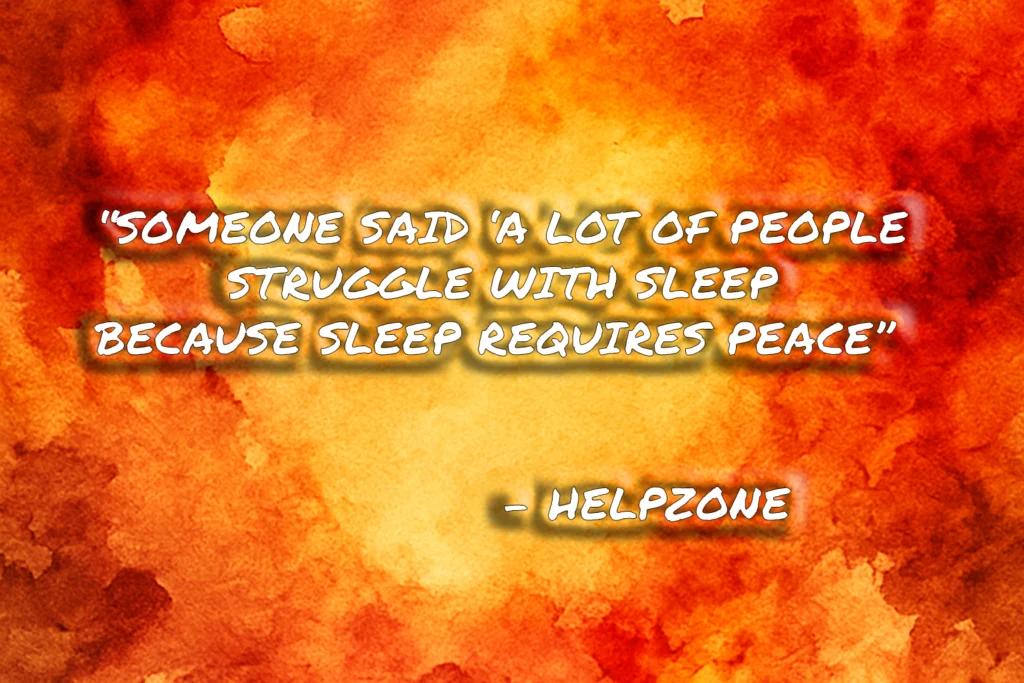
This seemingly simple image hides a deep psychological truth. Sleep is not just physical fatigue but an act of emotional safety. In this article, we explore why the mind refuses to rest when inner peace is missing and what psychology reveals about this struggle.
The Image That Says More Than It Seems
At first glance, the image contains only a short quote on a neutral background. No vivid colors. No visual noise. Yet the emotional impact is immediate. The message touches a sensitive psychological area: the relationship between sleep and inner peace.
Many people do not say, “I am sleepy.” They say, “I can’t sleep.” That difference matters.
Why So Many People Feel Seen by This Quote
A common reaction to this image is instant recognition: “This is me.” Psychologically, this happens because the message validates a shared but rarely articulated experience.
Sleep is not blocked by lack of tiredness. It is blocked by unresolved inner conflict.
What “Peace” Means in Psychological Terms
In psychology, peace does not simply mean silence. Peace is a state of emotional regulation. It is the moment when the nervous system no longer detects danger.
Peace includes:
- emotional safety
- acceptance
- absence of harsh self-judgment
- reduced mental hypervigilance
Without these conditions, the brain resists deep sleep.
The Brain Refuses to Sleep When It Feels Threatened
From an evolutionary perspective, sleep only occurs when the environment feels safe. Today, threats are rarely physical. They are emotional, relational, or cognitive.
To the brain, an unresolved emotional problem feels like a real danger.
Why Thoughts Grow Louder at Night
Daytime is full of distractions. Night removes them. The mind is left alone with itself, allowing suppressed emotions to surface.
Night does not create anxiety. Night reveals it.
Overthinking as a Survival Strategy
Overthinking is often misunderstood as weakness. In reality, it is a control mechanism. The mind tries to prevent future pain by anticipating every outcome.
Unfortunately, this constant control blocks rest. Sleep requires surrender, not vigilance.
Why Exhaustion Does Not Guarantee Sleep
Many people feel physically drained yet remain awake for hours. Psychology explains this paradox clearly: the body is tired, but the mind is on alert.
Sleep is triggered by safety, not exhaustion.
Anxiety and Modern Insomnia
Anxiety keeps the nervous system in “fight or flight” mode. In this state, relaxation becomes nearly impossible.
The image captures this truth perfectly: without peace, sleep has nowhere to land.
Trauma and the Fear of Letting Go
For people with trauma, sleep can feel unsafe. Falling asleep means losing control.
This is why insomnia is common in trauma-related conditions. Peace must be rebuilt before rest can return.
Guilt and the Nighttime Inner Dialogue
At night, the mind reopens old files. Regrets. Mistakes. Unspoken words.
Guilt keeps the brain active because it believes something still needs fixing.
When Silence Feels Heavy
For a restless mind, silence is uncomfortable. This explains why many people sleep with background noise, TV, or a phone nearby.
These distractions delay sleep but do not create peace.
Peace Cannot Be Forced
Trying to force sleep often backfires. The brain interprets pressure as danger.
Sleep arrives when resistance ends.
Why the Visual Design Works
The plain background mirrors the message. The lack of visual clutter reinforces calm. The typography feels honest and direct.
The design and the psychology align.
Social Media and Shared Vulnerability
The popularity of this image reflects collective emotional exhaustion. Many people are not looking for solutions. They want to feel understood.
Shared vulnerability reduces isolation.
Sleep as a Reflection of Emotional Life
How we sleep mirrors how we live. Unresolved conflicts, tense relationships, and constant self-criticism follow us into bed.
This image is not really about sleep. It is about life.
Small Rituals That Signal Safety
The brain thrives on predictability. Evening rituals send a clear message: “You are safe now.”
This sense of safety is the foundation of peace.
Silence Versus Peace
You can have silence around you and chaos inside. You can have noise outside and calm within.
Sleep comes from the inside, not the environment.
When Insomnia Is a Message
Insomnia is not always something to eliminate. Sometimes it is a signal. The body asks for emotional attention.
Listening is the first step toward peace.
The Image as Passive Therapy
Even reading this quote can bring relief. Validation lowers inner tension.
Sometimes, being understood is enough to breathe more easily.
A Simple Truth, Clearly Spoken
This image does not offer solutions. It offers truth. And truth, when expressed gently, begins healing.
When Rest Begins Within
Sleep Is Not a Function. It Is a Consequence.
When inner peace is missing, sleep becomes impossible. This image reminds us of an often-ignored truth: we cannot rest where we feel emotionally unsafe. Peace is not a luxury. It is a biological necessity.

⚠️ DISCLAIMER
This article is for informational purposes only and does not replace professional psychological or medical advice. If sleep problems persist, consult a qualified healthcare or mental health professional. The information is based on established psychological principles and scientific literature.
🔔 For more tutorials like this, consider subscribing to our blog.
📩 Do you have questions or suggestions? Leave a comment or contact us!
🏷️ Tags: sleep psychology, insomnia, inner peace, nighttime anxiety, overthinking, mental health, suppressed emotions, emotional safety, modern psychology, well-being
📢 Hashtags: #SleepPsychology, #Insomnia, #InnerPeace, #MentalHealth, #Overthinking, #AnxietyRelief, #Mindset, #EmotionalHealth, #PsychologyDaily, #Wellbeing
📚 Sources and References
Read also: 2030 World Cup Stadium Locations: Complete Host City Guide
– Sleep psychology research
– Studies on anxiety and emotional regulation
– Neuropsychology literature
– Clinical psychology observations
– Insomnia case studies
– Evidence-based mindfulness and cognitive therapy practices
