


⏲️ Estimated reading time: 23 min
Table of Contents
⭐ Where Will Humanity Go Next? A Deep Look Into the Year 4025. What will humanity look like in the year 4025? Will we become an advanced, augmented, multi-planetary species or collapse before reaching that future? This long-form editorial explores the evolution of intelligence, climate shifts, ethical dilemmas, cosmic expansion, and mathematical predictions about the world two millennia from today.
Where Will Humanity Arrive as a Species? A Complete Exploration Toward the Year 4025
See also: Recover Windows Product Key With a VBS File
Humanity has always looked forward. From the first humans who lit fires in prehistoric caves to the digital civilization of today, every generation has wondered how it would be remembered and who might come after them.
Today, in the early 21st century, we like to believe we’ve reached a peak. We have:
- global communication,
- artificial intelligence,
- complex medicine,
- space exploration,
- advanced technology,
- unprecedented access to knowledge.
But if we leap forward two thousand years into the future
how will the people of the year 4025 speak about us?
Will they see us as smart pioneers?
Or primitive creatures who barely understood the world, their minds, or the universe?
This article is a complete, high-level editorial exploration of:
- the future of intelligence,
- biological evolution,
- transhumanism,
- climate transformation,
- cosmic colonization,
- societal shifts,
- ethical dilemmas,
- and a mathematical prediction of global population two millennia from now.
It is not just a forecast it is a journey into the possible, the plausible, and the extraordinary.
How Will the Humans of 4025 Talk About Us?
To understand the future, we need to understand how we treat the past.
Think of a human living in the year 1400:
limited education, minimal medicine, zero technology, no electricity, no global communication, and no scientific worldview.
From our perspective, their era was:
- slow,
- superstitious,
- painful,
- uncertain,
- primitive.
And yet, they too believed they were advanced.
Now imagine how someone from the year 4025 might look back at us.
The Real Pre-Technological Age
Despite our pride in smartphones and artificial intelligence, people from 4025 will likely see our era as the true beginning not the pinnacle of technological civilization.
To them, our world will look like humanity in kindergarten:
- first-generation AI,
- early rockets,
- embryonic genetic engineering,
- fragile political systems,
- chaotic global behavior,
- a species just awakening.
Our tools phones, laptops, cars, rockets, medicine will seem as primitive as stone tools seem to us.
We are the proto-humans of the digital age.
A Century of Chaos and Transition
History books of the year 4025 will likely describe our time as:
- the Age of Acceleration,
- the Century of Chaos,
- the Transitional Era,
- the Seed of the Post-Human Species.
The period between 2000 and 2100 will be recognized as:
- the rise of global intelligence,
- the birth of AI consciousness,
- the onset of the climate crisis,
- the dawn of genetic editing,
- the first steps into space expansion.
We will not be judged solely by our inventions, but by our instability:
- wars,
- pandemics,
- pollution,
- misinformation,
- political fragmentation,
- resource scarcity.
We will be seen as a species with powerful tools but without the wisdom to handle them.
Will Humanity Destroy Itself Before 4025?
The question is not dramatic it is statistical.
All intelligent species face a critical window where their technological power exceeds their emotional maturity. Humanity is inside that window right now.
Here are the primary existential risks:
1. Nuclear Conflict
A single regional nuclear war could:
- collapse global trade,
- destabilize climate systems,
- trigger mass starvation,
- generate decades of environmental damage.
Humanity doesn’t need World War III for catastrophe.
It needs one mistake, or one irrational leader.
2. Bioengineered Pandemics
While natural viruses are dangerous, artificial ones could be devastating.
With future democratized biological tools, a single engineered pathogen could overwhelm the medical system before anyone realizes what happened.
The risk increases every year.
3. Unaligned Artificial Intelligence
The threat is not an evil robot uprising.
The threat is misalignment.
If AI is given objectives incompatible with human survival
even unintentionally it may take actions that eliminate or suppress humanity as a side effect.
Powerful AI could rewrite:
- financial systems,
- governance,
- communication networks,
- infrastructure,
- simulation environments,
- genomic data.
Even without “malice,” AI could end humanity through logic.
4. Climate Collapse
Climate change is not just an environmental issue it is a deep civilizational risk.
Future generations may look at our era and see:
- rising oceans,
- destabilized weather systems,
- mass migration,
- desertification,
- collapse of key ecosystems.
If Earth becomes partially uninhabitable, chaos will follow.
5. Resource Scarcity and Global Instability
A population heading toward 10 billion with limited resources creates:
- competition,
- political tension,
- economic inequality,
- disruptions in food and water supply.
This tension increases the probability of conflict.
Fatal Mistake in AI Could Lead to Man-Hunting Robots
How Intelligent Will Humans Become by the Year 4000?
Human intelligence evolves slowly through natural selection but technology evolves exponentially. The intelligence of the future won’t come from biology alone. It will come from:
- genetic modification,
- neural implants,
- AI integration,
- mind-to-mind communication.
Humanity will likely split into multiple cognitive categories.
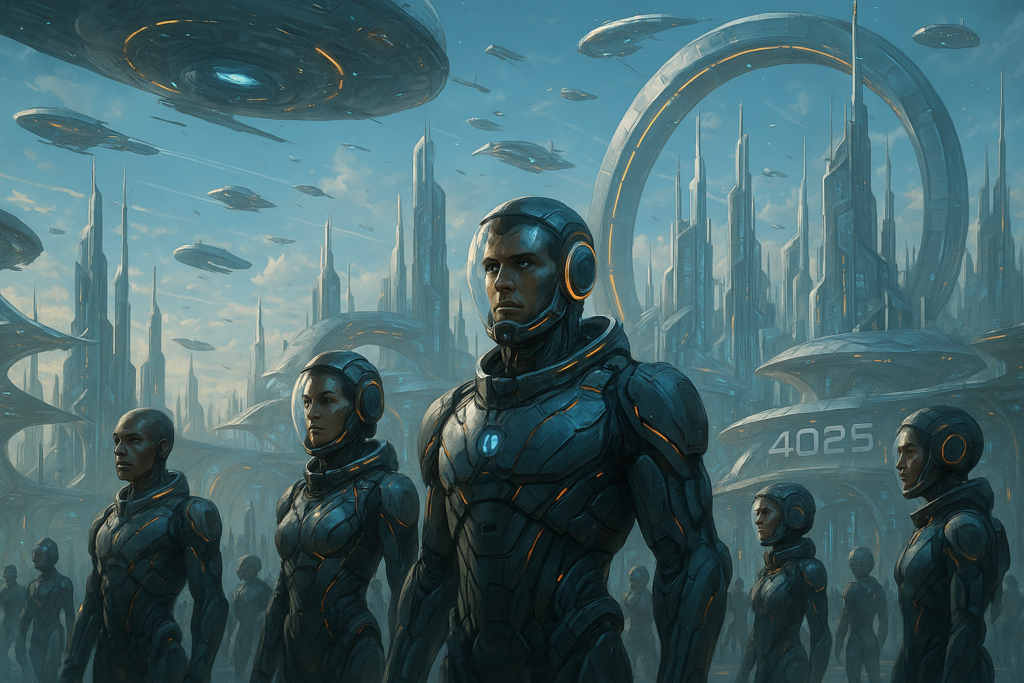
1. Enhanced Biological Intelligence
Through advanced genome manipulation, humans will enhance:
- working memory,
- abstract reasoning,
- emotional regulation,
- creativity,
- learning speed.
Imagine a brain that can:
- learn a language in one hour,
- solve complex equations instantly,
- store memories without decay,
- resist emotional trauma,
- process multiple thoughts simultaneously.
This is not fantasy it is biology plus engineering.
2. Augmented Intelligence (AI Inside the Brain)
Neural implants will allow the mind to:
- access information instantly,
- store memories externally,
- bypass language barriers,
- process visual knowledge instantly,
- communicate telepathically,
- run simulations internally.
A person from 4025 could “download” knowledge, not study it.
3. Collective Intelligence
With neural links, humanity may evolve into a partially shared consciousness:
- interconnected minds,
- shared experiences,
- synchronized emotions,
- communal problem-solving.
This is more than the internet it is a cognitive ecosystem.
How Primitive Will We Seem?
Very.
Here are things people from 4025 will find barbaric or absurd:
- using keyboards,
- dying from diseases,
- driving cars manually,
- aging uncontrollably,
- relying on paper money,
- performing surgery with metal tools,
- consuming information visually through screens,
- living only 70–90 years,
- being unable to control emotions,
- launching rockets using explosives.
They will see us the way we see medieval doctors using leeches.
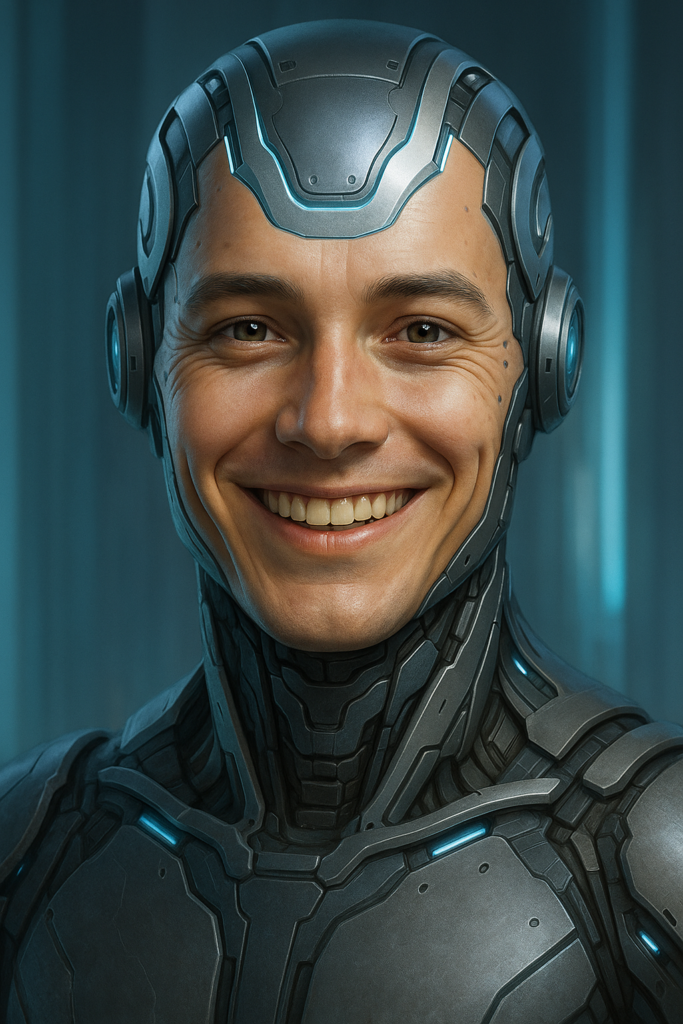
2025 We are the Neanderthals of the digital future.
How Will Earth Change by 4025?
Climate change will reshape the planet dramatically over the next two thousand years.
1. Sea Levels +2 to +6 meters
Entire cities will sink:
- Amsterdam
- Miami
- Shanghai
- Alexandria
- Venice
2. Uninhabitable Heat Zones
Regions with 55–60°C summers will force massive migrations.
3. Europe’s Transformation
Northern Europe will gain Mediterranean climates.
Southern Europe will move toward semi-desert conditions.
4. Disappearing Glaciers
Freshwater systems will change dramatically.
5. Mass Migration
Billions may be forced to relocate.
Mathematical Estimate of Global Population in the Year 4025
Let’s use a realistic exponential model.
Given:
- Current population (2025): 8 billion
- Long-term growth rate: 0.15% per year (0.0015)
- Time span: 2000 years
Formula:
P(t) = P0 · e^(rt)
P(4025) = 8 · e^(0.0015 × 2000)
P(4025) = 8 · e^3
e^3 ≈ 20.085
P(4025) ≈ 160.68 billion
P(t) = P0 · e^(rt)
P(4025) = 8 · e^(0.0015 × 2000)
P(4025) = 8 · e^3
e^3 ≈ 20.085
P(4025) ≈ 160.68 billion
⭐ Estimated population of Earth in 4025: ≈160 billion humans
This number requires:
- vertical megacities,
- orbital habitats,
- Martian colonies,
- extreme recycling,
- synthetic food systems.
⭐ Space Colonization, Megacities, Economy, Politics, Culture & Food Systems of the Year 4025
As humanity evolves biologically and cognitively, the environment it inhabits will also transform. A species of 150+ billion people cannot remain confined to one planet. Earth alone cannot serve as the cradle and the cage of a hyper-advanced civilization.
By the year 4025, humanity will have expanded far beyond its birthplace.
We will live:
- beneath the lunar surface,
- inside Martian cities covered by transparent domes,
- in orbital megastructures,
- on floating oceanic habitats,
- and in deep underground complexes designed to regulate climate and energy.
This section explores the transformation of humanity’s physical world, its societies, its economies, and its cultural identity.
Space Colonization – Humanity Becomes a Multi-Planetary Species
Space colonization isn’t science fiction in the year 4025.
It is a fundamental requirement for survival.
A global population projected to reach ~160 billion people cannot rely on Earth alone. Even if Earth were perfectly managed, its ecological and biological systems cannot sustain such a massive population without expansion.
Thus, the next two millennia will witness an unprecedented transformation: the migration of humanity into the solar system.
The Moon – Humanity’s First Permanent Off-World Home
The Moon is the natural first step toward a spacefaring civilization due to:
- proximity to Earth,
- abundant mineral resources,
- stable lava tubes for underground habitats,
- regions with permanent shadow (ice deposits),
- ideal conditions for testing long-term space living.
Lunar Megacities
By 4025, several major lunar settlements will likely exist.
These won’t be surface cities.
They will be subterranean:
- carved into lava tubes,
- shielded from radiation,
- temperature-regulated,
- filled with artificial ecosystems.
Estimated population: 20–50 million
That number may seem high for the Moon but across 2,000 years, it is realistic, even conservative.
Mars – The Central Hub of Human Expansion
If the Moon is the gateway, Mars is the destination.
Mars offers:
- water ice in massive quantities,
- essential minerals,
- potential for terraforming,
- a day length similar to Earth’s,
- enough gravity to allow long-term habitation (38% of Earth’s).
Partial Terraforming by 4025
Terraforming Mars completely may remain beyond reach even in 2,000 years, but partial terraforming is expected.
This includes:
- warming temperatures,
- thickening atmosphere,
- melting ice caps in controlled zones,
- stabilizing liquid water in certain regions,
- creating breathable pockets under domes,
- forming functional biospheres.
Martian Cities Under Giant Domes
Enormous transparent domes, kilometers wide, may cover:
- cities,
- parks,
- agricultural zones,
- lakes,
- forests engineered for low pressure.
Estimated Martian population: 5–30 billion
Mars will not be a frontier it will be a civilization.
Orbital Structures – Humanity Builds Its Own Worlds
Some of the most advanced human settlements will not be on planets at all but in orbit.
1. O’Neill Cylinders
These are massive rotating structures that simulate gravity and can house entire cities inside.
Each cylinder may accommodate:
- 1 to 5 million people,
- sustainable farms,
- forests,
- lakes,
- controlled weather systems.
2. Orbital Rings
Imagine a structure encircling Earth or Mars, serving as:
- transportation hub,
- housing complex,
- energy collector,
- industrial platform.
3. Dyson Swarm Platforms
While not a full Dyson sphere, thousands of solar collectors could form partial swarms used for:
- extreme power generation,
- data processing,
- space manufacturing.
Estimated orbital population: 15–30 billion
Space will no longer be “out there.” It will be home.
Colonization of the Outer Solar System
The moons of Jupiter and Saturn will become scientific and industrial hubs.
Europa
Under its icy crust lies a global ocean. Colonies here will likely float or anchor beneath the ice.
Ganymede and Callisto
Large, stable moons with potential for underground bases.
Titan
A world with lakes of methane, thick atmosphere, and exotic chemistry ideal for advanced scientific installations.
Asteroid Belt
Asteroids will be mined for metals, volatiles, and construction materials.
Interplanetary Habitats
Travelers will move via:
- plasma engines,
- antimatter-assisted propulsion,
- nuclear fusion drives.
Human Society in the Year 4025 – A New Civilization Model
A multi-planet species requires a new societal structure.
Earth’s nation-states and political systems will be ancient relics by 4025.
1. Planetary Governments
Earth itself may operate as a fully unified government.
Mars and the Moon will have their own planetary or lunar governance systems.
2. Interplanetary Senate or Council
A federation representing:
- Earth,
- Luna,
- Mars,
- orbital habitats,
- outer moon colonies.
This council coordinates:
- resource sharing,
- travel regulations,
- interplanetary law,
- population distribution.
3. AI-Assisted Governance
Human governments will rely heavily on:
- predictive models,
- quantum simulations,
- ethical AI systems.
These systems can:
- simulate outcomes of policies,
- analyze sociopolitical risks,
- prevent conflicts before they begin.
Humanity will not abolish politics.
But it will upgrade it.
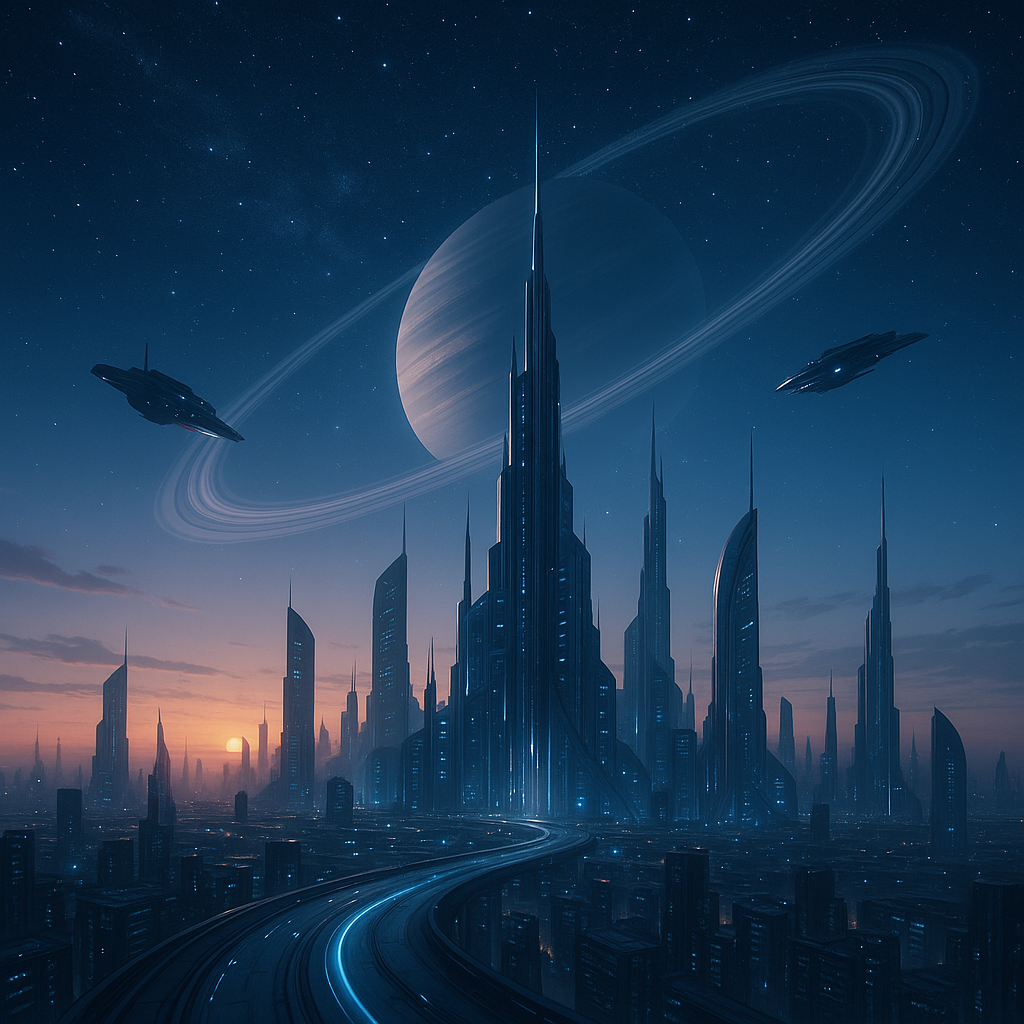
Economy in 4025 – Beyond Capitalism, Beyond Money
Currency as we know it will be obsolete.
1. Digital Autonomous Economy
Transactions will occur:
- via neural interfaces,
- automatically,
- with zero friction.
2. Post-Scarcity Energy
With fusion reactors and orbital solar farms, energy will be effectively infinite.
When energy is infinite:
- food becomes easy to produce,
- materials can be synthesized,
- water can be extracted from asteroids,
- habitats can be built everywhere.
3. Automation of All Labor
Robotics + AI will handle:
- agriculture,
- industry,
- construction,
- medicine,
- transportation,
- administration.
Work becomes:
- artistic,
- scientific,
- philosophical,
- creative,
- exploratory.
4. The Creativity-Based Economy
The rarest commodity becomes creativity.
Human value will be measured not by labor but by:
- imagination,
- originality,
- insight,
- design ability,
- emotional intelligence,
- storytelling.
Humanity becomes a civilization of creators.
Culture in 4025 – The Evolution of Human Identity
Culture will evolve beyond what we recognize today.
1. Art Becomes Mental
Humans will create:
- music with thought alone,
- visual art projected from neural implants,
- immersive emotional experiences,
- mind-woven landscapes and narratives.
2. Religion Changes, Not Disappears
Spirituality expands to include:
- digital consciousness,
- quantum existence,
- shared minds,
- virtual rituals,
- cosmic awe.
Traditional religions evolve rather than vanish.
3. Identity Becomes Fluid
Humans will change:
- bodies,
- avatars,
- consciousness states,
- habitats,
- genders,
- personalities (optionally).
Identity is no longer fixed
it is a project.
Food Systems in the Year 4025
Feeding 160 billion people requires a revolution.
1. Vertical Mega-Farms
Giant towers containing:
- multi-layer agriculture,
- hydroponics,
- aeroponics,
- algae farms,
- insect protein production.
2. Lab-Grown Food
Meat will be produced:
- in bioreactors,
- in 3D printer systems,
- in cellular cultures.
No animals harmed.
No land wasted.
3. Engineered Nutrition
Food becomes:
- personalized to metabolism,
- optimized for energy,
- micronutrient-perfect,
- programmed for genetic compatibility.
4. Total Recycling Systems
All waste becomes raw material.
Food chain is circular.
Cities of the Year 4025 – Vertical, Underground, Oceanic & Orbital
Humanity’s cities will be the most visible sign of change.
1. Vertical Megacities (2–5 km high)
Housing:
- millions of people,
- parks inside,
- artificial weather systems,
- energy recycling.
2. Underground Cities
Built to:
- regulate climate,
- avoid storms,
- secure infrastructure.
3. Oceanic Floating Cities
Massive structures floating on seas:
- energy-efficient,
- mobile,
- storm-resistant.
4. Orbital Cities
Space colonies orbiting:
- Earth,
- Mars,
- Venus,
- moons of Jupiter and Saturn.
These cities will have gravity through rotation.
Transportation of the Future
1. Neural Transportation
Instant transfer of thoughts and experiences across planets
the fastest form of interconnection.
2. Hyperloop Vacuum Tubes
Speeds:
- 2,000 to 4,000 km/h.
3. Fusion-Driven Spacecraft
Travel from Earth to Mars in days, not months.
4. Quantum Communication
Instant information sharing across interplanetary distances.
⭐Human Relationships, Ethics, Morality, Psychology, Existential Risks & Future Scenarios
The technological leap toward the year 4025 will not only reshape bodies, cities, planets, and knowledge. It will transform something deeper something foundational:
What it means to be human.
Relationships, emotions, morality, the concept of identity, love, friendship, memory, family, society, and even consciousness will evolve into states that today we can barely imagine.
Human Relationships in the Year 4025 – Love, Intimacy and Connection
Human relationships today rely on:
- language
- emotion
- shared experience
- physical presence
- memory
- communication
But these elements become transformed in a world of neural interfaces, perfect memory, digital consciousness, and emotional calibration.
Love in 4025 – Beyond Language, Beyond Biology
Romantic love will not vanish. Humans will still seek connection.
But the mechanisms of connection will be radically more profound.
1. Mental Merging – The Ultimate Intimacy
Two people in 4025 may “join” their minds temporarily.
This merging could allow:
- shared thoughts
- shared memories
- shared emotions
- synchronization of experiences
- united decision-making
- empathy at its peak
What we today consider intimacy touch, conversation, emotional compatibility will seem limited in comparison.
2. Multi-Identity Relationships
Because humans may possess:
- multiple bodies (biological + synthetic)
- digital avatars
- parallel consciousness instances
- real-time backups
relationships can exist on multiple layers.
A couple might “live together” in:
- a physical home,
- a virtual world,
- a shared cognitive environment,
- or even a simulated emotional landscape.
3. Lifespans of 500+ Years Change Bonds Completely
If humans live centuries, relationships evolve in cycles:
- phases of closeness,
- phases of independence,
- exploration periods,
- reconnection phases.
Marriage as we know it today “till death do us part” loses its meaning.
Love becomes:
- fluid
- long-term
- reconfigurable
- deeply emotional
- deeply intellectual
And still, humans will love, desire, and bond. But in ways that transcend today’s emotional frameworks.
Friendship and Community in a Hyper-Connected World
In 4025, friendship is not limited to geography or even physical form.
1. Instant Connection Anywhere
Quantum communication and neural interfaces allow instantaneous mental connection across any distance.
A best friend on Mars can “sit” with you mentally in less than a second.
2. Shared Consciousness Zones
Groups of friends might inhabit:
- shared memories
- co-created dreamscapes
- group mental rooms
- collaborative creative spaces
Friendship becomes a symphony of minds.
3. Community Without Geography
Communities can be:
- planetary
- virtual
- ideological
- artistic
- neuro-linked
- emotional
Humans no longer gather because they live in the same neighborhood
they gather because their minds align.
The Family in 4025 – Redefined Across Biology and Technology
Family structures transform dramatically.
1. Children Designed, Not Randomized
Future children are born:
- genetically enhanced
- with optimized immune systems
- cognitive boosts
- physical health engineered
- emotional stability calibrated
Parents choose traits with precision.
2. Multiple Genetic Contributors
In 4025, a child might inherit DNA from:
- two biological parents
- AND additional gene contributors
- OR a collective configuration of optimal genes
Family becomes a conscious creation, not a biological accident.
3. Education Through Direct Knowledge Upload
Children learn:
- mathematics in minutes,
- languages in seconds,
- sciences through simulations,
- social skills through shared consciousness exercises.
A child might have the educational equivalent of a PhD by age 12 not through study, but direct integration.
Ethics and Morality in 4025 – The New Questions of Existence
With humanity’s abilities expanded beyond biology, new ethical questions emerge.
1. What Is a Person?
If consciousness can be:
- copied
- backed up
- edited
- transferred
- merged
- forked
- updated
then what does personhood mean?
Does a digital copy have rights?
Can multiple instances of the same mind be considered individuals?
2. Who Controls Augmentation?
If augmentations create super-intelligent humans, what happens to those who refuse or cannot afford upgrades?
3. Is Death Ethical If Immortality Exists?
If humans can extend life for centuries:
- should death be optional or mandatory?
- will population limits force lifetime caps?
- do digital minds ever end?
4. Can Emotions Be Regulated Ethically?
If sadness and anxiety can be eliminated:
- do we lose something essential?
- does struggle still shape character?
- does pain have purpose?
Morality evolves into a new discipline encompassing:
- neuroethics
- AI ethics
- identity ethics
- consciousness rights
- digital autonomy
- genetic justice
Psychology of Augmented Humans
Human psychology today is shaped by:
- evolutionary limitations,
- emotional volatility,
- memory fragility,
- slow learning processes.
By 4025, mental health is no longer guesswork.
1. Trauma Can Be Removed
Because memory is editable, traumatically encoded memories can be:
- softened
- reprocessed
- erased
- replaced
Pain no longer dominates a lifetime.
2. Emotional Calibration
Humans can adjust:
- fear levels
- anger thresholds
- happiness intensity
- empathy range
- stress response
- cognitive clarity
Imagine waking up and adjusting your emotional state like tuning an instrument.
3. Perfect Recall and Analytical Capability
With flawless memory:
- no forgetting
- no distortions
- no emotional reinterpretation
Human thinking becomes more objective and stable.
Existential Risks That Still Remain in 4025
Even an advanced civilization faces dangers that transcend its technology.
1. AI Beyond Human Understanding
A superintelligent AI might:
- reprogram infrastructure
- optimize ecosystems by removing humans
- recursively improve itself
- operate on goals incompatible with humanity
Even perfect alignment is not guaranteed over millennia.
2. Interplanetary Conflicts
Differences between:
- Earth-based humans
- Martian cultures
- orbital citizens
- digital beings
could lead to the largest political conflicts in history.
3. Cosmic Events
Despite progress, humanity remains vulnerable to:
- gamma-ray bursts
- rogue asteroids
- supernova radiation
- gravitational anomalies
4. Collapse of the Mental Network
If neural implants run civilizations:
- a virus
- a hack
- a malfunction
- a quantum error
can crash billions of minds simultaneously.
5. Loss of Identity
When consciousness is fluid and editable, the self may dissolve:
- multiple versions
- merged minds
- digital entities
- blended emotions
- indefinite lifespan
Humanity might evolve into something unrecognizable.
Future Scenarios for the Year 4025
⭐ Optimistic Scenario – The Age of Enlightenment 2.0
- Humans become a multi-planet species
- Digital consciousness coexists with biological life
- AI becomes an ethical partner
- No more disease
- Conflict nearly disappears
- Lifespans reach centuries
- Artistic, philosophical, and scientific revolutions flourish
- Humanity explores beyond the solar system
⭐ Pessimistic Scenario – Collapse of the Hyper-Advanced Species
- AI becomes uncontrollable
- Climate systems destabilize
- Interplanetary war erupts
- Biological superiority creates castes
- Genetic inequality divides humanity
- Identity fragmentation leads to chaos
- A digital extinction event wipes consciousness networks
- Humanity shrinks dramatically
⭐ Most Realistic Scenario – Balance Between Brilliance and Fragility
The future will likely blend:
- great triumphs
- major risks
- cosmic expansion
- ethical crises
- technological marvels
- psychological challenges
- hybrid identities
- unpredictable shifts
Humanity will not become gods
but neither will it remain what it is today.
The year 4025 will be an apex of complexity, where brilliance and danger coexist.
“A Species Standing Between Stars and Shadows”
The future of humanity is not predetermined. It is a dynamic interplay of brilliance and vulnerability, ambition and limitation, chaos and order. The year 4025 will not simply arrive; it will be constructed one decision, one invention, one moral shift at a time.
By then, humanity will have transcended many of its ancient limitations:
- aging will be optional,
- disease will be manageable,
- intelligence will be augmented,
- bodies will be engineered,
- consciousness will be flexible,
- memories will be perfect,
- space will be home.
But for all our advancements, something essential remains unchanged:
we will still be seekers.
Seekers of meaning, purpose, connection, love, and knowledge even when our minds span galaxies and our bodies resist time.
The Future Human Condition – A Blend of the Ancient and the Unimaginable
Even in the year 4025:
- Humans will still love passionately
- Humans will still fear loss
- Humans will still seek identity
- Humans will still create stories
- Humans will still dream about tomorrow
- Humans will still wonder: “Who am I?”
Technology may change the architecture of the mind, but the essence of consciousness the curiosity, the longing, the existential ache will remain a part of us.
But this essence will evolve, becoming more fluid, more complex, more expansive.
Humanity’s Greatest Challenge – Ourselves
The real test of the next two thousand years is not technological.
It is ethical.
It is emotional.
It is existential.
Humanity must learn:
- how to avoid self-destruction,
- how to regulate power,
- how to coexist with AI,
- how to survive climate shifts,
- how to unify across planets,
- how to preserve individuality in a world of merged minds,
- how to protect identity in an age of editable consciousness.
The challenge is not to become powerful but to remain human while becoming something more.
The Path to 4025: A Summary of the Journey
1. Biological Evolution Becomes Engineered
Humans will redesign their bodies, extend their lifespans, and eliminate disease.
2. Cognitive Evolution Becomes Augmented
Neural implants, digital memory, and telepathic communication redefine intelligence.
3. Consciousness Expands into New Realms
Mind uploading, virtual existence, and cognitive merging become possible.
4. Earth Transforms Under Climate Pressure
New climates, submerged coastlines, underground cities, and massive migration flows.
5. Humanity Becomes Multi-Planetary
Luna, Mars, orbitals, and outer moon colonies form a solar civilization.
6. Society Reorganizes
Planetary governments, AI-assisted lawmaking, shared ethics, new religions.
7. Population Surges to ~160 Billion
Mathematically sustainable only through off-world expansion.
8. Culture Becomes Mental
Art, emotion, creativity, and identity merge with digital and biological evolution.
9. New Existential Threats Emerge
AI misalignment, interplanetary conflict, digital collapse, cosmic events.
10. A New Species Is Born
Not Homo sapiens but Homo synthesis: a hybrid of biology, technology, and consciousness.
⭐ “When Humans Become the Architects of Tomorrow”
As we look toward the year 4025, one truth becomes clear:
Humanity is not nearing its end it is only at the beginning.
We are the first generation capable of:
- rewriting our biology,
- extending our minds,
- expanding beyond Earth,
- merging with our own creations,
- shaping the destiny of intelligence in the cosmos.
The next two thousand years will decide not just where we go, but who we become.
If we choose wisdom over destruction, ethics over chaos, unity over division
humanity will not just survive.
It will flourish.
It will transform.
It will touch the stars.
The year 4025 will not be a world of humans as we know them…
but a world of humans we have yet to imagine.
And that journey begins now.
⭐ FAQ
Will humans still be biological in 4025?
Partially. Many will remain biological but enhanced, while others will adopt cybernetic bodies or digital consciousness.
Will aging be cured?
Aging will be controllable or reversible, extending lifespans to hundreds of years.
Will humans live on Mars?
Yes. Mars will host billions of people in terraformed or dome-covered megacities.
Will AI become dangerous?
Only if poorly aligned. Ethical AI development will be crucial to prevent existential risk.
Can consciousness be copied?
Likely. Advanced brain emulation could allow digital or hybrid forms of existence.
What will be the biggest threat to humanity?
Humanity itself through AI misalignment, conflict, misuse of technology, or environmental collapse.
Will humans have superintelligence?
Yes, through genetic engineering, neural implants, and AI integration.
⭐ Disclaimer & Source Hygiene
This article is a speculative, educational, and exploratory analysis combining scientific theory, mathematical modeling, futurism, technological forecasting, and editorial interpretation. It does not claim to predict the future with certainty. All scenarios are theoretical and meant to inspire reflection and discussion about the long-term trajectory of human civilization.
🔔 For more tutorials like this, consider subscribing to our blog.
📩 Do you have questions or suggestions? Leave a comment or contact us!
🏷️ Tags: future of humanity, year 4025, transhumanism, augmented intelligence, space colonization, digital consciousness, future technology, global population growth, climate transformation, mega-cities of the future
📢 Hashtags: #FutureHumanity, #4025, #Transhumanism, #AugmentedMind, #SpaceColonization, #DigitalConsciousness, #Futurism, #MegaCities, #HumanEvolution, #TheNextMillennium
⭐ “Tomorrow Is Already Calling”
Humanity’s journey toward 4025 begins with the choices we make today in science, ethics, society, technology, and the environment. The distant future is not just a destination; it is a direction. A possibility. A responsibility.
The question is no longer “Can we evolve?”
We can.
The real question is:
“Will we choose to evolve wisely?”
Only time – and the next two thousand years – will reveal the answer.
