

⏲️ Estimated reading time: 31 min
Table of Contents
The death of Alan Kurdi in September 2015 transformed a distant refugee crisis into a deeply human story. His short life, his family’s dangerous journey, and one unforgettable photograph forced millions to confront the human cost of displacement, war, unsafe migration routes, and political inaction.
Alan Kurdi and the Human Story Behind an Iconic Photograph
Some photographs document history. Others become part of history themselves. In September 2015, an image from a beach near Bodrum, Turkey, did exactly that. It showed the devastating outcome of a refugee journey that had begun with a family searching for safety. The child was Alan Kurdi, a young Syrian boy whose name would soon be known around the world. His death became one of the defining human stories of the European refugee crisis. UNHCR
It is easy to remember Alan only through the photograph that appeared on television screens, newspaper front pages, and social media. Yet doing so risks reducing a child to a symbol. Before the headlines, Alan was a son and a younger brother. He belonged to a family whose decisions were shaped by conflict, displacement, uncertainty, and the hope of finding somewhere safer to live.
His story therefore deserves to be approached carefully. It is not simply a story about one dangerous boat crossing. Nor should it become an argument in which a child’s death is used to score political points. Alan’s story belongs within a much larger history involving the Syrian war, displaced families, international borders, asylum systems, smuggling networks, humanitarian organizations, governments, journalists, and ordinary citizens.
More than a decade later, the photograph still raises difficult questions. Why do people place themselves and their children in dangerous boats? What happens when legal routes to safety become difficult or inaccessible? Can one photograph permanently change public opinion? What responsibility do governments have toward people fleeing conflict? And how should journalists report human suffering without taking away the dignity of the people involved?
Those questions are part of Alan Kurdi’s legacy.
A Child Should Be Remembered as More Than a Photograph
The extraordinary reach of the photograph created an unusual situation. Millions of people who had never met Alan suddenly knew his name. Yet they knew him through the worst moment imaginable for his family. That makes responsible remembrance particularly important.
Alan should not be defined only by the circumstances of his death. He was part of a family attempting to build a future after years of upheaval. His father, Abdullah Kurdi, survived the sea crossing, while Alan, his brother Ghalib, and their mother, Rehanna, died. Contemporary reporting described a family whose movements had been shaped by Syria’s conflict and the search for stability. The Guardian
This distinction matters because refugee statistics can become enormous very quickly. Thousands become hundreds of thousands, and eventually millions. Numbers help governments and humanitarian organizations understand the scale of displacement, but numbers cannot fully communicate what displacement means to an individual family.
Alan’s story temporarily changed that.
A refugee crisis that many Europeans had previously encountered through maps, statistics, political speeches, and television reports suddenly had a child’s name attached to it.

Img source: wikipedia
Who Was Alan Kurdi?
Alan Kurdi was a young Syrian child from a Kurdish family. Before his name became internationally recognized, his family’s experience reflected a broader reality faced by many Syrians during years of conflict. Families were displaced, communities were disrupted, and ordinary decisions about work, school, housing, and raising children became increasingly difficult.
Reports about the Kurdi family described movement through different parts of Syria before the family eventually lived in Turkey. The objective was not fame, politics, or becoming part of a historic photograph. Like many displaced families, they were trying to find a place where everyday life could become predictable again. The Guardian
That point can disappear when discussing refugee movements from a distance. People rarely abandon established lives casually. Leaving a home can mean abandoning employment, possessions, relatives, friendships, schools, familiar languages, and the community networks people rely upon every day. Displacement often replaces these things with temporary accommodation, uncertain legal status, limited employment opportunities, and an unclear future.
For parents, those uncertainties become even more complicated. They must make decisions not only for themselves but also for their children. Every available option can carry risks.
The Syrian Conflict Behind the Family’s Displacement
By 2015, Syria had endured years of devastating conflict. Millions of Syrians had been displaced either within the country or beyond its borders. Neighboring countries carried a substantial part of the humanitarian burden, while increasing numbers of people also attempted to reach Europe.
The movement toward Europe did not happen in isolation. It developed after years in which families had already experienced displacement, instability, and diminishing hopes of returning quickly to normal life. By the time the Kurdi family attempted the sea crossing, the refugee crisis was already enormous.
Yet much of the European political discussion had become focused on borders and numbers.
That language was understandable from an administrative perspective. Governments needed to discuss registration, asylum procedures, accommodation, transportation, budgets, and border management. However, something important could disappear inside that vocabulary: the individual person.
Alan’s story brought that individual dimension back into public attention.
Alan, Ghalib, Rehanna and Abdullah
Alan travelled with his parents and his older brother, Ghalib. Their father, Abdullah, survived the disastrous crossing. Alan, Ghalib, and their mother, Rehanna, did not.
The loss is difficult to understand simply as a historical event. For Abdullah, it was the destruction of almost his entire immediate family in a matter of minutes. Later interviews showed how the global attention surrounding the photograph existed alongside intensely personal grief. The Guardian
This is one reason discussions about Alan should remain respectful. The public may see an iconic historical image. A surviving relative sees members of his family.
Those are very different experiences.
You may also be interested in: Top 5 PUBG Players of All Time by Prize Money
Why the Kurdi Family Tried to Reach Europe
One of the most common mistakes in discussions about refugees is to imagine that a dangerous sea journey represents the beginning of the story. Usually, it does not. By the time someone steps into an overcrowded or unsuitable boat, months or years of previous events may have already narrowed the available choices.
Families fleeing conflict can experience repeated displacement. They may first move to another town, then another region, then another country. Some hope the conflict will end quickly and they can return home. As months become years, that hope can become harder to maintain.
Meanwhile, children continue growing.
They need education, healthcare, stability, and a safe environment. Adults need legal employment and a realistic way to support their families. Temporary solutions can become increasingly difficult when nobody knows how long “temporary” will last.
Why People Accept Dangerous Routes
From the safety of a home, a dangerous sea crossing can appear impossible to understand. The question often becomes: Why would a parent ever place a child in that situation?
A better question is what circumstances can make an obviously dangerous journey appear preferable to the alternatives.
This does not make the journey safe. It does not mean every decision is correct. Instead, it helps explain the psychology of displacement. People do not compare a dangerous boat with a comfortable and secure life. They compare it with the options they believe are genuinely available to them.
Smugglers can exploit that desperation. Families may receive incomplete or misleading information about boats, weather, distances, border procedures, or the likelihood of successfully reaching another country. Once people have spent money, travelled long distances, and committed emotionally to a route, turning back can become even more difficult.
That is why refugee safety cannot be understood solely through border enforcement. It also involves legal pathways, humanitarian protection, accurate information, international cooperation, and efforts against criminal smuggling networks.
The Mediterranean Was Already Taking Lives
Alan’s death did not create the Mediterranean migration crisis. The crisis was already killing people.
UNHCR reported that by the time Alan’s body was found, more than 300,000 people had risked sea journeys to reach Europe during 2015, while more than 2,600 had already died attempting them. Those figures reveal why the tragedy cannot be understood as a single isolated accident. UNHCR
Only days earlier, another horrific discovery had occurred in Europe. Austrian authorities found the bodies of 71 refugees and migrants inside an abandoned refrigerated truck near the Hungarian border. UNHCR described that tragedy as evidence of the desperation facing people seeking protection or a new life. UNHCR
Europe therefore had warning signs everywhere.
What changed after Alan’s death was not necessarily the existence of the crisis.
It was how millions of people emotionally understood it.
The Night the Journey Ended in Tragedy
On September 2, 2015, the Kurdi family was among people attempting to travel from the Turkish coast toward the Greek island of Kos. They were travelling in a small inflatable boat across a stretch of the Aegean Sea that can look deceptively manageable on a map.
The journey ended catastrophically.
Contemporary accounts reported that rough conditions overwhelmed the boat. Abdullah later described desperately trying to hold onto his family after the vessel overturned. Twelve Syrians reportedly died in related boat disasters that day. The Guardian
A journey measured geographically in only a few kilometres became the final journey for several people.
A Short Distance Can Still Be a Dangerous Crossing
One reason these journeys can be misunderstood is distance. When people look at a map of Turkey and nearby Greek islands, the crossing can appear surprisingly short.
But distance alone does not determine maritime safety.
A small inflatable craft can become extremely vulnerable when it carries too many passengers, lacks appropriate safety equipment, encounters waves, or operates in darkness. People may also have little maritime experience. Panic, cold water, poor visibility, and inadequate flotation equipment can turn a problem into a disaster very quickly.
The tragedy therefore illustrates an important principle. A short sea crossing is not automatically a safe sea crossing.
People fleeing desperate circumstances may understand that danger and still proceed. Others may underestimate it. Some may have been given misleading assurances.
Whatever combination of factors exists in an individual case, the consequences can be irreversible.
The Survivor Who Lost His Family
Abdullah survived.
Survival, however, did not mean escaping the tragedy. He had lost his wife and both sons.
Years of political arguments have surrounded migration across the Mediterranean, but the personal reality of that morning cannot be reduced to political language. A father survived while the family he had been trying to protect did not.
Later reporting documented both his grief and his discomfort with some of the ways the tragedy was interpreted or appropriated publicly. The Guardian
The distinction is worth remembering whenever famous photographs of human suffering circulate online.
For the audience, an image may last seconds.
For the family, the event never disappears.
The Photograph That Changed the Conversation
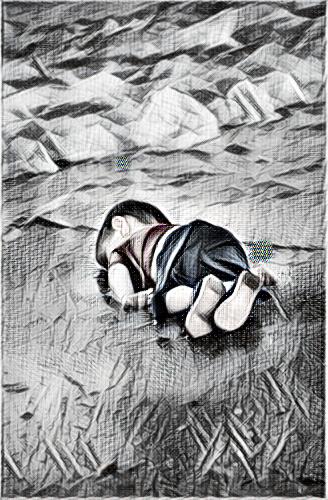
Photojournalist Nilüfer Demir was working near the Turkish coast when she documented the aftermath of the disaster. The resulting photographs rapidly travelled through news organizations and social media.
One image became particularly significant.
Rather than showing crowds, borders, boats, maps, or politicians, it showed the consequence of the crisis through one small child. The photograph made an enormous humanitarian emergency suddenly personal.
The image was distressing, and its publication produced serious ethical debate. Some editors chose to publish it prominently. Others selected less graphic photographs. Some people believed the world needed to see the reality of the crisis. Others believed publishing an image of a deceased child crossed an important boundary of privacy and dignity.
Both concerns deserve consideration.
Why One Image Had Such Extraordinary Power
Statistics communicate scale. Photographs communicate individual experience.
Before September 2015, news audiences had already heard repeatedly about people dying while attempting to cross the Mediterranean. Yet repeated statistics can become abstract. Hearing that hundreds or thousands of people have died does not necessarily create the same emotional response as seeing evidence of one individual life lost.
Alan’s photograph removed that abstraction.
A viewer did not need expert knowledge of Syria, European asylum law, Mediterranean geography, or international politics to understand what the photograph represented.
There was a child.
There had been a journey.
The journey had ended in death.
That simplicity gave the photograph extraordinary communicative power.
Research later reported that the image spread at remarkable speed online. An analysis discussed by The Guardian estimated that it appeared on around 20 million screens within approximately 12 hours, while online discussion increasingly used the term “refugee” rather than “migrant.” The Guardian
How the World Reacted to Alan Kurdi
The reaction was extraordinarily rapid. Newspapers placed the story prominently. Television networks discussed the refugee crisis in greater depth. Social media users shared the photograph and demanded political responses.
For many people, the language surrounding refugees also changed.
People who had previously discussed “migration” primarily as a border-management problem began talking about families, children, protection, and humanitarian responsibility. The photograph had created an emotional connection that years of statistics had often failed to produce.
The Guardian reported that research into European newspaper coverage found a sharp increase in sympathetic reporting immediately after the photographs appeared. However, that effect did not remain equally strong. Within a relatively short period, coverage in many publications began returning toward previous patterns. The Guardian
That finding reveals both the power and the limitations of an iconic photograph.
Compassion Can Arrive Quickly
Human beings naturally respond to individual stories.
A figure such as “300,000 arrivals” requires interpretation. A child’s story does not. People immediately understand childhood, family, fear, and loss.
As Alan’s story spread, citizens organized assistance, donated to humanitarian organizations, discussed refugee policies, and challenged their governments to respond.
The tragedy also influenced how newspapers framed the crisis. Publications that had previously concentrated heavily on migration control suddenly had to address humanitarian consequences.
That was a meaningful change.
However, emotional attention has a short half-life.
Public Attention Can Disappear Just as Quickly
The media research conducted after Alan’s death offers an uncomfortable lesson. Sympathy increased dramatically, but in several countries much of that change faded rapidly.
This pattern appears repeatedly after major humanitarian events.
A disaster dominates the news.
People react emotionally.
Donations increase.
Politicians make statements.
Social networks fill with messages.
Then another story arrives.
The people affected by the original crisis remain, but public attention moves elsewhere.
Alan’s story therefore asks something more difficult of society than momentary sadness. It asks whether compassion can survive after the photograph disappears from the front page.
Why the Words “Refugee” and “Migrant” Matter
Language played an important role in the 2015 debate. The terms “refugee” and “migrant” were sometimes used interchangeably, even though they can describe different legal and personal circumstances.
A refugee is generally someone who requires international protection because returning home would expose them to serious danger or persecution. Migration is a broader concept and can involve many reasons for movement, including employment, education, family reunification, environmental pressures, or economic opportunity.
Real human journeys can also be complicated.
A person may flee immediate danger, spend years in another country, struggle to establish a secure life there, and later continue elsewhere. Reducing that entire history to one label can hide important context.
Language Can Humanize or Dehumanize
Words such as “wave,” “flood,” or “swarm” can make groups of people sound like natural disasters rather than individuals.
Other language can create the opposite distortion by simplifying every journey into the same humanitarian narrative.
Responsible reporting requires precision.
People should neither be demonized nor romanticized. They should be described as human beings whose circumstances deserve accurate examination.
Research into social media discussion after Alan’s photograph circulated found a notable shift toward the word “refugee.” That linguistic change suggested that audiences were reconsidering the people arriving in Europe through a humanitarian rather than purely migratory frame. The Guardian
The shift demonstrates why terminology matters.
The words chosen by journalists, politicians, bloggers, and ordinary social media users help determine how society understands an issue.
The Ethical Debate Over Publishing Alan Kurdi’s Photograph
Publishing photographs of suffering creates one of journalism’s hardest ethical dilemmas.
If an image is hidden, audiences may never fully understand the consequences of war, famine, disasters, or forced migration. Yet publication can expose people at their most vulnerable moment. When the subject is a child, the ethical responsibility becomes even greater.
Alan’s photograph created exactly this conflict.
Some newspapers believed the image needed to be seen because sanitized coverage had failed to communicate the seriousness of the refugee crisis. Others used less distressing photographs or avoided the most disturbing version entirely.
The debate continues today.
Does the Public Need to See Suffering?
There is no universal answer.
History contains photographs that changed public understanding of wars, civil-rights abuses, famine, disasters, and humanitarian emergencies. Images can reveal realities that institutions would otherwise minimize or audiences might prefer to ignore.
However, public interest does not eliminate human dignity.
Editors must consider whether an image provides genuine information, whether less intrusive alternatives exist, whether publication adds context, and whether the subject is being treated as a person rather than content designed to generate attention.
The same principle should guide bloggers and social media users.
An image being widely available online does not automatically mean it needs to be republished.
Why This Article Does Not Need the Graphic Photograph
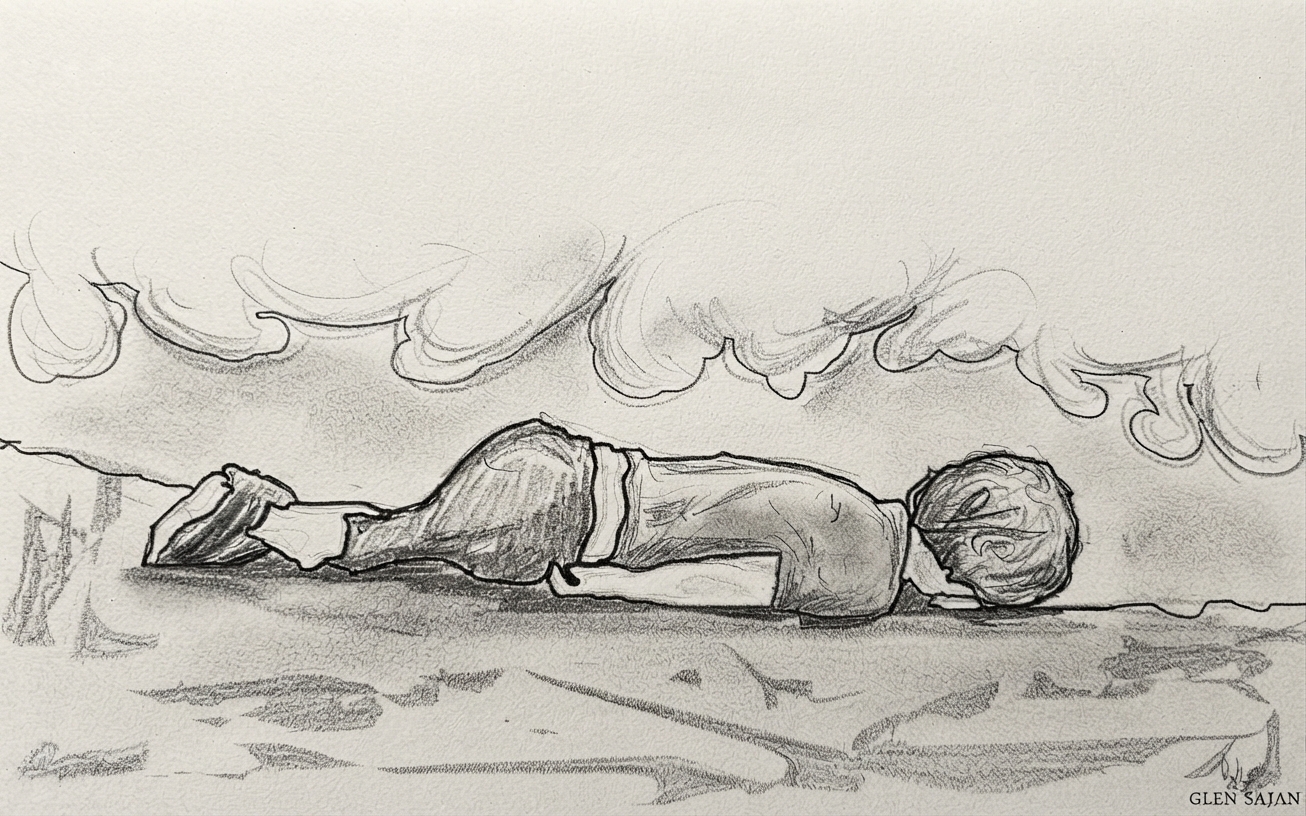
A responsible article can explain Alan’s story without repeatedly displaying the image of his body.
Readers can understand what happened through carefully written reporting, symbolic photography, maps, timelines, and humanitarian context.
Choosing not to reproduce a disturbing image does not mean hiding history. It can instead represent an editorial decision to preserve dignity while still discussing the event openly.
This approach is especially appropriate when children may encounter the page or when a website serves a broad general audience.
The story matters.
The shock value is not the story.
The Refugee Crisis Was Much Larger Than One Family
Alan became the most recognizable child associated with the 2015 European refugee crisis, but thousands of other people experienced similar dangers without becoming internationally known.
That imbalance is one of the strange effects of iconic photographs.
One person becomes visible while countless others remain anonymous.
UNHCR’s review of 2015 described a year in which extraordinary numbers of people crossed seas, borders, and countries while European governments struggled to coordinate their responses. By early September, hundreds of thousands had already risked Mediterranean journeys. Thousands had died. UNHCR
Behind every number was another story.
There were children whose names never appeared in newspapers. Parents who survived while relatives disappeared. Families who reached safety after terrifying journeys. People who remained in refugee camps. Others eventually returned home. Some established entirely new lives in countries they had never previously imagined calling home.
Statistics Need Human Context
Numbers remain essential.
Without statistics, governments cannot plan housing, asylum processing, healthcare, education, border operations, or humanitarian assistance.
However, numbers should not replace individual humanity.
If 2,600 people die, the statistic describes scale. It does not describe 2,600 separate families receiving devastating news.
Alan’s story temporarily connected those two perspectives.
He became one identifiable child within an enormous statistical crisis.
The challenge is remembering that every number in humanitarian reporting represents a person even when no photograph exists.
What Changed After the Photograph Went Around the World?
It would be tempting to say that Alan’s photograph changed everything.
History is more complicated.
It clearly affected public discussion and media coverage. It intensified humanitarian concern and placed pressure on political leaders. It encouraged people to reconsider the language used to describe refugees. It also inspired donations and public initiatives.
Yet the underlying causes of displacement did not disappear.
War continued.
People continued fleeing.
Dangerous routes remained.
Political disagreements over asylum and migration continued across Europe.
The photograph changed awareness more easily than it changed the systems creating the crisis.
An Image Can Open a Door, but Policy Must Walk Through It
Emotional awareness can create political opportunity.
When millions of citizens suddenly care about an issue, governments may find greater public support for humanitarian measures. But lasting policy requires much more than emotion.
Governments must negotiate.
Budgets must be approved.
Asylum claims must be processed.
Housing must be found.
Children need schools.
Adults need opportunities to participate in society.
Borders require management.
International protection obligations must be respected.
Smuggling networks must be investigated.
Countries also need to cooperate because displacement rarely stops neatly at a national border.
A photograph cannot perform those tasks.
It can only make ignoring them more difficult.
What Alan Kurdi’s Story Teaches Us About Refugee Policy
Alan’s story does not provide a simple formula for migration policy. Serious policy must consider humanitarian protection, border security, legal obligations, national capacity, integration, crime prevention, and international cooperation at the same time.
Pretending those tensions do not exist would not help refugees or host communities.
However, the tragedy demonstrates what can happen when desperate people believe unsafe routes offer their most realistic opportunity to reach security.
That lesson remains relevant.
Safe and Legal Pathways Matter
One of the most effective ways to weaken dangerous smuggling routes is to reduce the number of people who feel forced to use them.
Legal pathways can take different forms depending on national and international policy. They may include refugee resettlement, family reunification, humanitarian admission programs, or other protected routes.
Such systems still require identity checks, eligibility standards, security procedures, administration, and clear limits.
Humanitarian policy and orderly migration management do not have to be opposites.
In fact, poorly managed systems can harm everyone involved. Refugees may wait indefinitely, local communities may struggle with insufficient resources, and criminal organizations can exploit confusion.
Good policy requires both compassion and administration.
Fighting Smuggling Requires More Than Stopping Boats
Smuggling networks profit when people have few alternatives.
Enforcement therefore remains important, particularly against criminal groups that deceive, exploit, or endanger vulnerable people.
But enforcement alone does not eliminate demand.
If the conditions pushing people to move remain severe, another smuggler may simply replace the one who was arrested.
Long-term solutions must address several stages of the problem: conflict prevention, humanitarian support near affected regions, protection for displaced populations, lawful migration processes, border management, and integration for those granted permission to remain.
There is no single policy capable of solving all of these challenges.
That complexity should encourage serious debate rather than slogans.
Children Carry a Different Cost of Displacement
Children do not choose wars.
They do not design asylum systems.
They do not control national borders.
They do not hire smugglers or negotiate international agreements.
Yet children often experience some of the most significant consequences of displacement.
A displaced child may lose access to school, friends, familiar surroundings, healthcare, extended family, and a stable home. Even after reaching safety, rebuilding those structures takes time.
This is why discussions about refugee children should extend beyond emergency rescue.
Survival is the first requirement.
It is not the last.
Safety Must Eventually Become Stability
A family can cross a border and still live with enormous uncertainty.
Where will they live?
Can the parents work?
Can the children attend school?
How long will an asylum decision take?
Can family members reunite?
Will they need to move again?
These questions determine whether physical safety develops into a stable life.
Integration policies therefore matter. Language education, schooling, employment access, healthcare, and community relationships can influence whether displaced families become permanently marginalized or gradually establish independence.
This is not charity alone.
Successful integration benefits both newcomers and the communities receiving them.
How Social Media Amplified the Story
Alan’s photograph became one of the clearest early examples of how social media could transform an international humanitarian story almost instantly.
Previously, newspaper editors and television producers largely controlled which photographs reached mass audiences. Social platforms changed that structure.
A photograph could now move from a journalist to millions of people in hours.
Research discussed in 2015 found that posts surrounding Alan’s image expanded at extraordinary speed, at one stage reaching tens of thousands of tweets per hour. Researchers also observed changes in the terminology people used while discussing refugees and migrants. The Guardian
That speed created opportunities and risks that remain familiar today.
Viral Attention Is Not the Same as Understanding
Sharing a photograph takes seconds.
Understanding the conflict behind it can take hours.
Understanding refugee law, migration policy, and regional history can take much longer.
Social media frequently reverses that order. People see the most emotionally powerful material first and investigate context later, if they investigate it at all.
That creates an environment where empathy, misinformation, political campaigning, genuine reporting, rumors, and outrage can spread simultaneously.
Alan’s family later experienced some of those consequences. Various claims and narratives circulated around the tragedy, demonstrating how quickly a real family’s suffering could be pulled into wider political arguments. The Guardian
Responsible readers should therefore separate verified information from emotionally appealing claims.
A viral post is not automatically a reliable source.
How to Discuss Alan Kurdi Without Exploiting His Tragedy
There is an important difference between remembering a tragedy and repeatedly exploiting it.
A responsible article should provide historical context, explain verified events, identify reliable sources, and help readers understand broader issues.
It should not use graphic suffering merely to attract clicks.
This principle applies particularly strongly to Alan because the photograph became so recognizable that his identity was often reduced to a single moment.
The better approach is to restore the context around that moment.
Remember the Person Before the Symbol
Alan was not born to become an international symbol.
He was a child.
His family did not begin its journey hoping to become the subject of a global debate.
Keeping that perspective changes how the story is written. Sensational descriptions become unnecessary. Graphic details add little. Political accusations should not replace documented facts.
The tragedy is powerful enough without exaggeration.
Responsible storytelling also means acknowledging uncertainty when sources disagree and distinguishing documented events from later interpretations.
That is good journalism regardless of the subject.
Respect Matters More Than Shock
Online publishers compete for attention, and shocking material can generate clicks.
That does not make it valuable.
Readers are more likely to trust a publication that explains difficult events carefully than one that uses suffering primarily as a visual hook.
For WordPress publishers, news bloggers, and independent writers, Alan’s story offers an important editorial lesson: powerful journalism does not require maximum graphic intensity.
Context can be powerful.
Accuracy can be powerful.
Humanity can be powerful.
Sometimes restraint communicates more than shock.
Why Alan Kurdi’s Story Still Matters Today
More than a decade has passed since September 2015, but the central questions raised by Alan’s story have not disappeared.
Wars still displace civilians.
Families still cross borders.
Countries still debate asylum and immigration.
Smuggling networks still exploit vulnerable people.
Governments still struggle to balance humanitarian responsibilities, public resources, border management, and domestic political pressures.
Technology has changed dramatically, but another element has remained familiar: a single photograph or video can suddenly make a distant humanitarian crisis impossible to ignore.
That makes the lessons of 2015 relevant well beyond one particular refugee crisis.
Compassion Needs More Than a Viral Moment
One of the most important lessons from subsequent research is that emotional attention can be temporary.
Media coverage became substantially more sympathetic immediately after Alan’s photograph circulated. Yet research examining European newspapers found that much of that shift weakened quickly. The Guardian
This suggests a difference between reaction and commitment.
Reaction happens when a photograph shocks us.
Commitment happens when people continue caring after the photograph is gone.
The same distinction applies to governments, media organizations, charities, and individual citizens.
Humanitarian systems cannot operate only during moments of viral attention.
We Should Not Need Another Photograph
Perhaps the most uncomfortable lesson is that the world already possessed enormous amounts of information before Alan died.
There were statistics.
There were refugee testimonies.
There were reports from humanitarian organizations.
There were previous deaths in the Mediterranean.
There were warnings about dangerous migration routes.
Yet one photograph reached people in a way that the previous information had not.
The challenge for modern societies is therefore not simply gathering more information. It is learning how to respond to reliable evidence before another tragedy creates an image powerful enough to command attention.
Lessons for Journalism, Bloggers and Online Publishers
Alan’s story provides important lessons for anyone publishing news or historical content online.
Accuracy must come first. Emotional subjects make verification more important, not less important. Writers should check dates, locations, names, statistics, and quotations against credible sources before publishing.
Context matters equally.
Readers should understand what happened before an event, not simply what happened during its most dramatic moment.
Avoid Turning Human Suffering Into Clickbait
A headline can be compelling without being exploitative.
Words such as “shocking” and “heartbreaking” may accurately describe a story, but repeatedly escalating emotional language can eventually weaken an article.
Facts often carry enough emotional weight themselves.
Alan’s story does not require invented drama.
A child died during his family’s attempt to reach safety. His mother and brother also died. His father survived. The resulting photograph reached millions and changed international discussion.
Those facts are powerful without embellishment.
Use Images Responsibly
Publishers should also consider whether a graphic photograph is necessary.
For this subject, symbolic alternatives can communicate the theme without reproducing the most distressing image.
A shoreline, children’s shoes, an empty life jacket, a map of the route, or a carefully designed humanitarian infographic can provide visual context while preserving dignity.
Image captions and alt text should remain factual.
Avoid stuffing keywords into descriptions of tragedy simply for SEO.
Search optimization should never become more important than respectful reporting.
Frequently Asked Questions
Who was Alan Kurdi?
Alan Kurdi was a young Syrian child from a Kurdish family whose death during an attempted sea crossing from Turkey toward Greece in September 2015 received worldwide attention. A photograph taken after the tragedy became one of the defining images of the European refugee crisis. UNHCR
When did Alan Kurdi die?
Alan died on September 2, 2015, during a failed crossing of the Aegean Sea. His mother, Rehanna, and his older brother, Ghalib, also died. His father, Abdullah Kurdi, survived. The Guardian
Where was the family trying to go?
The family was attempting to cross from the Turkish coast toward the Greek island of Kos. Greece represented an entry point into the European Union for many refugees and migrants travelling through the eastern Mediterranean during that period. The Guardian
Why did Alan Kurdi become internationally known?
A photograph documenting the aftermath of the tragedy spread rapidly through international media and social networks. Its emotional impact transformed Alan into a symbol of the human consequences of the refugee crisis.
Who photographed Alan Kurdi?
Turkish photojournalist Nilüfer Demir documented the scene on the Turkish coast. Her photographs were subsequently distributed internationally and became central to the worldwide discussion about refugees and migration. The Guardian
Did the photograph change public opinion?
Evidence suggests it produced a significant immediate change. Media coverage became more sympathetic in several countries, while social-media language shifted toward describing people as “refugees.” However, research also indicated that some of the change in newspaper coverage faded relatively quickly. The Guardian
How large was the refugee crisis at the time?
UNHCR reported that by early September 2015 more than 300,000 people had risked their lives attempting to reach Europe by sea that year, while more than 2,600 had died during those journeys. UNHCR
Why were people taking dangerous boats?
There was no single reason applying to every person. Factors included war, persecution, prolonged displacement, limited opportunities, family reunification, and difficulties accessing safer legal routes. Criminal smuggling networks also exploited people seeking passage.
Should websites publish the original photograph?
That remains an editorial and ethical decision. Publishers should weigh public interest against dignity, sensitivity, context, and the availability of less disturbing alternatives. An article can explain the historical significance of the photograph without reproducing its most graphic version.
What is the most important lesson from Alan Kurdi’s story?
Perhaps the strongest lesson is that humanitarian crises involve individual people, not merely statistics. Effective responses require accurate information, international cooperation, safe protection mechanisms, responsible border management, and sustained attention rather than compassion that lasts only while a tragedy dominates the news.
A Small Life That Forced the World to Look
Alan Kurdi did not choose to become a symbol.
That distinction may be the most important part of remembering him.
He was a child travelling with his family during one of the largest displacement crises of modern times. Their journey ended with a father surviving while his wife and two sons did not. A photojournalist documented what happened, and within hours an enormous international audience was confronting a reality that statistics had struggled to communicate.
The photograph changed conversations. It influenced headlines. It altered language. It generated compassion and political pressure. Research suggests that its immediate reach was extraordinary. Yet it also demonstrated how quickly public attention can move elsewhere. The Guardian
That tension remains relevant today.
Remembering Alan should therefore involve more than remembering an image.
It should remind us to examine the circumstances that push families toward dangerous journeys, the responsibilities governments carry, the role of safe and orderly protection systems, the exploitation practiced by smugglers, and the responsibility journalists have when documenting suffering.
Most importantly, it should remind us that the people described in refugee statistics have names, families, histories, fears, and plans for the future.
Alan had a name long before the world knew it.
That is how he deserves to be remembered.
⚠️ Disclaimer and Source Hygiene
This article is intended for educational, historical, and informational purposes. Refugee policy, asylum law, international protection, and migration rules are complex and can change over time. Anyone requiring legal or immigration advice should consult an appropriately qualified professional or the relevant government authority.
Historical details in this article were cross-checked against established reporting and humanitarian sources, including UNHCR documentation and contemporary international journalism. Where a subject involves traumatic events, priority has been given to factual context and respectful language rather than graphic descriptions or sensational presentation. UNHCR’s historical review confirms the enormous scale of the 2015 European refugee emergency and the worldwide impact of Alan Kurdi’s death. UNHCR
🔔 For more tutorials like this, consider subscribing to our blog.
📩 Do you have questions or suggestions? Leave a comment or contact us!
🏷️ Tags: Alan Kurdi, Syrian refugee crisis, refugee crisis 2015, European refugee crisis, Syrian refugees, Mediterranean migration, refugee children, humanitarian crisis, migration history, refugee awareness
📢 Hashtags: #AlanKurdi, #Refugees, #RefugeeCrisis, #SyrianRefugees, #HumanRights, #HumanitarianCrisis, #Migration, #RefugeeChildren, #History, #NeverForget
Sources and References
UNHCR
UNHCR’s retrospective on Europe’s 2015 refugee crisis provides essential historical context. It records that more than 300,000 people had risked sea journeys to Europe and more than 2,600 had died by the time Alan’s death focused worldwide attention on the crisis. UNHCR
UNHCR – 2015: The Year of Europe’s Refugee Crisis
Contemporary Reporting on the Kurdi Family
Contemporary reporting documented the Kurdi family’s background, their journey, the fatal crossing, and photographer Nilüfer Demir’s account of documenting the scene. The Guardian
The Guardian – Alan Kurdi: Friends and Family Fill in the Gaps
Research Into the Photograph’s Global Reach
Later analysis examined how rapidly the photograph spread online and how the language used in social-media conversations changed after its publication. The Guardian
Research coverage on the global impact of Alan Kurdi’s image
Secondary Sources and Testimonials
Contemporary media analysis documented the immediate change in European newspaper coverage following publication of Alan’s photograph. Later research found that the surge in sympathetic coverage was significant but, in many publications, relatively short-lived. The Guardian
Reporting also documented Abdullah Kurdi’s experience after losing his family and the difficulties created when the tragedy became part of international political and online debate. His experience is an important reminder that behind an iconic photograph remained a surviving father living with an intensely personal loss. The Guardian
- Media analysis of coverage following Alan Kurdi’s death
- Reporting on Abdullah Kurdi and his family’s story
