


⏲️ Estimated reading time: 7 min
Table of Contents
A viral video from Teotihuacan shocked viewers worldwide. Why did bystanders hesitate instead of helping? This article explores crowd psychology, the bystander effect, and emergency response failures, offering insights into human behavior during crises and what can be improved for public safety.
Understanding the Teotihuacan Attack Video
What Happened at Teotihuacan?
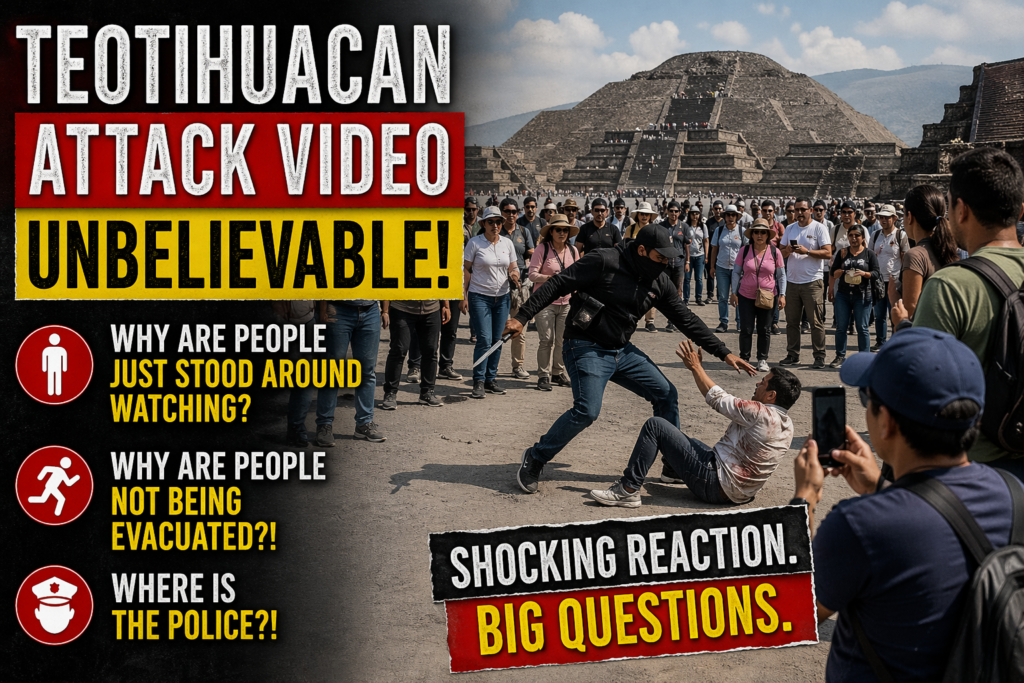
A disturbing video recorded at the historic site of Teotihuacan quickly spread across social media platforms. The footage shows a violent altercation unfolding in a crowded tourist area. What shocked viewers most was not only the incident itself, but also the reaction of those nearby.
Many bystanders appeared frozen. Some watched. Others recorded the situation on their phones. Very few intervened or attempted to help.
This response triggered intense debate online. People questioned whether fear, confusion, or social conditioning played a role. The video became more than just a viral clip it became a case study in human behavior.
Why This Incident Captured Global Attention
Teotihuacan is one of Mexico’s most visited cultural landmarks. Millions of tourists visit each year. Therefore, an incident like this challenges assumptions about safety in popular destinations.
Several factors amplified the video’s impact:
- The location was a globally recognized heritage site
- The crowd size suggested help was possible
- The lack of immediate intervention appeared unusual
- Social media accelerated the spread and reactions
As a result, the event sparked worldwide concern about public safety and emergency preparedness.
Breaking Down Crowd Behavior in Crisis Situations
What Is Crowd Psychology?
Crowd psychology studies how individuals behave when part of a larger group. In emergencies, people often act differently than they would alone.
Instead of responding quickly, individuals may look to others for cues. If no one reacts, many assume action is unnecessary or unsafe.
This creates a ripple effect of inaction.
How Group Dynamics Influence Decision-Making
In a group setting, responsibility becomes shared. This can lead to hesitation.
People may think:
- “Someone else will handle it”
- “Maybe it’s not as serious as it looks”
- “I don’t want to make things worse”
These thoughts slow down response time. In the Teotihuacan incident, this collective hesitation likely played a major role.
The Bystander Effect Explained
What Is the Bystander Effect?
The bystander effect is a psychological phenomenon where individuals are less likely to help when others are present.
The more people there are, the less personal responsibility each person feels.
Real-World Examples of the Bystander Effect
This behavior has been documented in many situations:
- Public accidents where no one immediately calls for help
- Assaults witnessed by crowds
- Emergencies in busy urban areas
The Teotihuacan video fits this pattern closely.
Why People Freeze Instead of Acting
Several psychological factors contribute:
- Diffusion of responsibility: Everyone assumes someone else will act
- Fear of danger: People worry about personal safety
- Uncertainty: It’s unclear what is happening
- Social influence: Individuals mirror others’ behavior
Together, these factors can paralyze even well-intentioned individuals.
Role of Technology: Recording vs Helping
Why Do People Film Instead of Intervene?
Modern smartphones have changed how people react to events. Recording has become almost instinctive.
There are several reasons:
- Desire to document events
- Belief that footage may help later
- Social media influence
- Emotional detachment through screens
However, this behavior raises ethical concerns.
Is Recording Ever Helpful?
In some cases, yes.
Videos can:
- Provide evidence
- Help authorities understand events
- Raise awareness
Still, recording should never replace immediate action when someone is in danger.
Emergency Response: What Went Wrong?
Delayed Reaction and Its Consequences
In the Teotihuacan incident, response time appeared slow. This delay can increase harm and escalate situations. Fast action is critical during emergencies. Even a few seconds can make a difference.
Importance of Clear Emergency Protocols
Public places must have:
- Visible security personnel
- Emergency response plans
- Clear communication systems
- Trained staff ready to act
Without these, chaos can take over quickly.
Tourist Safety at Popular Destinations
Why Tourist Sites Are Vulnerable
High-traffic areas attract diverse crowds. This increases risk factors:
- Language barriers
- Lack of local awareness
- Limited emergency knowledge
- Overcrowding
Teotihuacan, like many landmarks, faces these challenges daily.
Improving Safety Measures
Authorities can enhance protection by:
- Increasing visible security presence
- Installing surveillance systems
- Providing emergency training for staff
- Educating visitors on safety protocols
These steps can reduce risks significantly.
Human Behavior Under Stress
How Fear Affects Decision-Making
Fear triggers a natural survival response. This includes:
- Fight
- Flight
- Freeze
Many people in the video appeared to freeze. This is a common reaction during unexpected danger.
Why Freezing Is More Common Than We Think
Freezing allows the brain time to process threats. However, in fast-moving situations, this delay can be harmful.
Training and awareness can help people overcome this instinct.
Social Media’s Role in Shaping Reactions
How Viral Videos Influence Public Opinion
- The Teotihuacan video spread rapidly. Online users quickly formed opinions.
- Some criticized bystanders. Others showed empathy.
- Social media often simplifies complex human behavior into quick judgments.
The Danger of Oversimplification
It is easy to say, “I would have acted differently.” However, real-life situations are unpredictable. Understanding psychology helps explain behavior without unfair blame.
Lessons Learned from the Teotihuacan Incident
What Individuals Can Do in Emergencies
Everyone can take simple steps:
- Stay alert to surroundings
- Call emergency services immediately
- Help if it is safe to do so
- Encourage others to act
Small actions can have a big impact.
What Authorities Should Improve
Governments and site managers must:
- Strengthen emergency systems
- Train staff regularly
- Improve crowd control strategies
- Communicate clearly during crises
Preparedness saves lives.
Building Awareness Around Crisis Behavior
Why Education Matters
Understanding human behavior helps people respond better.
Public campaigns can teach:
- How to recognize emergencies
- When to act
- How to stay safe
Awareness reduces hesitation.
Encouraging Responsible Action
Society benefits when individuals take responsibility. Even simple actions like calling for help can change outcomes.
Frequently Asked Questions
What is the bystander effect?
It is a psychological phenomenon where people are less likely to help in emergencies when others are present.
Why didn’t people help in the Teotihuacan video?
Fear, confusion, and group behavior likely caused hesitation and inaction.
Is filming during emergencies wrong?
Not always, but helping should come first when someone is in danger.
How can people overcome the freeze response?
Training, awareness, and preparation can help individuals act more quickly.
Are tourist sites safe?
Most are safe, but risks exist, especially in crowded environments.
What should you do if you witness an emergency?
Call authorities, assess safety, and help if possible without risking yourself.
Can crowd behavior be predicted?
Not exactly, but patterns like the bystander effect are well documented.
How can authorities improve emergency response?
By training staff, improving communication, and increasing security presence.
Why do viral videos spread so fast?
Social media algorithms promote engaging content quickly to large audiences.
What lessons can we learn from this incident?
Awareness, preparedness, and responsibility are key to improving public safety.
Human Behavior in Crisis
The Teotihuacan incident reveals a powerful truth about human nature. In moments of crisis, people do not always act as expected. Fear, confusion, and social influence shape decisions. However, awareness can change outcomes. When people understand these behaviors, they can respond better in the future. Improving safety is a shared responsibility. Individuals, authorities, and communities must work together to create safer environments.
⚠️ Disclaimer and Source Hygiene
This article is for informational purposes only. It is based on general research in psychology, public safety studies, and widely reported behavioral patterns. For professional advice, consult qualified experts or local authorities.
🔔 For more tutorials like this, consider subscribing to our blog.
📩 Do you have questions or suggestions? Leave a comment or contact us!
🏷️ Tags: Teotihuacan attack, bystander effect, crowd psychology, emergency response, public safety, viral video analysis, crisis behavior, tourist safety, human behavior, security systems
📢 Hashtags: #TeotihuacanIncident #CrowdPsychology #BystanderEffect #EmergencyResponse #PublicSafety #CrisisBehavior #ViralVideoAnalysis #HumanBehavior #SecuritySystems #TouristSafety
📚 Sources and References
- Social psychology research on the bystander effect
- Public safety and emergency response studies
- Crowd behavior analysis reports
- Academic publications on human behavior in crises
🕊️ Secondary Sources and Testimonials
Experts in psychology emphasize that hesitation in emergencies is common and not always a sign of indifference. Testimonials from first responders often highlight how training makes a crucial difference in reaction time and effectiveness.
See also: Lightning Strike Kills Footballer During Thailand Cup Match
