

⏲️ Estimated reading time: 6 min
Table of Contents
A tragic lightning strike during the Golok FA Cup 2026 in southern Thailand claimed the life of 24-year-old footballer Sofwan Awae and injured several others. Here is what happened, why it matters, and how outdoor sporting events can improve lightning safety. (The US Sun)
A Tragic Day at the Golok FA Cup 2026
Football fans and players in southern Thailand witnessed a heartbreaking tragedy on August 4, 2026, when a lightning strike hit the pitch during a match at Santipap Stadium in Sungai Golok, Narathiwat province.
The match between Samcolts and Abu x Nong Sirin had continued despite heavy rain and stormy conditions. Around 5:00 p.m., a powerful bolt of lightning struck the field, instantly killing 24-year-old winger Sofwan Awae while leaving numerous other players injured. (The US Sun)
What Happened During the Match?
According to reports, intense rain had been falling throughout the game when the weather suddenly became even more dangerous.
Eyewitness videos show a bright flash illuminating the stadium before players collapsed onto the pitch. Teammates immediately rushed to Sofwan Awae and attempted CPR while emergency medical personnel made their way onto the field.
Despite rapid medical intervention, Sofwan could not be saved. The match was abandoned immediately after the incident. (The US Sun)
Who Was Sofwan Awae?
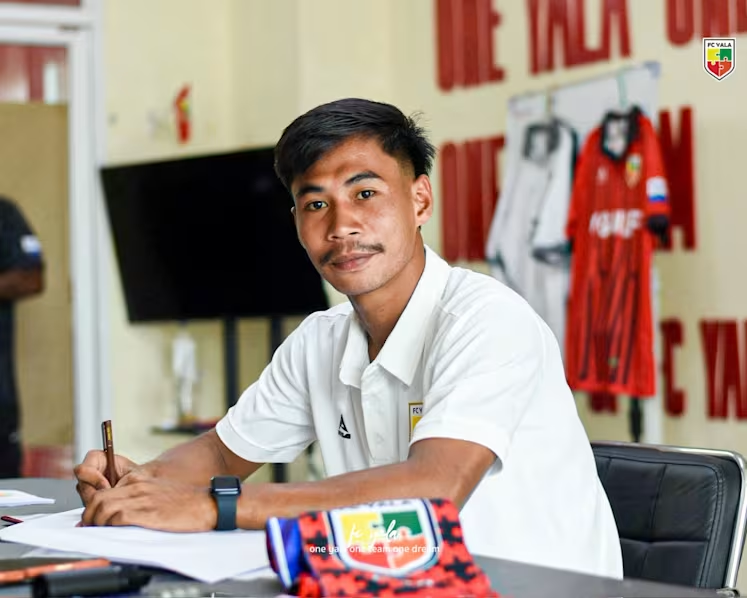
Sofwan Awae was a talented 24-year-old winger and forward who had recently achieved one of the biggest milestones of his football career by signing with Yala FC, a club competing in Thailand’s regional football system.
Friends and teammates described him as:
- Dedicated to football
- Hard-working
- Humble
- Passionate about representing his community
His sudden passing has shocked football supporters across Thailand and neighboring Malaysia.
Players Injured in the Lightning Strike
Besides the fatality, the strike injured numerous players.
Reports indicate:
- At least nine to twelve people suffered injuries.
- Malaysian footballer Mohamad Alif Ezzahan Bin Zulkifli was among those hurt.
- Several Thai players received treatment at a nearby hospital.
- Most injuries involved burns and trauma caused by the electrical discharge.
Fortunately, no additional fatalities have been reported.
Family Requests Privacy
Following the tragedy, Sofwan Awae’s family asked the public not to circulate videos showing the fatal incident.
Although footage quickly spread across social media, the family urged people to respect their grief and avoid sharing distressing images. This reminder highlights the importance of treating victims and their loved ones with dignity during tragic events.
Why Lightning Is So Dangerous on Football Fields
A football field is one of the most dangerous places to be during a thunderstorm.
Open spaces expose players directly to lightning, especially when:
- The pitch has no nearby shelter.
- Heavy rain is accompanied by thunder.
- Metal goalposts and fencing are present.
- Players remain outdoors after storm warnings.
A single lightning strike can carry hundreds of millions of volts of electricity and temperatures hotter than the surface of the sun.
Even people who are not directly struck may suffer injuries through ground current.
Should Matches Continue During Thunderstorms?
Modern sports safety guidelines strongly recommend suspending outdoor events whenever thunder or lightning is detected nearby.
Many sporting organizations follow the 30-30 Rule:
- If thunder is heard within 30 seconds of a lightning flash, play should stop immediately.
- Activities should only resume 30 minutes after the last clap of thunder.
These procedures have prevented countless injuries worldwide.
How Stadiums Can Improve Lightning Safety
This tragedy has renewed discussions about weather safety at amateur and regional sporting events.
Important measures include:
Real-Time Weather Monitoring
Organizers should continuously monitor radar and lightning detection systems.
Emergency Evacuation Plans
Every stadium should have clear evacuation procedures.
Public Warning Systems
Loudspeakers and digital displays should alert spectators immediately.
Referee Authority
Officials should have complete authority to suspend play without delay whenever severe weather threatens player safety.
Safe Shelters
Players and spectators should have access to enclosed buildings or properly protected facilities.
Impact on Football in Southern Thailand
The incident has deeply affected football communities throughout southern Thailand.
Local clubs have expressed condolences, while many supporters have shared tributes celebrating Sofwan Awae’s dedication and sportsmanship.
Yala FC also honored their newly signed player, mourning the loss of a promising athlete whose professional journey had only just begun.
Lessons for Outdoor Sports
Lightning remains one of nature’s most unpredictable hazards.
Although it cannot be prevented, many tragedies can be avoided through:
- Better planning
- Weather awareness
- Immediate match suspensions
- Player education
- Strong emergency response procedures
Safety should always take priority over completing a sporting event.
Frequently Asked Questions
Where did the lightning strike occur?
The incident happened at Santipap Stadium in Sungai Golok, Narathiwat province, Thailand.
When did the tragedy happen?
Around 5:00 p.m. on August 4, 2026.
Who died in the incident?
Twenty-four-year-old footballer Sofwan Awae.
Which teams were playing?
Samcolts and Abu x Nong Sirin during the Golok FA Cup 2026.
How many people were injured?
Reports indicate at least nine people were injured, with some sources reporting up to twelve casualties receiving medical treatment.
Was the match completed?
No. Officials abandoned the match immediately after the lightning strike.
What did Sofwan’s family request?
They asked the public not to share videos of the incident out of respect for the family.
Can football matches be suspended because of lightning?
Yes. Many football organizations immediately suspend play whenever lightning threatens player safety.
Why is lightning so dangerous on sports fields?
Players are exposed in open areas where lightning can strike directly or spread electricity across the ground.
Remembering a Promising Footballer
The death of Sofwan Awae is a heartbreaking reminder that severe weather can become deadly within seconds. His loss has united football communities across Thailand and Malaysia in mourning while reinforcing the need for stronger lightning safety procedures at every level of the sport.
Although no safety system can eliminate every risk, better weather monitoring and faster decisions to suspend matches can help prevent similar tragedies in the future.
⚠️ Disclaimer and Source Hygiene
This article is provided for informational and educational purposes only. Information is based on publicly available reports and authoritative news coverage available at the time of writing. Details may change as official investigations continue.
🔔 For more tutorials like this, consider subscribing to our blog.
📩 Do you have questions or suggestions? Leave a comment or contact us!
🏷️ Tags: lightning strike, Thailand football, Golok FA Cup 2026, Sofwan Awae, football tragedy, sports safety, lightning safety, outdoor sports, Narathiwat, football news
📢 Hashtags: Thailand #Football #LightningStrike #SportsSafety #GolokFACup #SofwanAwae #BreakingNews #FootballNews #WeatherSafety #ThailandNews
Sources and References
- The Sun – Coverage of the Golok FA Cup lightning tragedy and confirmed casualty information.
Secondary Sources and Testimonials
- Statements and tributes released by Yala FC following the death of Sofwan Awae.
