

⏲️ Estimated reading time: 21 min
Table of Contents
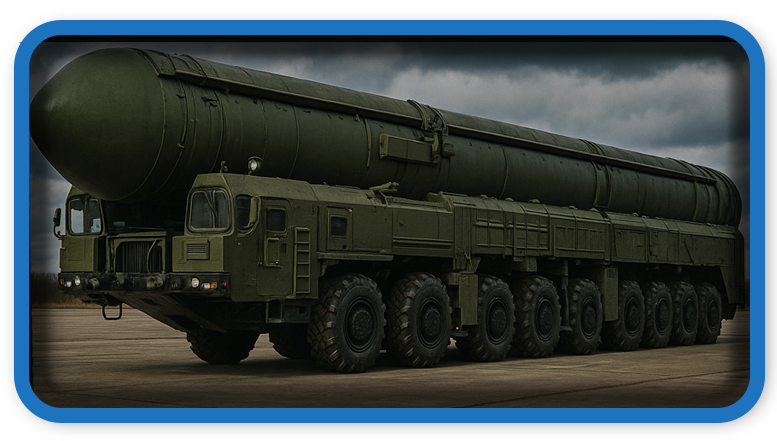
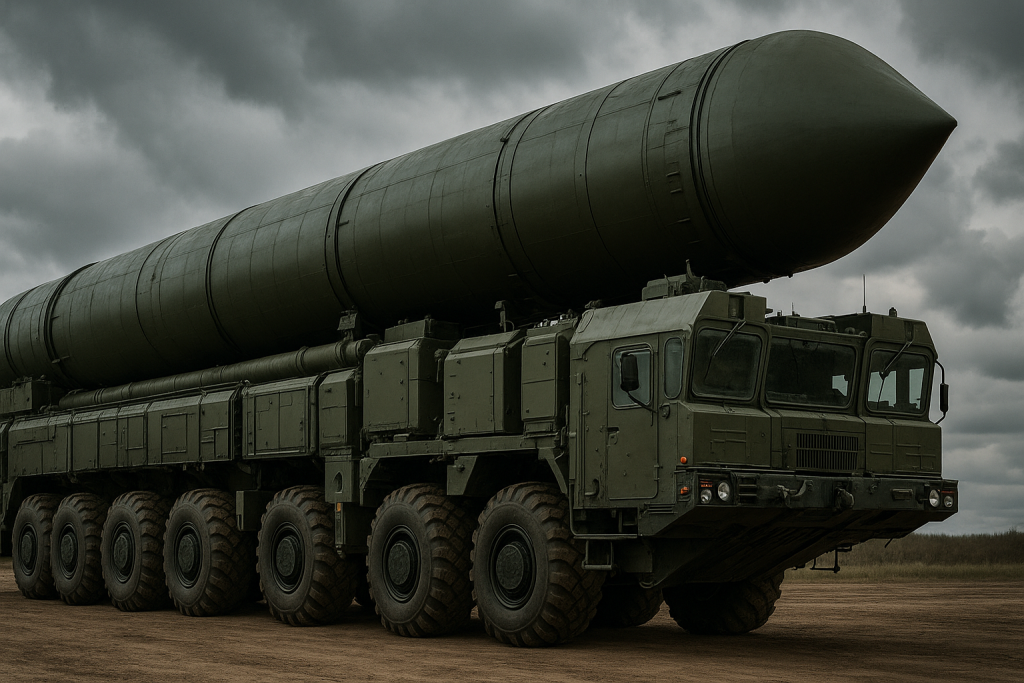
Satan 2, officially known as the Russian RS-28 Sarmat, is often described as the most powerful nuclear missile ever built. In this in-depth guide, you’ll learn what makes it so feared, how it fits into global nuclear strategy, what is fact, what is hype, and why arms control still matters.
See also: The Young Hero Who Sacrificed Everything for Love: The Story
What Makes Satan 2 So Famous – And So Feared
When people hear the nickname “Satan 2”, they immediately think of apocalyptic destruction. The image is not accidental. Satan 2 is the Western media name for RS-28 Sarmat, a Russian super-heavy intercontinental ballistic missile (ICBM) designed to carry multiple nuclear warheads across entire continents.(Wikipedia)
Russian officials and state media have presented it as a symbol of power, a weapon that can supposedly “penetrate any missile defense” and reach targets anywhere on Earth. Western outlets, in turn, often describe it as “the most destructive weapon on the planet”, which only adds more drama and confusion.(The Economic Times)
However, behind the scary nickname there is a complex mix of:
- Cold War history and the legacy of earlier Soviet heavy missiles.
- Modern technology such as MIRVs and hypersonic glide vehicles.
- Geopolitical signaling, propaganda, and psychological warfare.
- Arms control rules that still limit how many such weapons can be deployed.(Wikipedia)
This article walks through all of that in a calm, structured way. No panic, no sensationalism – just a clear look at what Satan 2 is, what it can do, and why it matters for global security.
From SS-18 “Satan” to RS-28 “Sarmat”
The Origins of the “Satan” Nickname
The nickname “Satan 2” did not come from Russia. It comes from NATO’s old reporting name “SS-18 Satan” for the Soviet/Russian R-36M heavy ICBM. That older missile was one of the most powerful ever deployed, capable of carrying multiple large warheads and serving as a central pillar of Soviet strategic forces.(Wikipedia)
When Russia began developing a new heavy ICBM to replace the aging SS-18, Western observers informally dubbed it “Satan 2” – a kind of sequel name to highlight its role as the successor. Russia, for its part, uses the official designation:
- RS-28 Sarmat (РС-28 «Сармат») – named after the ancient Sarmatian people.(Wikipedia)
So:
- SS-18 Satan = old Soviet/Russian heavy ICBM (R-36M).
- RS-28 Sarmat = new-generation heavy ICBM, informally called “Satan 2” by Western media.
Why Russia Wanted a New Heavy Missile
There are several reasons why Russia invested in Sarmat:
- Aging SS-18 fleet
The R-36M/SS-18 missiles were designed in the Cold War. Even with upgrades, they cannot last forever in silos. Components degrade, and safe operation becomes harder over time.(Wikipedia) - Maintaining “heavy ICBM” capability
Heavy ICBMs can carry a very large payload: many warheads, decoys, and penetration aids. That gives them a special place in Russian deterrence strategy because one missile can threaten many targets. - Response to missile defense
Russian officials repeatedly argue that U.S. missile-defense systems in Europe and elsewhere threaten their deterrent. A missile like Sarmat, with multiple warheads and advanced countermeasures, is presented as an answer to that perceived risk.(Wikipedia) - Symbolic value
In internal politics and international messaging, unveiling a “new super-weapon” sends a strong signal: Russia is still a major military power and cannot be ignored.
Put simply, RS-28 Sarmat is intended to keep Russia’s land-based nuclear forces credible for decades to come.
Technical Profile of Satan 2 (RS-28 Sarmat)
Size, Range and Payload
RS-28 Sarmat is classified as a super-heavy ICBM, and the numbers are impressive:(Wikipedia)
- Length: About 35.3 meters
- Diameter: Around 3 meters
- Launch weight: Around 208 tons
- Payload (“throw-weight”): Up to 10 tons
- Range: Up to 18,000 km (enough for global reach from Russian territory)
A 10-ton payload capacity is enormous by modern standards. It allows Sarmat to carry multiple warheads plus a large number of decoys and penetration aids designed to confuse missile-defense radars and interceptors.
Although exact numbers are classified, Russian media and various analyses suggest Sarmat could carry:
- Up to 10 “heavy” warheads, or
- Around 15–16 lighter warheads, or
- A mix of warheads + hypersonic glide vehicles + decoys.(Wikipedia)
MIRVs and Hypersonic Glide Vehicles
One of the key features of Satan 2 is support for MIRVs:
- MIRV stands for Multiple Independently Targetable Reentry Vehicles.
- A MIRVed missile carries several warheads that can be directed to different targets during the final phase of flight.(Wikipedia)
In practice, this means a single Sarmat missile could:
- Strike several cities or military sites at once.
- Overwhelm missile defenses by sending many warheads and decoys through the same general corridor.
Russia has also mentioned the option of carrying Avangard hypersonic glide vehicles (HGVs):(Wikipedia)
- HGVs separate from the missile in space and then glide at hypersonic speeds through the upper atmosphere.
- They can maneuver laterally and vertically, which complicates interception.
It is not publicly known whether Sarmat routinely carries Avangard vehicles or whether this is a special configuration. But the possibility adds to the perception that Sarmat is extremely hard to defend against.
Guidance, Propulsion and Launch Platform
According to open sources, RS-28 Sarmat uses a combination of inertial, astro-inertial and satellite guidance (GLONASS) to navigate.(Wikipedia)
- Inertial guidance tracks the missile’s motion internally (gyroscopes, accelerometers).
- Astro-inertial systems use star positions for additional corrections.
- GLONASS, Russia’s satellite navigation system, provides further updates.
In terms of propulsion:
- Sarmat is a three-stage, liquid-fuel missile.
- Liquid fuel allows high performance but demands careful handling and maintenance.(Wikipedia)
For launch, Sarmat is:
- Silo-based – installed in heavily protected underground silos.
- Silos are believed to be upgraded versions of those used for the older SS-18.(Wikipedia)
A short boost phase (the period when the rocket’s main engines are firing) has been highlighted by Russian officials as a way to reduce the window when satellites equipped with infrared sensors can detect and track the missile.(Wikipedia)
All these features support the same goal: to keep the missile survivable and able to reach its targets even in a heavily contested environment.
💥Is Satan 2 Really the World’s Most Powerful Missile?
What “Powerful” Actually Means
When media outlets call Satan 2 “the most powerful nuclear missile in the world”, they often mix several ideas:
- Payload capacity (how much weight it can carry).
- Number of warheads and their total explosive yield.
- Range and ability to reach targets.
- Ability to penetrate defenses.
On many of these metrics, Sarmat appears at or near the very top:
- Its range of up to 18,000 km allows it to hit nearly any point on Earth from Russia.(Wikipedia)
- Its support for MIRVs and potential HGVs gives it flexible strike options.(Wikipedia)
- Its 10-ton payload is massive compared with most modern ICBMs.(Missile Threat)
- Payload capacity:
- Up to 10 heavy nuclear warheads, or
- Up to 15 lighter MIRVs (Multiple Independently-targetable Reentry Vehicles)
- Estimated total yield:
- Between 50 and 100 megatons, making it up to 6,000 times more powerful than the Hiroshima bomb
- Speed: Hypersonic – can exceed Mach 20 upon reentry
However, it is important to understand that:
- Other nuclear powers (the United States, China) also have extremely capable ICBMs and submarine-launched missiles.
- The total destructive capability of a nuclear arsenal depends on all deployed systems, not just one missile type.
So, while Sarmat might be the heaviest and one of the most capable ICBMs, calling it “the most powerful weapon on Earth” is more a symbolic phrase than a precise technical ranking.
Comparing Satan 2 with Other Modern ICBMs
To put Satan 2 in context, consider:
- U.S. Minuteman III – an older but still reliable solid-fuel ICBM, lighter and with less payload than Sarmat, but deployed in significant numbers.
- Upcoming U.S. Sentinel ICBM – a modern replacement for Minuteman that focuses on survivability and maintainability rather than extreme throw-weight.
- Chinese DF-41 – a road-mobile ICBM that can also carry multiple warheads and reach intercontinental ranges.
These missiles are not as heavy as Sarmat, but they are integrated into powerful nuclear triads (ICBMs, submarines, bombers). The relative “power” of each must be understood in the broader strategic picture, not just as a numbers contest.
In short:
- Sarmat is probably the heaviest and most flexible single ICBM in service or near service.
- That does not mean Russia has absolute nuclear superiority, because other countries maintain robust, diversified arsenals with their own strengths.
🛠️Testing, Delays and Current Status
Early Tests and Public Demonstrations
Russia officially announced Sarmat to the world in the mid-2010s, and test launches have been conducted since then, including highly publicized firings from the Plesetsk Cosmodrome toward test ranges in the Russian Far East.(Wikipedia)
Russian leadership, including President Vladimir Putin, has repeatedly showcased Sarmat in presentations about new strategic weapons, emphasizing its:
- Long range
- Large payload
- Capability to follow “unpredictable trajectories”
These announcements were intended both for domestic audiences and for foreign governments.
Reported Failures and Setbacks
Despite confident messaging, open-source analysis suggests that development has not been smooth:
- In September 2024, satellite imagery and independent research indicated that a Sarmat test suffered a “catastrophic failure”, reportedly with the missile exploding at or shortly after launch.(Arms Control Association)
Such failures are not surprising for complex systems, but they raise questions about:
- The reliability of the system.
- The timeline for full operational deployment.
There have also been conflicting statements from Russian officials about whether Sarmat is already “on combat duty” or still in the final stages of testing and preparation.
Deployment Claims vs. Reality
Russian authorities have at times claimed that Sarmat has entered service. However, in October 2025, President Putin publicly acknowledged that Sarmat was not yet actually deployed on combat duty, although he insisted that this would happen “soon.”(The Moscow Times)
From an analytical perspective, the most reasonable view is:
- Sarmat is close to operational, with test launches and production preparations under way.
- It has not yet fully replaced the older SS-18 fleet in all silos.
- Reliability issues and industrial challenges may still be slowing large-scale deployment.(Arms Control Association)
In other words, Satan 2 is real, but the public image of a fully deployed, flawless “super-missile” is still partly aspirational and promotional.
🚀Satan 2 in Russia’s Nuclear Strategy
Deterrence and the Nuclear Triad
To understand Satan 2’s role, we need to look at Russia’s nuclear triad:
- Land-based ICBMs – in silos and on mobile launchers.
- Submarine-launched ballistic missiles (SLBMs) – carried by nuclear-powered submarines.
- Strategic bombers – aircraft that can carry nuclear bombs or cruise missiles.
RS-28 Sarmat fits into the land-based leg, specifically as a heavy silo-based ICBM. Its main strategic function is deterrence:
- To convince potential adversaries that any nuclear attack on Russia would provoke a devastating response.
- Heavy missiles with many warheads help ensure that even if some forces are destroyed, enough capability survives to inflict unacceptable damage.(Grokipedia)
Role Alongside Other Russian Systems
Sarmat is not alone. It exists alongside:
- Lighter ICBMs such as the road-mobile Yars.
- SLBMs like Bulava, deployed on Borei-class submarines.
- Air-launched cruise missiles carried by Tu-95 and Tu-160 bombers.
Russia also highlights Avangard hypersonic glide vehicles and other advanced systems as part of its deterrent toolkit.
In this mosaic, Satan 2 serves as:
- A flagship symbol of Russian technological reach.
- A high-capacity strike platform that can deliver many warheads over very long distances.
- A bargaining chip in future arms-control negotiations, since heavy ICBMs are always of special interest in such talks.
Arms Control, New START and Satan 2
How New START Limits Apply
The New START Treaty between the United States and Russia, signed in 2010, places limits on:(Wikipedia)
- Deployed strategic nuclear warheads – capped at 1,550.
- Deployed ICBMs, SLBMs and heavy bombers – capped at 700.
- Total launchers (deployed + non-deployed) – capped at 800.
Sarmat, as a heavy ICBM, would fall under these limits. Each RS-28 missile counts as:
- One launcher under the treaty.
- The actual number of warheads on it counts toward the 1,550 cap (unlike older treaties that used simplified counting rules).
This means that even if Sarmat could theoretically carry 16 warheads, Russia would need to respect the overall warhead limit, unless the treaty collapses or is replaced by something different.
Treaty Uncertainty and Political Signaling
In recent years, tensions over Ukraine and broader geopolitical issues have led to serious strains on New START:
- Russia suspended its participation in inspections and some obligations in 2023.
- However, it has indicated at times that it will informally respect the numerical limits, and in September 2025 President Putin signaled willingness to abide by New START limits for an additional year after the treaty’s scheduled expiration in February 2026, if the U.S. reciprocates.(AP News)
This uncertain environment increases the symbolic value of new weapons like Sarmat. Each test, announcement, or deployment claim sends messages not just about military capabilities, but also about:
- How Russia views its relationship with the West.
- Whether the world is headed toward more arms control or a new arms race.
In that sense, Satan 2 is about politics as much as physics.
Risks, Misconceptions and Media Myths
“One Missile Can Destroy an Entire Country” – Reality Check
You will often see dramatic headlines saying that Satan 2 can “wipe out a country the size of France or Texas” in one go. These claims are oversimplified and often misleading.
Yes, a fully armed Sarmat with many high-yield warheads would be catastrophically destructive if ever used. But:
- Modern nuclear planning focuses on multiple missiles and many targets, not a single all-or-nothing strike.
- The exact effects of nuclear explosions depend on yield, altitude, local geography, weather, and many other factors.
- Talking in terms of “erasing entire countries” is more rhetoric than serious military analysis.
The real danger of Satan 2 is not that it “alone can destroy a country”, but that it is part of a larger arsenal that could, if unleashed, cause global catastrophe.
Do Hypersonic Weapons Make Defense Impossible?
Another common myth is that Sarmat’s ability to carry hypersonic glide vehicles makes defense completely impossible.
Reality is more nuanced:
- Hypersonic glide vehicles are very hard to intercept with current systems, because they can maneuver and approach from different angles.(Wikipedia)
- However, even “traditional” ICBM warheads are already extremely challenging to stop, given their high speed during reentry.
- Defensive systems (like U.S. Ground-based Midcourse Defense or regional missile shields) were never designed to stop a full-scale strategic barrage from a major power. They focus on limited threats.
So, while hypersonic technology adds complication, it does not fundamentally change the core logic: nuclear deterrence between major powers remains based primarily on the certainty of mutual vulnerability, not on perfect shields.
Escalation, Miscalculation and Human Error
When discussing Satan 2, it is tempting to focus only on hardware, warhead yields and technical specs. But many experts emphasize that the greatest danger is not technology itself, but human decision-making:
- Misinterpretation of radar or satellite data during a crisis.
- Communication failures between leaders.
- Cyber interference with early-warning or command-and-control systems.
- Escalation spirals, where limited conventional conflict slowly or suddenly escalates to nuclear use.(Congress.gov)
In that context, Satan 2 is one more variable in a fragile system. Its existence may influence risk perception and crisis behavior, even if it is never fired in anger.
⚠️How Likely Is Satan 2 Ever to Be Used?
The Nuclear “Taboo” and Strategic Logic
Since 1945, nuclear weapons have been used in war only twice, both times by the United States against Japan (Hiroshima and Nagasaki). Ever since, a powerful “nuclear taboo” has emerged: a widely shared belief that using nuclear weapons would be morally, politically and strategically catastrophic.
Most nuclear doctrines, including Russia’s, frame nuclear weapons primarily as deterrents, not as tools for regular battlefield use. They are meant to:
- Prevent large-scale war between major powers.
- Guarantee retaliation if one side is attacked with nuclear weapons.
Even in Russia’s latest discussions about reviewing its nuclear doctrine, the central logic remains that nuclear use would be reserved for extreme scenarios, such as existential threats to the state.(Le Monde.fr)
From this perspective, the probability that Satan 2 will ever be launched in a real nuclear war is still very low – because doing so would almost certainly trigger massive retaliation and global disaster.
Crisis Scenarios Experts Worry About
Low probability, however, does not mean zero. Analysts worry about scenarios where:
- Conventional wars (for example, around NATO’s borders or in Asia) intensify and one side fears losing.
- There is pressure to “signal resolve” by raising the alert level of nuclear forces or conducting “demonstration” nuclear tests.
- One side misreads the other’s actions and concludes that a nuclear attack is underway.
In any such scenario, the existence of weapons like Sarmat adds:
- More options for planners.
- More targets for opposing forces.
- More complexity, which can increase the risk of miscalculation.
So while the direct use of Satan 2 in war is unlikely under normal conditions, its indirect impact on crisis dynamics is a genuine concern for policymakers and experts.
🧠What Ordinary People Should Take From All This
Why It Helps to Understand Nuclear Weapons
You might wonder: “Why should I care about detailed information about Satan 2? I can’t influence it.”
In fact, public understanding matters more than it seems:
- Democracies make decisions about defense budgets, foreign policy and arms control treaties based partly on public opinion.
- Politicians often respond to fear-based headlines. If citizens understand the reality behind the hype, they are better equipped to demand responsible policies.
- Knowing how deterrence, arms control, and escalation work makes it easier to see through propaganda and panic-driven narratives.
Understanding Satan 2 is not about glorifying destructive technology. It is about seeing clearly what is at stake and why reducing nuclear risks remains crucial.
Constructive Ways to Reduce Nuclear Dangers
As an individual, you cannot dismantle a missile silo. But there are still meaningful things you can support:
- Arms Control and Verification
Encouraging your representatives and governments to negotiate, maintain and improve treaties like New START – or future equivalents – helps cap numbers and create transparency.(Wikipedia) - Crisis Communication Channels
Hotlines, military-to-military dialogues, and regular diplomatic contacts reduce the risk of misunderstandings during tense times. - Nuclear Risk-Reduction Measures
These may include changes to alert levels, launch procedures, or posture that buy time for decision-makers and reduce the chance of accidental war. - Public Education and Debate
Supporting journalism, research institutions, and educational projects that treat nuclear issues with seriousness and nuance, not just sensationalism.
By paying attention and staying informed, citizens can create an environment where leaders feel more pressure to pursue stability and arms control, not only military showmanship.
Frequently Asked Questions
What is Satan 2 and why is it called that?
Satan 2 is the Western media nickname for RS-28 Sarmat, a Russian super-heavy intercontinental ballistic missile (ICBM) designed to replace the older Soviet SS-18 “Satan” missile. NATO originally called the older missile “Satan,” so observers informally named the new one “Satan 2” as its successor.(Wikipedia)
Is Satan 2 really the most powerful nuclear missile in the world?
In terms of payload capacity and range, Sarmat is one of the most powerful ICBMs ever built. It can reportedly carry up to 10 tons of payload and reach around 18,000 km. However, “most powerful” is partly a media label; other countries also field extremely capable missiles, and overall nuclear strength depends on the entire arsenal, not just one system.(Wikipedia)
How many warheads can Satan 2 carry?
Open-source estimates suggest Sarmat can carry up to 10 heavy or 15–16 lighter nuclear warheads, or a combination of warheads and hypersonic glide vehicles plus decoys and penetration aids. The exact configuration is classified, and under New START the total number of deployed warheads is capped regardless of one missile’s maximum capacity.(Wikipedia)
Is Satan 2 already deployed and operational?
Russian officials have at times claimed that Sarmat is on “combat duty,” but the picture is mixed. A catastrophic test failure was reported in 2024, and in October 2025 President Putin admitted that Sarmat was not yet deployed, though he said it would be “soon.” Most analysts believe the missile is close to operational but not yet fully deployed across all intended silos.(Arms Control Association)
Can any missile-defense system stop Satan 2?
Current missile-defense systems are not designed to reliably stop a large-scale strategic attack involving many ICBMs and warheads. Sarmat’s heavy payload and ability to carry MIRVs, decoys and possibly hypersonic glide vehicles make it especially hard to intercept. However, this is also true for many modern strategic missiles; the fundamental logic of nuclear deterrence is based on mutual vulnerability, not perfect defense.(Missile Threat)
Could Satan 2 destroy an entire country with a single launch?
This is a common exaggeration. A fully loaded Sarmat would be enormously destructive and could hit many targets, but the idea of “erasing an entire country” is more rhetorical than realistic. Modern nuclear planning involves multiple missiles, multiple targets, and complex scenarios. The true danger lies in the cumulative effects of an entire arsenal, not a single missile.
How does Satan 2 affect global security?
Sarmat contributes to Russia’s nuclear deterrent and is used to send a political message about its military capabilities. At the same time, it complicates arms control, missile-defense planning and crisis stability. For these reasons, experts view it as both a technological achievement and a risk factor in an already fragile global security environment.(Grokipedia)
What can be done to reduce the risk that Satan 2 will ever be used?
The most effective measures include:
- Preserving and updating arms-control agreements that limit deployed warheads and launchers.
- Maintaining communication channels between nuclear powers.
- Implementing risk-reduction steps, such as improved early-warning coordination and clear crisis protocols.
- Supporting public debate and expert analysis that focuses on real risks, not just sensational headlines.(Wikipedia)
Key Lessons for a World Living with Satan 2
Satan 2, or RS-28 Sarmat, is more than a frightening name. It is the latest chapter in a decades-long story about nuclear deterrence, technological competition and arms control.
Looking at the facts, we can say that:
- Sarmat is an extremely capable heavy ICBM with long range and a very large payload.
- Technical and industrial challenges have delayed full deployment, despite ambitious political announcements.
- The missile exists within a framework of treaties, doctrines and strategic calculations, not as a free-floating “doomsday device.”
- Its real significance lies in how it shapes perceptions of power, crisis behavior, and negotiations over the future of nuclear arms control.
For ordinary people, the lesson is not to live in constant fear of one missile, but to recognize the importance of responsible leadership, informed public debate, and robust international agreements that keep weapons like Sarmat permanently in the realm of deterrence, never in the realm of use.
The Worst and the Most Dangerous Jobs in the World
🟦 Disclaimer and Source Hygiene:
This article is for informational and educational purposes only. It does not endorse or promote nuclear weapons or any form of violence. Technical details, numbers and timelines are drawn from publicly available sources such as official treaty documents, governmental statements, and reputable research organizations and news outlets. Because nuclear programs evolve and many details remain classified, some information may be approximate or subject to revision. For critical decisions or professional analysis, always consult up-to-date reports from qualified experts and official institutions.
🔔 For more tutorials like this, consider subscribing to our blog.
📩 Do you have questions or suggestions? Leave a comment or contact us!
🏷️ Tags: Satan 2 missile, RS-28 Sarmat, Russian nuclear weapons, intercontinental ballistic missiles, nuclear deterrence, New START treaty, hypersonic glide vehicles, strategic arms control, global security, Cold War legacy
📢 Hashtags:
