


⏲️ Estimated reading time: 6 min
Table of Contents
Clint Eastwood – Tribute to a Living Legend of Cinema. Clint Eastwood is one of the last titans of cinema, a complete artist who redefined the western, the crime thriller, and intimate drama. This tribute honors his life, career, directing style, values, and legacy as one of Hollywood’s greatest icons.
Why a Tribute to Clint Eastwood, Now
Clint Eastwood is not only a Hollywood legend; he is a cultural phenomenon who has shaped cinema for over seven decades. For audiences worldwide, his name evokes freedom, moral complexity, stoic silence, courage, and relentless creativity. In an industry ruled by trends and spectacle, Eastwood has remained constant: filming quickly, telling stories about real people, and avoiding unnecessary glamour.
This article is not an obituary it is a living tribute. At 95, Eastwood continues to inspire filmmakers and movie lovers alike. His legacy deserves recognition while he is still here, shaping art and culture with quiet determination.
Early Years: From “Rawhide” to the Man With No Name
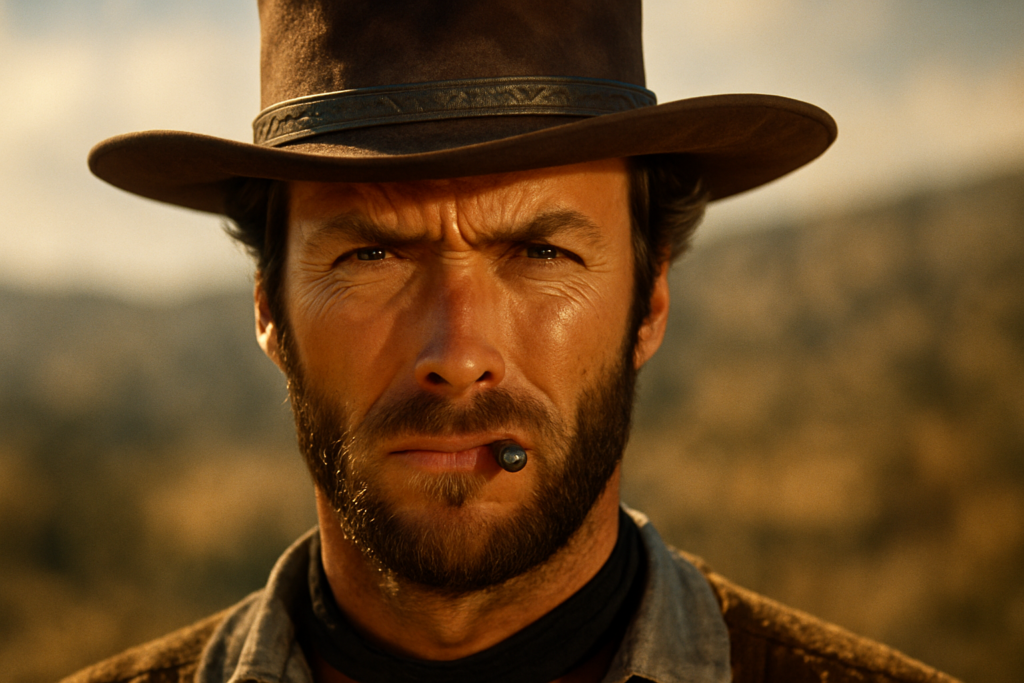
Before conquering cinema, Eastwood made his mark on television in the series “Rawhide”. But his destiny changed when he teamed up with Italian director Sergio Leone. Together they revolutionized the western with the Dollars Trilogy: “A Fistful of Dollars”, “For a Few Dollars More”, and “The Good, the Bad and the Ugly.”
With his poncho, squint, and few words, Eastwood became the ultimate symbol of the antihero. Leone’s landscapes, Ennio Morricone’s music, and Eastwood’s presence created a new mythology for the western genre gritty, morally ambiguous, and unforgettable.
The Spaghetti Western Revolution
The Dollars Trilogy proved that old genres could be reborn. Heroes were no longer pure, villains were layered, and endings weren’t always comforting. The impact of these films shaped generations of filmmakers, from Hollywood neo-westerns to modern cinema.
“Dirty Harry” and the Ethics of Justice
In the 1970s, Eastwood became a second cultural icon through Harry Callahan, the tough San Francisco cop. The “Dirty Harry” series raised debates about crime, authority, and morality. Was Harry a necessary hero or a dangerous symbol of vigilante justice? Eastwood kept the answer ambiguous, leaving the audience to wrestle with it.
A Line That Became Legend
“Do you feel lucky, punk?” transcended cinema it became part of cultural language. Yet beneath the coolness, the films forced viewers to confront uncomfortable truths about violence, justice, and society.
Becoming a Director: From Actor to Auteur
Few stars transition as gracefully to directing as Clint Eastwood. His debut, “Play Misty for Me” (1971), was already a psychological exploration. Over the decades, he delivered masterpieces that shaped modern cinema:
- “Unforgiven” (1992) – a brutal anti-western, deconstructing the myths of violence and glory.
- “Mystic River” (2003) – a haunting tragedy about guilt, destiny, and irreversible mistakes.
- “Million Dollar Baby” (2004) – heartbreaking meditation on dignity, sacrifice, and love.
- “Letters from Iwo Jima” (2006) – a rare act of empathy, telling war through the enemy’s eyes.
- “Gran Torino” (2008) – a testament to redemption, prejudice, and passing moral legacy.
- “American Sniper” (2014) – controversial yet powerful, sparking debates on war and heroism.
- “Sully” (2016) – restrained storytelling, celebrating human professionalism.
- “The Mule” (2018) and “Richard Jewell” (2019) – portraits of flawed, ordinary people.
- “Cry Macho” (2021) and “Juror #2” – proof that Eastwood keeps creating, even in his 90s.
Eastwood’s Style: Simplicity and Truth
As a director, Eastwood avoids excess. He shoots fast, keeps natural light, trusts his actors, and favors clarity. His films feel timeless because they focus on story, silence, and humanity not spectacle.
Core Themes: Guilt, Honor, Responsibility
Eastwood’s films ask fundamental questions:
- What does it mean to do the right thing?
- When does violence become a trap for the soul?
- How far can one go to protect others?
In “Unforgiven”, heroism is poisoned by trauma. “Mystic River”, justice punishes the innocent. In “Million Dollar Baby”, love demands sacrifice. His cinema thrives in the gray zone, rejecting black-and-white morality.
Eastwood and His Actors
As a director, Eastwood is admired for respecting his crew, avoiding endless takes, and pushing actors toward truth. Under his direction, actors gave career-defining performances:
- Sean Penn & Tim Robbins (Oscar winners for Mystic River)
- Hilary Swank & Morgan Freeman (Oscar winners for Million Dollar Baby)
- Bradley Cooper (American Sniper)
- Tom Hanks (Sully)
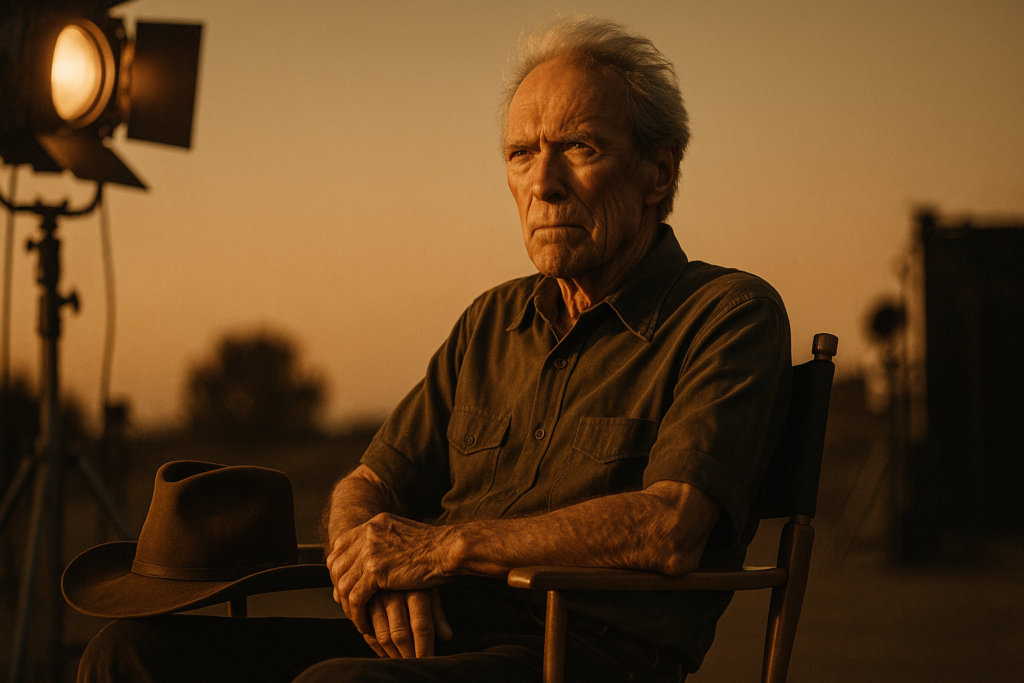
Eastwood’s sets are known for calm efficiency. He trusts his actors, and they reward him with unforgettable authenticity.
Creative Longevity: A Life’s Lesson
Eastwood’s career spans more than 60 years at the highest level. His longevity is not just physical it’s spiritual. He stays curious, embraces new stories, and avoids repeating himself. He shows that reinvention is possible without losing identity.
Cultural Legacy: Between Myth and Measure
Clint Eastwood is both myth and standard. As the “Man With No Name” or Harry Callahan, he embodies cinematic archetypes. As a director, he sets the bar for storytelling, efficiency, and humanity in film.
His Influence
From modern neo-westerns to intimate dramas, Eastwood’s fingerprints are everywhere. His films proved that simplicity, empathy, and moral depth never go out of style.
The Man Behind the Camera
Off-screen, Eastwood is disciplined, discreet, and grounded. He avoids publicity noise, focuses on work, and lives by a code of respect. His work ethic quiet, consistent, and precise may be his greatest lesson to younger filmmakers.
Why We Still Love Him
New generations continue to discover Eastwood. Despite lacking CGI spectacle, his films remain modern because they ask timeless questions: Who are we when no one is watching? What does it cost to do the right thing?
Seven Essential Films to Revisit
- The Good, the Bad and the Ugly – the birth of a legend.
- Dirty Harry – iconic, morally complex.
- The Outlaw Josey Wales – transitional western, human and conflicted.
- Unforgiven – deconstruction of myth, masterpiece.
- Mystic River – heavy tragedy, unforgettable.
- Million Dollar Baby – heartbreak and love.
- Gran Torino – testament to redemption and legacy.
Life Lessons From Clint Eastwood
- Keep it simple. The story is everything.
- Respect time. Yours and others’.
- Stay curious. Explore new themes.
- Embrace nuance. Truth isn’t black and white.
- Value character. Charisma fades, integrity remains.
A Living Tribute
The best tribute is made while someone is still alive. Clint Eastwood has given the world decades of unforgettable cinema. The greatest way to honor him is to rewatch, share, and discuss his work not out of nostalgia, but gratitude.
Clint Eastwood Tribute
You may also be interested in: How Much Peaky Blinders Actors Earned
Clint Eastwood proves that greatness is not about noise it is about clarity. In a fast, loud world, he reminds us to slow down, to let silence and images speak. His legacy is living, breathing, and still growing.
Thank you, Clint Eastwood for the stories, the lessons, and the humanity.
🔔 For more tutorials like this, consider subscribing to our blog.
📩 Do you have questions or suggestions? Leave a comment or contact us!
🏷️ Tags: Clint Eastwood tribute, Clint Eastwood movies, Dirty Harry, Unforgiven, Mystic River, Million Dollar Baby, Gran Torino, Clint Eastwood director, Hollywood legend, cinema tribute
📢 Hashtags: #ClintEastwood #Tribute #HollywoodLegend #CinemaIcon #DirtyHarry #Unforgiven #MillionDollarBaby #GranTorino #FilmLegend #MovieHistory
