

⏲️ Estimated reading time: 36 min
Table of Contents
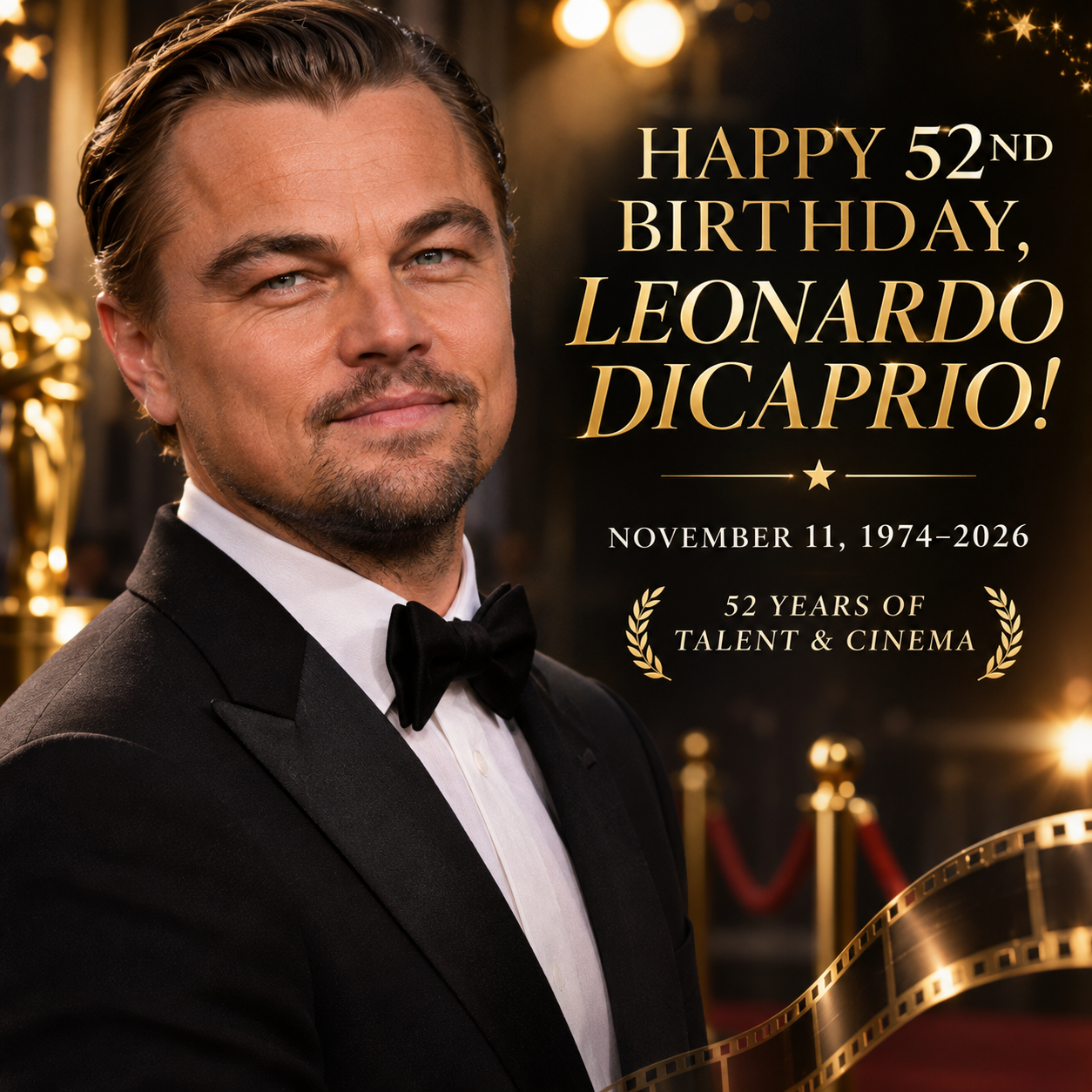
Celebrate Leonardo DiCaprio’s 52nd birthday on November 11, 2026, with a heartfelt look at his extraordinary Hollywood journey. From Titanic and Inception to his Oscar-winning performance in The Revenant, discover the films, achievements, environmental advocacy, and unforgettable moments that have shaped his remarkable career.
Happy 52nd Birthday, Leonardo DiCaprio: Celebrating a Hollywood Legend
On November 11, 2026, the world celebrates the 52nd birthday of one of Hollywood’s most recognizable and accomplished actors, Leonardo DiCaprio. For more than three decades, he has entertained audiences with performances that combine emotional depth, intelligence, intensity, and a remarkable commitment to storytelling. From his early days as a promising young performer to his position among the most respected names in international cinema, DiCaprio has built a career that continues to inspire movie lovers around the world.
Born on November 11, 1974, in Los Angeles, California, Leonardo Wilhelm DiCaprio became a global superstar through a combination of natural talent, careful career choices, and extraordinary dedication. His filmography includes romantic dramas, psychological thrillers, historical adventures, crime stories, and ambitious science-fiction productions. Yet his influence extends beyond acting. As a producer and environmental advocate, he has used his international recognition to support creative filmmaking and raise awareness about important global challenges.
Today, as Leonardo DiCaprio turns 52, his birthday offers the perfect opportunity to revisit the movies that made him famous, appreciate the artistic achievements that define his career, and celebrate the determination behind his success. Whether audiences first discovered him in Titanic, admired his imagination-driven performance in Inception, or applauded his Oscar-winning role in The Revenant, his work has created lasting memories across generations.
Leonardo DiCaprio at 52: A Special Birthday Celebration
Turning 52 represents another meaningful milestone in Leonardo DiCaprio’s extraordinary life. Unlike many performers whose careers revolve around a single successful character or franchise, DiCaprio has continuously reinvented himself. Each decade has brought different artistic challenges, new collaborations, and increasingly complex roles. His willingness to take creative risks has helped him remain relevant in an entertainment industry that changes constantly.
For longtime admirers, his birthday is more than an occasion to remember famous films. It is also an opportunity to recognize the years of preparation, physical commitment, and emotional dedication behind those performances. DiCaprio has repeatedly demonstrated that memorable acting requires more than popularity. It demands curiosity, discipline, and a willingness to explore unfamiliar characters. These qualities have helped transform him from a teenage television actor into a celebrated international film star.
His 52nd birthday also highlights the remarkable longevity of his career. Few actors who achieved worldwide fame during the 1990s have maintained a similarly prominent position in major filmmaking for so many years. DiCaprio has done so by choosing varied projects, working with respected directors, and prioritizing stories that challenge both performers and audiences. His career reminds aspiring artists that sustained success often comes from thoughtful decisions rather than simply following the latest trends.
Leonardo DiCaprio’s Birthday and Personal Details
Leonardo Wilhelm DiCaprio was born on November 11, 1974, in Los Angeles, California, United States. His zodiac sign is Scorpio, and he celebrates his 52nd birthday in 2026. He is internationally known as an actor, film producer, and environmental advocate. His most widely recognized films include Titanic, The Aviator, The Departed, Inception, The Wolf of Wall Street, The Revenant, and Once Upon a Time in Hollywood.
His Academy Award for Best Actor, received in 2016 for The Revenant, remains one of the defining moments of his professional journey. However, his accomplishments cannot be measured by a single award. His influence comes from decades of memorable performances, successful collaborations, and a consistent commitment to ambitious cinema. That combination has made him a familiar name to audiences who grew up watching his earliest films and younger viewers discovering his work for the first time.
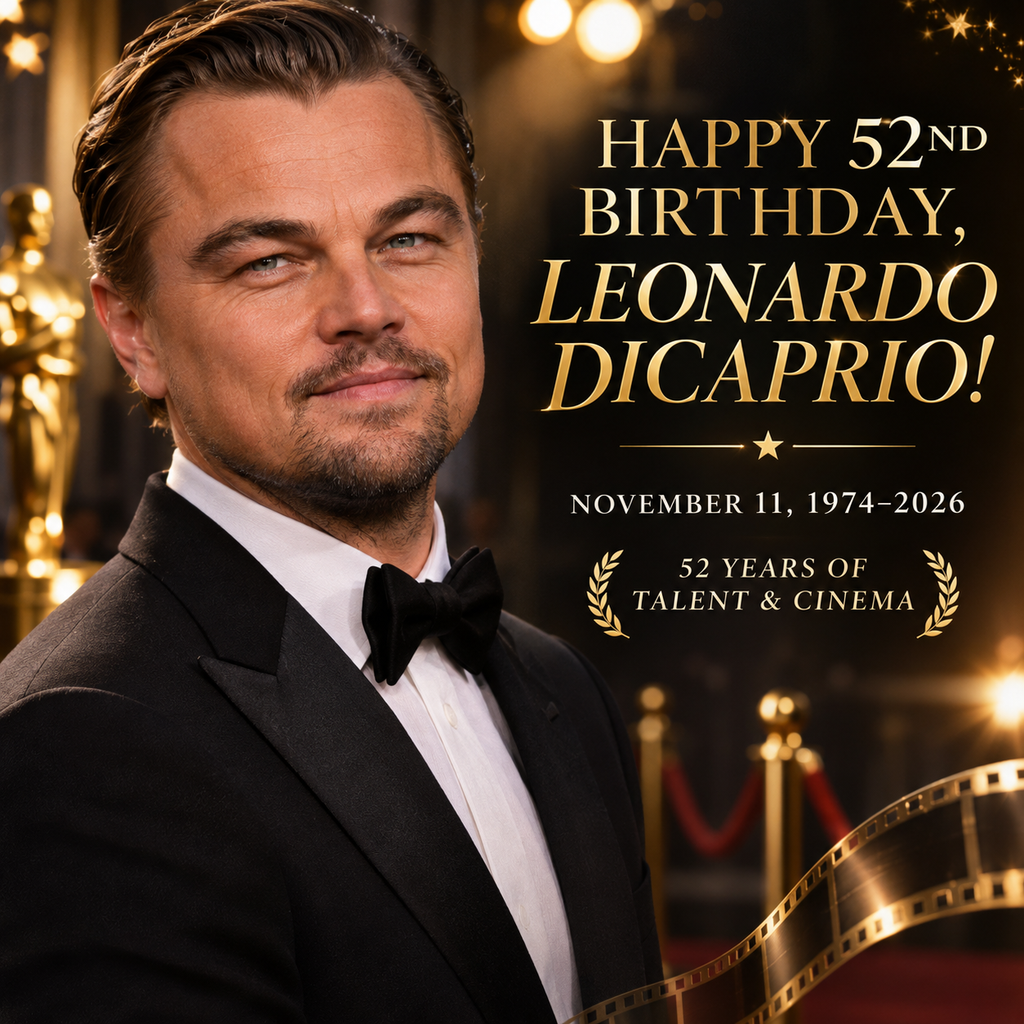
Leonardo DiCaprio’s 52nd Birthday Tribute
Early Life: The Beginning of Leonardo DiCaprio’s Journey
Leonardo DiCaprio grew up in Los Angeles, surrounded by a city closely associated with film, television, and artistic expression. His parents, George DiCaprio and Irmelin Indenbirken, supported his early development. His father worked in publishing and the underground comics scene, while his mother played an important role in encouraging his interests. Although his parents separated when he was young, both remained involved in his upbringing. These early experiences introduced him to different creative influences and helped shape his curiosity about people and storytelling.
His childhood was not defined by immediate Hollywood success. Like many aspiring performers, he faced auditions, uncertainty, and competition before finding meaningful opportunities. He began appearing in television commercials and gradually moved into television roles. These experiences provided valuable exposure to professional productions and helped him understand the discipline required to work in entertainment. Rather than becoming an overnight success, DiCaprio developed his abilities through a series of small opportunities that eventually opened the door to more demanding performances.
One of his early television appearances came in Growing Pains, where he played Luke Brower. The role introduced him to a broader audience and helped establish his reputation as a promising young actor. Yet it was his transition into feature films that truly revealed his potential. Even during these early years, he showed an ability to portray vulnerability, emotional conflict, and complicated personalities. Those qualities would later become defining characteristics of his most celebrated work.
What’s Eating Gilbert Grape: The Performance That Changed Everything
In 1993, Leonardo DiCaprio appeared alongside Johnny Depp in What’s Eating Gilbert Grape, directed by Lasse Hallström. He portrayed Arnie Grape, a young man with an intellectual disability whose relationship with his family forms an important part of the film’s emotional story. The performance required sensitivity, preparation, and careful attention to character development. DiCaprio approached the role with an intensity that surprised many viewers and demonstrated that his abilities extended far beyond conventional teenage acting.
The film earned DiCaprio his first Academy Award nomination, in the Best Supporting Actor category. He was still a teenager, making the recognition especially significant. Although he did not win, the nomination introduced him to the wider film industry as an actor capable of delivering serious dramatic performances. It also helped establish a pattern that would continue throughout his career: choosing emotionally demanding characters and exploring their personalities with considerable detail.
Looking back, What’s Eating Gilbert Grape represents one of the most important turning points in his early career. The film showed that a young performer could attract critical attention without relying on spectacle or commercial popularity. For DiCaprio, it opened the door to more challenging projects and provided an early foundation for the artistic reputation he would build over the following decades.
Titanic: The Movie That Made Leonardo DiCaprio a Global Superstar
When Titanic arrived in theaters in 1997, Leonardo DiCaprio’s career entered an entirely new chapter. Directed by James Cameron, the romantic historical drama told a fictional love story against the background of the real Titanic disaster. DiCaprio played Jack Dawson, a young artist who falls in love with Rose DeWitt Bukater, portrayed by Kate Winslet. Their relationship became the emotional center of a film that combined romance, tragedy, and ambitious cinematic spectacle.
The extraordinary success of Titanic transformed DiCaprio into an international celebrity. Audiences connected with Jack’s optimism, generosity, and willingness to challenge social expectations. His chemistry with Kate Winslet helped make the relationship memorable, while the film’s dramatic conclusion left a lasting impression on viewers. For many people, Jack Dawson remains one of the most recognizable romantic characters in modern cinema. The role introduced DiCaprio to millions of moviegoers who had not followed his earlier performances.
Beyond its cultural influence, Titanic became a historic box-office success and won 11 Academy Awards, including Best Picture. Although DiCaprio did not receive an Oscar nomination for his performance, the film dramatically expanded his international recognition. It also presented a difficult career decision. He could have continued pursuing similar romantic roles, but instead chose projects that allowed him to develop a broader artistic identity. That decision became essential to his long-term success.
Why Jack Dawson Remains an Unforgettable Character
Jack Dawson continues to resonate because he represents freedom, hope, and the possibility of meaningful connection across social boundaries. His relationship with Rose challenges the expectations surrounding wealth and class, giving the film an emotional dimension beyond its historical setting. DiCaprio portrayed Jack with warmth and spontaneity, allowing audiences to experience the character’s excitement, humor, and vulnerability. Those qualities helped make the story accessible to viewers from different generations.
The enduring popularity of Titanic also demonstrates the importance of character development in large-scale filmmaking. While the production featured elaborate sets, impressive visual effects, and a famous soundtrack, its emotional impact depended heavily on the relationship between its central characters. DiCaprio and Winslet brought that relationship to life in a way that remained memorable long after the original theatrical release. Their professional friendship has also continued to attract public interest.
For DiCaprio, the film created opportunities while introducing the pressures of international fame. His subsequent choices suggested a desire to be recognized for the quality of his performances rather than celebrity status alone. That distinction helps explain why his career continued evolving after the extraordinary attention surrounding Titanic. Instead of remaining associated exclusively with Jack Dawson, he gradually established himself through a wide range of challenging characters.
From Hollywood Heartthrob to Serious Dramatic Actor
Following the enormous success of Titanic, Leonardo DiCaprio faced expectations that might have limited another performer’s career. He had become one of the most recognizable young actors in the world, but public attention did not automatically guarantee artistic credibility. Rather than concentrating on conventional romantic leads, he pursued films that explored identity, ambition, morality, and human behavior. These decisions helped him move beyond the image associated with his early fame.
Projects such as The Beach, Catch Me If You Can, and Gangs of New York allowed him to experiment with different genres and personalities. In Catch Me If You Can, directed by Steven Spielberg, he portrayed Frank Abagnale Jr. in a stylish crime drama inspired by stories associated with the real-life figure. The film demonstrated his ability to combine charm, humor, vulnerability, and dramatic tension. His performance also highlighted the growing confidence with which he approached leading roles.
Gangs of New York, released in 2002, marked the beginning of his important professional relationship with director Martin Scorsese. Their collaboration would eventually become one of the most significant partnerships in contemporary American cinema. By working with filmmakers who emphasized character complexity and ambitious storytelling, DiCaprio continued developing his craft. His career during this period illustrates how deliberate artistic choices can help performers overcome expectations created by an early commercial breakthrough.
The Aviator: Bringing Howard Hughes to the Screen
In The Aviator, released in 2004, DiCaprio portrayed aviation pioneer and filmmaker Howard Hughes. Directed by Martin Scorsese, the biographical drama explored Hughes’s ambitions, achievements, personal relationships, and struggles with obsessive-compulsive symptoms. The character demanded a performance capable of communicating both extraordinary confidence and profound vulnerability. DiCaprio approached the role with careful attention to the contradictions that made Hughes such a complicated historical figure.
His performance earned an Academy Award nomination for Best Actor and won him a Golden Globe for Best Actor in a Motion Picture Drama. The recognition strengthened his reputation as a serious dramatic performer. More importantly, the film demonstrated his willingness to explore difficult psychological material without reducing the character to a simple collection of personality traits. Through Hughes, DiCaprio examined the relationship between ambition, creativity, control, and personal suffering.
The success of The Aviator also reinforced the value of his collaboration with Scorsese. Both artists shared an interest in stories involving complicated individuals whose decisions create significant consequences. Their work together encouraged DiCaprio to take on increasingly ambitious projects. As his career progressed, he became known for portraying characters who are often intelligent, driven, conflicted, and sometimes deeply flawed.
Inception: Leonardo DiCaprio and the Power of Imagination
In 2010, Leonardo DiCaprio starred in Christopher Nolan’s Inception, one of the most widely discussed science-fiction films of its era. He portrayed Dom Cobb, a specialist who enters dreams to extract information and manipulate ideas. The film combined elaborate action sequences with philosophical questions about memory, guilt, reality, and personal identity. Its unusual narrative structure challenged viewers to follow multiple layers of dreaming while remaining emotionally connected to the central character.
DiCaprio’s performance helped give the ambitious concept a human foundation. Beneath the complex rules of dream manipulation, Cobb is a man struggling with grief and the consequences of his past. His desire to return to his children provides an emotional motivation that audiences can understand even when the story becomes increasingly complicated. This balance between intellectual storytelling and personal drama contributed significantly to the film’s appeal.
Inception became both a commercial success and an important cultural reference. Its visual effects, music, narrative construction, and famously debated ending inspired conversations long after its release. For DiCaprio, the film demonstrated that he could lead a large-scale science-fiction production without sacrificing character depth. It also showed how his acting style could complement the distinctive vision of a director known for ambitious and unconventional storytelling.
Why Inception Still Fascinates Movie Lovers
One reason Inception remains memorable is its ability to encourage multiple interpretations. Viewers can appreciate it as an action thriller, a science-fiction adventure, or a story about grief and emotional acceptance. The dream sequences create spectacular visual possibilities, but the film’s deeper questions concern the relationship between perception and reality. DiCaprio’s character serves as the audience’s emotional guide through these ideas, making an elaborate concept feel surprisingly personal.
The film also demonstrates the importance of collaboration in cinema. Christopher Nolan’s direction, the ensemble cast, the visual design, and Hans Zimmer’s score all contribute to its distinctive atmosphere. DiCaprio’s performance connects these elements through a character whose personal struggles remain central to the story. His ability to communicate emotional conflict within a technically demanding production helped strengthen the film’s overall impact.
For younger audiences discovering DiCaprio’s filmography, Inception often provides an accessible introduction to his more ambitious work. It combines recognizable blockbuster entertainment with themes that invite reflection. More than fifteen years after its original release, the film remains a strong example of how mainstream cinema can challenge viewers while delivering an engaging emotional experience.
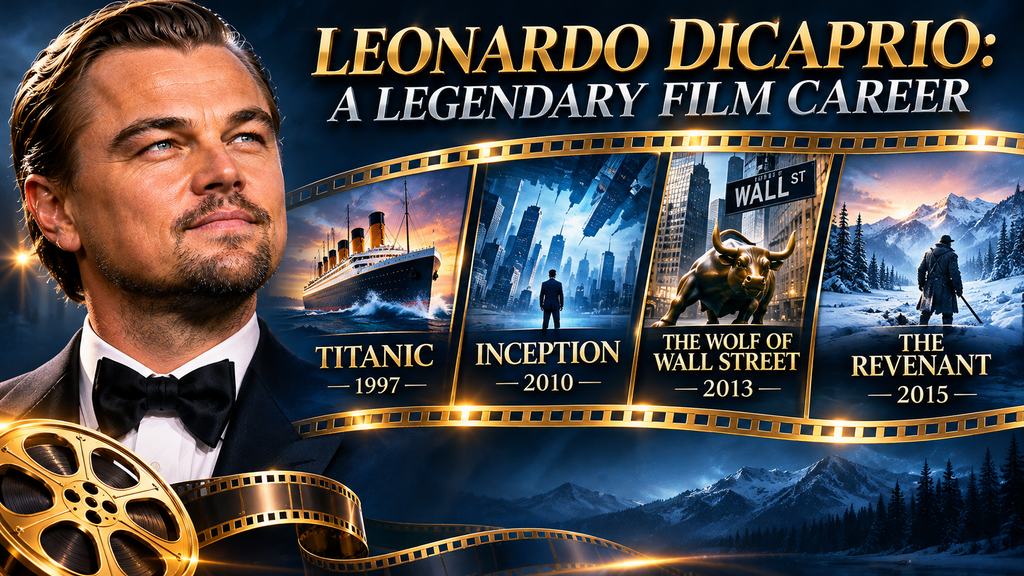
Leonardo DiCaprio’s Most Iconic Movies
The Wolf of Wall Street: A Bold and Unforgettable Performance
In 2013, Leonardo DiCaprio delivered one of his most energetic performances in Martin Scorsese’s The Wolf of Wall Street. Based on Jordan Belfort’s memoir, the film explored the rise and downfall of a stockbroker whose pursuit of wealth became associated with fraud, excess, and destructive behavior. DiCaprio portrayed Belfort with a combination of charisma, dark humor, and relentless intensity, creating a character who could be entertaining while remaining morally troubling.
The performance required a different kind of energy from many of his earlier dramatic roles. DiCaprio embraced physical comedy, exaggerated emotional reactions, and rapid changes in mood. These elements made the character memorable while emphasizing the instability beneath his confidence. The film also encouraged audiences to consider the consequences of greed, manipulation, and unchecked ambition. Its controversial subject matter sparked discussion about how cinema portrays unethical behavior.
DiCaprio received another Academy Award nomination for Best Actor and won a Golden Globe for Best Actor in a Motion Picture Musical or Comedy. The film also earned him a Best Picture nomination as one of its producers. Although the subject matter was provocative, the performance demonstrated his remarkable versatility. He could move from restrained emotional drama to outrageous satire while maintaining a clear understanding of the character’s motivations.
Understanding the Film Beyond Its Famous Scenes
The Wolf of Wall Street is frequently remembered for its extravagant sequences and memorable dialogue, but its broader themes deserve attention. The story examines how financial ambition can become destructive when individuals abandon responsibility and ethical judgment. DiCaprio’s portrayal emphasizes the appeal of Belfort’s confidence while revealing the consequences of his actions. That tension makes the character compelling without requiring audiences to admire his behavior.
The film also illustrates DiCaprio’s willingness to explore uncomfortable subjects. Rather than selecting characters designed to be universally likable, he often portrays individuals whose decisions invite criticism or debate. This approach allows him to investigate complicated aspects of human behavior. In Belfort’s case, the contrast between charm and dishonesty becomes central to the story’s dramatic and satirical impact.
For viewers interested in DiCaprio’s artistic development, the film represents an important example of his ability to embrace challenging material. It also strengthened his partnership with Scorsese, whose films frequently explore ambition, power, identity, and moral compromise. Their collaboration has helped create some of the most discussed performances of DiCaprio’s career.
The Revenant: The Oscar-Winning Performance That Made History
In 2015, Leonardo DiCaprio starred in The Revenant, directed by Alejandro G. Iñárritu. The survival drama follows frontiersman Hugh Glass as he struggles through a harsh wilderness after suffering a devastating bear attack and being abandoned by members of his expedition. Inspired by historical accounts and fictionalized storytelling, the film explores survival, grief, revenge, and the relationship between human beings and the natural world.
The production became widely known for its demanding filming conditions. DiCaprio performed in cold environments, worked through physically exhausting sequences, and relied heavily on facial expressions and body language to communicate his character’s suffering. Much of the film emphasizes the physical experience of survival rather than conventional dialogue. His performance required sustained emotional intensity while remaining believable within the story’s unforgiving setting.
At the 88th Academy Awards in February 2016, DiCaprio finally won the Oscar for Best Actor. The achievement followed several previous acting nominations and became one of the most celebrated moments of his career. For admirers who had watched his development since the 1990s, the award represented recognition of decades of work. Yet the significance of The Revenant extended beyond the trophy. It demonstrated his commitment to difficult productions and emotionally demanding characters.
Leonardo DiCaprio’s Oscar Acceptance Speech
When DiCaprio accepted his Academy Award, he used the opportunity to acknowledge the filmmakers and collaborators who helped create The Revenant. He also drew attention to climate change and the importance of protecting the natural environment. The speech reflected an issue that had become increasingly important in his public life. Rather than treating the ceremony exclusively as a personal celebration, he connected his professional achievement with a broader message about environmental responsibility.
The moment attracted international attention because it combined a long-awaited career milestone with an issue of global significance. DiCaprio had already established himself as an environmental advocate, and his remarks introduced that commitment to an enormous audience. His speech demonstrated how public figures can use moments of recognition to encourage discussion about subjects beyond their immediate profession.
For many fans, the Oscar victory remains an unforgettable part of his career story. However, it is worth remembering that awards represent only one measure of artistic achievement. DiCaprio’s influence also comes from the emotional impact of his films, the range of characters he has portrayed, and the collaborations that have shaped modern cinema. The Revenant brought official recognition to qualities that audiences and critics had appreciated for many years.
Leonardo DiCaprio and Martin Scorsese: A Remarkable Partnership
Few creative relationships have shaped Leonardo DiCaprio’s career as profoundly as his collaboration with Martin Scorsese. Their work began with Gangs of New York and continued through films such as The Aviator, The Departed, Shutter Island, The Wolf of Wall Street, and Killers of the Flower Moon. Each project explored different themes, historical settings, and personalities, allowing DiCaprio to expand his range while working with one of cinema’s most influential directors.
Their partnership has often focused on ambitious characters navigating complicated moral situations. Whether portraying a troubled undercover police officer, a wealthy aviation pioneer, or a manipulative stockbroker, DiCaprio has repeatedly explored the contradictions within human ambition. Scorsese’s filmmaking style provides room for detailed character development, while DiCaprio brings emotional intensity and a willingness to embrace difficult material. Together, they have created films that invite both entertainment and critical reflection.
The longevity of their collaboration also illustrates the value of artistic trust. Successful filmmaking depends on communication, preparation, and a shared understanding of the story being told. Over time, DiCaprio and Scorsese developed a professional relationship that encouraged creative experimentation. Their films have contributed significantly to DiCaprio’s reputation and remain important examples of contemporary American cinema.
The Departed and Shutter Island: Two Different Kinds of Suspense
In The Departed, released in 2006, DiCaprio portrayed Billy Costigan, an undercover police officer operating within a dangerous criminal organization. The role required him to communicate fear, pressure, and emotional exhaustion as the character struggled to maintain his identity. The film won the Academy Award for Best Picture and earned Martin Scorsese his first Oscar for Best Director. DiCaprio’s performance contributed to its intense atmosphere and complicated narrative.
Shutter Island, released in 2010, offered another opportunity to explore psychological uncertainty. DiCaprio played Teddy Daniels, a U.S. marshal investigating a disappearance at a psychiatric facility on an isolated island. As the story develops, the distinction between memory, perception, and reality becomes increasingly unstable. His performance helps maintain the film’s emotional tension while allowing audiences to question what they are witnessing.
Together, these films demonstrate DiCaprio’s ability to approach suspense from different directions. The Departed emphasizes external danger, deception, and criminal conflict, while Shutter Island explores psychological distress and unreliable perception. Both roles require careful emotional control and an understanding of complex character motivations. They also illustrate why his collaborations with Scorsese have remained so important to his artistic identity.
Leonardo DiCaprio as a Film Producer
Although audiences primarily recognize Leonardo DiCaprio for his acting, his work as a producer represents another important part of his career. Through Appian Way Productions, the company he founded in 2004, he has supported projects across different genres and formats. Producing allows him to participate in filmmaking beyond his performances, including the development of stories and collaboration with writers, directors, and other creative professionals.
His production interests reflect a broad curiosity about history, society, environmental issues, and human behavior. Some projects focus on dramatic storytelling, while others examine real-world subjects through documentaries. This variety demonstrates that his involvement in cinema extends beyond selecting roles for himself. By supporting different productions, he has helped bring additional stories and perspectives to audiences.
Producing also involves responsibilities that differ considerably from acting. Creative development, financing, production planning, and collaboration all influence whether a film reaches completion. Although the contributions of individual producers vary by project, DiCaprio’s work in this field illustrates his commitment to the wider filmmaking process. It also provides another explanation for his sustained presence in the entertainment industry.
Killers of the Flower Moon and Historical Storytelling
In 2023, DiCaprio appeared in Martin Scorsese’s Killers of the Flower Moon, a historical crime drama based on David Grann’s nonfiction book. The film examines the murders of members of the Osage Nation in Oklahoma during the 1920s and the exploitation connected with oil wealth. DiCaprio portrayed Ernest Burkhart, a character whose actions and relationships form part of the film’s exploration of betrayal, greed, and systemic injustice.
The production brought important historical events to a wider international audience. Its subject matter required careful attention to the experiences of the Osage people and the lasting significance of the crimes. Lily Gladstone’s performance as Mollie Burkhart became another central element of the film, receiving widespread recognition. The project demonstrated DiCaprio’s continued interest in stories that address difficult historical subjects rather than relying exclusively on familiar commercial formulas.
For viewers exploring his later career, Killers of the Flower Moon offers an example of his willingness to portray morally compromised characters. The film does not depend on making Ernest Burkhart admirable. Instead, it examines how personal choices intersect with broader structures of exploitation and violence. This kind of role reflects the artistic direction DiCaprio has pursued throughout much of his adult career.
Leonardo DiCaprio’s Environmental Advocacy and Global Influence
Leonardo DiCaprio’s public identity extends beyond the film industry through his longstanding involvement in environmental advocacy. In 1998, he established the Leonardo DiCaprio Foundation, which supported initiatives related to environmental protection, biodiversity, climate change, and conservation. Over the years, he has worked with organizations and campaigns focused on protecting ecosystems and encouraging greater awareness of environmental challenges.
His environmental work has included public speaking, documentary participation, fundraising, and collaboration with conservation organizations. In 2014, he was designated a United Nations Messenger of Peace with a special focus on climate change. The appointment reflected his visibility as an advocate and provided additional opportunities to communicate environmental concerns to international audiences.
Celebrity advocacy does not replace scientific research, public policy, or the work of environmental professionals. However, recognizable public figures can help introduce complex issues to audiences who might not otherwise encounter them. DiCaprio’s involvement has contributed to public conversations about climate change, wildlife protection, and sustainable development. His continued interest in these subjects remains an important aspect of his life outside acting.
Before the Flood: Using Documentary Film to Raise Awareness
In 2016, DiCaprio appeared in the documentary Before the Flood, directed by Fisher Stevens. The film follows his conversations with scientists, policymakers, and other individuals while examining climate change and its environmental consequences. It explores subjects such as fossil fuel consumption, deforestation, rising temperatures, and the challenges associated with reducing greenhouse gas emissions.
The documentary demonstrates how storytelling can make scientific and policy discussions more accessible. Rather than presenting climate change exclusively through statistics, it connects environmental research with places, communities, and real-world decisions. DiCaprio serves as a guide for viewers, asking questions and introducing perspectives from specialists. This approach encourages audiences to investigate the subject further and consider how environmental challenges affect different regions.
For readers interested in the science behind climate change, authoritative resources include the Intergovernmental Panel on Climate Change, NASA’s climate research, and the United Nations Environment Programme. These organizations provide evidence-based information that complements broader public-awareness campaigns. DiCaprio’s documentary work can serve as an introduction, while scientific institutions remain essential sources for understanding the underlying research.
Leonardo DiCaprio’s Awards, Nominations, and Career Recognition
Leonardo DiCaprio’s professional achievements include major recognition from the Academy Awards, Golden Globes, BAFTA Awards, and other film organizations. His Academy Award nominations span several decades, beginning with What’s Eating Gilbert Grape and continuing through acclaimed performances in The Aviator, Blood Diamond, The Wolf of Wall Street, The Revenant, and Once Upon a Time in Hollywood. These nominations demonstrate the consistency with which his work has attracted critical attention.
His Oscar victory for The Revenant remains his most famous individual award, but his career includes other significant achievements. He won the BAFTA Award for Best Actor for the same performance and has received multiple Golden Globe honors. His producing work has also earned recognition, including a Best Picture Oscar nomination for The Wolf of Wall Street. These achievements reflect his involvement in both performance and film development.
Awards can provide useful markers when reviewing an actor’s career, but they do not tell the entire story. Some of DiCaprio’s most culturally influential films did not bring him individual Academy Awards. Titanic and Inception, for example, reached enormous international audiences and became important parts of popular culture. His broader legacy therefore combines critical recognition, commercial success, memorable characters, and artistic influence.
What Makes Leonardo DiCaprio’s Acting Style Distinctive?
One defining characteristic of DiCaprio’s acting is his willingness to portray emotionally intense situations. His characters frequently experience fear, ambition, guilt, loss, or personal conflict. Rather than relying on a single familiar personality, he adapts his performance to the demands of each story. This flexibility allows him to move between romantic drama, crime cinema, psychological suspense, historical storytelling, and science fiction.
Another important quality is his attention to character motivation. Even when portraying individuals whose behavior is troubling, he seeks to communicate the desires and contradictions driving their decisions. This approach can make morally complicated characters believable without requiring audiences to approve of their actions. Films such as The Wolf of Wall Street and Killers of the Flower Moon illustrate how he uses that distinction to create compelling performances.
His commitment to collaboration also contributes to his distinctive career. By working with filmmakers such as Martin Scorsese, Christopher Nolan, Steven Spielberg, Quentin Tarantino, and Alejandro G. Iñárritu, he has encountered different creative approaches and storytelling techniques. These experiences have expanded his range and encouraged continuous artistic development. The result is a filmography that offers considerable variety while maintaining a recognizable level of dedication.
Once Upon a Time in Hollywood: Celebrating the Art of Acting
In Quentin Tarantino’s Once Upon a Time in Hollywood, released in 2019, DiCaprio portrayed Rick Dalton, a television actor struggling with professional uncertainty as Hollywood changes around him. The film is set in a fictionalized version of Los Angeles in 1969 and explores the entertainment industry’s shifting culture. DiCaprio’s performance combines humor, insecurity, frustration, and emotional vulnerability, creating a character whose personal fears feel surprisingly relatable.
Rick Dalton differs from many of DiCaprio’s more confident or ambitious characters. He worries about his future, questions his abilities, and struggles to accept changes in his profession. These concerns give the role an emotional authenticity that audiences can recognize beyond the film’s historical setting. DiCaprio’s performance moves between comedy and drama, often revealing the character’s insecurity beneath his attempts to appear successful.
The role earned him another Academy Award nomination for Best Actor. It also demonstrated his ability to approach familiar Hollywood themes from an unusual perspective. After spending decades as one of the industry’s most successful performers, he convincingly portrayed an actor afraid of losing his place within it. The contrast added another memorable performance to his career and reinforced his reputation for choosing varied, challenging characters.
The Importance of Reinvention in a Long Hollywood Career
Leonardo DiCaprio’s longevity offers an interesting lesson about professional reinvention. His early success could have encouraged him to repeat similar roles indefinitely, but he consistently pursued different challenges. As he matured, his characters became increasingly complicated, and his collaborations expanded into new genres. This willingness to evolve helped him avoid being defined exclusively by the films that first made him famous.
Reinvention does not necessarily require abandoning earlier achievements. Instead, it can involve building upon existing strengths while developing new abilities. DiCaprio’s performances often retain the emotional intensity visible in his earliest work, but his technique has adapted to different directors and storytelling styles. That continuity helps explain why audiences can recognize his distinctive approach even when the characters themselves are dramatically different.
For aspiring actors and creative professionals, his career provides an example of the importance of patience and thoughtful choices. Popularity may create opportunities, but sustaining a meaningful career requires preparation, flexibility, and ongoing development. DiCaprio’s journey illustrates how artistic ambition can continue evolving long after an initial breakthrough.
Leonardo DiCaprio’s Cultural Impact Across Generations
Leonardo DiCaprio belongs to a relatively small group of actors whose names are recognized across generations and international audiences. Viewers who grew up during the 1990s may associate him with Romeo + Juliet and Titanic, while others first encountered his work through Inception, The Wolf of Wall Street, or The Revenant. This broad appeal reflects both the longevity of his career and the diversity of the films in which he has appeared.
His performances have also become part of wider popular culture. Memorable scenes, recognizable characters, and references to his movies regularly appear in online conversations and entertainment discussions. Although internet popularity is not the same as artistic achievement, it demonstrates how familiar his work has become. Certain performances remain recognizable even to people who have not watched every film in his extensive career.
Perhaps his most significant cultural contribution is the way he has helped connect ambitious filmmaking with mainstream audiences. Many of his projects explore complex themes while reaching viewers around the world. By participating in films that combine commercial appeal with distinctive creative visions, DiCaprio has contributed to the continuing relevance of character-driven cinema.
Why Fans Continue to Celebrate Leonardo DiCaprio
Fans admire Leonardo DiCaprio for different reasons. Some appreciate the romantic charm of his early performances, while others prefer the psychological complexity of his later characters. Many respect his commitment to demanding productions and his collaborations with influential directors. His environmental advocacy also attracts attention from audiences interested in the responsibilities and influence of public figures.
Birthday celebrations provide a natural opportunity for viewers to revisit favorite films and discover performances they may have missed. Someone familiar with Titanic might explore The Aviator, while a fan of Inception could discover the emotional intensity of What’s Eating Gilbert Grape. His varied filmography makes these discoveries especially rewarding because each project reveals a different aspect of his abilities.
As he celebrates his 52nd birthday, DiCaprio’s appeal remains connected to the stories he has helped bring to life. His career demonstrates that memorable performances can transcend individual genres and generations. Whether audiences admire his dramatic intensity, his artistic choices, or his dedication to filmmaking, his work continues to offer meaningful reasons for celebration.
Celebrating Leonardo DiCaprio’s 52nd Birthday in 2026
November 11, 2026, offers fans around the world an opportunity to celebrate Leonardo DiCaprio’s remarkable journey. His birthday can be marked by revisiting a favorite film, exploring an unfamiliar performance, or discussing the characters that have made the strongest impression. From the emotional storytelling of Titanic to the demanding survival drama of The Revenant, his career offers something for many different kinds of movie lovers.
A birthday tribute also provides an opportunity to appreciate the people who contribute to great filmmaking. Directors, writers, cinematographers, editors, composers, production teams, and fellow actors all play essential roles in creating memorable cinema. DiCaprio’s achievements reflect his individual talent, but they also demonstrate the power of collaboration. Many of his most celebrated performances emerged from creative partnerships built around ambitious storytelling.
At 52, Leonardo DiCaprio has already established an extraordinary cinematic legacy. His career includes beloved romantic characters, complex dramatic roles, major awards, and a sustained commitment to environmental awareness. Whatever artistic directions he chooses in the years ahead, his existing body of work provides plenty of reasons to celebrate his birthday and recognize his contribution to modern filmmaking.
A Birthday Message for Leonardo DiCaprio
Happy 52nd birthday, Leonardo DiCaprio! Today is an occasion to celebrate not only your achievements but also the unforgettable stories you have helped bring to audiences worldwide. From your earliest performances to your Oscar-winning work, your dedication has created characters that continue to entertain, challenge, and inspire movie lovers of different generations.
Your career reminds us that creativity grows through curiosity, courage, and a willingness to embrace new challenges. The films you have chosen demonstrate the power of storytelling to explore love, ambition, survival, morality, and the human experience. Beyond cinema, your environmental advocacy has encouraged conversations about protecting the planet and considering the future we share.
May this birthday bring happiness, meaningful experiences, continued inspiration, and exciting creative opportunities. Thank you for the memorable performances and for the dedication that has made your career such an important part of contemporary film history. Happy birthday, Leonardo DiCaprio, and best wishes for the years ahead!
Frequently Asked Questions
1. When is Leonardo DiCaprio’s birthday?
Leonardo DiCaprio was born on November 11, 1974, in Los Angeles, California. He celebrates his birthday every year on November 11. His birthday is an opportunity for fans to revisit his films, celebrate his achievements, and appreciate his contributions to cinema. In 2026, the date falls on a Wednesday, marking another milestone in a career that began during his childhood.
2. How old is Leonardo DiCaprio in 2026?
Leonardo DiCaprio turns 52 years old on November 11, 2026. Before that date, he is 51. His age reflects more than three decades of professional acting experience, during which he has appeared in internationally successful films and received numerous awards. His career has evolved considerably since his teenage performances, and he remains widely recognized for his dedication to ambitious filmmaking.
3. Which movie made Leonardo DiCaprio famous?
Although Leonardo DiCaprio received critical attention for What’s Eating Gilbert Grape in 1993, Titanic made him a global superstar in 1997. His portrayal of Jack Dawson introduced him to an enormous international audience. The film’s romantic story, memorable performances, and extraordinary commercial success established him as one of the most recognizable actors of his generation.
4. Which movie earned Leonardo DiCaprio his first Oscar?
Leonardo DiCaprio won his first Academy Award for Best Actor for The Revenant, a 2015 survival drama directed by Alejandro G. Iñárritu. He received the award at the Academy Awards ceremony in February 2016. His portrayal of Hugh Glass required considerable physical commitment and emotional intensity, making it one of the defining performances of his career.
5. What are Leonardo DiCaprio’s most famous movies?
Some of Leonardo DiCaprio’s most famous movies include Titanic, Romeo + Juliet, Catch Me If You Can, The Aviator, The Departed, Shutter Island, Inception, Django Unchained, The Wolf of Wall Street, The Revenant, and Once Upon a Time in Hollywood. His filmography includes romance, crime, drama, science fiction, and historical storytelling, giving audiences a wide variety of performances to explore.
6. Is Leonardo DiCaprio also a film producer?
Yes. Leonardo DiCaprio is an actor and film producer who founded Appian Way Productions in 2004. Through his production work, he has supported films and documentaries covering different genres and subjects. Producing allows him to participate in storytelling beyond his acting performances and contribute to the development of projects that reflect his creative interests.
7. Why is Leonardo DiCaprio associated with environmental protection?
Leonardo DiCaprio has supported environmental initiatives for many years, including conservation projects, climate awareness campaigns, and documentary filmmaking. He established the Leonardo DiCaprio Foundation in 1998 and became a United Nations Messenger of Peace with a focus on climate change in 2014. His advocacy has helped bring environmental issues to the attention of international audiences.
8. Who are the directors Leonardo DiCaprio frequently works with?
Martin Scorsese is one of Leonardo DiCaprio’s most important longtime collaborators. Their films include Gangs of New York, The Aviator, The Departed, Shutter Island, The Wolf of Wall Street, and Killers of the Flower Moon. DiCaprio has also worked with directors such as Christopher Nolan, James Cameron, Steven Spielberg, Quentin Tarantino, and Alejandro G. Iñárritu.
9. Did Leonardo DiCaprio win an Oscar for Titanic?
No. Although Titanic won 11 Academy Awards, Leonardo DiCaprio did not receive an individual Oscar nomination for his portrayal of Jack Dawson. The film nevertheless became a defining moment in his career and helped establish his international fame. He later won his first acting Oscar for The Revenant in 2016.
10. What makes Leonardo DiCaprio one of Hollywood’s most respected actors?
Leonardo DiCaprio is respected for his versatility, dedication, and willingness to portray complicated characters. His career includes critically acclaimed performances, successful collaborations with influential filmmakers, and major international recognition. Rather than concentrating on one genre, he has explored diverse stories and consistently challenged himself through demanding roles. His work as a producer and environmental advocate also contributes to his broader public influence.
A Lasting Hollywood Legacy Worth Celebrating
Leonardo DiCaprio’s 52nd birthday is a celebration of an extraordinary career built through talent, determination, and artistic curiosity. From the emotional power of Titanic to the psychological complexity of Inception, the energetic satire of The Wolf of Wall Street, and the Oscar-winning intensity of The Revenant, his performances have helped shape modern cinema. Each major role reveals a different aspect of his abilities and contributes to a filmography that continues to attract new audiences.
His journey also demonstrates the importance of professional growth. Rather than allowing early fame to define his future, DiCaprio explored challenging characters and developed lasting relationships with respected filmmakers. His production work and environmental advocacy have further expanded his influence beyond acting. Together, these achievements reflect a career that combines commercial recognition with creative ambition and public engagement.
As November 11, 2026, arrives, fans have every reason to celebrate the actor and the unforgettable stories he has shared with the world. Happy 52nd birthday, Leonardo DiCaprio! May the years ahead bring continued inspiration, meaningful opportunities, and many more memorable moments in cinema.
⚠️ Disclaimer and Source Hygiene
This article is an editorial birthday tribute prepared for informational, educational, and entertainment purposes. It is not affiliated with, sponsored by, or officially endorsed by Leonardo DiCaprio, his representatives, or any film studio. Film titles, awards, biographical information, and career milestones are discussed using established public information and authoritative reference resources.
Awards information should be checked against the Academy of Motion Picture Arts and Sciences and other official award organizations. Environmental information should be verified through scientific institutions and relevant organizations. Readers seeking professional guidance about environmental policy, scientific issues, or other specialized subjects should consult qualified experts and current primary sources. Any artistic images accompanying this article should respect copyright, licensing, and appropriate attribution requirements.
Sources and References
The following primary and authoritative resources provide reference material for Leonardo DiCaprio’s career, filmography, awards, and environmental advocacy.
Academy of Motion Picture Arts and Sciences: https://www.oscars.org/oscars/ceremonies/2016
Official information about the 88th Academy Awards, including Leonardo DiCaprio’s Best Actor victory for The Revenant.
Academy Awards Database: https://awardsdatabase.oscars.org/
Official searchable records of Academy Award nominations and winners.
Encyclopaedia Britannica: https://www.britannica.com/biography/Leonardo-DiCaprio
Biographical information about Leonardo DiCaprio’s early life, career development, films, and achievements.
Golden Globes: https://www.goldenglobes.com/person/leonardo-dicaprio/
Information about Leonardo DiCaprio’s Golden Globe nominations and awards.
BAFTA Awards: https://www.bafta.org/awards/
Official British Academy resources for film awards and recognition.
United Nations: https://www.un.org/
Institutional information about United Nations Messengers of Peace and environmental advocacy.
Intergovernmental Panel on Climate Change: https://www.ipcc.ch/
Scientific assessments and research summaries concerning climate change.
NASA Climate Science: https://science.nasa.gov/climate-change/
Scientific information about climate systems, global warming, and environmental change.
Secondary Sources and Testimonials
IMDb: https://www.imdb.com/name/nm0000138/
A secondary reference for Leonardo DiCaprio’s film credits, acting career, and production involvement.
American Film Institute: https://www.afi.com/
Film-history resources, educational materials, and information about American cinema.
The Hollywood Reporter: https://www.hollywoodreporter.com/
Entertainment reporting, interviews, film-industry coverage, and career retrospectives.
Variety: https://variety.com/
Film-industry journalism, reviews, interviews, and coverage of major cinematic achievements.
These secondary resources provide additional context rather than replacing primary documentation. Any personal testimonials or fan comments should be attributed accurately and should not be invented or presented as verified statements without evidence.
