

⏲️ Estimated reading time: 11 min
Table of Contents
Five Things You Should Know About Mexico’s Day of the Dead. Mexico’s Day of the Dead is far more than a colorful holiday it’s a deep, joyful celebration of life, memory, and family. Discover its ancient Indigenous roots, symbolic traditions, and how it beautifully unites remembrance with festivity.
Five Things You Should Know About Mexico’s Day of the Dead
It’s a Celebration of Life, Not Death
Every autumn, between the end of October and the start of November, Mexico bursts into color with Día de los Muertos the Day of the Dead. Despite what its name suggests, this festival is not about mourning. It’s a radiant celebration of life, love, and the bonds that remain unbroken even after death.
The streets fill with flowers, music, sugar skulls, candles, and laughter. Families gather at cemeteries not to grieve but to honor and remember their loved ones. The atmosphere is filled with joy, food, and dancing a reminder that death is not an end, but a continuation in another form.
At its heart, Día de los Muertos reflects the belief that those who have passed away return temporarily to visit the living. The living, in turn, welcome them with open hearts, decorated altars, and their favorite meals. Far from being somber, the event is a poetic reminder that love transcends time.
In modern cities like Mexico City, Oaxaca, and Pátzcuaro, parades feature thousands of participants dressed in skeleton costumes and painted faces. These aren’t macabre they are artistic expressions of the idea that death and life coexist beautifully.
It’s not about fear but acceptance. The skull, or calavera, is treated as a symbol of humor and vitality. To Mexicans, laughing at death means embracing life in its fullest sense imperfections, fragility, and all.
This vibrant approach teaches us an important lesson: remembering those who came before us isn’t about sadness, it’s about gratitude. Every song sung, candle lit, or loaf of pan de muerto shared is a celebration of life itself.
The Day of the Dead Has Indigenous Roots
Long before the arrival of Spanish colonizers, Indigenous civilizations in Mesoamerica had their own rituals surrounding death and remembrance. The Aztecs, Toltecs, Maya, and other ancient cultures believed that death was part of a cyclical journey one that connected the earthly world with the spiritual realm.
To them, life and death were intertwined forces, constantly feeding each other. Death was not a tragic event but a transformation the start of a spiritual adventure. The Aztecs, for instance, honored the goddess Mictecacihuatl, the Lady of the Dead, who watched over the souls of the departed.
When Spanish missionaries introduced Catholicism in the 16th century, these Indigenous beliefs merged with Christian observances such as All Saints’ Day and All Souls’ Day. The result was the creation of Día de los Muertos as we know it today a fascinating blend of pre-Hispanic and European traditions.
This fusion explains why the festival is celebrated from October 31 to November 2, aligning with the Catholic calendar while retaining its ancestral Indigenous meaning.
- October 31: All Hallows’ Eve (children are remembered).
- November 1: All Saints’ Day (honoring infants and children).
- November 2: All Souls’ Day (dedicated to adults).
The Indigenous influence can still be seen in the use of marigolds (cempasúchil), the bright orange flowers believed to guide spirits home. Their scent and color act as a bridge between worlds. Offerings of maize, chocolate, and incense are echoes of the past traditions that have survived centuries of cultural change.
By honoring Indigenous roots, Día de los Muertos stands as a symbol of Mexico’s cultural resilience. It celebrates how spiritual wisdom and Catholic faith can coexist, forming one of the most beautiful examples of syncretism in human history.
Families Create Altars for the Deceased
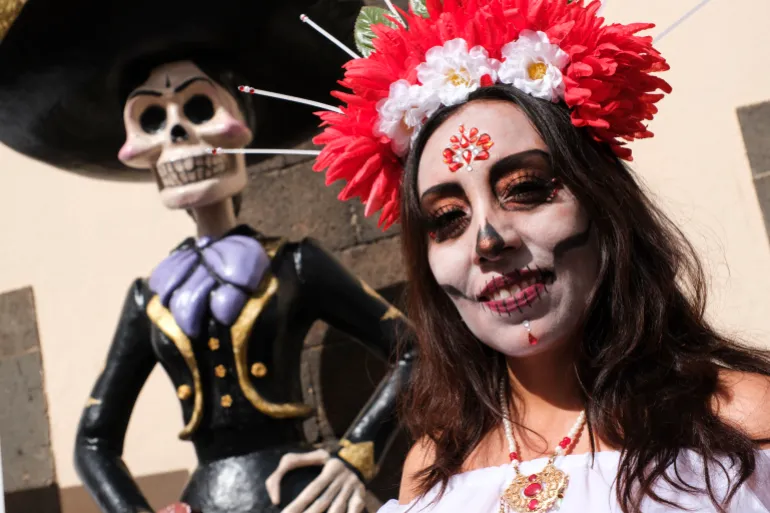
One of the most touching and recognizable symbols of Día de los Muertos is the altar, or ofrenda. Every home, school, and community space may contain one carefully decorated with candles, flowers, photographs, and favorite foods of departed loved ones.
The altar serves as a welcoming portal for souls returning to visit. Each element carries a deep symbolic meaning:
- Photographs remind the spirits that they are still cherished.
- Candles light the path home from the afterlife.
- Incense purifies the space, inviting spiritual peace.
- Marigolds (the “flower of the dead”) mark the path with their vivid orange petals.
- Food and drinks like tamales, mole, atole, or tequila represent the pleasures of earthly life.
- Pan de muerto, a sweet bread decorated with bone-shaped designs, symbolizes the cycle of life and death.
- Personal belongings show affection, from favorite toys to music instruments or hats.
Altars can have multiple tiers. A two-level altar represents the Earth and Heaven, while a seven-level altar mirrors the steps a soul must climb to reach spiritual rest.
In many homes, children take part by crafting paper decorations and placing toys for deceased siblings or pets. This family participation keeps memory alive and teaches younger generations the importance of honoring their ancestors.
Visiting cemeteries on these days is also part of the ritual. Families clean and decorate graves, light candles, and sometimes stay overnight, telling stories, playing music, and sharing food.
This act transforms the cemetery into a living place full of light, music, and community spirit.
Through these rituals, death loses its sting. It becomes a bridge connecting generations. The altar is not a symbol of sorrow, but of continuity, a living bond that no time can break.
La Catrina Dominates Parades
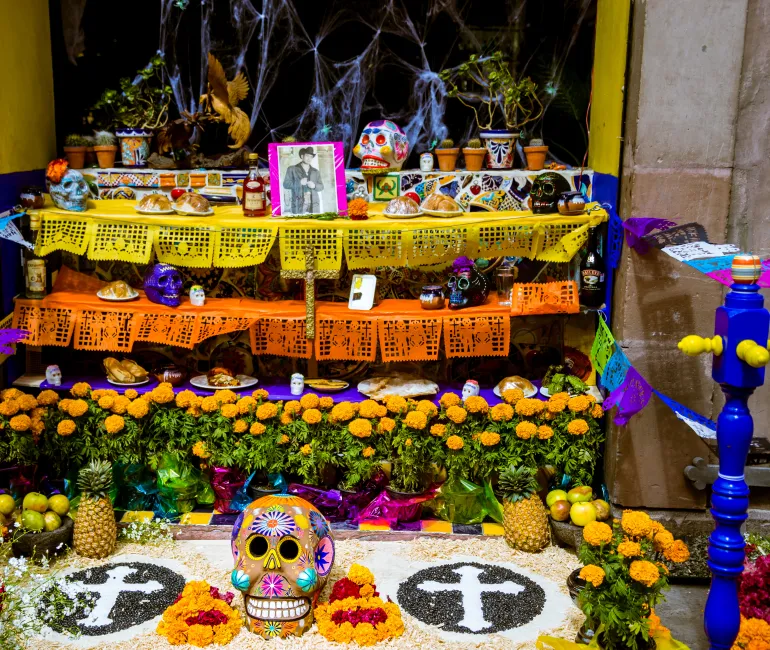
If you’ve ever seen a woman with an elegant hat, long gown, and painted skeletal face during Day of the Dead celebrations, you’ve met La Catrina the most iconic figure of the holiday.
La Catrina, whose full name is La Calavera Catrina, was originally created by Mexican artist José Guadalupe Posada in the early 1900s as a satirical cartoon. She was designed to mock upper-class Mexican women who imitated European fashions, forgetting their Indigenous heritage. Over time, she transformed from political commentary into a national symbol of cultural identity.
Today, La Catrina embodies the spirit of the Day of the Dead: elegant, timeless, and unafraid of death. She reminds everyone that, no matter their status or wealth, death unites all people equally. Her wide smile and ornate costume represent dignity in the face of mortality.
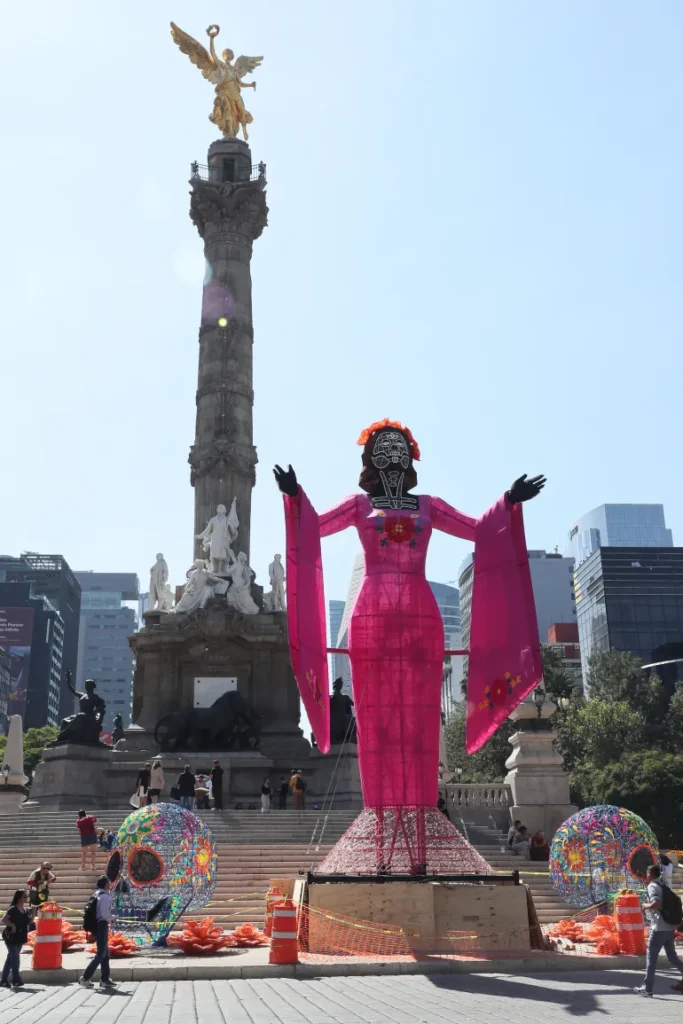
During parades, people of all ages dress as Catrinas and Catrines (the male version). Their costumes are extravagant, with feathers, lace, and intricate makeup. Parades, especially in cities like Mexico City and Oaxaca, feature giant Catrina puppets, musicians, dancers, and floats celebrating the ancestors.
The popularity of La Catrina has even spread worldwide. She has appeared in films, fashion, and art, notably in Pixar’s Coco and the James Bond movie Spectre where Mexico City’s massive parade was inspired by the film’s opening scene and then became an annual reality.
Beyond her visual allure, La Catrina teaches a profound lesson: to face death with grace and humor. Her smile invites us to accept that life’s finitude makes it precious. When people paint their faces as skulls, they are not glorifying death; they are honoring its inevitability and the beauty of living despite it.
Day of the Dead Continues for More Than One Day
Contrary to popular belief, the Day of the Dead is not a single-day event. It is a multi-day celebration filled with preparations, community activities, and deep reflection. Each day carries its own significance and rituals.
Preparations begin in mid-October, as markets fill with sugar skulls, paper banners (papel picado), candles, and marigolds. Families clean their homes, gather photos, and plan their ofrendas. Bakeries start making pan de muerto, while artisans sell skeleton figurines and painted pottery.
October 31 known as Día de los Angelitos honors deceased children. Families place toys, candies, and small gifts on altars to welcome the spirits of young ones. Bells ring softly at midnight to invite their return.
November 1, All Saints’ Day, celebrates all departed souls, especially the innocent. It is believed that the spirits of children visit first, followed by the adults the next day.
November 2, All Souls’ Day, is the main day of remembrance for adults. People attend Mass, visit cemeteries, light candles, and share meals with neighbors. In some regions, celebrations last all night, turning graveyards into glowing seas of candlelight.
In places like Janitzio Island in Lake Pátzcuaro, Michoacán, fishermen light torches and row across the water, creating a mesmerizing reflection a symbol of souls crossing into the living world. In Oaxaca, parades, music, and street art continue for days, blending solemnity with festivity.
The length of the celebration reflects its essence: remembrance takes time. Honoring the dead isn’t about a single act, but a season of connection of telling stories, preparing meals, and feeling the presence of those who came before.
By stretching across days, Día de los Muertos reminds us that memory itself is timeless. Love doesn’t fade when the candles go out; it lingers, just like the scent of marigolds after the festival ends.
Cultural and Global Significance
In 2008, UNESCO recognized Día de los Muertos as an Intangible Cultural Heritage of Humanity, affirming its role as one of the world’s most meaningful celebrations of life and death. Since then, countries around the globe have embraced its imagery and values.
Cities like Los Angeles, Madrid, Paris, and Tokyo now host their own Day of the Dead festivals, allowing Mexican communities abroad to share their heritage with pride. Schools, museums, and cultural centers use the occasion to teach lessons about family, memory, and respect for ancestors.
Beyond its Mexican roots, the festival holds universal appeal. Every culture grapples with the meaning of death. Día de los Muertos offers a refreshing perspective one that transforms loss into love, fear into acceptance, and sorrow into celebration.
For travelers, witnessing the Day of the Dead in Mexico is an unforgettable experience. Whether standing amid candlelit graves in Oaxaca or joining the grand parade in Mexico City, visitors quickly realize it’s not about death at all it’s about life, laughter, and remembrance.
Frequently Asked Questions (FAQ)
1. What is the purpose of the Day of the Dead?
The Day of the Dead honors and celebrates deceased loved ones, welcoming their spirits back for a brief visit. It focuses on memory, love, and life not mourning.
2. When is the Day of the Dead celebrated?
It spans from October 31 to November 2. Each day honors different groups: children, saints, and all souls.
3. Why are marigolds important?
Marigolds, or cempasúchil, are believed to guide spirits to their altars with their bright color and scent.
4. Who is La Catrina?
La Catrina is a famous female skeleton figure symbolizing death’s equality and the beauty of acceptance. She dominates parades and artworks during the festival.
5. Is the Day of the Dead related to Halloween?
While both occur in late October, they are completely different. Halloween focuses on fright and fantasy; Día de los Muertos centers on family, remembrance, and joy.
A Living Connection Beyond Time
Death is inevitable, but forgetting is a choice. Mexico’s Day of the Dead reminds us that memory gives life a second chance. Each candle, each flower, each shared story brings the past into the present.
When we celebrate Día de los Muertos, we’re not looking backward in sorrow; we’re looking inward toward the eternal bond between souls.
Whether you’re Mexican or simply human, this festival teaches something profound: love never dies, it just changes form.
Remembering the Joy in Remembrance
The Day of the Dead stands as one of humanity’s most beautiful expressions of remembrance. It teaches us to honor the departed without sadness, to live fully, and to face mortality with color, laughter, and love.
In every petal, drumbeat, and smile painted on a face lies a universal truth: death is not the end it’s a reminder to live.
⚠️ Disclaimer and Source Hygiene
This article is provided for educational and informational purposes only.
