


⏲️ Estimated reading time: 8 min
Table of Contents
Discover the powerful difference between supporting a partner and unintentionally raising them. This in-depth guide explores emotional maturity, relationship balance, and the hidden signs of unhealthy dynamics, helping you build stronger, healthier love based on mutual respect and growth.
The Truth About Love. Understanding the Difference Between Supporting and Raising a Partner
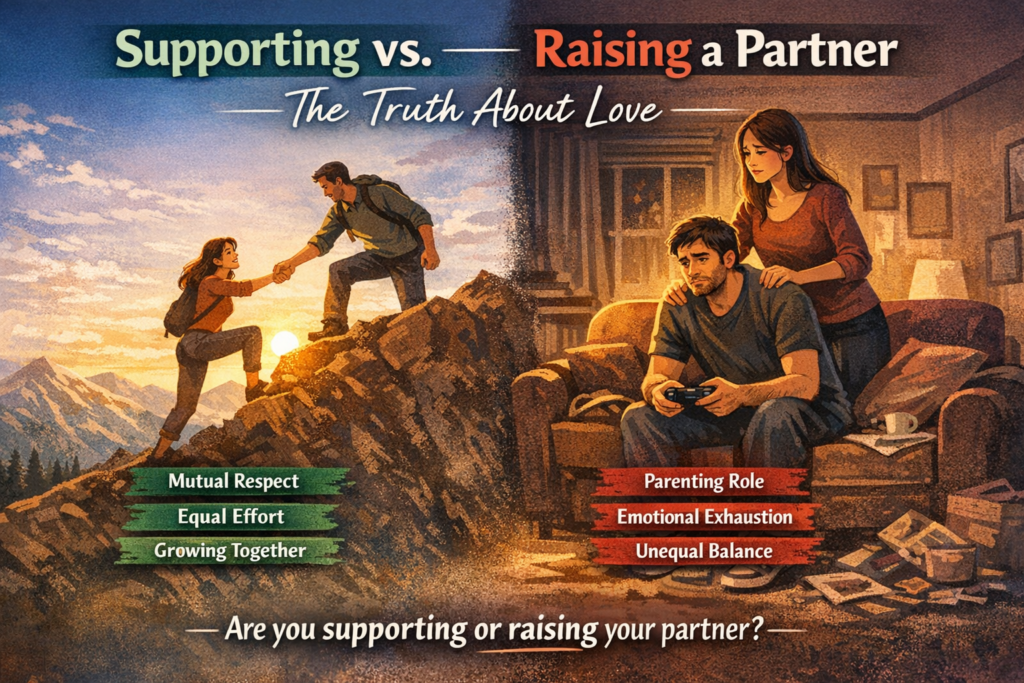
There is a deep, often overlooked difference between supporting a partner and raising one. Many people enter relationships with good intentions. They want to help, love, and build something meaningful together. However, over time, that support can slowly turn into something else entirely.
Instead of being equals, one partner may begin to take on the role of a caregiver, teacher, or even a parent. This shift is subtle at first. It does not happen overnight. But once it sets in, it can quietly damage the foundation of the relationship.
This idea is beautifully expressed in a powerful reflection:
The message is simple but profound. Love should not feel like raising someone. It should feel like growing together.
What Does It Mean to Support a Partner?
Supporting a partner means standing beside them, not above them. It is about encouragement, not control. It is about partnership, not hierarchy.
In a healthy relationship, both individuals take responsibility for their own growth. They uplift each other, but they do not depend entirely on the other person to function.
Key Elements of Healthy Support
- Emotional encouragement during difficult times
- Respect for personal boundaries
- Open and honest communication
- Mutual effort in solving problems
- Shared responsibility for growth
Support feels light. It feels balanced. It creates space for both people to evolve.
When Support Turns Into Parenting
The problem begins when one partner starts doing more than supporting. Instead of encouraging growth, they begin to manage it.
This often happens unconsciously.
At first, it may seem like love. You explain things patiently. You guide them. You forgive repeatedly. You try to teach them empathy, communication, and emotional awareness.
But slowly, the dynamic changes.
Signs You Are “Raising” Your Partner
- You constantly explain basic emotional concepts
- You feel responsible for their behavior
- You give more than you receive
- You excuse repeated harmful actions
- You feel exhausted rather than fulfilled
At this stage, the relationship no longer feels equal. It starts to feel like a burden.
The Emotional Cost of an Imbalanced Relationship
When one person becomes the emotional caretaker, they begin to lose themselves.
You may start questioning your needs. You may lower your expectations just to keep the relationship stable. Over time, your identity shifts.
Instead of being a partner, you become a provider of emotional stability.
This creates deep internal conflict.
Common Emotional Effects
- Burnout and emotional fatigue
- Loss of personal identity
- Resentment toward your partner
- Feeling unappreciated
- Constant overthinking
Love should energize you. It should not drain you completely.
Why Some People Fall Into This Pattern
This dynamic does not happen by accident. There are underlying psychological reasons behind it.
1. The Desire to Fix
Some people believe that love means helping someone become better. They see potential and want to nurture it.
However, potential is not reality. And growth must come from within.
2. Fear of Losing the Relationship
You may stay in the role of a “caretaker” because you fear that setting boundaries will push the other person away.
So you continue giving more, hoping things will change.
3. Low Self-Worth
Sometimes, people feel valuable only when they are needed. They attach their worth to how much they give.
This creates a dangerous cycle of overgiving.
The Harsh Truth About Growth
- One of the most important lessons in relationships is this:
- You cannot want someone’s growth more than they want it themselves.
- No matter how much you explain, guide, or support, real change only happens when the other person decides to evolve.
- This is a difficult truth to accept.
- It means letting go of control. It means accepting that love alone cannot fix everything.
Communication Is Not Enough Without Action
- Many relationships get stuck in endless conversations.
- You explain your needs. You express your feelings. You try to be patient.
- But nothing changes.
- Why?
- Because communication without action leads nowhere.
Healthy Communication Includes:
- Listening actively
- Taking responsibility
- Applying changes consistently
- Showing effort over time
If only one person is communicating and the other is not evolving, the relationship becomes one-sided.
The Illusion of “This Is Love”
- One of the most dangerous beliefs is thinking that sacrifice equals love.
- You give everything. You tolerate more than you should. You stay even when you are unhappy.
- And you convince yourself that this is what love looks like.
- But love is not supposed to hurt constantly.
- Love is not supposed to feel like a responsibility.
- Love is not about losing yourself.
Learning to Let Go
There comes a moment when you must face reality.
You must ask yourself a difficult question:
“Am I in a relationship, or am I carrying someone else’s growth on my shoulders?”
Letting go does not mean you failed. It means you chose yourself.
Why Letting Go Is Sometimes Necessary
- It allows the other person to take responsibility
- It protects your emotional well-being
- It creates space for healthier relationships
- It restores your sense of self
Sometimes, loving someone means stepping away so they can learn to stand on their own.
The Power of Self-Respect in Relationships
Healthy love begins with self-respect.
When you respect yourself, you set boundaries. You know your worth. You do not accept less than you deserve.
How to Build Self-Respect
- Recognize your emotional needs
- Stop over-explaining yourself
- Set clear boundaries
- Walk away from unhealthy dynamics
- Prioritize your mental health
Self-respect transforms your relationships. It shifts your role from giver to equal partner.
What a Healthy Relationship Truly Looks Like
A healthy relationship feels balanced. Both partners contribute. Both grow. Both support each other.
Characteristics of Healthy Love
- Mutual respect
- Equal effort
- Emotional maturity
- Accountability
- Growth together
There is no hierarchy. No one is raising the other.
Instead, both are evolving side by side.
Breaking the Cycle
If you recognize yourself in this pattern, know that change is possible.
It starts with awareness.
Then comes action.
Steps to Break the Pattern
- Acknowledge the imbalance
- Stop overcompensating
- Set clear expectations
- Observe actions, not words
- Be willing to walk away
Change is not easy. But it is necessary for your well-being.
Frequently Asked Questions
1. Is it wrong to help my partner grow?
No, helping is healthy. But it becomes unhealthy when you take full responsibility for their growth.
2. How do I know if I am doing too much?
If you feel exhausted, unappreciated, or responsible for everything, you are likely overgiving.
3. Can a relationship recover from this imbalance?
Yes, but only if both partners are willing to change and take responsibility.
4. Why do I feel guilty for setting boundaries?
Because you may be used to putting others first. Boundaries can feel uncomfortable at first.
5. What if my partner refuses to change?
You must decide whether staying aligns with your emotional well-being.
6. Is leaving a form of giving up?
No. Leaving can be an act of self-respect and emotional protection.
7. Can love exist without sacrifice?
Yes. Healthy love includes compromise, not constant sacrifice.
8. How do I rebuild myself after such a relationship?
Focus on self-care, rediscover your identity, and rebuild your confidence step by step.
9. Why do I attract partners who need “fixing”?
It may be linked to your desire to help or your self-worth patterns.
10. What is the biggest lesson here?
You cannot fix someone who does not want to grow.
Reflection on Love and Growth
At some point, you must accept that it is not your responsibility to fix what you did not break.
True love is not about carrying someone. It is about walking together.
And sometimes, the most powerful act of love is letting go.
See also: Andrew and Tristan Tate Arrested in the U.S. Following UK
⚠️ Disclaimer and Source Hygiene
This article is based on psychological principles and general relationship insights. It is intended for informational purposes only. For serious relationship issues, consider consulting a licensed therapist or relationship expert. The inspiration text reflects personal perspective and emotional experience.
🔔 For more tutorials like this, consider subscribing to our blog.
📩 Do you have questions or suggestions? Leave a comment or contact us!
🏷️ Tags: relationships, emotional maturity, love advice, healthy relationships, toxic relationships, self respect, communication, personal growth, dating advice, relationship psychology
📢 Hashtags: #relationships #loveadvice #selfrespect #emotionalgrowth #datingtips #toxicrelationships #healthyrelationships #mindset #personaldevelopment #psychology
📚 Sources and References
- General relationship psychology literature
- Emotional intelligence studies
- Communication theory in relationships
🕊️ Secondary Sources and Testimonials
- Personal reflections on relationship dynamics
- Real-life experiences shared in counseling contexts
- Observations from modern dating culture
