


⏲️ Estimated reading time: 9 min
Table of Contents
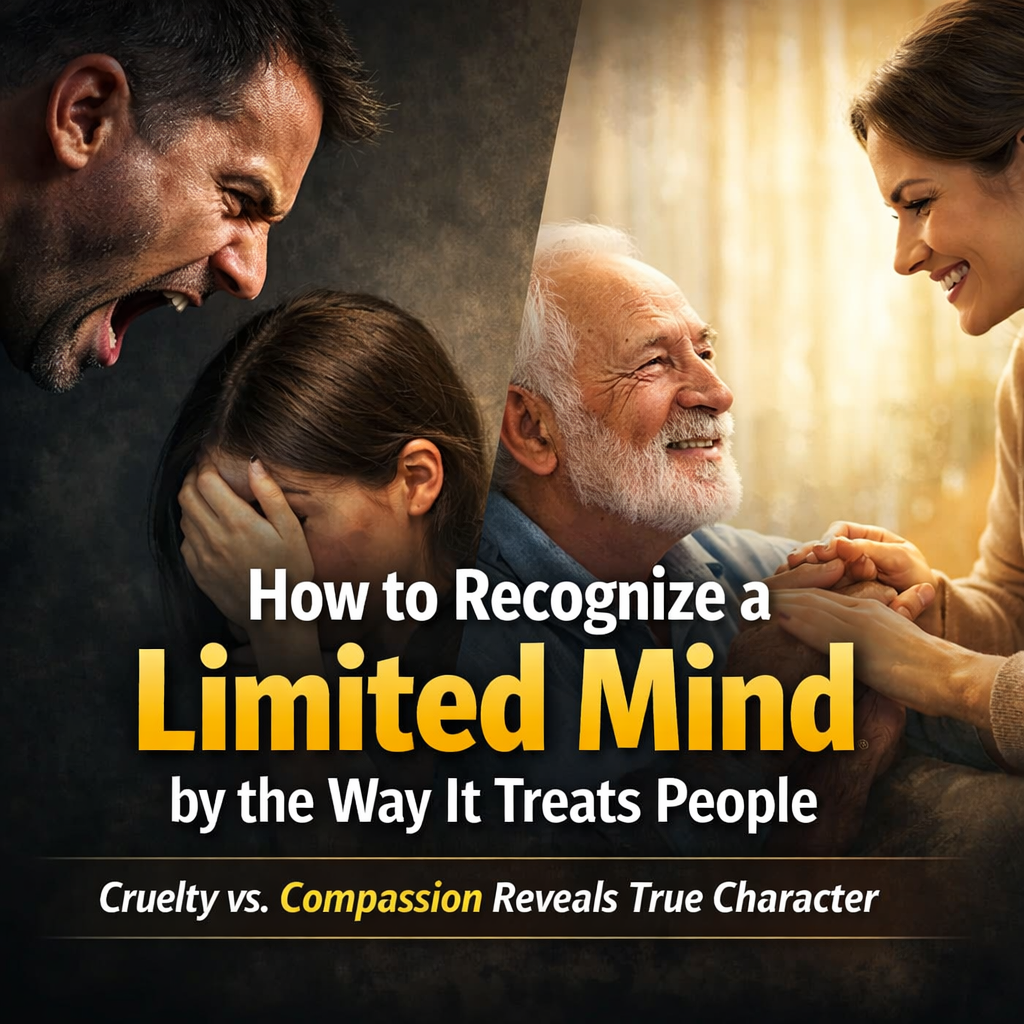
Cruelty is not a sign of strength but of inner limitation. In this article you will discover why empathy, compassion, and kindness represent advanced forms of human intelligence and how a person’s true character is revealed by the way they treat those who are vulnerable.
You may also be interested in: Lightning Strike Kills Footballer During Thailand Cup Match
Intelligence
Many people try to measure intelligence in different ways. Some look at academic degrees. Others focus on wealth, status, or influence. Still others assume intelligence is reflected in how confidently someone speaks.
Yet real life repeatedly shows something far simpler and far more meaningful.
The clearest measure of a person’s inner character does not appear on a résumé. It does not appear in an impressive speech either. Instead, it appears in behavior especially in the way someone treats people who cannot offer them anything in return.
A person may appear educated, confident, and powerful. But if they behave with cruelty, contempt, or indifference toward vulnerable individuals, the illusion disappears.
This idea forms the core of the text you provided: cruelty is often a sign of an unevolved mind, while empathy and compassion represent higher forms of human intelligence .
Understanding this difference allows us to see character beyond appearances.
Cruelty Is Not Strength It Is Emotional Underdevelopment
At first glance, cruel people may appear powerful. They may seem dominant, intimidating, or emotionally unshakeable. Sometimes they even gain temporary control through fear.
But this image is misleading.
Cruelty is rarely a sign of strength. It is often the result of unresolved weakness. People who feel the need to humiliate, ridicule, or control others are not demonstrating superiority. Instead, they are revealing their inability to manage primitive emotional impulses. Truly strong individuals do not need to crush others to prove their worth. They earn respect through calmness, self-control, and dignity. Cruelty often emerges where emotional depth is missing. It becomes the language of individuals who never learned to process vulnerability without reacting through aggression. Therefore cruelty should never be mistaken for confidence. In reality, it is usually a sign of emotional immaturity.
Why Humans Often Fear What Is Different
The original text highlights an important psychological truth. When people encounter someone who looks, thinks, lives, or loves differently, their first reaction is often fear or judgment .
From an evolutionary perspective, this reaction is understandable.
The human brain evolved to detect potential threats quickly. Anything unfamiliar could represent danger. As a result, people instinctively react cautiously toward differences.
However, maturity begins when individuals move beyond that instinct.
Emotionally developed people notice their first reaction and question it. They do not let primitive impulses dictate their behavior.
Instead, they listen.
They observe.
They try to understand before forming conclusions.
That is where real human development begins.
Empathy Is a Higher Form of Intelligence
Many people believe intelligence means quick thinking, logical reasoning, or academic success.
Those abilities certainly matter.
But there is another form of intelligence that is often overlooked: emotional intelligence.
Empathy is the ability to understand and recognize the emotional experiences of others.
It requires awareness, imagination, and the ability to temporarily step outside one’s own perspective.
Empathy is not naive.
In fact, empathetic individuals are often more perceptive than those who judge quickly.
Empathy demands discipline. Instead of reacting immediately through rejection or hostility, an empathetic person pauses and seeks understanding.
This effort requires mental energy, which is precisely why empathy represents a sophisticated form of intelligence.
Compassion Is Not Weakness
- In many environments, kindness is misunderstood.
- Calm individuals may be labeled weak.
Gentle personalities may be perceived as easy targets. - But this interpretation is deeply flawed.
- Compassion does not mean allowing abuse.
It does not mean abandoning personal boundaries. - Compassionate people can still say no. They can establish limits and leave harmful situations.
- The difference is that they do not become cruel themselves.
- A reactive individual responds to pain with more pain.
- A mature individual responds with awareness and restraint.
- True compassion is not emotional softness. It is controlled strength.
When People Use Cruelty to Appear Superior
Some individuals use cruelty as a strategy. In their worldview, empathy and kindness are weaknesses, while dominance represents power .
These people may attempt to rise through intimidation, sarcasm, or humiliation.
At first, this behavior may appear effective. It may create short-term authority.
But environments built on fear eventually collapse.
Creativity disappears. Trust vanishes. Honest communication stops.
Cruelty may produce immediate results, but it destroys long-term stability.
Therefore cruelty is not only morally questionable it is strategically limited.
Truly Intelligent People Do Not Need to Humiliate Others
A genuinely intelligent person does not measure their worth by humiliating others.
They do not constantly seek opportunities to prove superiority.
Why?
Because they already know who they are.
Insecurity demands comparison.
True intelligence seeks understanding.
Insecure individuals try to win every argument.
Mature individuals seek insight.
This difference becomes visible in everyday behavior tone of voice, patience, listening ability, and respect toward others.
Character appears in moments when someone has the opportunity to dominate but chooses humanity instead.
Cruelty Reflects Limited Thinking
The text also explains that cruel individuals often fail to develop mental pathways capable of overcoming instinctive fears .
Creativity requires openness.
Innovation requires flexibility.
But cruelty simplifies reality in extreme ways. It divides people into rigid categories such as superior or inferior. Human reality, however, is far more complex.
Those who cannot tolerate complexity often resort to rigid thinking. And rigid thinking rarely reflects deep intelligence.
Empathy and creativity both require flexibility.
They demand the ability to see beyond one’s own perspective.
How Cruelty Appears in Everyday Life
Cruelty does not always appear as obvious violence.
Often it hides behind subtle behaviors.
Humiliation
Making someone feel ashamed or embarrassed in front of others.
Indifference
Ignoring someone’s suffering even when it is obvious.
Superiority
Treating others as inferior due to status, education, or background.
Exclusion
Deliberately making someone feel invisible or unimportant.
Exploitation
Using someone’s vulnerability for personal advantage.
These behaviors may not leave physical scars, but they can leave deep psychological wounds.
How You Treat Vulnerable People Reveals Your Character
The most powerful indicator of character is how someone treats people who cannot benefit them.
How:
- does someone speak to service workers?
- do they treat children?
- do they react to mistakes?
Anyone can behave politely when there is something to gain.
True character appears when kindness is voluntary.
That is where the mask falls away.
The Difference Between Kindness and Weakness
Kindness:
- should never be confused with passivity.
- does not mean accepting abuse.
- does not mean sacrificing self-respect.
Truly kind individuals understand boundaries.
They combine empathy with strength.
They can forgive, but they also know when to walk away.
Authentic kindness carries dignity.
Why Some People Reject Kindness
Some people feel uncomfortable around genuine kindness.
They do not trust it. Sometimes they even attack it.
Why?
Because authentic kindness exposes their emotional emptiness.
Manipulative individuals view kindness as an opportunity to exploit.
Cynical individuals interpret compassion as naivety.
Cruelty can become a defense mechanism for those who have suppressed their vulnerability.
Understanding this does not excuse harmful behavior, but it helps explain it.
Moral Intelligence Matters as Much as Cognitive Intelligence
- Society often celebrates intellectual achievement while ignoring character.
- A person can be intellectually brilliant yet morally immature.
- Moral intelligence involves recognizing the impact of one’s actions on others.
- It asks not only what someone knows, but how they use that knowledge.
- Knowledge without humanity can become destructive.
The Kindest Person in the Room Is Often the Most Intelligent
One of the strongest ideas from the text is that the kindest person in the room is often the most intelligent. This may sound surprising at first. But genuine kindness usually comes from deep understanding of human vulnerability. People who understand suffering become slower to judge others. They recognize that every individual carries unseen struggles. True intelligence does not inflate the ego. Instead, it expands compassion.
Frequently Asked Questions
Is cruelty always a sign of low intelligence?
Not necessarily academically. However, cruelty usually reflects limited emotional maturity.
Does empathy mean agreeing with everyone?
No. Empathy means understanding another person’s perspective without necessarily supporting their actions.
Can a kind person be strong?
Yes. Genuine kindness requires emotional discipline and strong boundaries.
Why do some people view compassion as weakness?
Because they interpret relationships as power struggles.
Can cruel people change?
Sometimes, but change requires self-awareness and a desire for growth.
What is emotional intelligence?
It is the ability to understand and manage emotions both your own and those of others.
Why is kindness toward vulnerable people important?
Because it reveals genuine character.
How can someone develop more empathy?
By listening carefully, observing others without judgment, and remaining open to different perspectives.
A Thought Worth Remembering
The way someone treats vulnerable individuals reveals more about them than any speech about success or intelligence.
Cruelty may appear powerful on the surface, but it often exposes deep inner limitations.
Empathy, compassion, and kindness are not weaknesses. They are signs of emotional maturity and real intelligence.
In a world that sometimes admires aggression and cynicism, it is worth remembering something simple:
The person who remains human in the presence of weakness, difference, and suffering may very well be the most intelligent person in the room.
⚠️ Disclaimer and Source Hygiene
This article is intended for informational purposes only and does not replace professional psychological advice or therapy. If you experience emotional distress or abusive situations, consider seeking help from qualified professionals.
The ideas discussed here are based on expanded through general psychological interpretation.
🔔 For more tutorials like this, consider subscribing to our blog.
📩 Do you have questions or suggestions? Leave a comment or contact us!
🏷️ Tags: human psychology, empathy, compassion, emotional intelligence, kindness, cruelty, personal growth, character development, moral intelligence, human behavior
📢 Hashtags: #empathy #kindness #psychology #humanbehavior #emotionalintelligence #personalgrowth #compassion #character #mindset #lifephilosophy
