


⏲️ Estimated reading time: 9 min
Table of Contents
Hair thinning can be alarming, but the biggest mistake isn’t the thinning itself it’s how people react to the first signs. This article explains what most people do wrong, why it makes things worse, and what realistic, proven steps can help protect hair health in the long run.
Why Hair Thinning Is a Signal, Not a Sentence
Hair thinning rarely happens overnight. Most of the time, it’s a slow and silent process that sends a clear message about the body, lifestyle, or internal balance. Hair acts like a barometer. It reacts to stress, hormones, nutrition, inflammation, and daily habits.
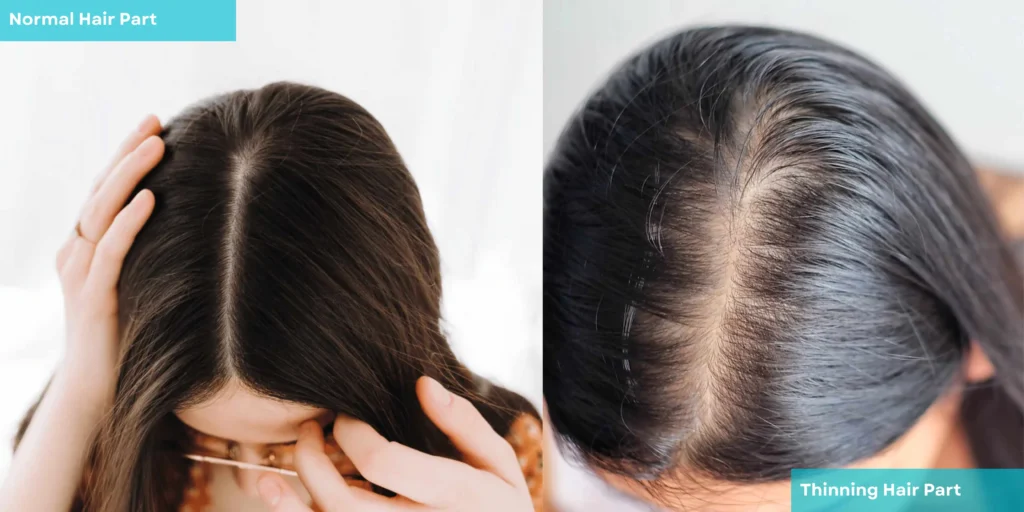
Many people notice the first signs in the mirror or in photos. The front hairline looks weaker. The part becomes wider. The ponytail feels thinner. The shower drain fills faster. The emotional response is natural. Panic often follows. Unfortunately, this is exactly where the biggest mistake begins.
The #1 Mistake: Treating Hair Thinning as a Purely External Problem
Why This Mistake Is So Common
When people notice thinning hair, most react with surface-level solutions. They switch shampoos. They buy “miracle” treatments. They apply ampoules, oils, sprays, or expensive serums. Some wash their hair more often. Others wash it less. Everyone hopes for a quick fix.
The problem is simple but uncomfortable: hair is not the cause. Hair is the result.
When you treat thinning hair only from the outside, you ignore the real mechanism behind it. It’s like repainting a wall without fixing the water leak behind it. It may look better briefly. Over time, the damage continues.
What Actually Happens When Hair Starts to Thin
Hair Follicles Don’t “Die” Overnight
A dangerous myth is the belief that follicles die suddenly. In reality, follicles go through a process called miniaturization. Each new hair becomes thinner, shorter, and weaker. The growth phase shortens. The resting phase lengthens.
This process is influenced by:
- hormonal imbalances
- chronic inflammation
- psychological stress
- nutritional deficiencies
- poor scalp circulation
No shampoo can fix these issues.
Why “Anti-Hair Loss” Products Don’t Solve the Core Problem
Marketing Makes Promises, Biology Makes Decisions
The cosmetic industry sells hope. Labels are filled with words like “fortifying,” “revitalizing,” and “anti-aging.” Many products are fine for hygiene. Some improve hair appearance. Very few address the root cause.
Even products with active ingredients only work if:
- the follicle is still active
- internal causes are addressed
- usage is consistent
- lifestyle supports regeneration
Without these conditions, results remain minimal or nonexistent.
Panic Makes Hair Thinning Worse
Stress Is a Powerful Amplifier
Once people notice thinning, many enter a constant state of alert. They check their hair daily. They count fallen strands. They compare old photos. They fear baldness or loss of femininity.
Chronic stress leads to:
- elevated cortisol levels
- reduced scalp blood flow
- systemic inflammation
- disrupted sleep
All of these accelerate thinning.
The Difference Between Hair Loss and Hair Thinning
Two Different Processes Often Confused
Hair loss means losing strands. Hair thinning means weaker strands. You can experience thinning without excessive shedding. You can also shed seasonally without true thinning.
Confusing the two leads to the wrong treatments. Many people treat hormonal thinning as temporary shedding. Others treat post-stress shedding as a genetic condition.
Hair Thinning in Women: A Frequently Overlooked Issue
Why Women Notice It Later
In women, thinning is usually diffuse. It doesn’t create classic bald spots. It shows up in the part line, volume, and texture. Many women blame dyeing or aging.
Common causes in women include:
- iron deficiency
- thyroid issues
- hormonal fluctuations
- restrictive dieting
- chronic stress
External treatments alone completely miss these causes.
Hair Thinning in Men: Premature Acceptance
The Opposite Mistake: Resignation
Some men make the opposite mistake. They notice thinning and immediately accept it as unavoidable. “It’s genetic.” “Every man in my family has it.” They take no action.
The problem is timing. Early intervention matters. Miniaturization can be slowed or partially reversed in early stages. Once advanced, options become limited.
Subtle Signals People Ignore
Hair Thinning Doesn’t Start on the Scalp
The body sends warnings before hair changes:
- persistent fatigue
- brittle nails
- dry skin
- poor concentration
- low-quality sleep
Hair is often the last system affected. Treating it in isolation ignores the bigger picture.
Why Changing Shampoo Is Rarely the Solution
Hygiene Versus Regeneration
A shampoo cleans. It may calm the scalp. It may reduce irritation. It cannot:
- balance hormones
- correct deficiencies
- reduce chronic stress
- improve sleep quality
Unrealistic expectations lead to frustration and wasted money.
Nutrition and Hair Thinning
Hair Is a Biological “Luxury”
The body prioritizes vital organs. When nutrients are scarce, hair suffers first. Diets low in protein or essential micronutrients directly reduce hair density.
Critical nutrients include:
- complete proteins
- iron
- zinc
- biotin
- vitamin D
- essential fatty acids
Without them, external treatments are pointless.
You may also be interested in: How to Fix “Too Many Preconnect Connections” in
The Role of Sleep in Hair Health
Regeneration Happens at Night
During deep sleep:
- growth hormone is released
- tissues repair
- inflammation decreases
Poor or fragmented sleep blocks these processes. Hair responds slowly, but consistently.
Scalp Circulation and Follicle Oxygenation
A Severely Underestimated Factor
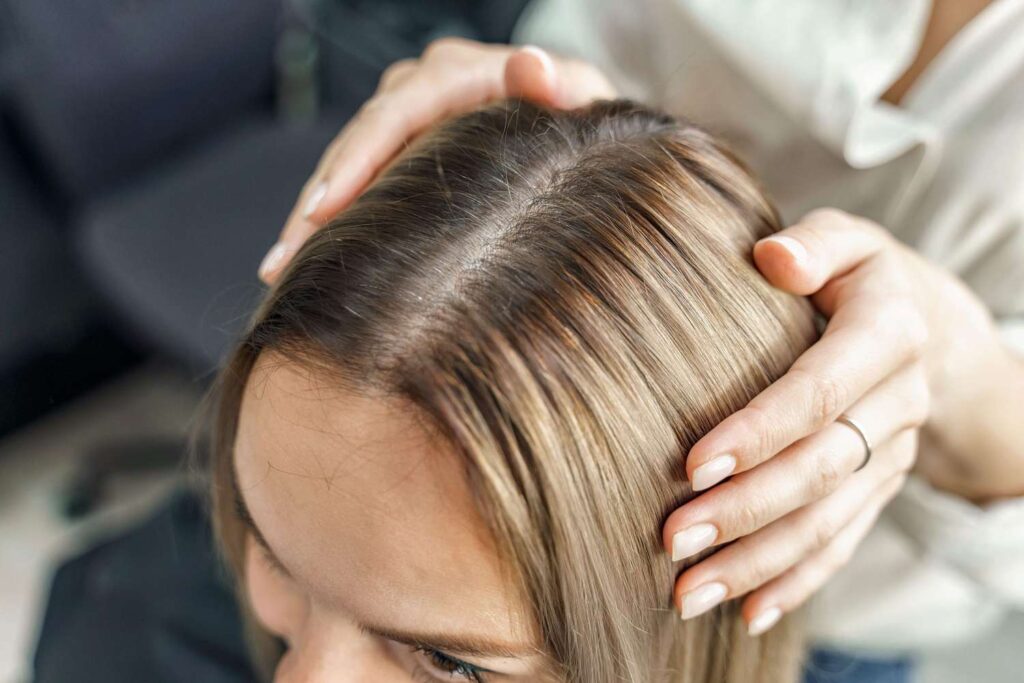
A tense, cold, or rigid scalp often signals poor circulation. Without oxygen and nutrients, follicles regress.
Factors that impair circulation include:
- chronic stress
- poor posture
- lack of movement
- smoking
Massage helps, but only as part of a broader approach.
Why “Miracle Treatments” Fail
Lack of Personalization
Hair thinning has many causes. What works for one person may be useless for another. Without assessment, treatment becomes guesswork.
What People Should Do Instead
Change the Perspective
The first correct step is understanding. Thinning is a symptom, not a cosmetic flaw. The approach must be systemic.
The Right Steps When You Notice Hair Thinning
Observe, Don’t Panic
Track changes over several months. Note:
- when it started
- other symptoms
- recent lifestyle changes
Internal Evaluation
Basic medical tests often reveal silent issues. Correcting them stops thinning in many cases.
Lifestyle Adjustment
Stress reduction, consistent sleep, and balanced nutrition are foundational. They are not optional.
Smart External Support
Products can help, but only as support. They complement internal corrections they don’t replace them.
Why Early Intervention Is Crucial
Time Works Against the Follicle
The longer you wait, the more the process stabilizes in an unfavorable direction. The first 6–12 months are critical.
Common Myths About Hair Thinning
“It’s Just Aging”
Age plays a role, but it’s rarely the only cause.
“If It’s Not Falling Out, It’s Not a Problem”
Thinning often occurs without visible shedding.
“Only Men Experience This”
False. Women are affected differently, not less.
The Psychological Impact of Hair Thinning
More Than an Aesthetic Issue
Hair is identity. Thinning affects:
- self-esteem
- confidence
- social behavior
Ignoring the emotional side increases stress and worsens the physical problem.
Acceptance Versus Action
Finding the Balance
Acceptance doesn’t mean giving up. It means clarity. Informed action makes the difference.
When Is It Too Late?
Rarely Ever
Even in advanced stages, slowing progression is possible. What matters is realism and consistency.
Why Consistency Beats Intensity
Small, Daily, Correct Actions
Small changes applied consistently create cumulative effects. Aggressive, sporadic treatments do not.
What People Who Manage Thinning Well Learn
The Core Lesson
Hair doesn’t get “fixed.” It gets supported. When the body is balanced, hair follows.
A Long-Term Perspective
Hair as a Health Indicator
When thinning is seen as feedback rather than a tragedy, many people improve not only their hair, but their overall well-being.
The One Idea You Must Remember
The #1 Mistake, Summarized
The biggest mistake isn’t that hair thins. It’s trying to fix it only on the surface while ignoring the real cause.
A Simple but Uncomfortable Truth
Hair doesn’t lie. It reflects what’s happening inside. Those who understand this gain time, control, and real results.
Often Ignored but Essential
Hair thinning doesn’t require panic. It requires clarity.
Frequently Asked Questions
Why is my hair thinning without heavy shedding?
Because follicles are producing thinner strands, not because hair is falling out massively.
Can stress alone cause hair thinning?
Yes. Chronic stress is one of the most common triggers.
Will changing shampoo stop thinning?
Rarely. Shampoo helps hygiene, not internal causes.
Is hair thinning reversible?
In early stages, often yes. In later stages, it can usually be slowed.
Does nutrition really matter?
Absolutely. Hair reflects nutritional quality directly.
Can women thin without bald spots?
Yes. Female thinning is diffuse rather than localized.
How long until real results appear?
Usually 3–6 months, sometimes longer, depending on the cause.
Does scalp massage help?
Yes, but only as part of a complete strategy.
A Necessary Shift in Perspective
Hair thinning isn’t a battle with the mirror. It’s a conversation with your body.
⚠️ Disclaimer and Source Hygiene
This article is for informational and educational purposes only and does not replace medical advice. The information is based on general research from dermatology, trichology, nutrition science, and studies on chronic stress and hormonal balance.
🔔 For more tutorials like this, consider subscribing to our blog.
📩 Do you have questions or suggestions? Leave a comment or contact us!
🏷️ Tags: hair thinning, hair health, hair loss causes, internal imbalance, stress and hair, thin hair, scalp health, nutrition and hair, hormones, regeneration
📢 Hashtags: #hairthinning, #hairhealth, #hairloss, #scalpcare, #stressmanagement, #nutrition, #balance, #selfcare, #wellbeing, #healthsignals
📚 Sources and References
Research articles from dermatology, trichology, clinical nutrition, and studies on chronic stress and hormonal influence on hair follicles.
🕊️ Secondary Sources and Testimonials
Reported experiences from individuals who addressed hair thinning through lifestyle changes and internal evaluation, not cosmetic treatments alone.
