


⏲️ Estimated reading time: 9 min
Table of Contents
Sixty-five million years ago, an asteroid struck Earth with unimaginable force. Within minutes, continents burned. Within years, the planet entered a global “winter.” This article explains, step by step, how life collapsed and why the world was never the same.
Earth
You may also be interested in: The Eternal, Cycle Of Man (AHLMA)
In Earth’s history, there are moments so violent that they rewrite the rules of life. One of those moments happened about 65 million years ago, when an asteroid slammed into shallow seas near the Yucatán Peninsula, in what is now Mexico. From that instant, the planet changed forever. Fire filled the sky, darkness followed, cold took hold, and food chains collapsed across the globe.
Why This Impact Remains the Most Famous Biological “Reset”
The end-Cretaceous impact is not just a story about dinosaurs. It is a lesson about how fragile ecosystems truly are. It shows how quickly climate can shift and how a seemingly stable planet can turn from paradise into hell in a single day. Most importantly, it proves that life does not simply disappear. It reorganizes, adapts, and sometimes explodes again in new forms.
Where the Asteroid Hit and Why the Location Mattered
The impact site was critical. The asteroid struck shallow ocean waters near the Yucatán Peninsula, forming what we now call the Chicxulub crater.
When an asteroid hits the ocean, the result is not just a crater. Water vaporizes instantly, mixing with molten rock and fine debris. This combination launches enormous quantities of material into the atmosphere, creating a global cloud of dust and aerosols.
The Energy of the Impact Explained Simply
Scientists estimate that the energy released was equivalent to roughly ten billion Hiroshima-scale nuclear bombs detonating at once. This comparison is not exaggeration. It helps us understand the scale involved. This was not a regional disaster. It was a planetary shock.
Second Zero: When Earth “Rang Like a Bell”
At the moment of impact, Earth itself shook. Massive seismic waves traveled through the planet, while atmospheric shock waves raced around the globe. The planet received such a powerful blow that its energy rippled in every direction.
The Ocean Did Not Boil It Vanished
One of the most terrifying details is that the water near the impact site did not slowly boil. It vaporized instantly. In everyday terms, boiling is a process. Here, it was an immediate phase change. Water became steam in a fraction of a second.
Earth’s Crust Turned into a Weapon
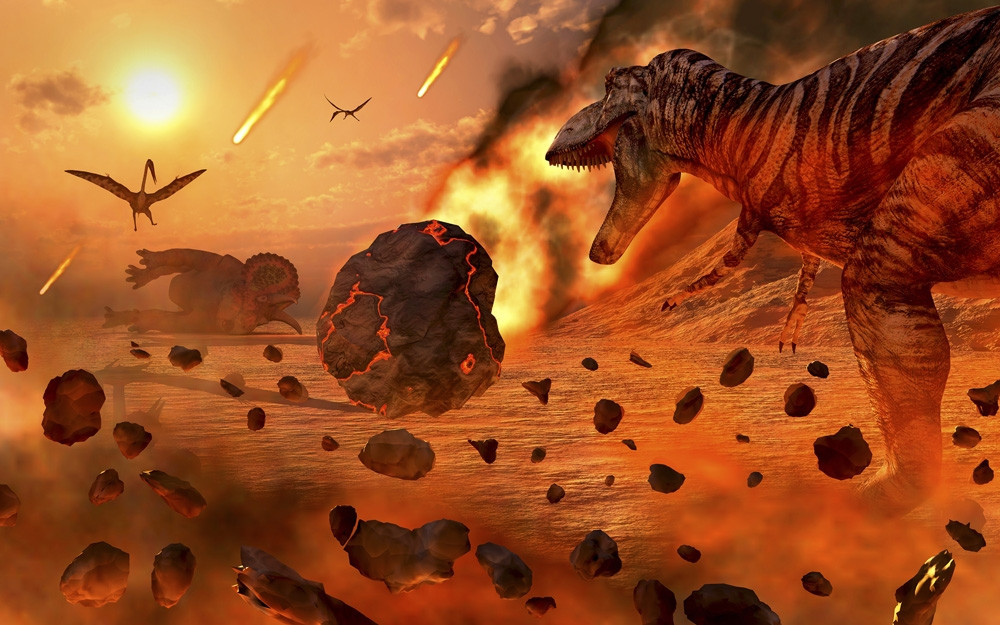
The crust shattered and was thrown tens of miles into the air. Vast volumes of rock were ejected, only to fall back to Earth later as burning projectiles. The planet effectively bombarded itself with its own molten debris.
The First Five Seconds: Instant Annihilation
Within hundreds of miles of the impact, all life was destroyed instantly. This was not burning or suffocation. It was vaporization. Temperatures and pressures were so extreme that biology simply ceased to exist in that zone.
The First Two Minutes: Shockwaves and Air as a Weapon
Within minutes, supersonic shockwaves raced outward. The air itself became lethal, capable of stripping skin and throwing massive animals like toys. The atmosphere was no longer a protective layer. It became an instrument of destruction.
The First Thirty Minutes: Rocks Return from Space
Billions of tons of debris were blasted into space. Many fragments briefly orbited Earth before falling back, glowing red-hot. What followed was a global rain of fire that ignited forests and grasslands across entire continents.
Days of Fires That Could Not Go Out
Unlike normal wildfires, these fires could not burn themselves out. New burning material kept falling from the sky. For days, flames reignited again and again, consuming what little remained untouched.
Forty-Five Minutes Away: The Illusion of Safety
Even regions thousands of miles away were not safe. Temperatures rose rapidly in distant lands. What felt survivable at first quickly crossed lethal thresholds. Distance offered only a brief delay, not protection.
Ninety Minutes Later: Surface Temperatures Soar
As temperatures climbed to extreme levels, survival above ground became nearly impossible. Some creatures sought shelter in burrows, caves, or water. These refuges helped temporarily, but only delayed the inevitable for most species.
Two Hours After Impact: Firestorms and Burning Skies
Debris clouds overheated and ignited. Massive firestorms formed, driven by violent winds. Valleys experienced sudden pressure drops that sucked flames inward. Weather systems collapsed into chaotic infernos.
Walls of Fire Moving Across the Land
Walls of flame swept across the surface at steady speeds. They did not explode and vanish. They advanced relentlessly, consuming everything in their path.
North America: From Paradise to Hell in Hours
Only hours earlier, North America was rich with life. After the impact, it became one of the most hostile environments the planet had ever known. The transformation was abrupt and total.
Five Hours Later: The Real Horror Begins
After the fires, a greater threat emerged. Dust and soot filled the atmosphere, blocking sunlight. The Sun disappeared behind a thick veil that would linger for years. Darkness spread worldwide.
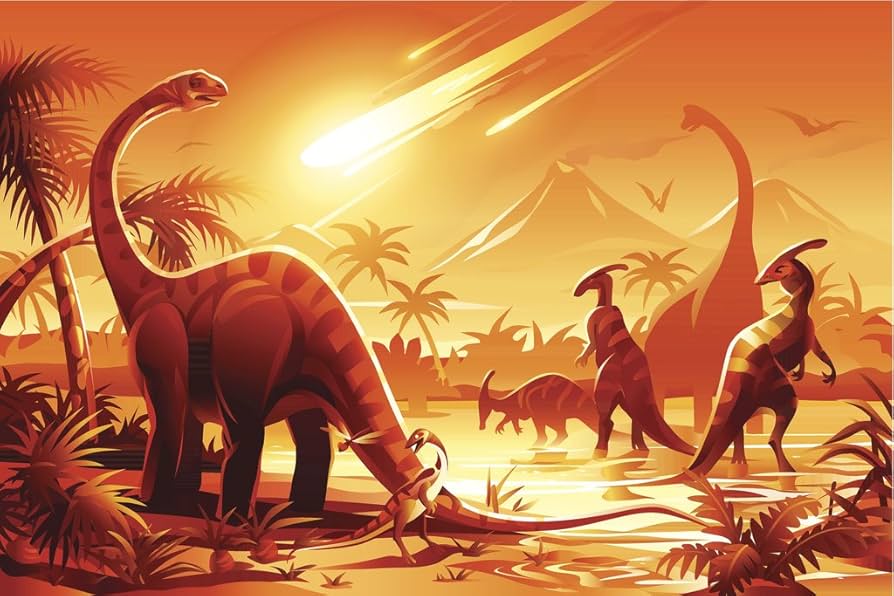
From Furnace to Freezer: The Start of Global Winter
Without sunlight, temperatures plunged. Photosynthesis stopped. Plants withered. Algae died in massive numbers. The engine that powered Earth’s ecosystems shut down.
Why Photosynthesis Is the Base of All Life
Plants and algae form the foundation of nearly every food chain. When they stop producing energy, herbivores starve. Carnivores soon follow. Collapse begins at the bottom, not the top.
The Dust Curtain That Stopped Life
Trillions of tons of fine silicate dust remained suspended in the atmosphere. This dust blocked sunlight for years, preventing plant recovery and driving long-term cooling.
A Global Temperature Drop That Changed Everything
A sharp drop in global temperature disrupted weather patterns, froze regions, altered ocean currents, and stressed organisms adapted to stable climates. Life did not need total freezing to fail. Instability alone was enough.
Food Chains Collapse from the Bottom Up
Grass dies first. Then herds disappear. Finally, predators starve. This bottom-up collapse defines mass extinctions.
One Week Later: Resources Are Gone
Within a week, food sources were critically depleted. Burned forests no longer fed herbivores. Oceans without algae could not support marine life.
Why Giant Herbivores Died First
Large herbivores required enormous amounts of food daily. With vegetation gone, migration failed. Starvation weakened them, making survival impossible.
Carnivores: A Short Delay, Then Collapse
Predators survived briefly by feeding on carcasses. That food source quickly vanished. Even apex predators eventually died of starvation.
Oceans Were Not a Safe Haven
Marine life also suffered. Without algae, oxygen levels dropped. Large marine animals suffocated, proving how tightly connected ocean life is to sunlight.
Extinction Happened in Waves
The extinction was not a single moment. It came in stages:
Immediate death from heat and shock.
Global fires.
Prolonged darkness.
Long-term starvation and ecosystem collapse.
Who Survived and Why
Some life forms survived. Typically, they were small, adaptable, able to hide, capable of living on minimal resources, and quick to reproduce.
Modern Lessons from an Ancient Disaster
This event teaches us how fast climate can change, how fragile food webs are, and how dependent life is on stability and sunlight.
Why “Normal” Is a Temporary State
Life adapts to conditions, but adaptation needs time. Sudden planetary shocks remove that time. Stability is not permanent. It is a pause between extremes.
Pros and Cons of the Impact Theory
The asteroid impact explains the suddenness of extinction. Some scientists also discuss volcanic activity as a contributing factor. Still, the impact remains the clearest trigger for rapid global collapse.
Questions That Remain Open
How long darkness lasted in different regions.
How oceans reacted at varying depths.
Why some species survived better than others.
Why This Story Also Works as a Human Metaphor
When the foundation of a system collapses, everything above it falls. Size, power, or dominance do not guarantee survival. Adaptability does.
Frequently Asked Questions
What was the Chicxulub impact?
It was a massive asteroid impact near the Yucatán Peninsula linked to the extinction of the non-avian dinosaurs.
How fast did the asteroid hit Earth?
Estimates suggest speeds over 43,000 miles per hour.
Did everything die instantly?
No. Some regions were destroyed immediately, while global extinction unfolded over years.
Why did the sky go dark?
Dust and aerosols blocked sunlight, halting photosynthesis.
How long did the dust remain?
Some estimates suggest atmospheric circulation of dust lasted decades.
What caused the global winter?
The loss of sunlight led to cooling and ecosystem collapse.
Why did large animals die first?
They needed large amounts of food that no longer existed.
Did oceans suffer too?
Yes. Without algae, oxygen levels dropped and marine life collapsed.
Key Takeaway Thoughts
The impact triggered a planetary chain reaction.
Fire killed fast. Darkness killed slowly.
Photosynthesis is the backbone of life.
Adaptability matters more than size.
The Day Earth Became Another World
This asteroid impact tells the story of a planet that lost its balance in an instant. Hours of fire were followed by years of darkness and cold. Giants fell first. Small survivors carried life forward. It remains the clearest reminder that stability is precious, fragile, and never guaranteed.
⚠️ DISCLAIMER
This article is for informational and educational purposes only. It does not replace academic research or expert consultation. The information is based on widely accepted scientific interpretations and narrative reconstructions of the end-Cretaceous impact event.
🔔 For more tutorials like this, consider subscribing to our blog.
📩 Do you have questions or suggestions? Leave a comment or contact us!
🏷️ Tags: asteroid impact, Chicxulub, dinosaur extinction, Cretaceous, Yucatan, global winter, food chain collapse, paleontology, Earth history, natural disasters
📢 Hashtags: #asteroidimpact, #dinosaurs, #Chicxulub, #extinction, #paleontology, #science, #geology, #earthhistory, #climate, #ecosystems
📚 Sources and References
General scientific consensus on the Chicxulub impact and end-Cretaceous mass extinction, synthesized into an accessible explanatory narrative.
🕊️ Secondary Sources and Testimonies
Further reading is recommended from natural history museums, peer-reviewed journals, and academic publications in geology, climatology, and paleontology.
