


⏲️ Estimated reading time: 9 min
Table of Contents
How Judges in Constanța Motivated Their Decision. Wiz Khalifa was definitively sentenced to nine months of imprisonment to be served, following an incident involving the possession and public consumption of cannabis at a music festival in Costinești, Romania. Judges in Constanța justified the decision by invoking prevention, deterrence, and the strong influence the artist has on a young audience.
The Case in Brief
The case that brought Wiz Khalifa before Romanian courts stems from an incident that took place during a major music festival in the seaside resort of Costinești. According to information made public in the court’s reasoning and media reports, the artist was found in possession of approximately 18 grams of cannabis and allegedly consumed cannabis on stage, in front of the audience.
Who Is Wiz Khalifa and Why the Case Drew Public Attention
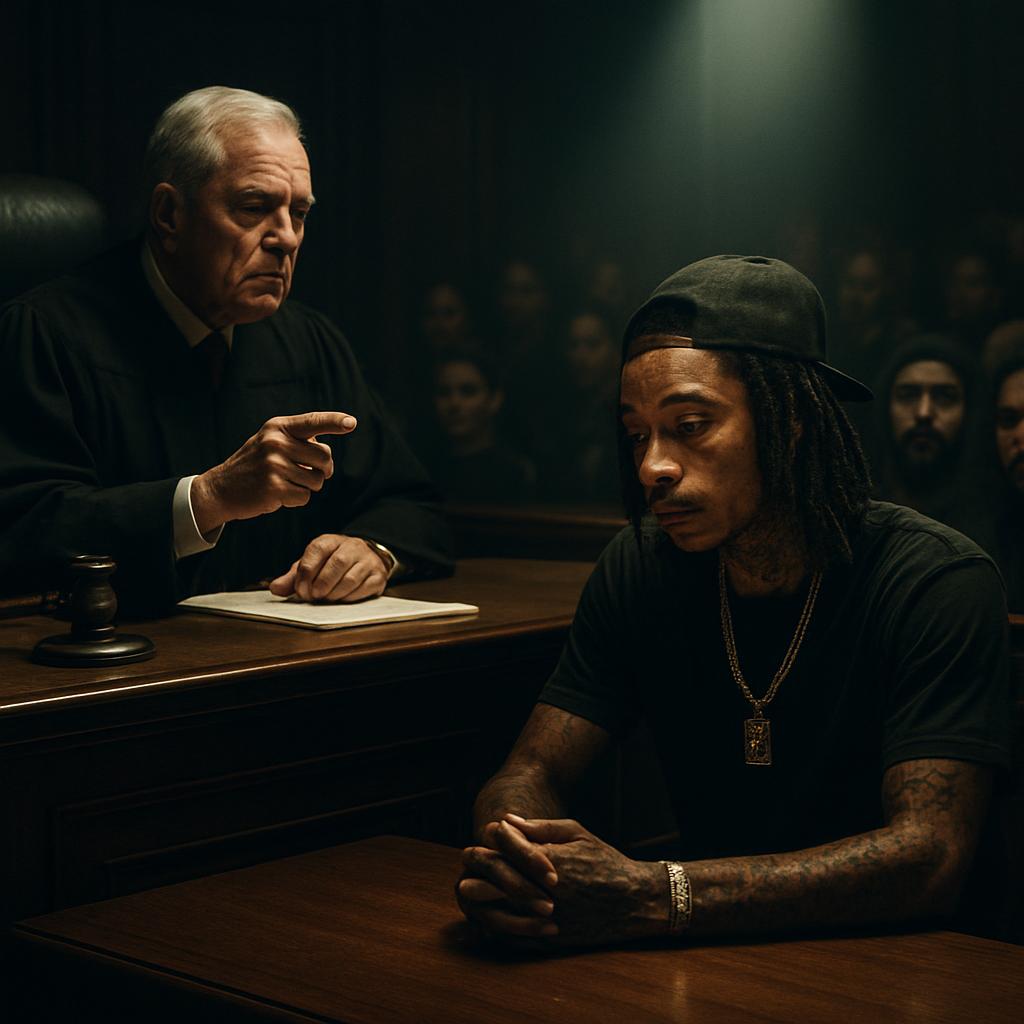
Wiz Khalifa is a globally recognized American rapper with a massive following, especially among young people. This wide influence played a key role in the court’s assessment of the case. Judges emphasized that when a public figure commits an illegal act in front of thousands of fans, the impact goes far beyond the individual and enters the realm of public interest. The message transmitted to the audience was considered highly relevant.
What Exactly He Was Convicted For
The conviction concerns possession of drugs for personal use and illegal consumption, as defined under Romanian law. Law no. 143/2000 clearly states that possession of risk drugs for personal use, without legal right, is punishable by imprisonment ranging from three months to two years or by a criminal fine.
What Prosecutors and Judges Noted About the Incident
According to information reported in the press, the incident occurred on July 13, 2024, around 11:55 p.m., while Wiz Khalifa was performing at the “Beach, Please!” festival in Costinești. The quantity mentioned in the case file was approximately 18 grams of cannabis.
Why the Case Did Not Remain at the Level of a Fine
Initially, public information suggested that the court had imposed a criminal fine, a common solution in cases where the law allows an alternative between imprisonment and a fine. In April 2025, media outlets reported a criminal fine of 3,600 lei, calculated under the Romanian “day-fine” system.
How the Criminal Fine System Works and Why It Matters
Under Romanian criminal law, fines are usually determined through the “day-fine” mechanism. The court sets a number of days and a value per day, and the total fine results from multiplying the two. This system is regulated by Article 61 of the Romanian Criminal Code.
Why the Constanța Court of Appeal Chose Prison With Execution
In its publicly cited reasoning, the court shifted its focus toward general deterrence and the exemplary nature of the punishment. Judges argued that combating drug-related offenses does not only involve fighting trafficking, but also discouraging possession for personal use, as it indirectly fuels the illegal market.
The Core Idea in the Court’s Reasoning: The “Message” Sent to Young People
A key passage highlighted by the media refers to the idea that the artist transmitted a message of normalization of illegal behavior. The court stressed that this message could encourage drug use among young people, especially given the context: a concert stage, a large crowd, and a predominantly young audience.
Why Judges Considered the Behavior “Ostentatious”
The court described the public consumption of cannabis as ostentatious behavior, significantly increasing the social danger of the act. In the judges’ view, not only the substance matters, but also the place, the timing, and the influence wielded by the person committing the act in public view.
The Emphasis on “Exemplarity”
Courts sometimes invoke the concept of general prevention, meaning that a punishment is meant not only to sanction the offender, but also to discourage similar conduct by others. In this case, judges explicitly stated that the sentence was intended to serve as an example, contributing both to the re-education of the defendant and to the deterrence of similar actions.
The Role of Confession and Simplified Procedure
According to public information, Wiz Khalifa acknowledged the facts, and the case was handled through a simplified procedure. While such a procedure can reduce trial duration and influence sentencing limits, it does not automatically guarantee a lenient punishment when the court assesses a high level of social danger.
Why Nine Months and Not Another Sentence
The law allows for a sentencing range between three months and two years of imprisonment, or a fine. By choosing a nine-month sentence, the court positioned the punishment in a range it considered appropriate to achieve general deterrence and to sanction more severely the public consumption of drugs in front of young audiences.
What “Prison With Execution” Means in Simple Terms
“Prison with execution” means the sentence is not suspended and is not merely symbolic. In practice, it implies actual enforcement of the prison term, according to legal procedures. In cross-border cases, enforcement involves judicial cooperation mechanisms rather than just the court ruling itself.
Why the Court Insisted on Protecting “Values Protected by Criminal Law”
The reasoning emphasized that social protection is achieved not only by punishing drug trafficking, but also by sanctioning possession for personal use. The court linked this approach to prevention and deterrence, aiming to reduce the broader phenomenon of drug use.
How This Case Fits Into the Broader Public Debate on Drugs and Youth
In Romania, drug use among minors and young people has become a growing topic of public debate. Public information campaigns consistently underline that possession of risk drugs for personal use is punishable by law, and courts increasingly stress the importance of discouraging the normalization of such behavior.
Impact on the Events Industry and Invited Artists
Definitive decisions in high-profile cases can influence industry practices. Event organizers may impose stricter rules, contractual clauses, or controls. Artists, in turn, may become more cautious about differences between national laws, even when certain behaviors are tolerated elsewhere.
What the Public Should Understand From the Judges’ Reasoning

The court’s reasoning conveys three dominant ideas: context matters, influence matters, and the message matters. Judges did not treat the incident as a private lapse, but as a public act with potential social consequences, especially in an environment dominated by young people.
The Legal Status of Cannabis in Romania, Briefly Explained
In most reported cases, cannabis is classified as a “risk drug” under Romanian law. Possession for personal use is punishable by imprisonment or a fine, depending on circumstances and judicial assessment.
What Is Known Publicly About the Final Nature of the Decision
Media reports state that the decision of the Constanța Court of Appeal is final and that the sentence imposed is nine months of imprisonment to be served.
Frequently Asked Questions
Was Wiz Khalifa convicted of drug trafficking?
No. According to public information, the case concerns possession for personal use and illegal consumption, not trafficking.
What quantity of cannabis was mentioned in the case?
The reasoning cited in the press mentions approximately 18 grams of cannabis.
Where did the incident take place?
It occurred during a music festival in the seaside resort of Costinești.
Why did it matter that the act took place on stage?
Judges emphasized public consumption in front of a large and predominantly young audience, which increased the perceived social danger.
What does Romanian law say about possession of risk drugs for personal use?
Law no. 143/2000 provides for imprisonment from three months to two years or a criminal fine.
What does a “criminal fine” based on day-fines mean?
It means the court sets a number of days and a monetary value per day, and the total fine is calculated accordingly.
Why did the Court of Appeal choose prison instead of a fine?
The reasoning invoked general deterrence, the exemplary nature of the punishment, and the message sent to young people.
Did admitting guilt automatically help him avoid prison?
No. Admission can influence procedure and sentencing, but it does not guarantee a lighter punishment when social danger is deemed high.
Is the decision final?
According to central media reports, the decision of the Constanța Court of Appeal is final.
Is there an indirect message for event organizers and artists?
Yes. The ruling underlines that public behavior on stage may be judged more severely, especially when it influences young audiences.
Key Takeaways for Readers
The case was treated as a public act, not a private one.
The court focused strongly on deterrence and exemplarity.
The law allows both fines and imprisonment, depending on context.
The judges emphasized the impact on young people and the risk of normalization.
🟦 Disclaimer and Source Hygiene
This article is for informational purposes only and does not constitute legal advice. For case-specific legal interpretations, consult a qualified lawyer. The information presented is based on publicly available media reports and Romanian legislation, prioritizing authoritative sources.
🔔 For more tutorials like this, consider subscribing to our blog.
📩 Do you have questions or suggestions? Leave a comment or contact us!
🏷️ Tags: Wiz Khalifa, Romania conviction, Constanța Court of Appeal, Beach Please Costinești, cannabis Romania, Law 143/2000, drug possession personal use, court reasoning, prison sentence, justice news
📢 Hashtags: #WizKhalifa #Romania #ConstantaCourt #Justice #BeachPlease #Costinesti #Law143 #Cannabis #RomanianNews #Deterrence
📚 Sources and References
Media reports on the court’s reasoning and sentencing decision.
Romanian legislation: Law no. 143/2000 on preventing and combating illicit drug trafficking and use.
Romanian Criminal Code, Article 61, regarding the day-fine system.
🕊️ Secondary Sources and Testimonies
You may also be interested in: Happy Birthday Russell Crowe
National media coverage detailing the indictment, trial, and final ruling.
