

⏲️ Estimated reading time: 35 min
Table of Contents
A EuroMillions player won more than €141.9 million in November 2026, raising a fascinating question: how did they choose their numbers? Explore the winning combination, lottery mathematics, popular selection strategies, and what we can genuinely learn from a jackpot without confusing luck with a guaranteed system.
The €141.9 Million EuroMillions Jackpot That Everyone Is Talking About
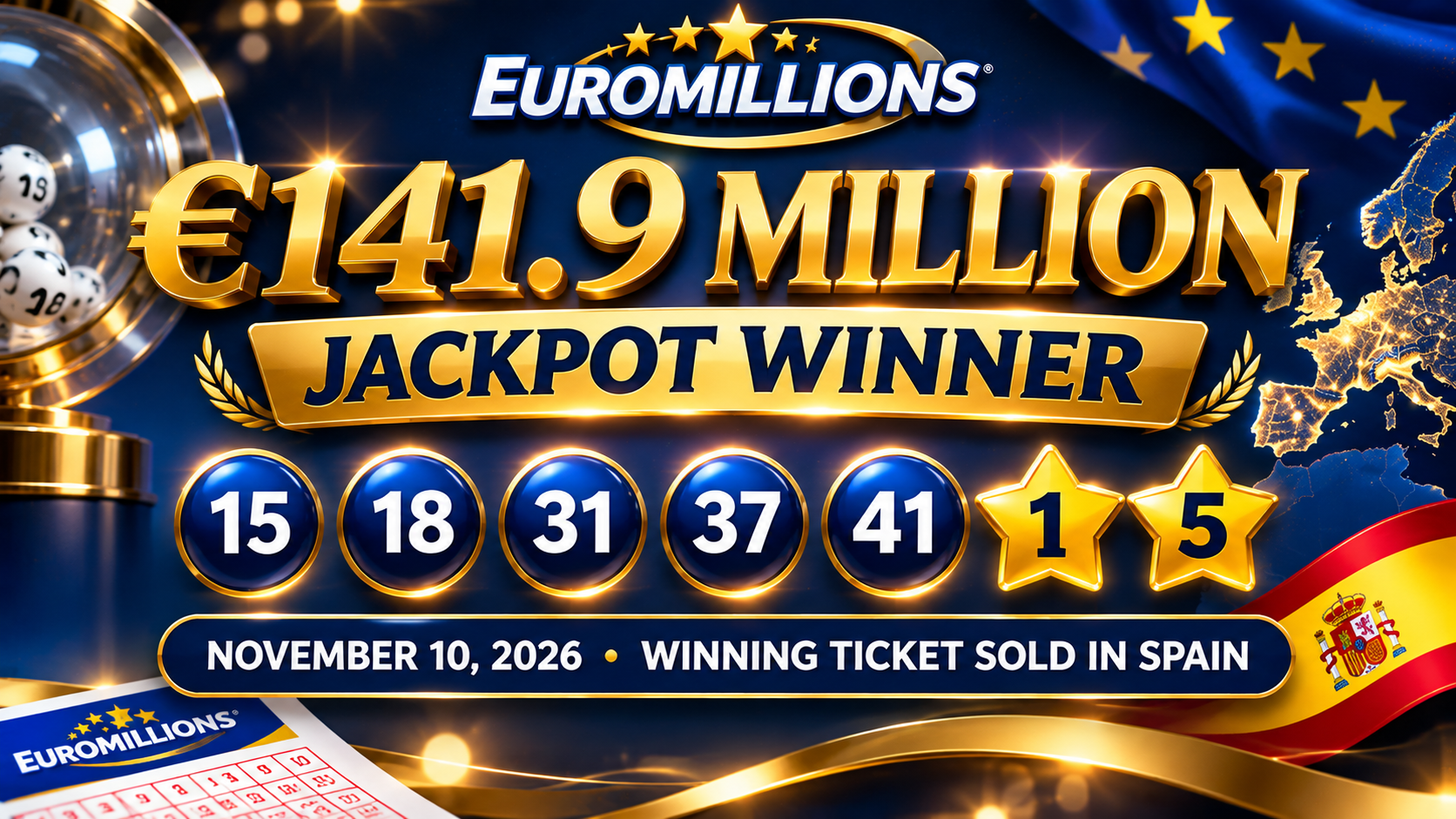
On Tuesday, November 10, 2026, EuroMillions produced a remarkable result. According to the Belgian National Lottery results shown in the accompanying screenshot, one ticket matched all five main numbers and both Lucky Stars. The published jackpot prize was €141,899,445, a life-changing amount that immediately raises questions about how the winning combination was selected.
Whenever a jackpot reaches this size, curiosity grows far beyond the identity of the winner. People want to understand whether the successful player used meaningful dates, random numbers, statistical patterns, or a carefully designed selection system. Some wonder whether years of experience contributed to the result. Others suspect that a particular combination of high and low numbers made the difference.
However, one important distinction must guide this discussion. The winning numbers are publicly visible, but the winner’s personal selection strategy has not been established by the screenshot. We can examine the combination, explain how different selection methods work, and calculate the actual probabilities. We cannot responsibly claim to know why the winner selected those numbers without a verified statement from the player or lottery operator.
This article explores what the November 10 draw reveals, what mathematics tells us about EuroMillions, and why even the most carefully selected ticket remains subject to chance.
The Winning EuroMillions Numbers for November 10, 2026
The winning combination contained three numbers above 30, two below 20, and two Lucky Stars from the lower part of their range. Although that arrangement may appear carefully balanced, its appearance alone does not reveal the selection method.
The jackpot also attracted attention because the screenshot reports only one top-prize winner across participating countries. It does not identify that player’s nationality, ticket purchase location, or whether the numbers were chosen manually or generated automatically.
Where Was the Winning EuroMillions Ticket Sold?
The Irish National Lottery’s official results history provides an important detail that was not visible in the Belgian screenshot: the jackpot-winning ticket was sold in Spain. This confirms the country of sale, although it does not establish the winner’s identity, hometown, or personal approach to choosing numbers. Irish National Lottery
That distinction matters because EuroMillions operates across several European countries. The same main draw determines prizes for participating players, but the results pages may display national winner counts alongside European totals. For November 10, Belgium recorded no jackpot winner, while one player in Belgium matched all five main numbers without either Lucky Star.
The confirmed Spanish ticket makes the story especially interesting for readers throughout Europe. Yet the central question remains unanswered: did the winner deliberately choose 15, 18, 31, 37, 41, and Lucky Stars 1 and 5, or did a random selection generate them? Until reliable evidence emerges, both possibilities remain open.
Video Extraction EuroMillions
Did the Winner Have a Secret EuroMillions Strategy?
Stories about lottery winners often suggest that the winning player discovered a special technique. Perhaps they studied previous draws, followed recurring numbers, or used a formula developed over many years. These explanations are attractive because they turn an unpredictable event into something that appears understandable and repeatable.
Unfortunately, a winning ticket does not prove that a particular system works. Millions of combinations are selected across Europe, and some eventually win major prizes. After the draw, it becomes easy to examine the winning numbers and discover patterns that look meaningful. Statisticians call this a form of hindsight bias: we attach explanations to outcomes after we already know what happened.
For the November 10 jackpot, no verified public evidence reviewed for this article establishes the winner’s personal number-selection strategy. Therefore, any suggestion that the Spanish winner relied on birthdays, mathematical sequences, artificial intelligence, or previous results would be speculation rather than reporting.
Could the Winner Have Used Personal Numbers?
Many lottery players choose numbers associated with meaningful events. Birthdays, anniversaries, family milestones, and favorite dates are among the most familiar examples. A person might choose 15 because of a birthday, 18 because of a wedding anniversary, and 31 because it represents the final day of a memorable month.
The November 10 combination includes 15, 18, and 31, which could fit a date-based selection. However, the presence of those numbers does not establish that the winner used dates. The remaining numbers, 37 and 41, could reflect ages, personal preferences, or a completely random choice.
Personal numbers can make participation more meaningful, but they cannot improve the mathematical probability of winning. Each valid combination has exactly the same chance of appearing in a fair draw, regardless of whether its numbers carry emotional significance.
Could a Random Number Generator Have Selected the Winning Ticket?
EuroMillions allows players to choose numbers manually or use an automatically generated selection. The random option removes the need to study combinations, compare historical results, or decide which numbers feel lucky. For someone who enjoys occasional participation, it offers a straightforward way to obtain a valid entry.
Random selection does not make a ticket more likely to win than a manually chosen combination. Its main advantage is practical: it avoids relying on personal preferences or imagined patterns. It may also produce combinations that a person would not naturally choose, including numbers from the upper part of the available range.
The November 10 combination could have been generated randomly. It could equally have been selected manually. Without verified information about the winning ticket’s purchase method, neither explanation should be presented as fact.
A Closer Look at the Winning Number Pattern
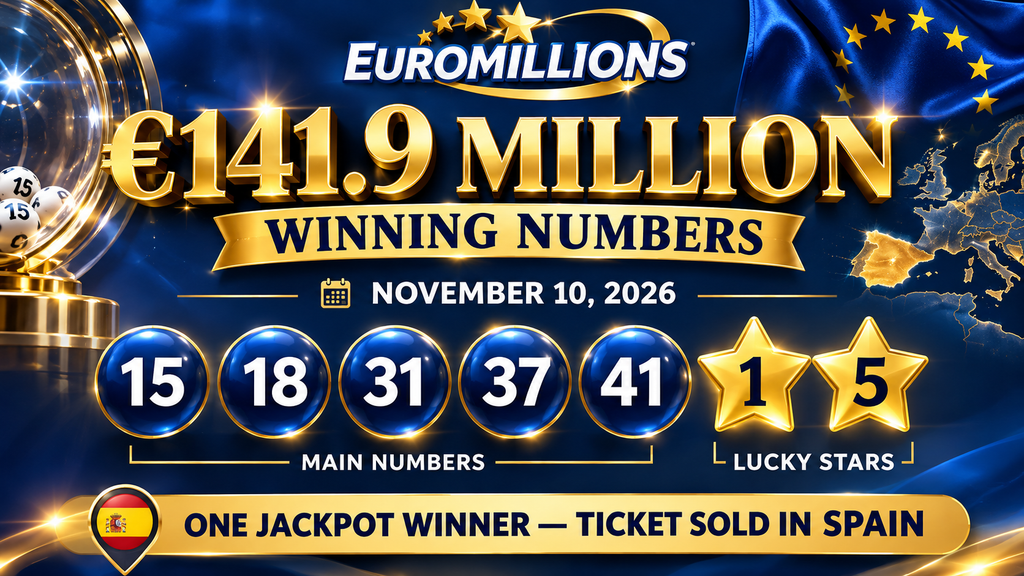
The winning numbers provide several interesting statistical observations. Four of the five main numbers are odd, while only one is even. Two numbers fall between 1 and 25, and three fall between 26 and 50. The sum of the five main numbers is 142, and none of them are consecutive.
These features can make the combination appear deliberately structured. Nevertheless, they describe the result rather than explain how it was selected. Every combination has properties such as an odd-even distribution, a numerical total, and a particular arrangement across the available range.
The correct way to analyze these patterns is to separate their descriptive value from their predictive value. They can help readers understand what happened, but they cannot establish a method for predicting the next winning numbers.
Some lottery guides recommend selecting a balanced mix of odd and even numbers, such as three odd numbers and two even numbers. This approach may seem logical because both types are equally represented in the full range from 1 to 50. However, no rule requires each individual draw to contain a balanced distribution.
The November 10 result demonstrates that an uneven combination can win the jackpot. Four odd numbers and one even number were sufficient because those were the numbers selected in the draw. A player choosing three odd and two even numbers would not have gained any special mathematical advantage.
Interestingly, while individual combinations have equal probabilities, some broad categories of combinations contain more possible tickets than others. For example, there are more combinations with three odd and two even numbers than combinations containing five odd numbers. That fact describes groups of tickets, not the likelihood of one particular ticket.
High and Low Numbers: Why 31, 37, and 41 Matter
The EuroMillions main number range extends from 1 to 50. When analysts divide that range into two equal sections, numbers 1–25 form the lower group, while 26–50 form the upper group. The November 10 draw contained two lower numbers and three upper numbers.
This is relevant when discussing how people choose lottery numbers. Birthdays based on calendar days naturally favor numbers from 1 to 31. Players who rely exclusively on birthdays may therefore overlook numbers between 32 and 50. In this draw, both 37 and 41 fall outside the usual birthday-day range.
Choosing numbers above 31 does not increase the chance of matching the draw. However, it may reduce the likelihood of sharing a jackpot with people who favor birthday-based selections, assuming those preferences influence the actual pool of tickets. That is a possible prize-sharing consideration, not a way to improve the chance of winning.
The Winning Number Sum: Does 142 Reveal Anything?
Adding the five main numbers produces a total of 142. Some lottery enthusiasts examine sums because extremely low or high totals may appear unusual. Others prefer combinations whose totals fall near the middle of the mathematically possible range.
For five distinct numbers from 1 to 50, the smallest possible sum is 15, while the largest is 240. The expected sum for a randomly selected five-number combination is 127.5. Therefore, 142 is somewhat above the average but remains an entirely ordinary possible outcome.
A sum of 142 does not provide a predictive formula. Many different five-number combinations produce the same total, and each specific combination remains equally likely. Selecting a ticket based on a preferred total simply narrows personal choices without changing the probability assigned to any chosen line.
Did the Previous Draw Predict Number 37?
One detail stands out in historical comparisons: number 37 also appeared in the EuroMillions draw on Friday, November 6, 2026. Its appearance again on November 10 may seem significant to players who track repeated numbers. Yet consecutive appearances are fully compatible with a fair random lottery. Winning Numbers
For any particular main number, the probability of appearing in a EuroMillions draw is five out of fifty, or 10%. If number 37 appeared in the previous draw, its probability of appearing in the next independent draw remains 10%. The previous result does not make it more or less likely.
This is an important lesson because many lottery systems mistakenly assume that recently drawn numbers should be avoided. Others believe that repeated numbers are entering a lucky period. Neither belief changes the mathematics of the next draw.
How EuroMillions Actually Works: The Mathematics Behind the Jackpot
EuroMillions uses a straightforward structure. Players select five different main numbers from 1 to 50 and two different Lucky Stars from 1 to 12. The draw then randomly selects five main numbers and two stars. A jackpot ticket must match all seven selected values.
The system produces an enormous number of possible combinations. There are 2,118,760 ways to select five numbers from fifty and 66 ways to select two stars from twelve. Multiplying those quantities gives 139,838,160 possible complete combinations.
The Belgian National Lottery confirms that the jackpot odds for one standard entry are 1 in 139,838,160. Those odds apply to each valid combination, whether selected manually, randomly, or through a statistical system. Nationale Loterij+1
Calculating the EuroMillions Jackpot Odds
The notation represents combinations, meaning the order in which numbers are selected does not matter. Choosing 15, 18, 31, 37, and 41 produces the same main-number entry regardless of the order in which those five numbers are written.
Because there is only one exact jackpot combination for each draw, the probability of a single line winning is approximately 0.000000715%. This tiny percentage helps explain why jackpot victories are exceptional events, even when millions of tickets are purchased.
It also highlights the central limitation of every prediction system. Historical charts, number-frequency tables, and artificial intelligence cannot change the number of possible combinations in a properly conducted independent draw.
EuroMillions Probability Calculator
This mathematical illustration assumes every line is different. The €2.50 option reflects Belgium’s standard entry price; the other price is hypothetical. More entries increase spending and do not guarantee a prize.
The calculator shows that purchasing more distinct combinations increases the total probability of winning in a single draw. However, it also increases the cost. Even with one hundred unique entries, the probability of winning the jackpot remains extremely small.
Buying duplicate lines does not improve the probability that at least one line matches the jackpot, because identical entries depend on the same outcome. It may affect the amount claimed if that combination wins, subject to applicable prize-sharing rules, but it does not create additional distinct chances.
Popular EuroMillions Number-Selection Strategies Explained
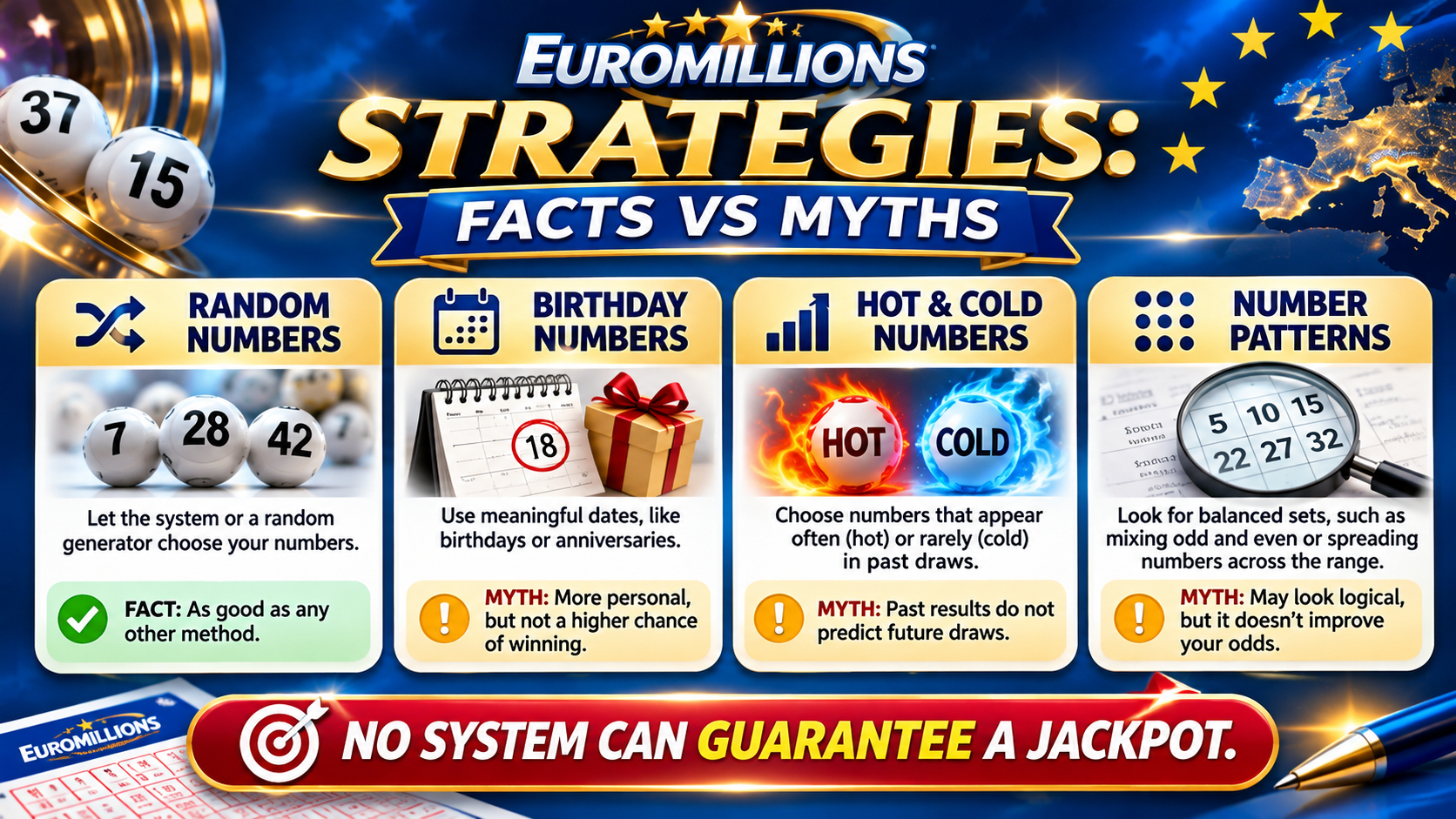
Although no selection strategy can predict a fair EuroMillions draw, players use many methods to decide which numbers to enter. Some approaches are based on personal traditions, while others involve historical statistics, spreadsheets, or software. Understanding these methods can help readers distinguish harmless preferences from misleading promises.
A useful comparison begins with the question each method actually answers. Random selection answers which valid combination to use without personal bias. Birthday selection answers which numbers feel meaningful. Frequency analysis describes past results. None of these methods answers which combination will appear next.
Strategy 1: Random Selection
Random selection is one of the simplest methods because it does not require historical research or complex calculations. A player allows the lottery system or another suitable random generator to produce a valid combination. The resulting ticket may contain consecutive numbers, unusual distributions, or values that the player would never have selected personally.
The mathematical advantage of random selection over a specific manually chosen line is zero. Both have the same jackpot probability. Nevertheless, random selection avoids the temptation to treat recent results or familiar numbers as reliable predictions.
For occasional players, the simplicity of random selection may be appealing. It requires less time, encourages fewer assumptions, and reinforces the idea that the outcome depends on chance rather than a hidden formula.
Strategy 2: Birthday and Anniversary Numbers
Date-based selection remains popular because it creates a personal connection with the ticket. A player might use birthdays from several family members or combine a wedding date with other memorable events. These choices can make the experience feel meaningful without requiring any statistical knowledge.
The main limitation is that calendar days generally range from 1 to 31. Players who use only day-of-month values may exclude nineteen possible main numbers, from 32 to 50. This does not make their chosen ticket less likely to win, but it restricts the combinations they consider.
There is also a potential prize-sharing issue. If many people select similar date-based combinations, a winning combination drawn from that popular group could be shared among more winners. The size of that effect depends on actual player behavior and cannot be established from one draw.
Strategy 3: Hot and Cold Numbers
Hot-number strategies focus on numbers that have appeared frequently during a selected period. Cold-number strategies favor those that have appeared less often. Both methods rely on historical draw records, which can be interesting to study but are often misunderstood.
A number that appeared frequently during the previous year does not become more likely to appear tomorrow. Similarly, a number absent for many draws does not accumulate an obligation to appear. Every fair draw begins with the same selection probabilities.
The belief that a number is due because it has been missing is known as the gambler’s fallacy. It occurs when people incorrectly apply a balancing expectation to independent random events. Over large samples, frequencies may approach expected proportions, but that does not require short-term results to compensate for earlier outcomes.
Strategy 4: Balanced Number Combinations
Balanced selection systems often recommend mixing odd and even numbers, spreading values across the available range, and avoiding combinations that appear visually unusual. These methods may produce tickets that resemble commonly observed draw patterns.
However, resemblance to past results is not evidence of a higher probability for a specific line. A combination containing five consecutive numbers is just as likely as any other exact five-number combination. It only appears less random because humans associate randomness with visible disorder.
Balanced systems may help players organize their selections, but they should not be advertised as tools that improve jackpot odds. The November 10 winning combination, with four odd numbers and one even number, illustrates why rigid balance rules can exclude perfectly valid winning outcomes.
Strategy 5: Lottery Wheeling Systems
A wheeling system creates multiple lottery entries from a larger chosen set of numbers. For example, a player might select seven main numbers and arrange them into several five-number combinations. Different wheel designs provide different levels of coverage and require different numbers of tickets.
These systems can increase the number of distinct combinations entered. That can improve the overall probability of obtaining certain matches, simply because more tickets are purchased. However, the improvement comes from paying for additional entries, not from discovering a mathematical shortcut.
Wheeling systems can also become expensive. Their guarantees are conditional on how many of the selected numbers appear in the draw and on the specific coverage design. Players should examine those conditions carefully rather than assuming that a wheel guarantees a profitable result.
Strategy 6: Artificial Intelligence and Lottery Prediction Software
Modern prediction tools sometimes use machine learning, statistical models, or historical databases to suggest lottery combinations. These systems can analyze large datasets, calculate number frequencies, and generate charts more quickly than a person working manually.
That analytical capability should not be confused with predictive accuracy. In a properly operated random draw, previous results do not contain a dependable signal identifying the next winning combination. A sophisticated algorithm cannot manufacture predictive information that is absent from the underlying process.
Artificial intelligence can be useful for explaining probabilities, checking historical records, and demonstrating statistical concepts. Claims that it can reliably forecast EuroMillions jackpots should be treated skeptically unless supported by rigorous, independently verified evidence.
Which EuroMillions Strategy Offers the Best Chance of Winning?
The most important principle is that every individual EuroMillions combination has the same probability of winning the jackpot. No arrangement of odd numbers, even numbers, birthdays, or historical frequencies changes that probability. A selection method can influence how someone chooses a ticket, but it cannot make the draw favor that ticket.
There is, however, a meaningful distinction between improving the probability of winning and reducing the possibility of sharing a prize. Purchasing more unique combinations increases coverage, although it also increases spending. Choosing less popular combinations may affect prize sharing if a ticket wins, but reliable estimates require data about other players’ choices.
The following comparison separates the mathematical facts from the claims commonly associated with lottery strategies.
| Selection strategy | Improves odds per line? | Main consideration |
|---|---|---|
| Random selection | No | Avoids personal selection bias |
| Birthday numbers | No | May overlap with popular choices |
| Hot numbers | No | Describes historical frequency |
| Cold numbers | No | Does not predict overdue numbers |
| Balanced combinations | No | Organizes selections |
| Wheeling systems | No | Adds coverage by purchasing more lines |
| AI prediction | No proven advantage | Can analyze data, not reliably forecast random draws |
| Less popular combinations | No | May reduce jackpot sharing |
The distinction is especially relevant when someone claims to have discovered a winning system. A strategy that selects more tickets can improve the chance of matching a result, but that benefit is purchased at an additional cost. It is not evidence that the numbers themselves were predicted.
For most readers, understanding this difference is more valuable than copying any particular combination. Lottery participation should remain entertainment rather than a financial plan.
What Can We Learn From the November 10 EuroMillions Winner?
The €141.9 million result provides a useful opportunity to study the difference between successful outcomes and successful methods. The Spanish ticket matched the winning combination, but that achievement does not establish how the numbers were chosen. A winning result alone cannot reveal the thinking behind the entry.
Imagine two players selecting the same combination. One uses birthdays, while the other receives the numbers from a random generator. If their tickets are identical, their probability of winning is identical. The method used to arrive at the combination does not change its mathematical properties.
This example explains why stories about lottery strategies require careful reporting. The winner’s experience may be fascinating, but personal anecdotes cannot replace probability calculations or controlled evidence.
The Difference Between Luck and a Repeatable Strategy
A repeatable strategy should produce a measurable advantage across comparable situations. For example, a legitimate forecasting method should demonstrate that its predictions perform better than random selection over many independent trials. One successful prediction is not sufficient to establish that advantage.
Lottery winners sometimes describe routines they followed before their victory. They may have played the same numbers for years, changed their selections at the last moment, or purchased a ticket spontaneously. Each story can be genuine without proving that the routine caused the win.
The November 10 jackpot should therefore be understood as a confirmed winning outcome rather than evidence of a particular number-selection technique. Until the winner’s method is documented, any detailed explanation of their strategy would be invented.
Why People Search for Patterns After a Jackpot
Human beings naturally look for explanations when unusual events occur. A jackpot worth nearly €142 million is extraordinary, so the mind searches for an equally extraordinary cause. A seemingly balanced combination, repeated number, or meaningful date can become the center of a convincing story.
This tendency is called pattern perception. It is useful in many areas of life, but it can mislead us when applied to independent random events. A pattern may describe a sequence accurately without providing information about what will happen next.
For example, the winning combination contained no consecutive main numbers. That observation is correct. Yet it does not mean that avoiding consecutive numbers is an effective strategy. The next draw can contain consecutive numbers without violating any statistical principle.
Why Copying the Winning Numbers Does Not Work
After a major jackpot, some players consider entering the same numbers in the following draw. They may believe the combination is lucky or that a previous success gives it special significance. Others avoid those numbers because they assume an immediate repetition is impossible.
Both approaches misunderstand independence. The exact combination 15, 18, 31, 37, 41 with Lucky Stars 1 and 5 has the same chance of appearing in the next draw as every other valid combination. It is neither rewarded nor penalized for having appeared previously.
The probability of an exact repeat is extremely small, but so is the probability of any other predetermined combination. The previous result does not change the calculation.
How Many People Won Money in the November 10 Draw?
The jackpot attracted the most attention, but the draw also produced a large number of winners in lower prize categories. EuroMillions has thirteen prize tiers, ranging from matching two main numbers to matching all five main numbers and both Lucky Stars.
According to the official Irish National Lottery results, 1,841,796 winning entries received prizes across the participating countries in this draw. That total includes the single jackpot-winning entry and winners across the remaining twelve prize categories. Irish National Lottery
The distribution illustrates how lottery prizes differ dramatically. A small number of entries received substantial amounts, while most winning entries qualified for lower prize tiers. The presence of many smaller winners does not mean that lottery participation is generally profitable, because ticket purchases and losing entries must also be considered.
EuroMillions Prize Distribution – November 10, 2026
| Matched numbers | Winners in Europe | Prize per winner |
|---|---|---|
| 5 + 2 stars | 1 | €141,899,445.00 |
| 5 + 1 star | 2 | €369,732.70 |
| 5 + 0 stars | 3 | €57,608.40 |
| 4 + 2 stars | 32 | €1,682.20 |
| 4 + 1 star | 733 | €135.20 |
| 3 + 2 stars | 1,479 | €70.80 |
| 4 + 0 stars | 1,541 | €47.80 |
| 2 + 2 stars | 23,501 | €15.60 |
| 3 + 1 star | 32,343 | €12.70 |
| 3 + 0 stars | 72,258 | €10.50 |
| 1 + 2 stars | 130,007 | €7.10 |
| 2 + 1 star | 488,308 | €5.90 |
| 2 + 0 stars | 1,091,588 | €4.30 |
Source: Irish National Lottery official results history, November 10, 2026. Irish National Lottery
These figures show how prize distribution becomes increasingly concentrated toward the highest categories. Only six entries matched all five main numbers, and just one of those also matched both Lucky Stars. Meanwhile, more than one million entries matched exactly two main numbers without a Lucky Star.
The Belgian screenshot also shows one Belgian winner in the five-main-number category, receiving €57,608.40. That player came remarkably close to the jackpot but did not match either Lucky Star. The distinction highlights the importance of all seven selected values.
How Important Are the Lucky Stars?
The Lucky Stars are essential to the EuroMillions jackpot structure. Matching all five main numbers is not enough to win the top prize. A ticket must also match both stars, selected from the range of 1 to 12.
There are 66 possible unordered pairs of Lucky Stars. Consequently, even after correctly identifying all five main numbers, only one of those 66 star combinations matches the jackpot result. This explains why the additional star selection has such a significant effect on the overall probability.
In the November 10 draw, the winning stars were 1 and 5. Their low values do not make them more predictable than higher stars. Every valid pair has the same probability of being selected in a fair draw.
Why the EuroMillions Jackpot Reached €141.9 Million
EuroMillions jackpots can grow substantially when consecutive draws produce no top-prize winner. Under the game’s rules, the jackpot can roll over, subject to applicable limits and distribution arrangements. This creates the possibility of prizes far larger than the initial jackpot.
The November 10 jackpot was worth €141,899,445, an amount that attracted attention across participating European countries. The prize was not evidence that the winning combination was especially difficult or unusual. Every jackpot combination has the same probability, regardless of the advertised prize.
The Belgian National Lottery describes the game’s jackpot structure and confirms a maximum jackpot of €250 million under its published rules. The size of the prize changes, but the probability of matching all five numbers and both Lucky Stars remains unchanged. Nationale Loterij
Does a Bigger Jackpot Improve Your Chances?
A larger jackpot does not improve the probability of winning. Whether the top prize is €17 million, €141 million, or €250 million, the same number of possible combinations exists under the current game format.
What changes is the potential payout. A larger jackpot can make the game more attractive to participants, but it may also encourage additional ticket purchases. If more people enter, the possibility of multiple winning tickets sharing the jackpot may change.
This is why the size of the prize should not be confused with the likelihood of success. A large advertised jackpot can create excitement, but the underlying odds remain extremely demanding.
Can Two People Win the Same Jackpot?
Yes. If multiple valid tickets match all five main numbers and both Lucky Stars, the jackpot prize is shared according to the applicable game rules. The same winning combination can appear on tickets purchased by different people, potentially in different countries.
For example, if a jackpot prize of €120 million were shared equally among three winning entries, each would receive €40 million before any applicable national considerations. This is a hypothetical illustration rather than a description of the November 10 result.
In the actual November 10 draw, only one entry matched the complete winning combination. Therefore, the published €141,899,445 jackpot was allocated to that single winning entry.
Can Lottery Statistics Help You Make Better Decisions?
Statistics can improve a player’s understanding of EuroMillions, even though they cannot reliably identify future winning numbers. Historical records reveal how frequently numbers have appeared, how prize categories work, and how often particular patterns occur.
That information is educational rather than predictive. For example, a player can calculate how many past draws contained consecutive numbers or how frequently a particular Lucky Star appeared. These results describe history, but they do not change the probability of future independent draws.
The most useful statistical knowledge concerns the game’s structure, costs, and probabilities. Understanding those factors can help people avoid misleading claims and make more informed entertainment decisions.
Understanding Number Frequency Charts
Frequency charts count how many times each number appeared during a selected period. They can be useful for checking historical records and comparing observed results with expected frequencies.
However, the selected period matters. A number that appears unusually frequently over ten draws may look ordinary over several hundred draws. Small samples naturally contain fluctuations, and those fluctuations should not be mistaken for a dependable trend.
A proper analysis should also account for changes in lottery rules. Historical EuroMillions data spans different game configurations, so comparisons across all years may require adjustments. Using statistics without considering the rules in effect can produce misleading conclusions.
Why Historical Data Cannot Guarantee Future Results
In a fair independent lottery, each draw is a new random event. The system does not remember which numbers appeared previously. Historical data can help verify whether results are broadly consistent with randomness, but it does not create a reliable forecast.
Consider number 15. Its appearance in the November 10 draw does not reduce its chance of appearing next time. Likewise, a number absent from the previous twenty draws does not become overdue.
The correct mathematical approach treats each valid combination as equally likely in every draw. Any claim that historical data can guarantee a jackpot should be viewed with considerable skepticism.
What Would a Responsible EuroMillions Strategy Look Like?
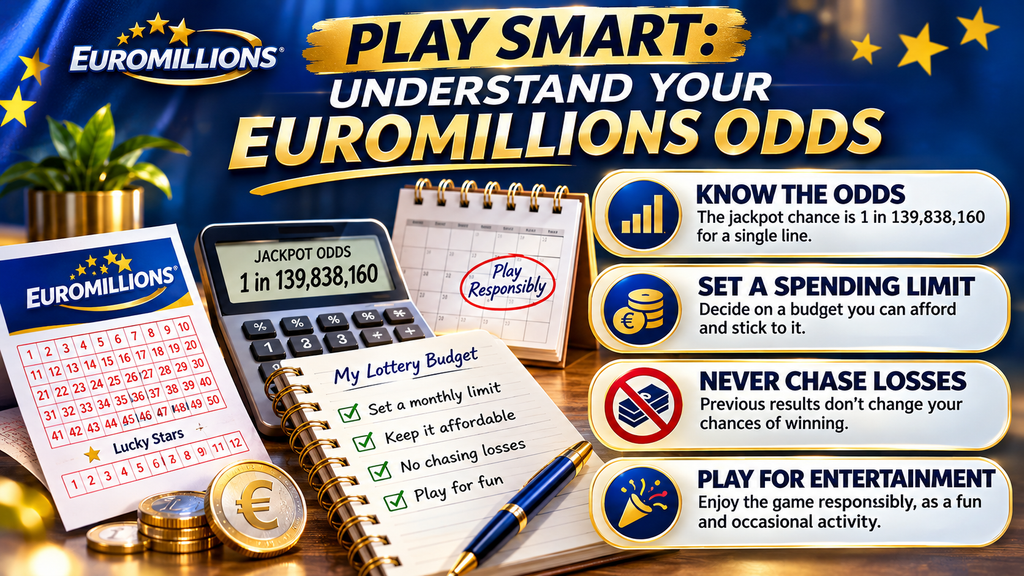
A responsible EuroMillions approach begins with realistic expectations. The jackpot is possible, as the November 10 winner demonstrates, but the probability of obtaining it with one entry is exceptionally small. No personal routine, statistical formula, or prediction tool removes that uncertainty.
For someone who chooses to participate, the most practical decisions concern affordability and entertainment value. Lottery tickets should never compete with essential expenses such as housing, food, transportation, or savings. The possibility of a jackpot should not become a reason to spend beyond a comfortable limit.
The goal is not to develop a guaranteed winning system, because none exists. It is to understand the game well enough to avoid costly misconceptions.
Set a Clear Entertainment Budget
A spending limit helps prevent occasional participation from becoming an uncontrolled expense. In Belgium, the standard EuroMillions entry price listed by the National Lottery is €2.50 per line. That may appear modest, but repeated purchases can accumulate over time. Nationale Loterij
For example, one €2.50 entry in each of the two weekly draws costs approximately €260 over 52 weeks. Five entries per draw would cost approximately €1,300 over the same period. These examples exclude optional additional purchases and assume the same price throughout.
Those amounts illustrate why frequency matters. A person who participates regularly should consider the annual cost rather than focusing only on the price of one ticket. Money spent on lottery entries should be treated as entertainment expenditure, not an investment.
Avoid Chasing Losses
Chasing losses occurs when someone increases spending after unsuccessful results, hoping to recover previous expenses. This behavior is particularly risky in lotteries because earlier losses do not improve the probability of winning later.
For example, losing ten consecutive draws does not make the eleventh draw more favorable. Every new entry still faces the same jackpot odds. Increasing the number of tickets may increase coverage, but it also increases financial exposure.
A predetermined limit is more useful than reacting emotionally to previous outcomes. If participation stops being enjoyable or creates financial stress, taking a break and seeking appropriate support is a sensible decision.
Be Careful With Paid Lottery Prediction Systems
Some websites and applications sell number predictions, exclusive combinations, or supposedly advanced winning algorithms. Marketing materials may include impressive charts, testimonials, or examples of previous successful predictions.
These claims deserve careful scrutiny. A system that occasionally includes winning numbers does not necessarily outperform random selection. To establish predictive value, it would need rigorous testing over many independent draws, with clear methods and results that can be verified.
Readers should be especially cautious of promises involving guaranteed jackpots, secret mathematical formulas, or unusually high success rates. Such claims conflict with the established probabilities of a fair random lottery.
What Happens After Someone Wins €141.9 Million?
Winning a jackpot of this size involves more than checking the numbers. The ticket must be validated, and the prize must be claimed through the appropriate lottery operator. The exact process depends on the country where the ticket was purchased and the applicable national rules.
For the November 10 winner, the official Irish National Lottery identifies Spain as the country where the jackpot ticket was sold. Therefore, the relevant Spanish lottery procedures would govern the claim. Readers should avoid assuming that Belgian or British claim procedures apply to this ticket.
Because the prize is exceptionally large, professional financial and legal advice would be important. The winner may need to consider privacy, taxation, estate planning, investment risk, and long-term financial security.
Why Privacy Matters After a Major Lottery Win
A large lottery prize can attract significant public attention. Friends, relatives, journalists, and unfamiliar individuals may become interested in the winner’s circumstances. Managing that attention can be challenging, especially when the prize is worth more than €140 million.
Privacy protections and publicity requirements vary between countries. Winners should rely on their national lottery operator for accurate information about identification, disclosure, and claiming procedures.
It is also important for journalists and bloggers to respect the distinction between verified information and speculation. The winning ticket’s country of sale is public information, but the winner’s personal identity and number-selection method should not be invented to make the story more dramatic.
Why Financial Planning Matters More Than the Winning Numbers
Once a jackpot has been won, the question of how the numbers were selected becomes less important than how the prize is managed. A large financial windfall can create opportunities, but it can also introduce unfamiliar responsibilities.
Professional advice may help a winner understand tax obligations, protect assets, manage investments, and establish long-term priorities. These decisions should be based on individual circumstances rather than generic promises of easy wealth.
A sensible approach would emphasize patience, security, and informed decision-making. The excitement of winning should not create pressure to make immediate financial commitments.
Frequently Asked Questions
1. What were the EuroMillions winning numbers on November 10, 2026?
The five winning main numbers were 15, 18, 31, 37, and 41. The two Lucky Stars were 1 and 5. One ticket matched the complete combination and won €141,899,445.
2. Which country won the €141.9 million EuroMillions jackpot?
The official Irish National Lottery results confirm that the winning ticket was sold in Spain. The publicly available results do not establish the winner’s identity or personal number-selection method.
3. What strategy did the EuroMillions jackpot winner use?
The winner’s strategy has not been publicly verified in the sources reviewed for this article. The ticket could have been selected manually or generated randomly. Claiming a specific strategy without evidence would be misleading.
4. Can mathematical formulas predict EuroMillions numbers?
No mathematical formula can reliably predict the outcome of a properly conducted independent random draw. Formulas can calculate probabilities and analyze historical results, but they cannot identify the next jackpot combination with certainty.
5. Are random numbers better than personally selected numbers?
No. Every valid combination has the same jackpot probability. Random selection can reduce personal selection bias, but it does not improve the mathematical odds of an individual ticket.
6. Is it better to choose numbers above 31?
Numbers above 31 are not more likely to appear. However, selecting less commonly chosen combinations could potentially reduce the chance of sharing a jackpot, particularly if many other players favor birthday-based numbers. This does not improve the probability of winning.
7. What are the odds of winning EuroMillions?
The official jackpot odds are 1 in 139,838,160 per standard line. The Belgian National Lottery also reports an overall probability of approximately 1 in 12.97 of winning any prize, including the smallest categories.
8. Can the same EuroMillions numbers win twice?
Yes. A previously drawn combination can appear again. Each draw is independent, so an exact combination retains the same probability regardless of its historical appearances.
9. Does buying more tickets guarantee a EuroMillions prize?
No. Buying more distinct entries increases the number of combinations covered, but it does not guarantee a prize. Costs increase with the number of entries, and the probability of winning the jackpot remains extremely small for ordinary ticket quantities.
10. Can artificial intelligence discover a winning lottery strategy?
Artificial intelligence can analyze historical records and explain mathematical patterns, but it has no demonstrated ability to reliably predict fair EuroMillions draws. Any commercial service promising guaranteed winning combinations should be treated skeptically.
The Real Lesson Behind the €141.9 Million EuroMillions Victory
The November 10, 2026 EuroMillions draw will be remembered for its extraordinary jackpot. One ticket sold in Spain matched all five main numbers and both Lucky Stars, producing a prize of €141,899,445. The winning combination was 15, 18, 31, 37, 41, with Lucky Stars 1 and 5.
Yet the most interesting lesson is not a hidden formula or a mysterious numerical pattern. It is the difference between observing a winning result and proving that a particular strategy caused it. The public results establish what happened, but they do not reveal how the winning player selected the numbers.
Mathematics provides a clear answer to the broader question. Every valid EuroMillions combination has the same probability of winning in a fair draw. Random selection, birthdays, historical frequency charts, and sophisticated software cannot change those odds.
For readers interested in lottery statistics, the November 10 result offers a fascinating example of probability in action. For anyone considering participation, the most useful principles remain simple: understand the odds, avoid unrealistic promises, respect personal spending limits, and treat lottery tickets as entertainment rather than a route to financial security.
The winner’s fortune is extraordinary. The mathematics behind the draw, however, remains exactly the same.
⚠️ Disclaimer and Source Hygiene
This article is provided for educational, informational, and journalistic purposes. It does not offer financial, legal, tax, or gambling advice. EuroMillions is a game of chance, and no number-selection strategy guarantees a prize or provides a proven predictive advantage in a fair draw.
The November 10, 2026 results and jackpot amount were checked against official lottery information. The ticket’s country of sale was confirmed through the Irish National Lottery. The winner’s personal selection strategy has not been independently established, and no unverified claims about their identity, motivations, or selection method are presented as facts.
Readers should consult official lottery operators for game rules, prize claims, and responsible-play information. Anyone seeking guidance about significant winnings should consult appropriately qualified professionals.
Sources and References
Official Primary Sources
1. Irish National Lottery – EuroMillions Results History
Official confirmation of the November 10, 2026 winning numbers, jackpot amount, prize distribution, and ticket sale in Spain. Irish National Lottery – Official Results History
2. Belgian National Lottery – EuroMillions
Official information concerning the EuroMillions game structure, ticket pricing, jackpot rules, and winning probabilities. Belgian National Lottery – EuroMillions Rules
3. UK National Lottery – EuroMillions Game Specification
Official documentation explaining the selection of five main numbers and two Lucky Stars, random draws, and ticket entries. EuroMillions Game Specification – PDF
Secondary Sources and Testimonials
4. Euro-Millions.com – November 10, 2026 Results
Historical draw details and prize breakdowns for participating countries, including additional information about the draw. EuroMillions Draw Results – November 10, 2026
5. LotoStats – EuroMillions Draw Statistics
Supplementary historical statistics and prize information for the November 10 draw. LotoStats – November 10 Draw
6. Academic Research – Number 19: Another Victim of the Gambler’s Fallacy
Research discussing lottery number-selection behavior and mathematical probabilities, including EuroMillions probability calculations. Academic Research on Lottery Choices and Probabilities
Winner testimonials: No verified first-person statement from the November 10, 2026 jackpot winner was established in the sources reviewed. Consequently, this article does not attribute a number-selection strategy, quotation, or personal experience to that individual.
