


⏲️ Estimated reading time: 6 min
Table of Contents
Attention is one of the most valuable cognitive resources we possess. It helps us navigate a world full of distractions and remain anchored to the present moment. But when attention is hijacked by technology, impulses, or external stimuli a single second of distraction can change everything.
🔍 The Power and the Trap of Attention: When One Second Can Change a Life
Attention is more than focusing. It is a complex cognitive mechanism that filters, selects, orients, and maintains our awareness. It’s the invisible force that lets us stay connected to our goals while ignoring the noise of the outside world.
But what happens when this attention breaks?
When a simple vibration, a notification, or a moment of curiosity shatters the flow of consciousness?
When the mind slips even for a second and that second becomes fatal?
A witness from a recent accident described the moment in chilling words:
“He was driving very fast. I saw him right before the crash. He had the phone in his hand, playing on the screen. I told my aunt he was going straight to his death driving like that.”
This short sentence captures the tragedy of an entire generation one living with a split mind, torn between reality and the screen.
🧠 What Is Attention and How Does It Work?
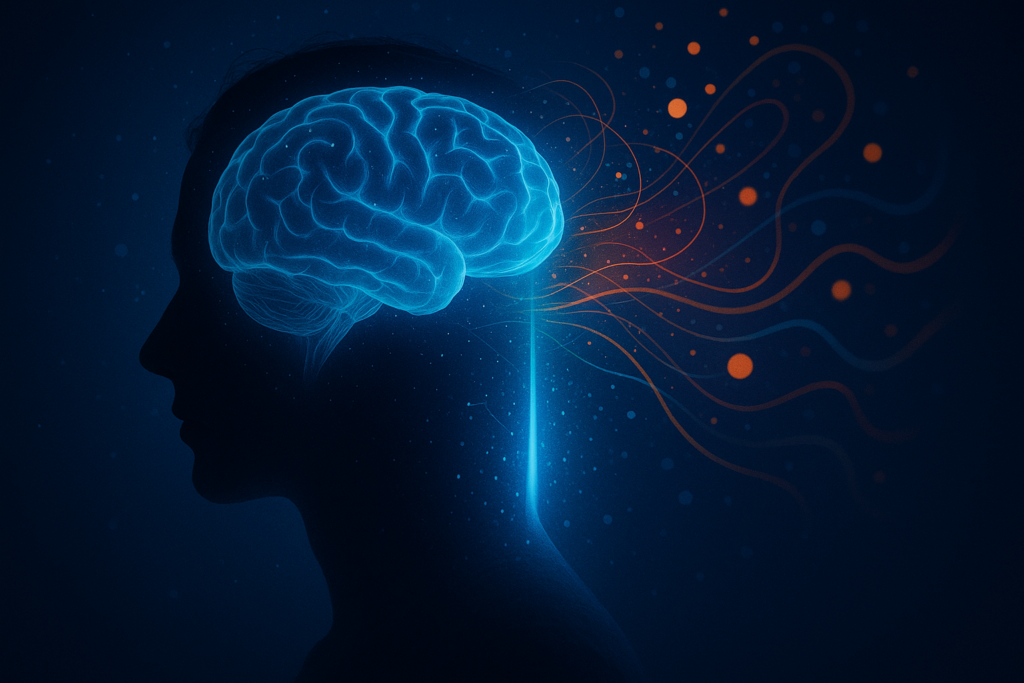
Attention functions like a flashlight in a dark room: whatever it points at becomes clear, while everything else fades into the background.
Psychologists divide attention into several types:
1. Voluntary Attention
Conscious, intentional focus directed toward something specific.
2. Involuntary Attention
Triggered by strong stimuli sounds, lights, notifications, sudden movement.
3. Divided Attention (the multitasking illusion)
Contrary to popular belief, the brain cannot truly multitask.
It rapidly switches between tasks, and every switch costs energy, time, and accuracy.
When this “attention switching” happens in critical moments like driving the consequences can be disastrous.
📱 How Technology Hijacks the Human Mind
The smartphone is the most powerful attention disruptor ever invented.
Apps are designed to capture the brain’s dopamine-driven reward circuits.
Even the presence of a phone without touching it reduces cognitive performance.
Research shows:
• The mere presence of a phone on the table reduces concentration by up to 20%.
• A driver who texts is 23 times more likely to cause a fatal accident.
• After a distraction, the brain needs up to 2 seconds to regain context enough for tragedy to strike.
Attention is the psychological oxygen of consciousness.
When it’s gone, the mind is no longer present.
🚗 The Distracted Young Driver: A Painful Lesson
The young man from the witness report was not simply a statistic he was a symbol.
A symbol of how fragile attention is in a hyper-digital world.
He was driving fast.
He was looking at a screen.
He trusted his reflexes more than reality.
At 120 km/h, one second of distraction equals over 33 meters traveled without awareness.
At 90 km/h, reading a simple 5-second message means driving 125 meters completely blind.
This is not carelessness.
It is neurological vulnerability.
🧩 The Psychology Behind Distraction
There are several mechanisms that explain why people get distracted so easily:
• The Illusion of Control
We believe we can “handle everything,” even though the brain has strict limits.
• Stimulation Addiction
Silence feels uncomfortable because the mind is conditioned to constant input.
See also: Klaus-Michael Kühne Dies at 89, Leaving a Global Logistics
• Dopamine Bias
Notifications create reward loops that keep us checking compulsively.
• Reduced Situational Awareness
The more attention the screen takes, the less remains for the environment.
These psychological traps affect adults, teenagers, and even children.
💬 Real-World Examples
• A German study found that 38% of accidents involving drivers under 25 were linked to smartphone use.
• In Romania, over 20% of severe accidents** are caused by driver inattention.
• Experiments showed that a 5-second glance at a phone while driving can recreate the same level of blindness as closing your eyes for 100+ meters.
The numbers are terrifying and real.
🧘♀️ How to Regain Control of Your Attention
Attention can be strengthened and protected. Here’s how:
1. Practice mindfulness
Observe breathing, sensations, and the present moment.
2. Remove distractions
Put your phone on airplane mode or place it out of reach while driving.
3. Take mental breaks
Every 90 minutes, disconnect completely for 5–10 minutes.
4. Train your focus
Meditation, reading, puzzles, and deep work routines enhance attention capacity.
5. Create screen-free rituals
Meals, conversations, and driving should be safe psychological zones no devices.
⚖️ Pros and Cons: Technology & Attention
| Pros | Cons |
|---|---|
| Instant access to information | Permanent distraction |
| Social connection | Reduced concentration |
| Learning tool | Cognitive dependency |
| Work efficiency | Mental fatigue |
| Intellectual stimulation | Loss of patience & focus |
📊 Focused Mind vs. Distracted Mind Comparison Table
| Characteristic | Focused Mind | Distracted Mind |
|---|---|---|
| Mental clarity | High | Low |
| Reaction speed | Fast | Delayed |
| Emotional state | Stable | Agitated |
| Stress level | Low | High |
| Error risk | Minimal | Major |
💡 Key Takeaways
• Attention is limited, not infinite.
• Distracted driving is not “carelessness” it is self-endangerment.
• Technology is not the enemy; our relationship with it determines the outcome.
• Every notification is a temptation to lose awareness and sometimes, life.
• Presence is the strongest form of self-control.
🧠 Final Notes
Tragedies do not begin with the sound of impact.
They begin with the first moment of distraction.
Attention is our inner compass when we lose it, we lose contact with reality.
Whether we are driving, working, or resting, presence remains one of the greatest acts of responsibility.
❓ Frequently Asked Questions (FAQ)
1. Why do we get distracted so easily?
Because the human brain evolved to react to new stimuli a survival mechanism that backfires in the digital age.
2. Is it safe to use hands-free while driving?
No. Even without touching the phone, cognitive load reduces visual focus by over 30%.
3. How can I reduce phone dependency?
Set clear limits, use focus modes, and create tech-free zones (car, bedroom, dining table).
4. Why are young people more prone to distraction?
The prefrontal cortex the center of attention and impulse control is fully developed only after age 25.
5. Can attention be trained like a muscle?
Yes. Mindfulness, deep reading, sports, and cognitive exercises strengthen focus.
🟦 Disclaimer & Source Information
The information presented in this article is intended for educational, preventive, and informational purposes. The psychological explanations, accident statistics, examples, and recommendations are based on public research, cognitive science literature, official road safety reports, and publications by international institutions such as WHO, the European Commission for Road Safety, NHTSA, APA, and similar organizations.
This article does not constitute medical, psychological, legal, or professional advice and should not be used as a sole basis for safety decisions. Accident-related statistics may vary by region, study methodology, and source. For personalized guidance, diagnosis, or assessment, please consult a certified professional, medical specialist, psychologist, or traffic safety authority.
The material provides a general overview meant to raise awareness about attention and distraction not to replace expert recommendations or legal regulations.
🔔 For more tutorials like this, consider subscribing to our blog.
📩 Do you have questions or suggestions? Leave a comment or contact us!
🏷️ Tags: attention, psychology, distracted driving, cognitive science, human behavior, digital distraction, smartphone addiction, mindfulness, focus training, mental health awareness
📢 Hashtags: #Attention #Focus #CognitiveScience #DistractedDriving #Mindfulness #DigitalWellbeing #Psychology #MentalHealth #StayPresent #RoadSafety
About Our Publication
We deliver timely, reliable, and well-researched news covering the latest developments in Romania, Europe, and around the world. Our mission is to provide readers with clear, accurate, and verified information, along with in-depth articles, guides, and analyses that help you understand the stories shaping today’s society.
We prioritize transparency, credibility, and editorial integrity, ensuring that every article published meets professional journalistic standards. Stay informed with trusted updates, breaking news, and exclusive insights delivered directly to you. Google News
