


⏲️ Estimated reading time: 9 min
Table of Contents
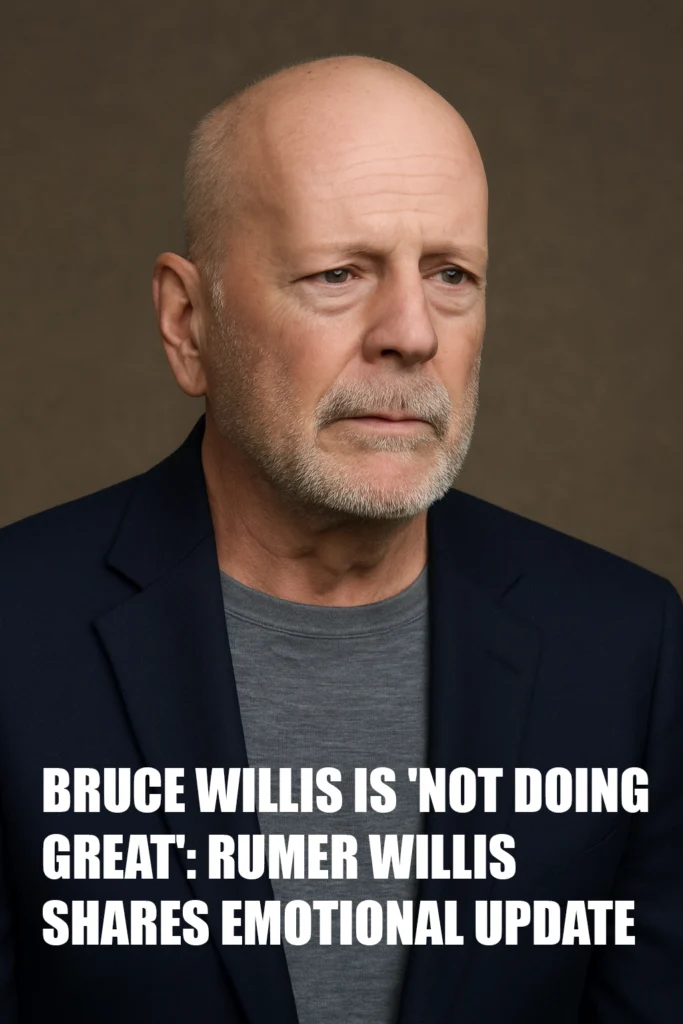
Bruce Willis’s daughter, Rumer Willis, recently shared a heartbreaking update about her father’s ongoing battle with frontotemporal dementia. The Hollywood icon is reportedly “not doing great,” as his condition continues to progress. This in-depth report explains what is happening, how the family is coping, and what this diagnosis truly means.
Read also: Top Famous Restaurants in Amsterdam You Must Visit
Bruce Willis Is ‘Not Doing Great’: Rumer Willis Shares Emotional Update About Her Father’s Dementia
Bruce Willis remains one of Hollywood’s most beloved action legends. For decades, his presence lit up cinema screens, and his charisma inspired millions of fans worldwide. But today, his life looks very different. Instead of movie sets, interviews, and premieres, Bruce is fighting a devastating illness: frontotemporal dementia (FTD), a progressive and currently incurable neurological condition.
Recently, his daughter Rumer Willis provided a painful health update stating that her father is “not doing great”. Her words left fans worried and searching for answers. What exactly is happening to Bruce? What does FTD do to a person? How is his family coping with this heartbreaking reality?
This article takes a deep, compassionate, and detailed look at the latest developments surrounding Bruce Willis’s condition, explaining everything clearly, respectfully, and without sensationalism.
Understanding Rumer Willis’s Statement
Rumer has been open and transparent about her father’s health journey. Her recent comments reaffirm what medical experts have explained about FTD: it progressively affects behavior, communication, memory, and personality. She acknowledged that watching the disease advance is extremely painful for the entire family.
Her message was honest and emotional. She did not dramatize the situation she simply told the truth. Bruce is struggling. His decline has become more noticeable. The family is working hard to keep him comfortable, safe, and surrounded by love.
Rumer’s update confirms what many suspected: the disease is entering a more advanced phase.
What Frontotemporal Dementia Means for Bruce Willis Today
FTD is not like Alzheimer’s. It affects different parts of the brain, leading to rapid and significant changes in behavior, personality, and communication abilities. For Bruce Willis, the condition has severely impacted his ability to speak, understand words, and recognize people.
Doctors describe FTD as a condition that often affects patients in their 50s and early 60s. Bruce’s diagnosis at 67 places him within the typical range. Unfortunately, the disease progresses steadily, and there is no cure.
The updates from his family suggest that the following symptoms have become more dominant:
- Difficulty recognizing loved ones
- Limited ability to communicate
- Major personality changes
- Memory gaps
- Confusion and disorientation
- Increasing need for full-time care
The man who delivered sharp one-liners in Die Hard can no longer express himself fluently. This reality is heartbreaking for fans and unimaginably painful for his family.
Why His Family’s Honesty Matters
The Willis family has been incredibly transparent since Bruce’s diagnosis became public. Instead of hiding the truth, they chose to educate fans and the world about FTD. Their honesty has sparked important conversations about neurological illnesses and encouraged compassion for others facing similar battles.
Rumer’s message did not come from a place of seeking attention. It came from love, vulnerability, and the desire to help others understand what FTD truly does.
Their openness is a gift not only to Bruce’s fans but also to families who are quietly dealing with the same struggles at home.
How Bruce Willis’s Daily Life Has Changed
Although the family protects his privacy, sources close to them have described the lifestyle adjustments Bruce has had to make. He no longer acts, travels, or participates in complex conversations. His world has become quieter and smaller.
Here are key aspects of his daily life now:
Living in Familiar Environments
People with dementia often become distressed by unfamiliar places. Bruce stays in environments that feel safe and predictable.
Constant Support From Loved Ones
His wife Emma Heming, his ex-wife Demi Moore, and his daughters work together to provide care and emotional comfort.
Limited Social Interaction
Large gatherings or new faces may overwhelm him. His time is mostly spent with close family members.
Focus on Peace, Not Stimulation
Rather than forcing activities, the family prioritizes gentle routines, calm surroundings, and low-stress companionship.
Professional Medical Oversight
Doctors and specialists guide his treatment, symptom management, and safety.
This is not the life fans remember, but it is the reality of progressive neurological illness.
How Frontotemporal Dementia Progresses
FTD tends to advance in stages. Understanding these helps explain why Bruce is “not doing great,” according to Rumer.
Early Stage
- Subtle personality changes
- Trouble expressing words
- Mild forgetfulness
- Difficulty focusing
This was the period when Bruce’s family first noticed something was wrong.
Middle Stage
- Difficulty recognizing people
- Major communication decline
- Behavior changes
- Reduced judgment
- Trouble performing simple tasks
This stage is where Bruce is now, based on updates from the family.
Late Stage
- Near-total communication loss
- Full dependence on caregivers
- Severe memory loss
- Possible loss of mobility
Doctors expect this phase, though the timeline varies for each person. The family knows what lies ahead.
The Emotional Toll on His Loved Ones
The Willis family is united, but this journey is emotionally exhausting. Watching a parent or partner slowly disappear behind an illness like FTD is one of the hardest experiences a family can face.
Rumer’s words reflect:
- Heartbreak
- Acceptance
- Strength
- Grief
- Love
Even though Bruce may not fully recognize every family member at all times, they remain devoted to him. They bring love, patience, and presence even on the hardest days.
Bruce Willis’s Legacy: More Powerful Than His Illness
While his condition is tragic, Bruce’s legacy remains untouchable.
A Career That Redefined Action Movies
From Die Hard to The Fifth Element, Bruce became a symbol of toughness mixed with vulnerability.
Comedy, Drama, and Humanity
He excelled in emotional roles just as much as explosive ones.
A Public Figure Who Embraced His Imperfections
He never pretended to be perfect. Fans loved him for his authenticity.
A Devoted Father and Husband
Family has always been his first priority.
A Legacy of Strength, Humor, and Courage
Even now, his resilience inspires millions.
His illness does not erase the man he was or the impact he’s made.
How Fans Around the World Are Reacting
When Rumer revealed the latest update, social media filled with:
- messages of love
- gratitude
- prayers
- memories
- condolences
People shared favorite movie scenes, personal stories, and tributes. Bruce’s influence spans generations, and fans want him to feel supported even if he cannot read their messages himself.
This global wave of compassion shows how deeply he is loved.
Why His Family Chose to Donate His Brain (Announced Earlier)
Emma Heming previously confirmed that Bruce’s brain will be donated to scientific research after his passing. This brave decision reflects the family’s desire to help future patients.
Researchers hope to learn more about:
- how FTD develops
- why it progresses so aggressively
- what biological markers can predict the disease
- which future treatments could slow it down
Bruce Willis will contribute to medicine long after his career ended.
Frequently Asked Questions
1. What exact condition does Bruce Willis have?
He has frontotemporal dementia (FTD), a degenerative brain disease affecting behavior, communication, and memory.
2. Is Bruce Willis still able to speak?
His communication ability has declined significantly. According to family members, he often struggles to express himself.
3. Does Bruce Willis recognize his family?
Reports indicate that he sometimes has difficulty recognizing people, especially during bad days, which is common with FTD.
4. Can frontotemporal dementia be cured?
No. There is currently no cure or treatment that stops the progression.
5. Why did Bruce retire from acting?
His cognitive challenges made it impossible to continue working safely or effectively on movie sets.
6. Who is caring for Bruce Willis today?
He is cared for by his wife Emma Heming, his daughters, and professional medical support.
7. How fast does FTD progress?
It varies, but many patients experience significant decline within 2–10 years.
8. What are common symptoms of FTD?
Personality changes, speech difficulties, memory issues, impulsive behavior, and reduced social awareness.
9. What did Rumer Willis say recently?
She stated that Bruce is “not doing great,” acknowledging that his condition continues to worsen.
10. What can fans do to show support?
Share positive messages, raise awareness about FTD, and honor Bruce’s legacy by revisiting his films.
A Heartfelt Reflection on Bruce Willis’s Courage
Bruce Willis’s journey is a reminder of how fragile life is even for legends. His family’s strength, honesty, and unity show the world how love can remain unshaken even in the hardest moments. Though the update from Rumer Willis is painful, it comes from a place of truth and deep affection.
Nothing can change the legacy Bruce leaves behind. His career, his presence on screen, and the joy he gave to millions will outlive any illness. And while dementia may take away his memories, the world will never forget him.
🟦 Disclaimer and Source Hygiene
This article is based on publicly available statements from Bruce Willis’s family, especially Rumer Willis, along with medical information from reputable neurological research sources. For medical advice, diagnosis, or treatment, always consult certified healthcare professionals.
🔔 For more tutorials like this, consider subscribing to our blog.
📩 Do you have questions or suggestions? Leave a comment or contact us!
🏷️ Tags: Bruce Willis, frontotemporal dementia, Rumer Willis update, Hollywood news, celebrity health, dementia awareness, Emma Heming Willis, movie legends, family support, neurological illnesses
📢 Hashtags: #BruceWillis #DementiaUpdate #RumerWillis #FTD #HollywoodNews #CelebrityHealth #MovieLegend #FamilySupport #NeurologicalAwareness #HelpZoneBlog
