


⏲️ Estimated reading time: 20 min
Table of Contents
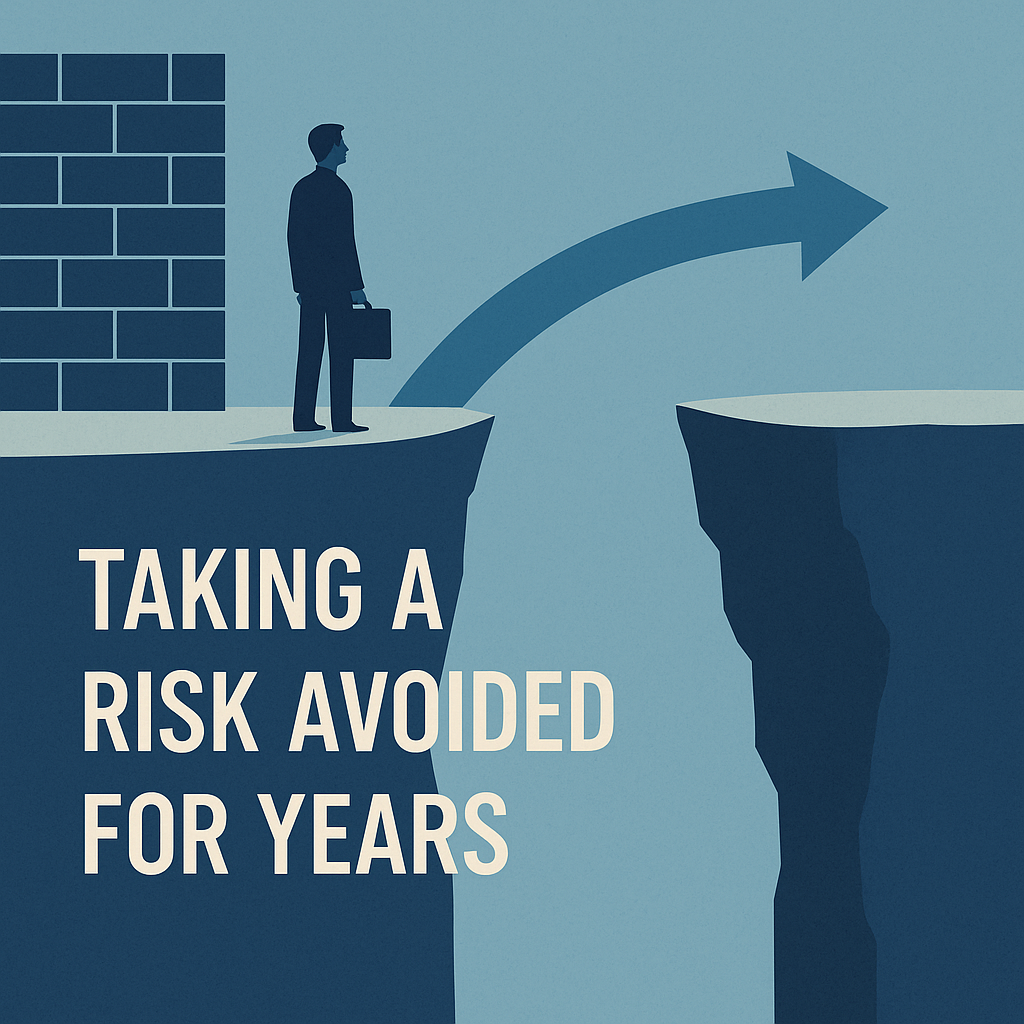
For years you’ve felt a pull toward a bold decision you keep postponing. Maybe it’s a new career, a move, a business, or love. This guide shows why you’ve avoided that risk so long, what it’s secretly costing you, and how to finally move forward with courage.
What’s something you would attempt if you were guaranteed not to fail.
Understanding the Risk You’ve Been Avoiding
Read also: How Prince William and Meghan Markle Are Both Included in
You probably already know which risk this article is about.
It’s that one decision that keeps coming back in your thoughts. The one you push away with “now’s not the right time” or “I’ll do it when things are more stable.”
Maybe it’s starting a business.
Maybe it’s ending a relationship.
Maybe it’s moving to another country, changing careers, going back to school, or finally putting your work in front of the world.
It might look different for each person, but the feeling is the same: a deep pull forward mixed with a heavy weight of fear holding you back.
What “That One Big Risk” Really Represents
On the surface, your risk might look like a practical choice:
- Leaving your job
- Selling your house
- Changing careers
- Committing to someone
- Walking away from a long relationship
- Moving to a new city or country
- Launching a project, brand, or business
But underneath, that risk usually represents much more:
- Identity – Who you believe you are allowed to become
- Freedom – How much control you have over your life
- Self-worth – What you think you deserve
- Belonging – Who will still accept you if you change
This is why it feels so big and so heavy. You’re not only changing a situation. You’re challenging your entire story about yourself.
Signs You’ve Been Avoiding a Life-Changing Step
Often, people pretend they’re “thinking things through” or “waiting for the right moment,” when in reality they are stuck in avoidance. Some signs:
- You talk about this change regularly but never move beyond vague plans.
- You consume tons of content about it (videos, books, blogs) without taking real action.
- You feel a mix of guilt and sadness when you imagine yourself in the same place five years from now.
- You keep telling yourself you need just “one more” thing before starting: more money, more time, more confidence, more support.
- You get defensive when someone gently asks: “So… why haven’t you done it yet?”
If these feel uncomfortably familiar, that’s not a bad sign.
It means you’re finally honest enough to see where you’re stuck and that honesty is the starting point of any meaningful change.
Why We Delay Important Risks for Years
If you’ve postponed this risk for a long time, you might also blame yourself:
“I’m lazy.”
“I’m weak.”
“I’m not brave enough.”
In reality, the reasons are usually much deeper, more human, and more understandable than “I’m lazy.”
Fear of Failure and Judgment
The most obvious reason is fear: fear of losing money, status, relationships, comfort, or stability. But often, what hurts the most is the fear of how you’ll look if it doesn’t work out.
- “What will people say if I try and it fails?”
- “What if my family thinks I’ve lost my mind?”
- “What if I prove to myself that I’m not good enough?”
Your brain is wired to protect you from pain. Social rejection and humiliation feel almost as dangerous as physical threats. So even when your soul says “go,” your nervous system hits the brakes.
The result? You don’t say “no” to the risk. You just say, “later.” And “later” repeats for years.
Comfort Zones Disguised as “Stability”
Another powerful trap is your comfort zone.
It doesn’t mean your life is perfect. It means it’s predictable.
You know what your days look like.
You know how much money comes in.
You know who you see, what you do, what to expect.
Even if you’re unhappy, your system is used to this discomfort. It’s the devil you know. Taking a big risk feels like stepping into chaos, even if that chaos could lead to a better life.
So you tell yourself:
- “I should be grateful for what I have.”
- “Other people have it worse; I’m being selfish.”
- “I’ll wait until things settle down a bit.”
Ironically, many people stay in situations that slowly drain their life just because those situations are familiar.
Perfectionism and the Illusion of the “Right Moment”
Perfectionism doesn’t always look like perfection.
Sometimes it looks like endless preparation.
You want the timing, plan, money, skills, and emotional state to all line up perfectly before you move. You tell yourself:
- “I’ll start when I’ve saved X amount.”
- “I’ll launch when the website is perfect.”
- “I’ll move when I feel 100% ready.”
Here’s the truth: you will never feel 100% ready.
At best, you might feel 60–70% ready and the last 30–40% only comes from doing the thing, not from thinking about it.
Perfectionism isn’t about high standards; it’s often a sophisticated form of fear. It keeps you “planning” forever so you never have to face the risk of real action.
Past Wounds and Hidden Beliefs
Your history shapes the risks you’re willing to take.
- If you grew up in chaos, you might cling to stability and fear anything that looks like uncertainty.
- If you were criticized whenever you failed, you may avoid situations where you could be judged again.
- If you were told you’re “not the type” for success, love, or freedom, your risk may feel “unrealistic” even when it’s fully possible.
These experiences create hidden beliefs:
- “People like me don’t succeed.”
- “If I try and fail, I’ll lose everything.”
- “It’s safer not to want too much.”
When you avoid a risk for years, you’re not just avoiding a decision. You’re avoiding the emotional pain of confronting those beliefs.
Imagining Life If You Finally Took That Risk
Before you take any big leap, it helps to zoom out.
Instead of focusing only on what could go wrong, you need to explore the entire landscape: the best, the worst, and the most likely outcomes.
A Simple Visualization Exercise
Take a quiet moment and imagine:
- It’s one year from now.
- You finally took the risk you’ve been avoiding.
- You committed, followed through, and stuck with it, even on hard days.
Now ask yourself:
- What has changed in your daily life?
- How do you feel when you wake up in the morning?
- How do you talk about yourself?
- Who is still around you and who isn’t?
- What new doors opened that weren’t even visible before?
Don’t censor yourself. Let your mind travel into this version of you who actually did it. This isn’t fantasy; it’s one of many real possibilities.
Mapping the Best and Worst Case Scenarios
Now, take a piece of paper (or a note on your phone) and draw three columns:
- Best case scenario
- Worst case scenario
- Most realistic scenario
In each column, describe what could happen if you take this risk.
Best case might look like:
- You build a thriving business.
- You find a healthy relationship.
- You land a deeply meaningful job.
- You move to a place that feels like home.
Worst case might look like:
- The business fails.
- The relationship doesn’t work out.
- You lose some money or status.
- Things are harder than expected at first.
Now, in the realistic column, write what is most likely if you commit, learn, adapt, and refuse to quit at the first obstacle. Often, the realistic path is much closer to the best case than to the worst.
This exercise does two things:
- It shows you that your mind exaggerates the worst case.
- It reminds you that you are not helpless; you can adjust, pivot, and recover.
The Hidden Cost of Staying Where You Are
When you calculate risk, you often forget one thing:
Doing nothing is also a decision.
Staying in the same job, relationship, city, or lifestyle is not neutral. It has a cost:
- The opportunities you never see
- The skills you never build
- The confidence you never gain
- The energy you lose to frustration and regret
Ask yourself honestly:
“What is the price of staying exactly where I am for the next five years?”
Sometimes the safest place on paper is actually the most dangerous place for your soul.
Turning a Huge Risk into Manageable Steps
Big risks feel terrifying when they stay vague.
The moment you translate them into concrete steps, they become less mystical and more manageable.
Clarify the Exact Risk You Want to Take
You can’t move toward something you haven’t defined.
Instead of “I want to change my life,” clarify:
- “I want to leave my current job and find a role in X field.”
- “I want to move from this city to that city within 12 months.”
- “I want to end this relationship that hasn’t been working for years.”
- “I want to start an online business with Y product or service.”
Write your risk in one clear sentence.
If you cannot describe it clearly, your brain will treat it as a vague threat and keep you stuck.
Break It Into Micro-Actions
Once you define the risk, break it into very small actions. Think in terms of what you can do this week, not what you need to do forever.
For example, if your risk is “change careers,” micro-actions might be:
- Day 1: Make a list of fields that genuinely interest you.
- Day 2: Research three people who already work in those fields.
- Day 3: Send one message asking for a short call or email advice.
- Day 4: List your transferable skills.
- Day 5: Update a basic CV or LinkedIn profile.
- Day 6: Apply to one position or program.
- Day 7: Reflect on what you learned and adjust.
Each step should be small enough that it feels almost too easy.
Your goal is not to impress yourself with huge moves. It’s to build momentum and prove to your brain that action is safe.
Design a 30-Day Courage Plan
Instead of obsessing over the entire year, design a 30-day courage plan focused on tiny, consistent actions connected to your risk.
Your plan might include:
- One courage action per day (a call, an email, a task, a decision).
- One learning action per day (reading, course, video, or reflection).
- One self-care action per day (sleep, movement, food, rest, journaling).
At the end of 30 days, evaluate:
- How has your fear level changed?
- What new information did you gain?
- Which obstacles were real, and which were imagined?
- What’s the next obvious step?
This approach transforms a huge, paralyzing risk into a series of experiments. Instead of “I must change my entire life,” it becomes “I’ll take 30 days to explore this seriously.”
Set Boundaries and Safety Nets
Risk doesn’t mean recklessness.
It’s perfectly okay to build safety nets to protect yourself and those who depend on you.
Examples of safety nets:
- Saving a few months of expenses before quitting a job.
- Testing a side project before going full-time.
- Setting a clear timeline and conditions for your move or transition.
- Discussing your plans with those directly affected and making realistic agreements.
Boundaries might look like:
- “I won’t take on extra responsibilities that sabotage my goal.”
- “I will protect two hours per day for my transition work.”
- “I will not let criticism from people who don’t support my dreams dictate my choices.”
Healthy risk-taking is courageous, not chaotic.
You’re not proving anything by suffering more than necessary.
Managing Fear, Doubt, and Overthinking
Even with a plan, fear doesn’t disappear. It changes shape.
Your job is not to eliminate fear; your job is to act alongside it.
Making Friends with Fear Instead of Fighting It
When fear shows up, most people react with:
- “I shouldn’t feel like this.”
- “I need to be fearless first.”
But fear has a job: to keep you alive. It’s not your enemy; it’s a protective instinct that sometimes overreacts.
Next time you feel fear about your risk, try telling yourself:
- “Thank you for trying to protect me.”
- “I can handle this discomfort.”
- “We’re not in danger; we’re just doing something new.”
This simple mental shift softens the panic and gives you space to think clearly.
Reframing Self-Doubt into Data
Self-doubt often says:
- “You’re not ready.”
- “You’re not good enough.”
- “You don’t know what you’re doing.”
Instead of arguing with those thoughts, turn them into practical questions:
- “What specific skills would help me feel more ready?”
- “Which areas do I need to improve?”
- “What’s one thing I can learn this week that makes me 1% more prepared?”
Now self-doubt becomes data signals about what you can train, study, or practice rather than proof that you should give up.
Building Emotional Resilience Day by Day
Taking a risk you’ve avoided for years isn’t only about strategy; it’s about emotional strength.
You build resilience with small practices:
- Journaling: Write about your fears, progress, and small wins.
- Movement: Physical activity reduces stress and clears your mind.
- Sleep: Exhaustion makes risk feel ten times bigger; rest is a performance tool.
- Support: Talking with someone you trust lightens the emotional weight.
Resilience doesn’t mean you’re never scared or sad.
It means you build the capacity to feel those emotions without letting them control your life.
Support Systems That Make Risk Safer
You don’t have to do this alone.
In fact, trying to carry a huge life decision entirely by yourself makes it heavier than it needs to be.
The Power of One Supportive Person
Sometimes you don’t need a big audience.
You just need one person who truly believes in your potential.
This could be:
- A close friend
- A partner or family member
- A colleague who understands your industry
- Someone you only know online but deeply trust
Tell that person:
- What risk you want to take
- Why it matters to you
- What you’re afraid of
- What kind of support you need (listening, feedback, accountability)
You are still responsible for your decisions, but a kind witness can make the journey less lonely and more real.
Mentors, Communities, and Accountability
Depending on your risk, the right people can accelerate your progress and reduce avoidable mistakes:
- Mentors – people who’ve already done what you want to do
- Communities – groups with similar goals, challenges, and values
- Accountability partners – someone who checks in on your progress regularly
This doesn’t mean copying other people’s lives.
It means learning from their experience so you don’t have to reinvent every wheel yourself.
A mentor or community can help you see:
- What’s normal in this journey (what looks like “failure” may just be a phase)
- What to ignore and what to prioritize
- Which fears are valid and which are just old stories
Protecting Your Energy from Negativity
Not everyone will support your risk.
Some people will project their own fears, failures, or limitations onto you.
You might hear:
- “That’s too risky.”
- “You should be grateful for what you already have.”
- “I know someone who tried that and it didn’t work.”
Learn to recognize the difference between constructive caution and limiting negativity:
- Constructive caution offers specific concerns, suggestions, or alternatives.
- Limiting negativity only tells you why it’s impossible, often without knowing your actual plan.
You don’t need to fight with negative people.
You just need to limit how much space you give their voices in your decisions.
When Taking the Risk Is Actually the Safest Option
It might sound strange, but sometimes the boldest move is the most responsible and sane choice.
Recognizing When You’ve Outgrown Your Life
You’ve outgrown a situation when:
- You feel dead inside where you used to feel alive.
- You keep fantasizing about leaving but always talk yourself out of it.
- You grow resentful, impatient, or cynical without wanting to be.
- You feel like you’re living someone else’s life, not your own.
In these cases, staying is not neutral.
It slowly damages your mental health, relationships, creativity, and self-respect.
A risk that honors your growth may feel scary in the short term but healthier over the long term.
Differentiating Impulsive Leaps from Brave Choices
There is a difference between an impulsive leap and a courageous decision.
Impulsive leap:
- Made in a rush
- Driven by a desire to escape pain quickly
- Lacking basic planning or awareness of consequences
Brave choice:
- Made with reflection and clarity
- Acknowledges fear but doesn’t obey it blindly
- Includes a realistic plan and some safety measures
You don’t need to wait until you feel zero fear.
You just need to ensure you’re not using risk as a way to run from yourself.
Ask:
- “Am I moving toward something meaningful, or just away from something uncomfortable?”
- “If I gave myself three months to prepare, what would I do?”
If your answer leads to a clearer, calmer version of the same decision, it’s likely a brave choice, not a reckless one.
Listening to the “Quiet No” Inside You
Sometimes the most honest voice is not loud. It’s quiet.
It sounds like:
- “This isn’t right for me anymore.”
- “I can’t pretend I’m okay here.”
- “I want more than this, even if it scares me.”
You can silence that voice for years with distractions, overwork, scrolling, or numbing habits. But it never fully disappears.
Taking the risk you’ve avoided often means honoring that quiet “no” and trusting that something better can grow in the space it creates.
Frequently Asked Questions
How do I know if a risk is worth taking?
A risk is usually worth taking if:
- It aligns with your values and long-term vision.
- It moves you closer to who you want to become.
- The cost of staying where you are feels heavier than the potential discomfort of change.
You don’t need a guarantee of success. You need a strong enough “why” and a plan that respects your responsibilities.
What if I fail and regret my decision?
Failure is always possible, but regret comes mostly from never trying. If you act with intention, preparation, and integrity, even an outcome that doesn’t match your hopes can still bring growth, lessons, and new opportunities.
Regret usually sounds like “What if I had tried?”
Failure sounds more like “I tried, I learned, and now I know what’s next.”
How can I handle friends or family who don’t support my risk?
First, listen for any useful feedback. Sometimes people see real dangers you might miss.
Then separate the helpful input from their personal fears.
You might say:
- “I appreciate your concern; I’ve thought about those risks.”
- “This is important to me, and I’m creating a plan to do it responsibly.”
Ultimately, you’re the one who lives your life.
Seeking approval from everyone often means betraying yourself.
What if my risk affects people who depend on me?
This is a valid and important concern. You’re not irresponsible for wanting change, but you do need a realistic plan.
Ask yourself:
- “How can I protect those who depend on me while I transition?”
- “What time frame makes this more sustainable?”
- “What backup plans can I create if things don’t go as expected?”
Sometimes the most loving thing you can do for those who depend on you is to become a more fulfilled, alive, and stable version of yourself and that requires change.
How do I start if I feel completely stuck?
Start extremely small.
- Write a one-sentence description of the risk you want to take.
- Brainstorm 10 tiny actions related to it.
- Commit to doing one action per day for the next 7 days.
You don’t need a perfect roadmap. You just need movement. Clarity often comes after you start, not before.
Is it ever too late to take a big risk?
It’s rarely “too late,” but it might be different than it would have been 10 years ago. That doesn’t make it meaningless.
You bring more experience, wisdom, and emotional depth now. Many people start businesses, careers, relationships, or adventures later in life and feel more grounded than they ever did when younger.
The real danger isn’t age. It’s allowing fear to write the final chapters of your story.
How can I stay consistent once I start?
Consistency comes from systems, not motivation.
- Set specific times for your risk-related actions.
- Use reminders, calendars, or habit trackers.
- Share your goals with someone who will check in.
- Celebrate small wins so your brain associates action with reward, not only stress.
When you slip and you will don’t dramatize it.
Just return to the next small step.
Your Next Bold Step Starts Now
Taking a risk you’ve avoided for years is not about becoming a different person overnight. It’s about finally aligning your actions with the truth you’ve been carrying inside for a long time.
You don’t need:
- Perfect timing
- Perfect confidence
- Perfect conditions
You need honesty, courage, and a willingness to move forward even while your hands shake a little.
Life will never be 100% safe.
But staying in a place that slowly shrinks your spirit is not safety it’s slow self-abandonment.
You deserve a life that feels like it belongs to you.
The first step may be small and quiet. It may not look impressive on social media. But it will mean everything to you, because it’s the moment you stop postponing your own story.
When you look back years from now, the question won’t be “Did I always succeed?”
It will be “Did I dare to live in alignment with what I knew was true for me?”
Today, you can begin answering that question with a brave, imperfect “yes.”
🟦 Disclaimer and Source Hygiene:
This article offers general personal-development information and reflections. It is not psychological, financial, legal, or medical advice. For major life decisions, consider discussing your situation with qualified professionals, such as therapists, coaches, financial advisors, or legal experts, who can take your specific context into account.
🔔 For more tutorials like this, consider subscribing to our blog.
📩 Do you have questions or suggestions? Leave a comment or contact us!
🏷️ Tags: taking a risk you’ve avoided for years, overcoming fear of change, personal growth and courage, leaving your comfort zone, life decisions and risks, starting over in life, facing fear and doubt, building emotional resilience, mindset for bold choices, self improvement journey
📢 Hashtags: #TakeTheRisk, #FaceYourFear, #PersonalGrowth, #CourageToChange, #LifeDecisions, #SelfImprovement, #LeaveYourComfortZone, #MindsetShift, #EmotionalResilience, #NewBeginnings
