


⏲️ Estimated reading time: 6 min
Table of Contents
Camp Nou Inauguration – The Iconic Home of FC Barcelona. On September 24, 1957, Camp Nou was inaugurated in Barcelona, becoming the proud home of FC Barcelona. This stadium, the largest in Europe, is more than a sports venue it symbolizes the identity, culture, and passion of Catalonia.
The Birth of a Football Temple
Football stadiums are more than just bricks, steel, and concrete. They are living monuments where millions of fans gather, cheer, and dream. On September 24, 1957, Barcelona celebrated one of the most significant events in its sports history the inauguration of Camp Nou, the new stadium that would soon become the beating heart of FC Barcelona.
Before Camp Nou, FC Barcelona played at Les Corts Stadium, which could no longer accommodate the ever-growing number of supporters. The post-war era brought renewed enthusiasm for football, and the club realized it needed a much larger venue to reflect its ambitions and its social role in Catalan identity.
Why a New Stadium Was Needed
By the early 1950s, Barcelona had become one of the most admired teams in Spain and Europe. The arrival of legendary Hungarian forward László Kubala in 1950 drew unprecedented crowds, far beyond what Les Corts could hold. The demand for tickets regularly exceeded capacity, and the board knew that a modern, larger stadium was essential for the club’s future.
The decision to build a new stadium was made official in 1953, the same year Kubala’s brilliance had cemented Barça’s popularity. Architect Francesc Mitjans Miró, together with Lorenzo García Barbón, was commissioned to design what would become Europe’s largest stadium.
The Inauguration Ceremony – September 24, 1957
Camp Nou was inaugurated on September 24, 1957, coinciding with La Mercè, the patron saint festival of Barcelona. The opening was a spectacular event attended by club members, local authorities, football fans, and international guests.
- The ceremony included religious blessings, traditional Catalan music, and vibrant performances celebrating local culture.
- Barcelona played its first match at the new ground against Poland’s Legia Warsaw, securing a 4-2 victory.
- More than 90,000 spectators attended, marking a new era in European football.
From that day on, Camp Nou was not just a football stadium it became a symbol of Catalonia’s resilience, pride, and cultural identity.
Architectural Marvel of Its Time
When inaugurated, Camp Nou was the largest stadium in Europe with a capacity of around 93,000 seats, later expanded to over 99,000.
Key architectural features included:
- Open design with panoramic views.
- Three tiers of seating, ensuring visibility for all fans.
- Modern facilities compared to other European stadiums of the era.
- A structure designed with future expansion in mind.
Camp Nou was an engineering feat that placed Barcelona at the center of world football.
Camp Nou as a Cultural Symbol
The stadium quickly transcended football. Under the dictatorship of Francisco Franco, when expressions of Catalan identity were suppressed, Camp Nou became a safe space where fans could chant in Catalan language and express their regional pride.
It became a political and cultural landmark:
- The phrase “Més que un club” (“More than a club”) echoed within its walls.
- During matches, thousands waved the Senyera, the Catalan flag, as a silent protest.
- It hosted not only sports but also major cultural and political events that shaped Catalonia’s modern identity.
Memorable Matches After Inauguration
Since its opening, Camp Nou has witnessed unforgettable moments:
- Johan Cruyff’s era (1970s), which revolutionized Barça’s playing style.
- Ronald Koeman’s goal in 1992, leading Barça to its first European Cup victory.
- The rise of Lionel Messi, who scored hundreds of goals at this legendary ground.
- Countless El Clásico battles between Barcelona and Real Madrid, followed worldwide.
Renovations and Future Plans
Over the decades, Camp Nou has undergone several renovations:
- 1982: Adjustments to host matches during the FIFA World Cup in Spain.
- 1990s: Upgrades to seating and facilities for safety and comfort.
- 2000s: Digital screens, VIP boxes, and museum improvements.
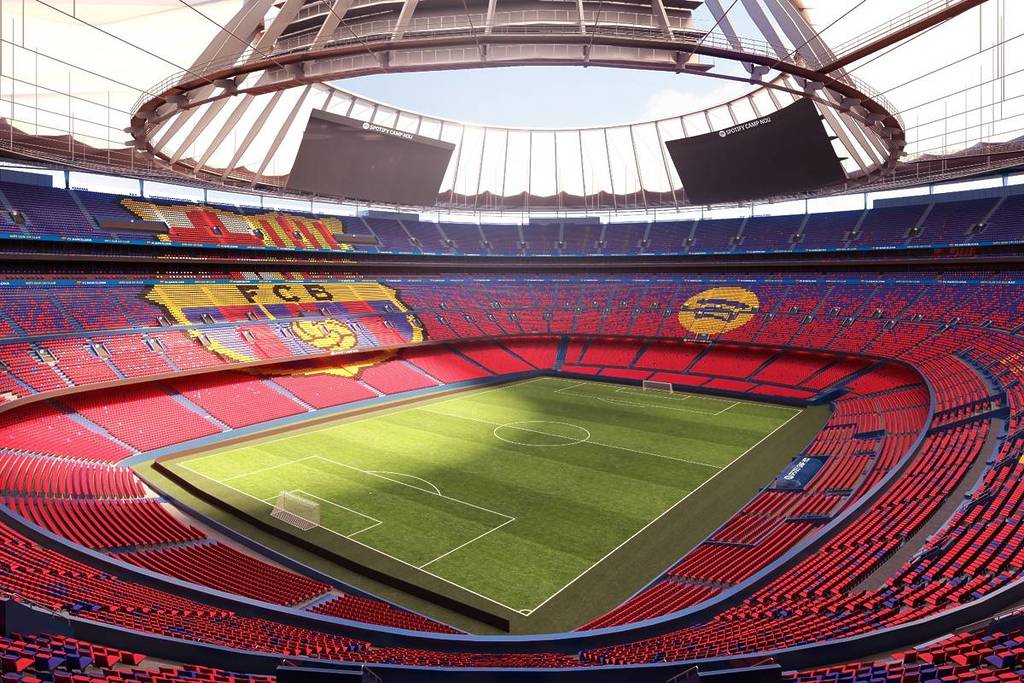
In 2023, work began on the Espai Barça project, a complete redevelopment to modernize Camp Nou into a state-of-the-art stadium while preserving its historic legacy. When completed, it will become one of the world’s most advanced football arenas.
Impact Beyond Football
Camp Nou has also been:
- A concert venue for international stars such as U2 and Michael Jackson.
- A gathering point for political rallies and Catalan independence demonstrations.
- The home of the FC Barcelona Museum, one of the most visited sports museums globally.
Its influence extends far beyond sports, shaping tourism, culture, and the economy of Barcelona.
Legacy of the Inauguration
The 1957 inauguration was not just about opening a stadium; it was about laying the foundation for FC Barcelona’s global identity. For nearly seven decades, Camp Nou has been at the center of unforgettable football history, inspiring millions of fans worldwide.
It remains a sacred ground for football lovers and a constant reminder of how sports and culture intertwine.
Inauguration
The inauguration of Camp Nou on September 24, 1957, was more than a sporting milestone it was the birth of a cultural icon. What began as a necessity to house more fans turned into a symbol of identity, resilience, and global football excellence. Today, even as it undergoes redevelopment, Camp Nou’s legacy continues to inspire generations of players and supporters.
⚠️ Disclaimer and Source Hygiene
This article is based on publicly available reports, post-fight interviews, and media coverage. The content is intended for informational and entertainment purposes only and does not constitute medical, legal, or professional advice. All opinions expressed belong to the quoted individuals or are part of journalistic analysis. Fight results, injuries, and future plans are subject to official confirmation and change.
🔔 For more tutorials like this, consider subscribing to our blog.
📩 Do you have questions or suggestions? Leave a comment or contact us!
🏷️ Tags: Camp Nou history, FC Barcelona stadium, Barcelona football, Camp Nou inauguration, Spanish football history, European stadiums, Catalonia culture, FC Barcelona heritage, Camp Nou 1957, football history
📢 Hashtags: #CampNou #FCBarcelona #FootballHistory #Barcelona #Stadium #Inauguration #Catalonia #SoccerCulture #SportsHistory #EuropeanFootball
