


⏲️ Estimated reading time: 7 min
Table of Contents
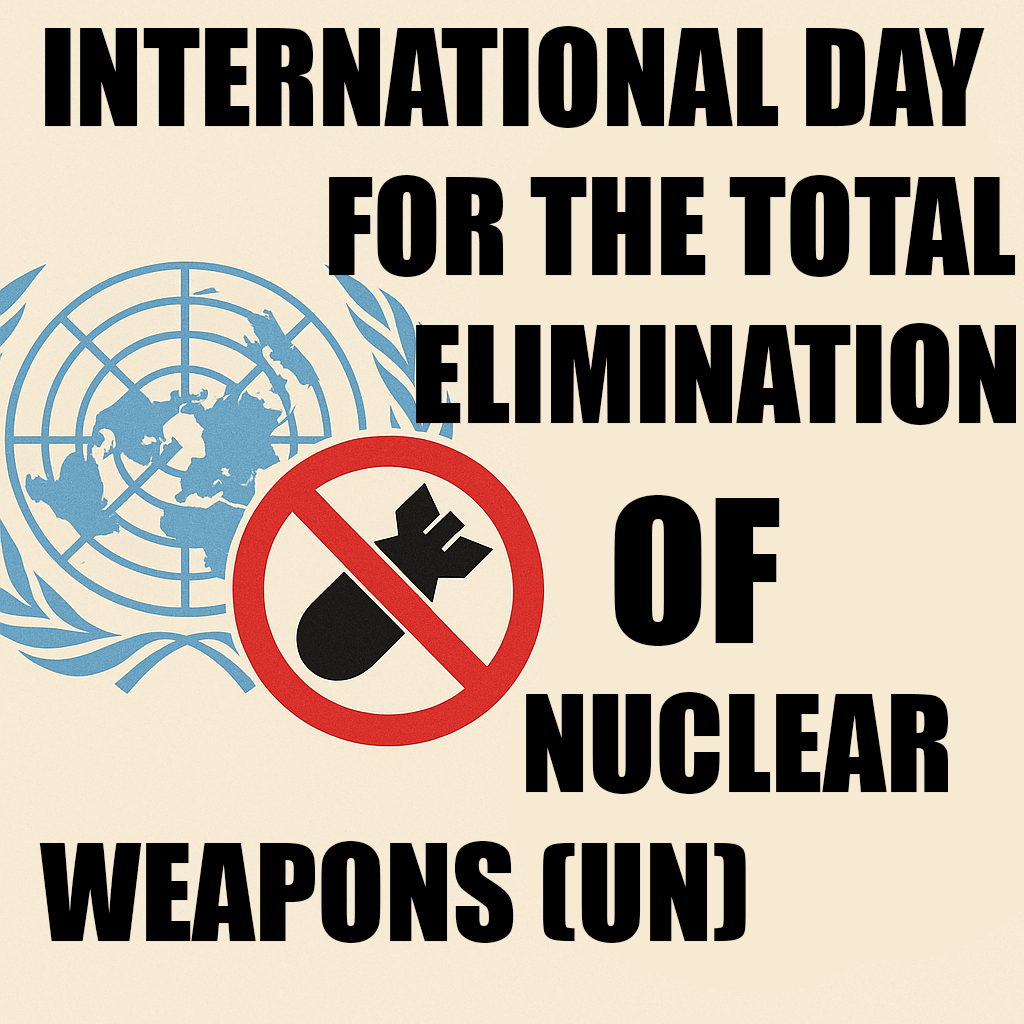
International Day for the Total Elimination of Nuclear Weapons (UN). Observed every September 26, the International Day for the Total Elimination of Nuclear Weapons highlights humanity’s urgent need for disarmament. Learn about its history, meaning, and global efforts to remove nuclear threats for a safer and more peaceful future.
See also: The Quality of People Around You Defines You
Total Elimination of Nuclear Weapons
Each year on September 26, nations, activists, and citizens gather physically and virtually to mark the International Day for the Total Elimination of Nuclear Weapons. This important day is more than a symbolic event. It’s a reminder that while technological progress has elevated humanity, it has also created the most destructive weapons known to mankind.
The United Nations General Assembly (UNGA) established this observance in 2013 with the vision of creating a nuclear-free world. The goal is clear: to prevent the humanitarian and environmental devastation that nuclear weapons would bring and to ensure peace through disarmament. Despite numerous treaties and decades of diplomacy, over 12,000 nuclear warheads remain in existence worldwide, making this day as relevant today as ever.
Historical Context of Nuclear Weapons
The Beginning: Hiroshima and Nagasaki
The devastating bombings of Hiroshima (August 6, 1945) and Nagasaki (August 9, 1945) marked the first and only use of nuclear weapons in war. More than 200,000 people died directly or from radiation exposure in the months following the attacks. Survivors, known as Hibakusha, became living symbols of nuclear horror, continuously reminding the world of the human cost of nuclear arms.
The Cold War Arms Race
The second half of the 20th century was dominated by a nuclear arms race between the United States and the Soviet Union. At its peak in the 1980s, the global stockpile exceeded 70,000 nuclear warheads. The doctrine of Mutually Assured Destruction (MAD) ironically kept peace between superpowers but left the world perpetually on the brink of annihilation.
Progress Toward Disarmament
- 1968: Treaty on the Non-Proliferation of Nuclear Weapons (NPT) – A cornerstone in preventing the spread of nuclear weapons.
- 1996: Comprehensive Nuclear-Test-Ban Treaty (CTBT) – Prohibited nuclear test explosions, though not universally ratified.
- 2017: Treaty on the Prohibition of Nuclear Weapons (TPNW) – The first legally binding treaty banning nuclear weapons completely.
While these milestones are crucial, the journey toward total elimination continues.
Why September 26?
The UN General Assembly declared September 26 as the official date in resolution 68/32 (2013). This day was chosen to coincide with the annual UN General Debate, where world leaders meet in New York to discuss global peace and security.
It also pays tribute to significant historical events. For instance, on September 26, 1983, Soviet officer Stanislav Petrov averted a potential nuclear disaster by correctly identifying a false alarm of incoming missiles from the United States. His decision prevented a possible nuclear war a story that underscores the importance of disarmament and vigilance.
Why Nuclear Weapons Remain a Threat
Despite disarmament efforts, nuclear weapons continue to endanger the world. Let’s break it down:
Humanitarian Consequences
- A single modern nuclear bomb could kill hundreds of thousands instantly.
- Survivors would suffer burns, blindness, cancers, and psychological trauma.
- Generations would face genetic mutations and health complications due to radiation.
Environmental Impact
Nuclear detonations would produce:
- Nuclear winter: soot in the atmosphere blocking sunlight, leading to crop failures and mass starvation.
- Contaminated water and soil: rendering regions uninhabitable for decades.
- Biodiversity loss: countless species would face extinction.
Geopolitical Instability
Tensions remain between nuclear-armed nations:
- USA and Russia possess over 90% of the world’s stockpile.
- North Korea continues its nuclear program despite global opposition.
- Regional conflicts between India and Pakistan heighten risks of escalation.
The Doomsday Clock, maintained by the Bulletin of the Atomic Scientists, is closer to midnight than ever symbolizing how dangerously near humanity stands to self-destruction.
The Role of the United Nations
The UN is at the forefront of nuclear disarmament advocacy. Through General Assembly debates, special sessions, and high-level conferences, the UN calls for:
- Universal adherence to the NPT, CTBT, and TPNW.
- Dialogue between nuclear and non-nuclear states to build trust.
- Education programs to spread awareness about the dangers of nuclear weapons.
- Civil society involvement, encouraging grassroots campaigns worldwide.
Achievements and Ongoing Challenges
Achievements
- Reduction of nuclear arsenals since the Cold War peak (from 70,000 to 12,000 warheads).
- Adoption of the TPNW in 2017, supported by over 120 nations.
- Increased recognition of the humanitarian dimension of nuclear weapons.
Challenges
- Major nuclear powers (USA, Russia, China, France, UK) refuse to join the TPNW.
- Modernization programs: billions are being spent to upgrade nuclear arsenals.
- Lack of global consensus: some states see nuclear deterrence as essential for national security.
Global Movements and Civil Society
The power of change does not rest only with governments. Civil society organizations play a vital role:
- International Campaign to Abolish Nuclear Weapons (ICAN) – Awarded the 2017 Nobel Peace Prize.
- Peace marches in Japan, led by survivors of Hiroshima and Nagasaki.
- Academic forums and NGOs pushing for nuclear-free zones in regions such as Latin America and Africa.
Ordinary people, students, teachers, and activists worldwide participate in September 26 campaigns by hosting discussions, sharing educational materials, and calling on leaders to act.
The Moral and Ethical Argument
The existence of nuclear weapons raises profound ethical questions:
- Can any country justify holding weapons capable of wiping out humanity?
- Is deterrence a legitimate security strategy when mistakes and accidents can trigger catastrophe?
- Wouldn’t resources be better invested in education, healthcare, and sustainable development?
From a humanitarian perspective, nuclear weapons are not just military tools they are instruments of indiscriminate mass destruction.
How Individuals Can Contribute
You don’t need to be a politician or diplomat to support this cause. Here are ways to take action:
- Educate yourself by reading credible sources about nuclear disarmament.
- Join campaigns like those organized by ICAN or local peace organizations.
- Use your voice on social media on September 26 to spread awareness.
- Contact representatives and urge them to support disarmament treaties.
- Participate in commemorative events organized by schools, universities, and NGOs.
Reflections on Peace and Security
True security cannot be built on threats of annihilation. Peace is sustainable only through dialogue, trust, and cooperation. The International Day reminds us that survival depends not on the size of our weapons, but on the strength of our diplomacy.
Epilogue
The International Day for the Total Elimination of Nuclear Weapons is not just another date on the calendar. It’s a global call to choose life over death, unity over division, and cooperation over destruction. Every step toward disarmament is a step toward ensuring that future generations inherit a safer and more just world.
The road may be long, but history proves that collective willpower can change the course of humanity.
🔔 For more tutorials like this, consider subscribing to our blog.
📩 Do you have questions or suggestions? Leave a comment or contact us!
🏷️ Tags: United Nations, nuclear disarmament, nuclear weapons, Hiroshima Nagasaki, September 26, peace and security, nuclear ban treaty, Doomsday Clock, ICAN, UN resolution
📢 Hashtags: #UN, #NuclearDisarmament, #GlobalPeace, #September26, #NuclearWeapons, #NoMoreHiroshima, #PeaceDay, #InternationalDay, #ICAN, #UnitedNations
Ending Section
The International Day for the Total Elimination of Nuclear Weapons is a reminder that disarmament is not optional it is essential. By coming together, raising awareness, and pressuring leaders to act, humanity can move closer to a world free of nuclear threats.

VPS Hosting – Save minimum 20%