


⏲️ Estimated reading time: 8 min
Table of Contents
Battle of Stamford Bridge: Harold Godwinson Defeats Harald Hardrada. On 25 September 1066, King Harold Godwinson of England defeated Harald Hardrada of Norway at Stamford Bridge. This monumental clash ended the Viking Age, reshaped English destiny, and set the stage for the Norman Conquest weeks later at Hastings.
The Battle of Stamford Bridge
Few years in English history are as eventful and transformative as 1066. Known to schoolchildren, historians, and military enthusiasts alike, this year witnessed multiple invasions, decisive battles, and the fall of one dynasty to make way for another. Among these clashes, the Battle of Stamford Bridge, fought on 25 September 1066, stands out as a dramatic turning point.
King Harold Godwinson, newly crowned and facing threats from all sides, confronted and defeated the formidable Harald Hardrada of Norway, known as the last great Viking. This triumph was momentous, not only because it ended Viking ambitions in England, but also because it came at great cost. The exhausted English army would soon be tested again, this time fatally, at the Battle of Hastings against William of Normandy.
In this post, we will explore the background, strategies, the battle itself, and its enduring legacy.
The Political Background of 1066
Edward the Confessor’s Death and Succession Crisis
The drama began with the death of Edward the Confessor, king of England, on 5 January 1066. Edward died childless, leaving no direct heir. His death created a power vacuum, and his choice of successor became a matter of debate and international contention.
The Witenagemot (council of nobles) elected Harold Godwinson, Earl of Wessex, as king. He was crowned the very next day, on 6 January, at Westminster Abbey. However, his claim to the throne was contested almost immediately.
Rivals for the Throne
- William, Duke of Normandy – Claimed that Edward had promised him the throne during a visit in 1051 and that Harold had sworn an oath to support him.
- Harald Hardrada, King of Norway – Claimed that an earlier pact between the Danish king Harthacnut and Magnus of Norway gave Norway’s kings a right to England upon Edward’s death.
- Tostig Godwinson, Harold’s Brother – Exiled from England, Tostig allied himself with Hardrada to weaken Harold and reclaim power.
England thus faced not one, but two major invasions in the same year.
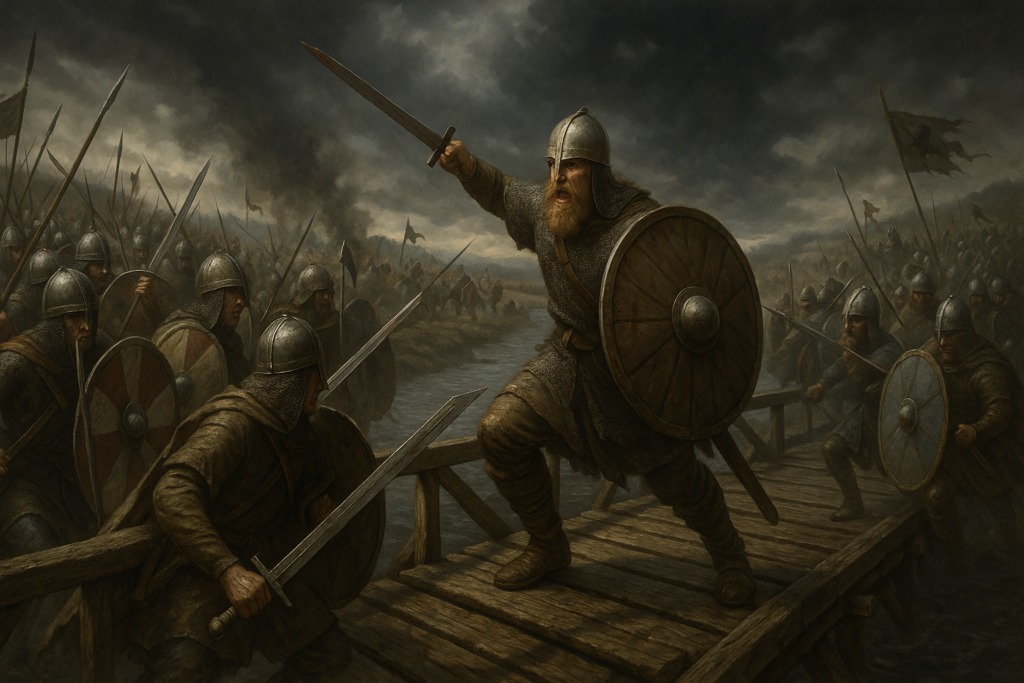
Harald Hardrada: The Last Viking King
Reputation and Ambition
Harald Hardrada was no ordinary claimant. A towering warrior, often described as a giant of a man, he had fought across Europe and the Byzantine Empire. His epithet “Hardrada” means “hard ruler” or “stern council,” reflecting his reputation as a fearsome and uncompromising leader.
Harald had set his eyes on England for years. With the support of Tostig Godwinson, who sought revenge against his brother Harold, he launched a massive invasion in September 1066, bringing with him an army of perhaps 10,000 Norse warriors aboard around 300 longships.
The Norwegian Invasion of England
The Battle of Fulford (20 September 1066)
Harald Hardrada and Tostig landed in Yorkshire and quickly advanced inland. At Fulford, near York, they met resistance from Earl Morcar of Northumbria and Earl Edwin of Mercia. The Norwegians won a decisive victory, scattering the English forces and forcing York to surrender.
With this victory, Hardrada seemed poised to consolidate his hold in the north. He demanded hostages and supplies, confident that Harold Godwinson was preoccupied in the south with William of Normandy.
Harold’s Forced March North
News of the invasion reached Harold Godwinson swiftly. Despite expecting William’s attack from across the Channel, Harold decided to march north with his housecarls (professional warriors) and the fyrd (militia).
The march from London to York nearly 190 miles was completed in just four days. This extraordinary feat of logistics and endurance allowed Harold to surprise the Norwegians, who were not expecting him so soon.
The Battle of Stamford Bridge (25 September 1066)
Location and Setting
The battle took place just outside York, at a crossing over the River Derwent known as Stamford Bridge. The geography played a crucial role in the early stages of the fight.
The Surprise Encounter
The Norwegians were caught off guard. Believing their victory at Fulford had secured their position, many had left their armor aboard their ships. On the morning of 25 September, Hardrada’s men were dispersed, gathering supplies and resting.
See also: 8 Qualities Women Often Value Most in a Long-Term Partner
When Harold’s army appeared on the horizon, the Norwegians scrambled to assemble their forces.
The Viking at the Bridge
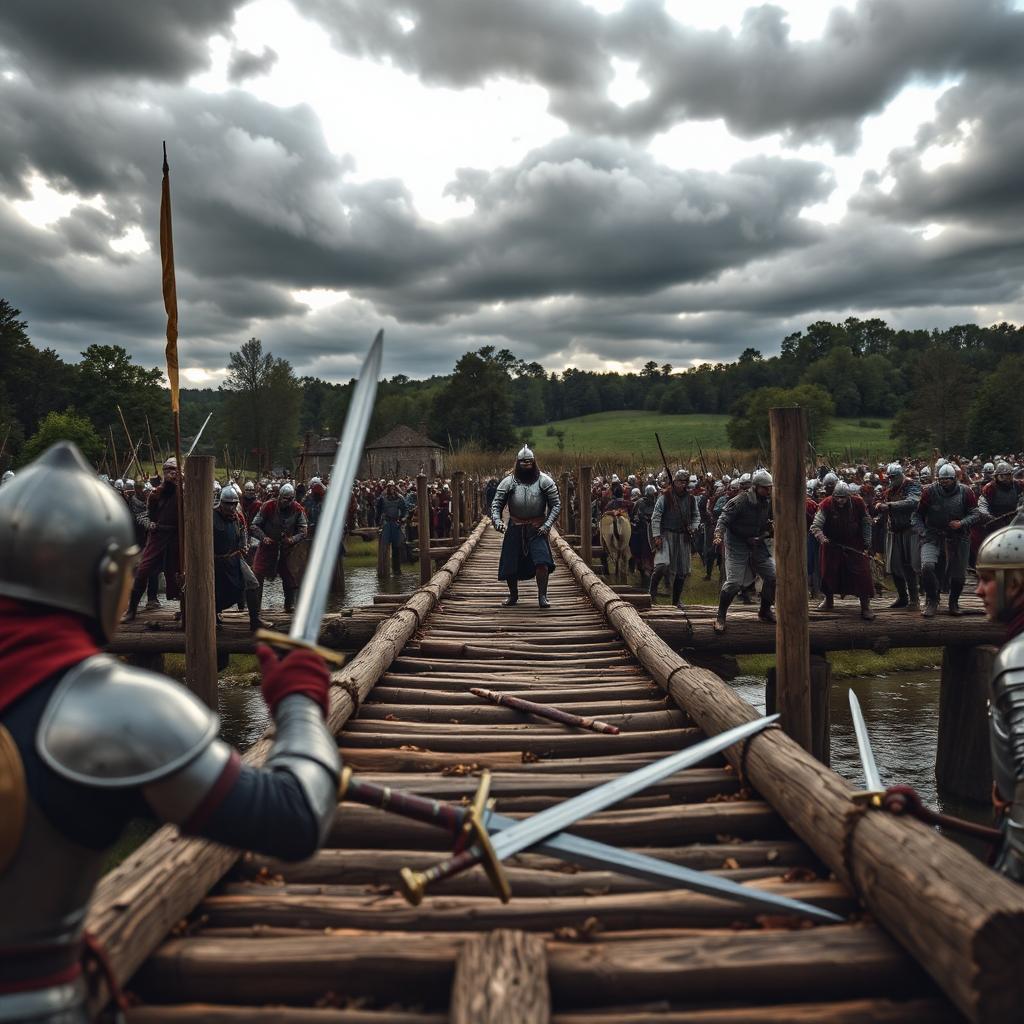
One of the most famous legends of the battle tells of a giant Norwegian warrior who held the narrow wooden bridge, cutting down dozens of English soldiers and delaying their advance. According to chroniclers, he was eventually killed by a soldier who floated under the bridge in a barrel and thrust a spear upward.
Though likely embellished, this story symbolizes Viking courage and resistance in the face of overwhelming odds.
The Main Engagement
Once across the bridge, Harold’s army clashed with Hardrada’s shield wall. Despite fighting valiantly, the unarmored Norwegians were at a disadvantage. Harald Hardrada was struck in the throat by an arrow and killed. Leadership passed to Tostig, Harold’s estranged brother, but he too fell in the battle.
By the end of the day, the Norwegian army was shattered. Of the 300 longships that had brought them, only about 24 ships were needed to carry the survivors back to Norway.
The Aftermath of Victory
The End of the Viking Age
The Battle of Stamford Bridge is often seen as the final blow to Viking ambitions in England. For centuries, Scandinavians had raided and conquered large parts of the British Isles. With Hardrada’s death, the age of large-scale Viking invasions came to a close.
Harold’s Pyrrhic Victory
Though victorious, Harold Godwinson’s army suffered heavy losses and exhaustion. They had marched hundreds of miles, fought two major battles in quick succession, and had little time to rest.
This exhaustion would prove disastrous, because only three weeks later, Harold had to march south again to meet William of Normandy, culminating in the fateful Battle of Hastings on 14 October 1066.
Consequences for England
- Short-lived triumph: Harold secured the north but lost his strength in the process.
- Dynastic shift: Within weeks, Harold was killed at Hastings, and William became king, ushering in Norman rule.
- Cultural transformation: The battle symbolized the transition from the Viking Age to the Norman era.
Military Analysis of Stamford Bridge
Harold’s Strategic Brilliance
- The rapid march north was a masterstroke, surprising the invaders.
- The use of disciplined housecarls alongside the fyrd proved effective against the disorganized Norwegians.
Hardrada’s Miscalculation
- Overconfidence after Fulford left his men vulnerable.
- Failure to maintain armor and readiness was a fatal error.
- Reliance on allies (Tostig) created internal divisions.
Lessons in Medieval Warfare
- Speed and logistics can be as decisive as numbers.
- Surprise attacks often determine outcomes.
- Leadership deaths (Hardrada, Tostig) cripple armies.
Stamford Bridge in English Memory
Chronicles and Legends
The battle was recorded in sources such as the Anglo-Saxon Chronicle and by later Norman chroniclers. While some details may be exaggerated like the lone Viking at the bridge the accounts confirm the scale and impact of the English victory.
Cultural Legacy
- Seen as the end of the Viking Age in England.
- Celebrated as Harold’s finest hour, showing his skill and determination.
- Overshadowed by Hastings, but equally crucial in the story of 1066.
Modern Commemoration
Today, Stamford Bridge (a village in Yorkshire) commemorates the battle with plaques and annual re-enactments. It remains a symbol of courage, fate, and the shifting tides of history.
Why Stamford Bridge Matters Today
- Military History: The battle illustrates key lessons about leadership, preparation, and endurance.
- National Identity: It represents the resilience of Anglo-Saxon England, even in its final days.
- Turning Points: Reminds us how quickly fortune can shift victory one week, disaster the next.
- Cultural Transition: Marks the end of Scandinavian dominance and the beginning of a Norman dynasty that reshaped England forever.
Final Reflections
The Battle of Stamford Bridge was both a brilliant victory and a tragic prelude. King Harold Godwinson proved his courage and leadership by defeating Harald Hardrada, one of the most legendary Viking kings. Yet the cost of this triumph was enormous. The English army, exhausted and depleted, soon faced a fresh Norman invasion at Hastings, where Harold would lose his life and crown.
Thus, Stamford Bridge represents the last great stand of the Anglo-Saxons before the sweeping changes of the Norman Conquest. It remains a reminder of how destiny can pivot on the outcome of just a few weeks in history.
🔔 For more tutorials like this, consider subscribing to our blog.
📩 Do you have questions or suggestions? Leave a comment or contact us!
🏷️ Tags: Battle of Stamford Bridge, Harold Godwinson, Harald Hardrada, Vikings, Anglo-Saxon England, Norman Conquest, Tostig Godwinson, 1066 battles, Medieval warfare, English history
📢 Hashtags: #StamfordBridge #HaroldGodwinson #HaraldHardrada #1066 #Vikings #MedievalHistory #BattleHistory #NormanConquest #EnglishHistory #SaxonEngland
