


⏲️ Estimated reading time: 7 min
Table of Contents
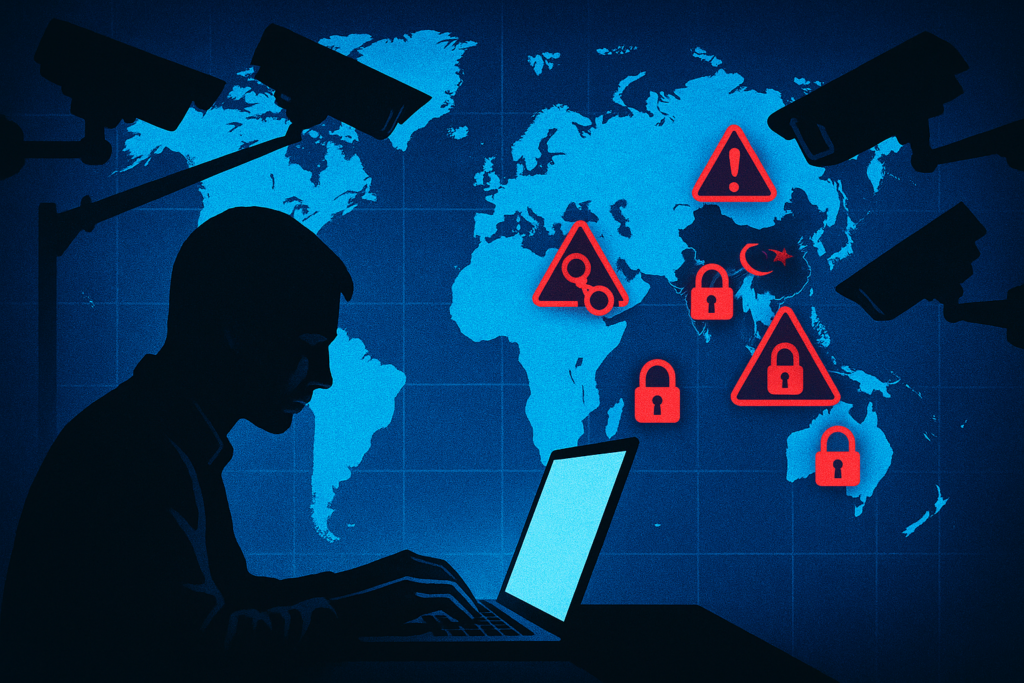
Countries with the Highest Number of Arrests for Online Comments. Speaking online can be dangerous in many countries. Some governments arrest people for their digital opinions, calling them threats to security or order. This article explains which nations record the most arrests for online comments and how these laws shape society.
The Risk of Speaking Online
Read also: Perez Hilton Treated After Disturbing Livestream Incident
Across the world, millions log in daily to share ideas on Facebook, Twitter, TikTok, or YouTube. In open societies, online speech usually sparks debate. However, in restrictive states, one comment can lead to surveillance, interrogation, or even prison.
Governments often justify these arrests with arguments about national security, morality, or protecting institutions. Yet human rights organizations argue that these laws erode freedom of expression and silence citizens. To understand the issue, let’s explore the countries where online comments frequently lead to arrest.
1. China: A Digital Space Under Heavy Control
China operates the largest system of online surveillance in the world. The government monitors every major platform, from WeChat to Weibo and Douyin.
- Officials frequently arrest citizens for posts that criticize the Communist Party.
- Doctors and journalists who warned about COVID-19 faced detention.
- The Cybersecurity Law (2017) and Data Security Law (2021) give the state broad authority to punish digital speech.
As a result, online expression in China remains extremely risky. Citizens know that even a private message may attract official attention.
2. Saudi Arabia: Tweets as Crimes
Saudi Arabia enforces one of the harshest cybercrime frameworks worldwide. The state does not tolerate criticism of religion, leadership, or policy.
- In 2022, authorities sentenced a woman to 34 years in prison for retweeting activists.
- Journalists, dissidents, and even ordinary users have faced prosecution.
- The Anti-Cyber Crime Law (2007) allows vague charges such as “disturbing public order.”
Consequently, many Saudis practice extreme caution online. Yet despite the risks, activists still find ways to express themselves, often at great personal cost.
3. Turkey: Criminalizing Insults
In Turkey, insulting the president or government carries legal consequences under Article 299 of the penal code.
- Thousands of investigations open each year for online remarks.
- Social media companies face strong pressure to remove critical content.
- Satirical posts or cartoons often lead to arrests.
Because of these laws, political debates online frequently end in court cases. Arrests rise sharply during elections or periods of social unrest.
4. Egypt: Facebook as Evidence
Since 2013, Egypt has turned social media into a legal minefield. Authorities treat online comments as potential threats.
- Activists have received sentences for calling protests on Facebook.
- Women influencers on TikTok faced charges of “violating family values.”
- The Cybercrime Law (2018) enables broad monitoring powers.
The government punishes not only political dissent but also cultural expression. This combination makes Egypt one of the strictest states for online behavior.
5. Iran: Punishing Protesters
Iran regularly arrests people for Instagram posts, tweets, or blog entries. Authorities treat criticism of the regime as a direct attack on national security.
- During the 2022 women-led protests, hundreds were detained for online activity.
- Courts charge many activists with “spreading corruption on earth.”
- VPN use does not guarantee safety since the Revolutionary Guard monitors traffic.
For many Iranians, digital spaces offer a rare chance to speak out. However, those who do face serious consequences.
6. Russia: Silencing War Critics
Russia increased online arrests dramatically after invading Ukraine in 2022.
- Laws criminalize so-called “fake news” and “discrediting the army.”
- Facebook posts that question the war often result in fines or jail.
- Independent bloggers became frequent targets of the authorities.
The state pairs censorship with blocking Western platforms. This combination leaves Russians with limited outlets for uncensored discussion.
7. Thailand: Lèse-Majesté in the Digital Age
Thailand enforces strict laws against criticizing the monarchy.
- Article 112, known as the lèse-majesté law, applies to online speech.
- Citizens have received sentences of up to 15 years per charge for memes or comments.
- Students and activists often bear the heaviest penalties.
Because of this, many Thais avoid any reference to the royal family online, even in private chats.
8. United Arab Emirates: Defamation as a Crime
The UAE prosecutes defamation, blasphemy, and criticism of leaders under cybercrime laws.
- Citizens and expats have both faced arrests for Facebook or WhatsApp posts.
- Even complaints about employers online can lead to charges.
- Courts often treat private messages as legal evidence.
Although the UAE presents itself as modern and global, its digital laws sharply restrict free speech.
9. Vietnam: Tight Grip on Social Media
Vietnam’s government actively monitors online activity.
- The Cybersecurity Law (2019) requires platforms to store local data and remove “harmful” content.
- Facebook users who criticize policies risk immediate arrest.
- Bloggers often face years in prison for “anti-state propaganda.”
Vietnam’s internet continues to grow rapidly, but free expression does not expand at the same pace.
10. India: A Democracy with Digital Challenges
Despite its democratic structure, also records frequent arrests for online remarks.
- Section 66A of the IT Act (struck down in 2015) still gets misused by police.
- Citizens face charges for “hurting religious sentiments.”
- Journalists covering protests have been detained for tweets.
India demonstrates how even democratic systems can struggle with balancing free speech and social order.
Comparison Table: Online Arrests by Country
| Country | Main Law / Regulation | Common Offense | Typical Penalty |
|---|---|---|---|
| China | Cybersecurity Law (2017) | Criticizing Communist Party, “rumors” | Detention to multi-year jail |
| Saudi Arabia | Anti-Cyber Crime Law (2007) | Tweets against royals or religion | Long prison terms (10–34 yrs) |
| Turkey | Penal Code Article 299 | Insulting the president | Fines, months to years jail |
| Egypt | Cybercrime Law (2018) | Protests, “immoral” TikTok posts | 2–10 years jail |
| Iran | National Security Laws | Protest posts, anti-regime speech | Heavy sentences, even death |
| Russia | “Fake News” & Army Laws | Criticizing war or military | Fines to 15 years prison |
| Thailand | Lèse-Majesté Law (Art. 112) | Criticism of monarchy | Up to 15 years per charge |
| UAE | Cybercrime / Defamation Laws | Criticism, defamation, private posts | Fines, deportation, jail |
| Vietnam | Cybersecurity Law (2019) | “Anti-state propaganda” | 5–15 years prison |
| India | IT Act misuse / Penal Code | “Hurting religious sentiments” | Arrests, bail, short jail |
Global Patterns Behind the Crackdowns
Several clear trends appear across these countries:
- Broad and vague laws – Terms such as “fake news” or “insults” give officials freedom to punish almost any comment.
- Advanced surveillance – Governments use modern technology to track users.
- Targeting dissent – Arrests often increase during protests or political crises.
- Cultural protection – Religion, military, and monarchy often receive special protection from criticism.
These patterns show that online arrests are less about crime and more about power.
Social Consequences of Online Arrests
Arrests for digital speech have deep effects on society:
- Citizens adopt self-censorship, avoiding sensitive topics.
- Many dissidents flee abroad to speak freely.
- Fear spreads through communities, reducing trust and debate.
- International watchdogs condemn these practices, yet global pressure rarely stops them.
As a result, societies risk losing innovation, dialogue, and trust in governance.
Staying Safe in Restrictive States
If you live in or travel to such countries, digital safety matters greatly.
- Choose encrypted messaging apps such as Signal.
- Avoid heated political debates on monitored platforms.
- Research local laws before posting anything online.
- Use VPNs carefully, since authorities may still detect them.
These steps cannot guarantee safety, but they reduce exposure to legal risks.
Closing Section
Online arrests remind us that the internet does not guarantee freedom. While some countries treat digital platforms as spaces for dialogue, others view them as tools of control. The nations listed here represent the sharpest examples of punishment for simple comments.
Ultimately, protecting free speech requires global awareness, legal reforms, and continued advocacy. People deserve the right to speak their minds without fearing prison for a tweet, a Facebook post, or even a private message.
🔔 For more tutorials like this, consider subscribing to our blog.
📩 Do you have questions or suggestions? Leave a comment or contact us!
🏷️ Tags: online arrests, censorship, freedom of speech, social media laws, digital rights, internet freedom, human rights, online comments, cybercrime laws, surveillance
📢 Hashtags: #FreeSpeech, #Censorship, #DigitalRights, #OnlineFreedom, #HumanRights, #SocialMedia, #InternetFreedom, #CyberLaws, #GlobalJustice, #FreedomOfExpression
