


⏲️ Estimated reading time: 9 min
Table of Contents
Porn isn’t just about pleasure. For many, it acts as fast emotional regulation against stress, anxiety, loneliness, or boredom. Learn how the dopamine–avoidance loop forms, the hidden long-term costs, and pragmatic, healthy alternatives you can start using today consistently and compassionately.
Emotional Regulation Strategy
We usually frame pornography in terms of pleasure, taboo, or morality. Far less often do we examine it as an emotional regulation strategy a (often unconscious) way to dull stress, anxiety, boredom, or loneliness. Through that lens, the question “Why do we watch porn?” shifts from pure sexual impulse to self-medication.
This guide distills the strongest ideas from two long drafts into a practical, ready-to-apply blueprint: how the dopamine–avoidance loop works, why ritual and “control” make it sticky, the long-term costs, and most importantly healthy replacements that build resilience rather than avoidance.
Emotional Regulation 101 (and why it matters)
Emotional regulation is how we notice, tolerate, and modulate feelings so we stay functional and present. Everyone regulates via exercise, sleep, conversations, creativity, meditation or via shortcuts aimed at quick relief: doomscrolling, gaming, emotional eating, alcohol… and pornography.
The issue isn’t the existence of a shortcut; it’s dependence on a single shortcut. When one behavior becomes the default response to discomfort, regulation stops being regulation and turns into avoidance.
How Porn Functions as Emotional Regulation
1) Dopamine surge = fast tension release
Explicit content engages the reward system. Dopamine rises quickly, delivering a neurochemical “phew.” It’s predictable, immediate relief that teaches the brain: feel bad → do X → feel better.
2) Avoiding difficult feelings
When anxiety, shame, boredom, or loneliness show up, porn offers escape without vulnerability. No asking for help. No social exposure. Hit play and exit the present but the emotion remains unprocessed.
3) Ritual and predictability
Repeated enough, the behavior becomes ritual: after work, when alone, when sleepless. Ritual brings predictable relief, a felt sense of control yet it’s surface-level control rooted in avoidance.
4) The illusion of total control
Choose what, when, how long. This hyper-control compensates for helplessness elsewhere in life. But the more relief you outsource to a “dopamine button,” the more emotional resilience erodes.
Why It Becomes the Default
- Accessibility: always one click away.
- Anonymity: no social risk or vulnerability.
- Immediacy: zero warm-up, instant reward.
- Associative learning: the brain wires a shortcut: problem X → solution Y.

Hidden Long-Term Costs
1) Short-term relief vs. long-term stuckness
Short term: relief, euphoria, distraction.
Long term: the root problem persists, then guilt, shame, self-criticism often follow. The loop forms: feel bad → use → feel guilty → use again to escape guilt.
2) Tolerance and escalation
The brain adapts. To get the same peak, you need more, newer, or more intense stimulation. Result: time creep, content escalation, and diminishing satisfaction.
3) Relationship and intimacy impact
- Unrealistic expectations: bodies, performance, scripts.
- Emotional detachment: you practice dodging feelings rather than processing them.
- Proxy intimacy: simulated closeness replaces real bonding.
4) Isolation and self-esteem erosion
Secrecy breeds distance from yourself and others. Self-esteem drops; avoidance stiffens.
Signs the Coping Strategy Became a Problem
- You use porn repeatedly without genuine sexual desire.
- You try to cut back but can’t stay consistent.
- Time spent or intensity keeps climbing.
- It’s the automatic response to stress, boredom, or anxiety.
- Post-use guilt/shame/anxiety, yet you return to the same ritual.
- Sleep, focus, work, or relationships take a hit.
If this resonates, it’s not a verdict it’s a useful signal.
Change ≠ Raw Willpower. It’s Better Architecture.
Sustainable change comes less from clenching your teeth and more from environment design, strategy, and self-compassion. Treat this like a project: set targets, measure, experiment, iterate.
A 14-Day Reset (actionable, low friction)
1–2: Gentle audit & clarity
- List your top triggers (time, place, emotion).
- Clarify what you actually seek: soothing, stimulation, distraction, validation?
- Set a realistic aim: “Reduce frequency and diversify my emotional responses.”
3–4: Smart digital hygiene
- Remove sexualized accounts from feeds (unfollow/mute/block).
- Keep devices out of the bedroom; airplane mode 60 minutes pre-sleep.
- Use site blockers during trigger windows (allowlists beat blocklists).
5–7: Deliberate replacements (habit swap)
Pre-decide one alternative per trigger:
- Anxiety: 2 minutes of 4-6 breathing (inhale 4, exhale 6), then a 10-minute brisk walk or 20 push-ups.
- Boredom: 10-minute “micro-project” (tidy desk, wash dishes, read one page).
- Loneliness: send a 59-second voice note to a safe person.
Days 8–10: Urge-surfing (ride the wave)
When an urge hits, don’t fight observe:
- Where in the body?
- Intensity 0–10?
- Start a 10-minute timer and stay with slow exhale-focused breathing.
Urges crest and ebb. The goal isn’t “don’t feel,” it’s “I can remain present.”
Days 11–14: New rewards & review
- Give yourself healthy rewards for successful days (walk, good coffee, podcast).
- Review your notes: what worked, what didn’t, what to adjust.

Emotional First-Aid Kit (fast tools)
1) 4–6 Breathing (2–5 minutes)
Inhale 4, exhale 6. Do 10–20 cycles. Down-regulates arousal and creates choice.
2) The 3-line note (2 minutes)
- I’m feeling: …
- Probably because: …
- What I truly need is: …
Turns fog into actionable needs.
3) 10-minute strong distraction
Quick walk, push-ups, or a 30–60 sec cold shower. Breaks the automatic ritual.
4) The “red phone”
Choose 1–2 safe people. Pre-write: “Tough moment. Taking a 10-minute walk; will reply after.” Normalizes the healthy detour.
Four Resilient Replacements
A) Scheduled movement (not “when I can”)
- Minimum viable dose: 3×/week, 20 minutes (brisk walk, bodyweight).
- Add-on: 60-second stretch whenever you catch yourself doomscrolling.
B) Mindfulness & grounding
- 5 minutes/day: breath focus or a short body scan.
- When thoughts intrude, gently return to sensations. You’re training the return, not perfection.
C) Emotion journal (evening, 5 minutes)
- “Today’s dominant feeling was…”
- “I responded with…”
- “Next time I’ll try…”
Keep it short, consistent, judgment-free.
D) Intentional social connection
- Two micro-connections/day (a voice note, a genuine check-in).
- One in-person meet/week (walk, coffee, gym).
Partner Conversation Guide (10 minutes)
- Safe frame: “This isn’t about blame; I want to be understood.”
- I-statements: “When I’m stressed, I feel X and tend to do Y.”
- Clear ask: “It would help if… (10-minute walk together / hug / phone-free evenings).”
- Shared ritual: two evenings/week without screens (cook, game, movie chosen together).
Digital Hygiene That Actually Works
- No screens in the bedroom; chargers in another room.
- Scheduled blocks during trigger hours (e.g., 10:30 p.m.–7:00 a.m.).
- Clean feeds of routine sexualized stimuli.
- Friction by design: remove shortcut icons; one minimalist home screen.
When to Seek Professional Help
- Personal efforts don’t change frequency or distress meaningfully.
- Recurrent conflict with your partner, declining work performance, or isolation.
- Signs of underlying trauma, major depression, or severe anxiety.
Therapy offers a confidential space to explore roots and tailor strategies to your context.
Mini-FAQ (brief, no jargon)
“If I cut down, am I just repressing the need?”
No. The difference is conscious substitution and emotion processing, not denial.
“Do I have to quit entirely?”
Not everyone shares the same goal. For many, reducing + diversifying coping markedly improves quality of life.
“Why do relapses happen after good streaks?”
Because triggers (fatigue, stress) return. That’s not failure; it’s feedback. Re-apply tools, adjust environment.
6-Step Emergency Protocol (for strong urges)
- Put the phone down; set a 10-minute timer.
- 4–6 breathing for 2 minutes.
- Name the feeling: “Anxiety 7/10 in chest.”
- Micro-movement: 20 squats + 10 push-ups / 10-minute walk.
- Context shift: different room or balcony.
- Red-phone message: “On a wave walking 10; text you after.”
If intensity ≥7/10 after 10 minutes, repeat steps 2–5. Most waves fall to 3–4/10.
Rewriting the Habit Loop (applied)
- Trigger: “Alone at night.”
- Old behavior: porn.
- Sought reward: soothing + intense stimulation.
New loop:
- Trigger: same.
- New behavior: 10-minute walk + voice note to a friend + warm shower.
- Reward: calmer body, real connection, better sleep.
Repeat the same new loop for the same trigger. The brain loves predictability.
Progress Markers (measure what matters)
- Urge frequency and time-to-decrease intensity.
- Days with successful substitutions.
- Sleep quality and morning energy.
- Real-world connections per week.
- Self-talk: less self-criticism, more kind tone.
Common Roadblocks & Antidotes
You may also be interested in: Psychological Tricks That Should Be Banned: 10 Manipulation Rules
- Perfectionism: “I slipped streak ruined.”
- Antidote: the next right choice rule. Resume the protocol now.
- Secrecy: hiding sustains shame.
- Antidote: one trusted person + a prewritten check-in message.
- Poor sleep: fatigue magnifies impulses.
- Antidote: sleep hygiene (fixed schedule, morning light, screens out at night).
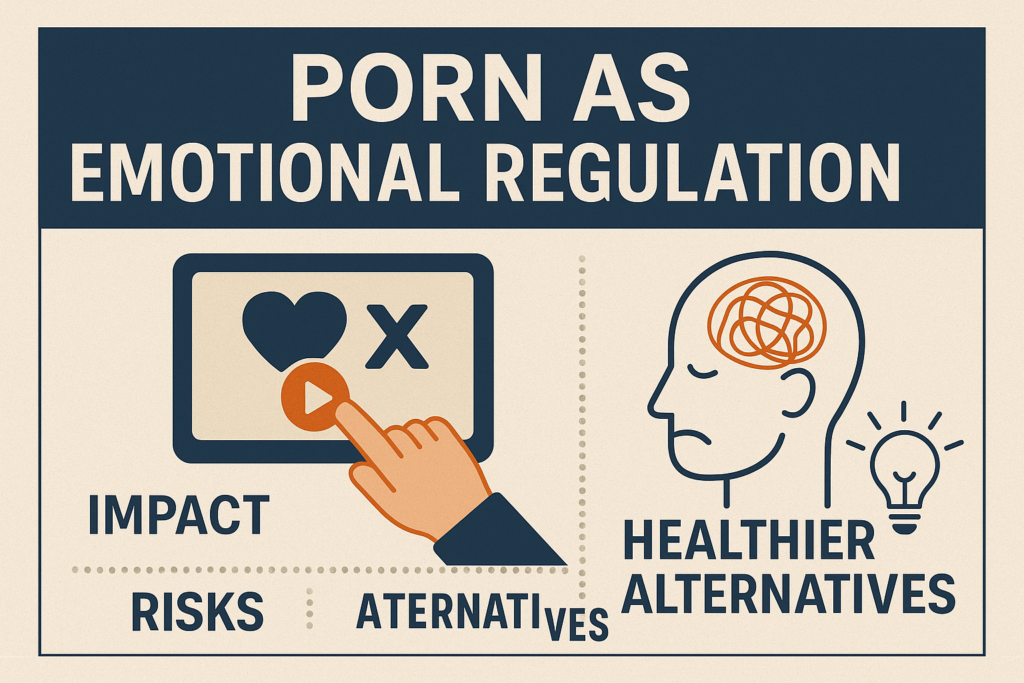
Porn can serve as emotional regulation a quick, fragile anesthetic. Costs mount when it becomes the default response to discomfort: tolerance, escalation, isolation, intimacy issues.
The exit is not just “don’t do it,” but build something else instead: movement, breathing, journaling, connection, digital hygiene, and therapy when needed.
Start small and concrete today: a 10-minute timer, 20 squats, one voice note. Repeat. That’s how the loop rewires not through infinite willpower, but by shaping your environment, training your body, and softening your inner voice.
You deserve an emotional life that’s grounded, warm, and freer not perfect, but well-practiced.
🔔 For more tutorials like this, consider subscribing to our blog.
📩 Do you have questions or suggestions? Leave a comment or contact us!
🏷️ Tags: emotional regulation, porn addiction, mental health, anxiety, loneliness, dopamine, digital hygiene, relationships, therapy, personal growth
📢 Hashtags: #EmotionalRegulation, #MentalHealth, #Addiction, #Pornography, #Relationships, #Resilience, #DigitalHygiene, #Mindfulness, #PersonalGrowth, #Wellbeing
