

⏲️ Estimated reading time: 6 min
Table of Contents
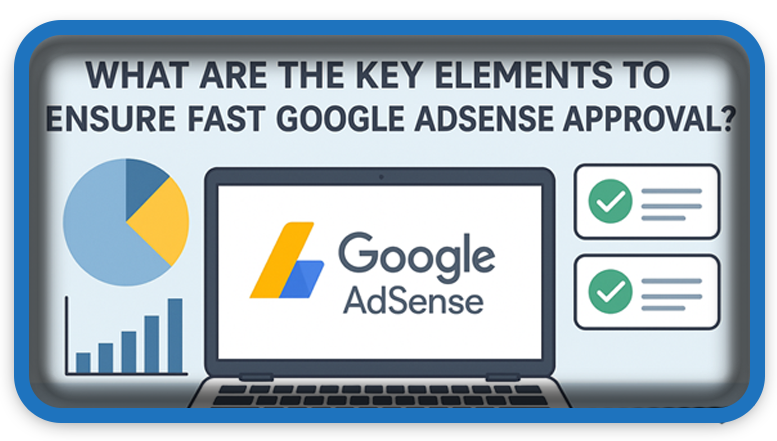
What Are the Key Elements to Ensure Fast Google AdSense Approval? Getting fast Google AdSense approval requires more than just applying. It involves creating a high-quality website with original content, professional design, strong compliance pages, user engagement, and optimized performance. This guide explains the essential elements to speed up your approval process.
AdSense
Google AdSense remains one of the most popular ways to monetize websites, blogs, and online platforms. However, getting approved quickly is not always straightforward. Many website owners apply without preparing their sites properly, only to face rejection or delays that can last weeks or even months.
Fast AdSense approval depends on a combination of quality content, technical optimization, compliance with policies, and overall trustworthiness of your website. If your site appears professional, user-friendly, and in line with Google’s guidelines, you will increase your chances of approval significantly.
In this in-depth guide, we’ll explore the key elements you need to ensure fast Google AdSense approval. By the end, you’ll have a complete roadmap to make your website ready, polished, and attractive to both visitors and Google’s review team.
1. High-Quality, Original Content
Perhaps the most important factor for AdSense approval is unique and valuable content. Google’s primary goal is to serve ads on websites that provide genuine value to users.
Characteristics of high-quality content:
- Original writing – Never copy or spin articles from other websites. Plagiarism leads to rejection.
- Length & depth – Aim for posts of at least 800–1000 words, covering topics in detail.
- Clear formatting – Use headings, subheadings, bullet points, and short paragraphs for easy reading.
- User-focused – Write content that solves problems, answers questions, or entertains your target audience.
- Regular updates – Keep your content fresh and relevant by updating posts periodically.
Example:
Instead of publishing a short post like “Top 5 SEO Tips” with only 300 words, create a comprehensive guide of 2000+ words. This shows Google that your website is serious and provides long-term value.
2. Professional Website Design
First impressions matter. If your site looks unfinished, broken, or unprofessional, Google will likely reject it.
Elements of professional design:
- Responsive theme – Ensure your website looks great on mobile, tablet, and desktop.
- Clean navigation – Easy menus and internal links help visitors (and Google) explore your site.
- No broken links – Check for 404 errors and fix them before applying.
- Attractive layout – Use consistent fonts, colors, and spacing for a polished look.
- Minimal distractions – Avoid popups, excessive ads, or auto-playing media.
A well-designed site demonstrates credibility and shows Google that you care about user experience.

3. Custom Domain and Hosting
Using a custom domain instead of a free subdomain (like yoursite.wordpress.com or blogspot.com) greatly increases your approval chances.
Why a custom domain is important:
- It builds trust and credibility with visitors.
- Google considers it more professional.
- It shows commitment to your website’s growth.
- Easier branding and SEO optimization.
Additionally, reliable hosting ensures your site loads fast and stays online, another factor that influences approval.
4. Essential Legal and Compliance Pages
Google requires certain pages to evaluate your site’s transparency and trustworthiness. Missing these can lead to rejection.
Must-have pages:
- Privacy Policy – Explains how you handle user data and cookies.
- About Us – Provides background about your website and team.
- Contact Us – Lets users (and advertisers) reach you easily.
- Disclaimer (optional but recommended) – Especially for health, finance, or advice-based sites.
These pages make your website look legitimate and compliant with Google’s requirements.
5. Website Traffic and Engagement
Although Google doesn’t state a minimum traffic requirement, having real user engagement increases your chances of approval.
Why traffic matters:
- Shows your website is active and useful.
- Demonstrates growth potential for advertisers.
- Prevents Google from labeling your site as “thin” or inactive.
Focus on organic traffic through SEO, social media sharing, and high-quality content rather than paid traffic (which Google discourages).

6. Fast Website Loading Speed
Page speed is both a ranking factor and a user experience requirement. A slow site can lead to rejection.
How to improve speed:
- Use lightweight themes and plugins.
- Optimize images with compression tools.
- Implement browser caching and CDN.
- Minify CSS, JavaScript, and HTML.
- Use reliable hosting.
A fast-loading website not only impresses Google but also keeps users engaged longer.
7. Mobile-First Design and Indexing
Since Google uses mobile-first indexing, your site must perform flawlessly on smartphones.
Read also: Automatically Delete Trashed Posts After X Days (WordPress PHP)
Mobile optimization tips:
- Use a responsive design.
- Ensure text is readable without zooming.
- Optimize images for small screens.
- Avoid intrusive popups or banners.
A mobile-friendly design is no longer optional – it’s a requirement.
8. Clear Website Structure and Navigation
Google reviewers need to understand your website’s purpose quickly.
Checklist for strong site structure:
- Clear homepage explaining your niche.
- Categories and tags for content organization.
- Internal linking between related articles.
- Sitemap (XML and HTML) for crawlers and visitors.
A well-structured site boosts SEO, user experience, and approval chances.
9. Consistency in Posting and Updates
Google looks for websites that are active and regularly updated. A site with only 2–3 posts published months ago is unlikely to pass.
Recommendations:
- Publish at least 15–20 high-quality articles before applying.
- Maintain a regular posting schedule (weekly or bi-weekly).
- Update older posts to keep content fresh.
Consistency signals seriousness and long-term growth.
10. Compliance with Google Policies
Before applying, review Google’s AdSense Program Policies and Content Guidelines. Violations will cause immediate rejection.
Avoid:
- Copyrighted or duplicate content.
- Adult, violent, or hateful content.
- Excessive ads from other networks.
- Misleading navigation or clickbait practices.
Compliance is non-negotiable – always align with Google’s policies.
11. User Trust and Engagement Signals
Google favors websites that build trust with users.
Ways to build trust:
- Allow comments or community interaction.
- Display author bios with real names and photos.
- Add SSL (HTTPS) for secure browsing.
- Show social media links for credibility.
The more trustworthy your site looks, the faster the approval process.
12. Patience and Timing
Finally, once you’ve prepared your website, apply and wait. Approval can take anywhere from a few days to a couple of weeks.
If rejected, don’t get discouraged. Carefully review Google’s feedback, make improvements, and reapply. Many successful publishers were initially rejected but succeeded after improving their sites.
Final Thoughts
Fast Google AdSense approval doesn’t come from luck – it comes from preparation. By focusing on quality content, professional design, compliance pages, fast loading speed, and mobile optimization, you demonstrate to Google that your website is ready to deliver value to users and advertisers.
If you apply these key elements before submitting your site for approval, you’ll dramatically reduce the waiting time and increase your chances of a first-try approval.
🔔 For more tutorials like this, consider subscribing to our blog.
📩 Do you have questions or suggestions? Leave a comment or contact us!
🏷️ Tags: Google AdSense approval, website monetization, SEO tips, blogging guide, fast AdSense approval, website optimization, AdSense requirements, online advertising, content quality, blog monetization
📢 Hashtags: #GoogleAdSense #BloggingTips #Monetization #SEO #WebsiteOptimization #DigitalMarketing #AdSenseApproval #ContentStrategy #OnlineBusiness #PassiveIncome
