


⏲️ Estimated reading time: 4 min
Table of Contents
✅ 20 Essential Rules to Follow When Writing a WordPress Post. Writing a great WordPress post requires more than just words. From SEO optimization to structure, readability, and media use, these 20 essential rules will guide you to create engaging, search-friendly, and professional content for your blog or website.
You may also be interested in: Nobody Seeks You Unless You’re Useful? The Truth
20 Essential Rules to Follow When Writing a WordPress Post. Creating content in WordPress is not only about expressing your ideas, but also about structuring them in a way that engages readers and performs well in search engines. Below you’ll discover 20 golden rules that every blogger, marketer, or content creator should follow when writing a WordPress post.
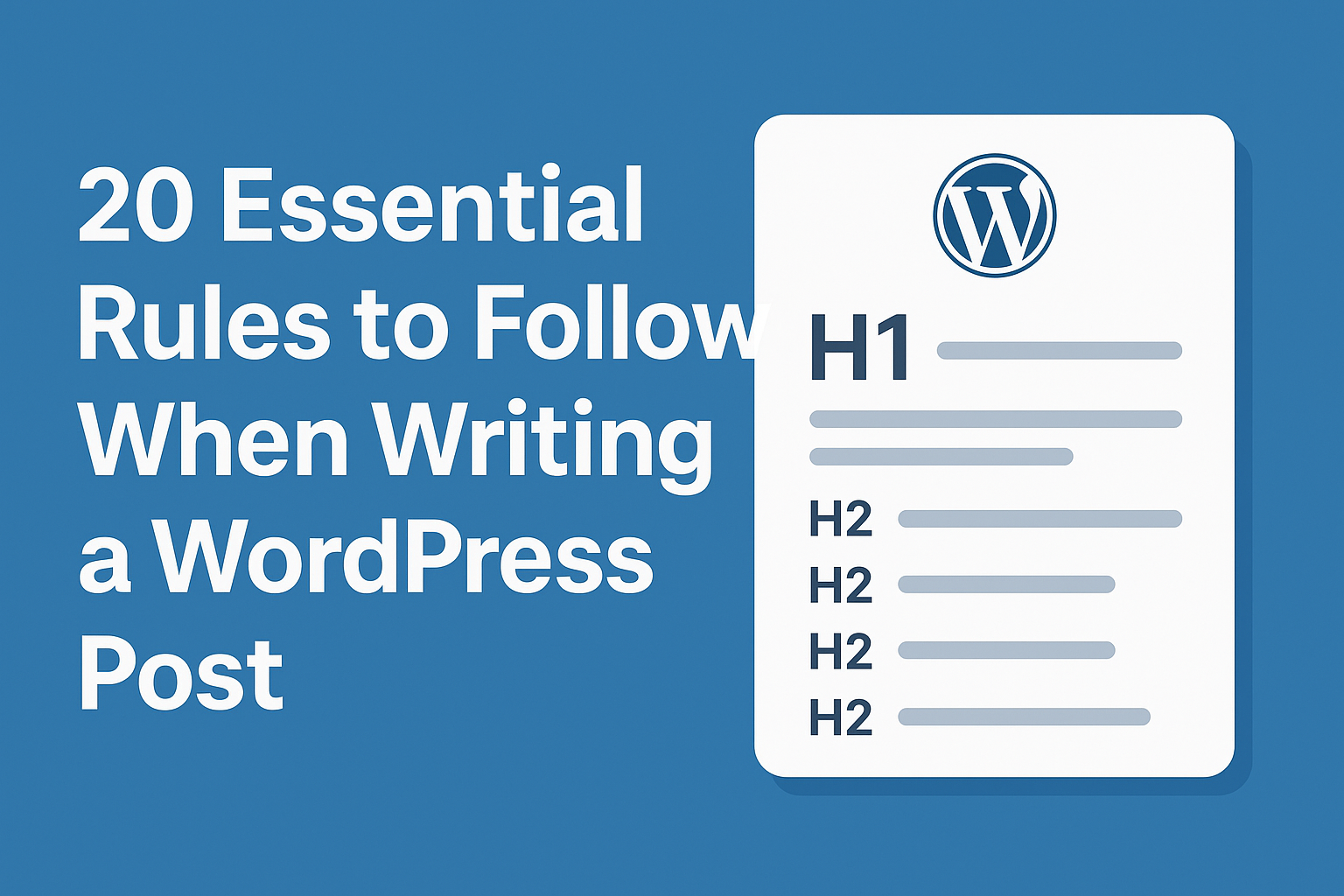
1. Use a Single H1 – Your Title Only
Your post should only have one H1 tag, which is automatically the main title of your WordPress post. All other headings must be H2 or lower to ensure proper SEO structure and accessibility.
2. Write a Catchy and SEO-Friendly Title
Your title is the first impression. Include your main keyword, keep it under 60 characters, and make it engaging enough to encourage clicks from search results.
3. Start with a Strong Introduction
Your introduction should hook readers immediately. State the problem or topic clearly, promise value, and encourage them to keep reading.
4. Use Headings to Structure Content
Break your content into logical sections with H2, H3, and H4 tags. This makes it scannable and improves SEO.
5. Keep Paragraphs Short and Clear
Long walls of text discourage readers. Aim for 2–4 sentences per paragraph to maintain readability.
6. Optimize for SEO with Focus Keywords
Choose one primary keyword and include it in your title, meta description, first paragraph, and naturally throughout the article. Avoid keyword stuffing.
7. Use Transition Words for Flow
Transition words like however, therefore, in addition, and for example make your text smoother and easier to follow.
8. Include a Meta Description
Always write a compelling meta description (150–160 characters). It should summarize your post and include the focus keyword.
9. Add Internal Links
Link to other relevant posts on your website. This improves SEO, reduces bounce rate, and helps readers discover more content.
10. Add External Links to Authoritative Sources
Cite trustworthy websites, studies, or news sources. Outbound links build credibility and improve SEO signals.
11. Use High-Quality Images
Enhance your post with at least one featured image and other supporting visuals. Images improve engagement and make content more appealing.
12. Always Add ALT Text to Images
ALT text boosts accessibility and helps search engines understand your images. Include descriptive text with keywords when appropriate.
13. Keep Passive Voice Under Control
Too much passive voice makes writing harder to read. Aim for less than 10% passive voice in your article.
14. Ensure Mobile-Friendly Formatting
Most users browse on mobile devices. Use short sentences, bullet points, and responsive images to optimize the mobile experience.
15. Optimize Your Post URL (Permalink)
Use clean and short permalinks with your main keyword. Example:
❌ example.com/123-post-about-random-stuff
✅ example.com/wordpress-writing-rules
16. Add a Call-to-Action (CTA)
At the end of your post, guide readers on what to do next: comment, share, subscribe, or read a related article.
17. Use Categories and Tags Properly
Each post should be assigned to one main category. Use 5–10 relevant tags, but don’t overuse them.
18. Proofread Before Publishing
Spelling and grammar mistakes hurt your credibility. Always proofread or use tools like Grammarly before publishing.
19. Focus on Readability Score
Yoast SEO recommends a Flesch Reading Ease score of 60–70+. Keep your writing simple, direct, and reader-friendly.
20. Update and Repurpose Old Content
Don’t let your posts go stale. Update them regularly with fresh information, new images, and improved SEO optimization.
📌 Why Following These Rules Matters
By applying these 20 rules, your WordPress posts will become more engaging, professional, and optimized for both readers and search engines. This structured approach ensures your blog grows in authority, visibility, and credibility.
Final Thoughts
Writing a great WordPress post is both an art and a science. You must balance creativity with SEO best practices. Follow these rules consistently, and your content will not only rank higher but also build stronger connections with your audience.
🔔 For more tutorials like this, consider subscribing to our blog.
📩 Do you have questions or suggestions? Leave a comment or contact us!
🏷️ Tags: WordPress tips, SEO, blogging, content writing, website growth, headings, readability, meta description, images optimization, call to action, blogging rules
📢 Hashtags: #WordPress #SEOTips #Blogging #ContentMarketing #WebsiteGrowth #WritingTips #BloggingForBeginners #OnlineMarketing #ContentStrategy #DigitalMarketing
