


⏲️ Estimated reading time: 8 min
Table of Contents
The FIFA World Cup generates billions in economic activity worldwide, yet sports bars often experience larger revenue spikes than hotels. Discover why fans spend more in local venues, how viewing habits have changed, and what this means for businesses worldwide.
Why the FIFA World Cup Boosted Sports Bars More Than Hotels
Read also: Tesla Pi Phone: Is Elon Musk’s $789 Phone Real?
The FIFA World Cup is much more than the biggest football tournament on Earth. Every four years, billions of people follow the competition, creating one of the largest sporting events ever broadcast.
While many assume that hotels are the biggest financial winners, recent trends suggest something different. Sports bars, pubs, restaurants, and local entertainment venues have experienced a significantly larger increase in revenue compared to many hotels.
This may sound surprising. After all, millions of fans travel during the World Cup. However, today’s viewing habits, improved technology, and changing travel behavior explain why local sports bars have become the biggest commercial winners.
Let’s explore why.
The Global Economic Impact of the FIFA World Cup
The World Cup affects nearly every sector of the economy.
Among the industries benefiting are:
- Hotels
- Airlines
- Restaurants
- Sports bars
- Public transportation
- Merchandise retailers
- Television broadcasters
- Streaming platforms
- Betting companies
- Tourism agencies
The tournament creates billions of dollars in additional spending.
However, not every industry benefits equally.
Sports Bars Have Become Community Viewing Centers
One of the biggest changes over the past two decades is how people watch football.
Years ago, many fans either:
- attended matches in person,
- watched from home,
- or gathered with friends.
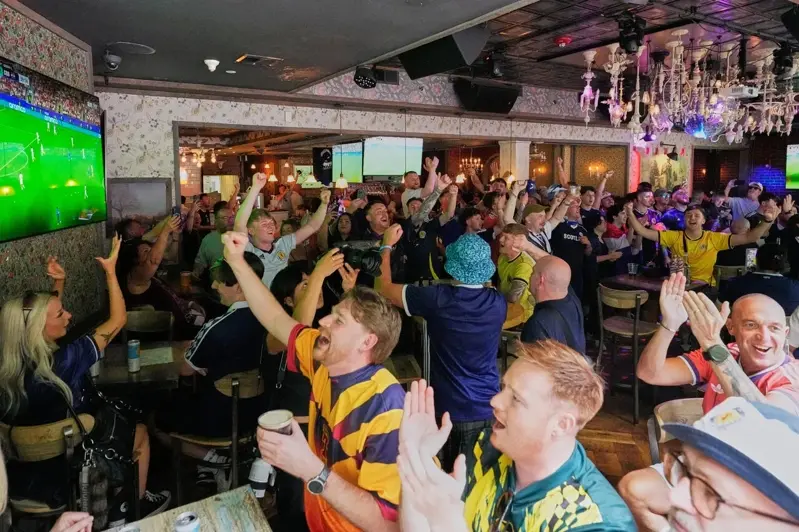
Today, sports bars have evolved into social entertainment hubs.
Instead of simply watching football, fans enjoy an experience.
That experience includes:
- giant HD screens
- surround sound
- themed decorations
- food specials
- drink promotions
- live commentary
- shared celebrations
- community atmosphere
People don’t just watch the match. They celebrate together.
Hotels Depend Mainly on Traveling Fans
Hotels primarily benefit from visitors.
These include:
- international supporters
- journalists
- broadcasters
- FIFA staff
- sponsors
- security personnel
- tourism visitors
Although millions travel, only the host country experiences major hotel occupancy growth.
Outside the host nation, hotels generally see little change.
Sports bars, on the other hand, benefit almost everywhere.
Every city with football fans experiences increased customer traffic.
Most Fans Never Travel to the World Cup
One important reason is simple.
Tickets are expensive.
Travel costs continue rising every year.
Many supporters cannot afford:
- flights
- accommodation
- transportation
- match tickets
- meals
- travel insurance
Instead, they choose the next best option:
Watching the match at their favorite sports bar.
Watching Football Is Better Together
Football is emotional.
Fans enjoy sharing:
- excitement
- tension
- celebrations
- disappointment
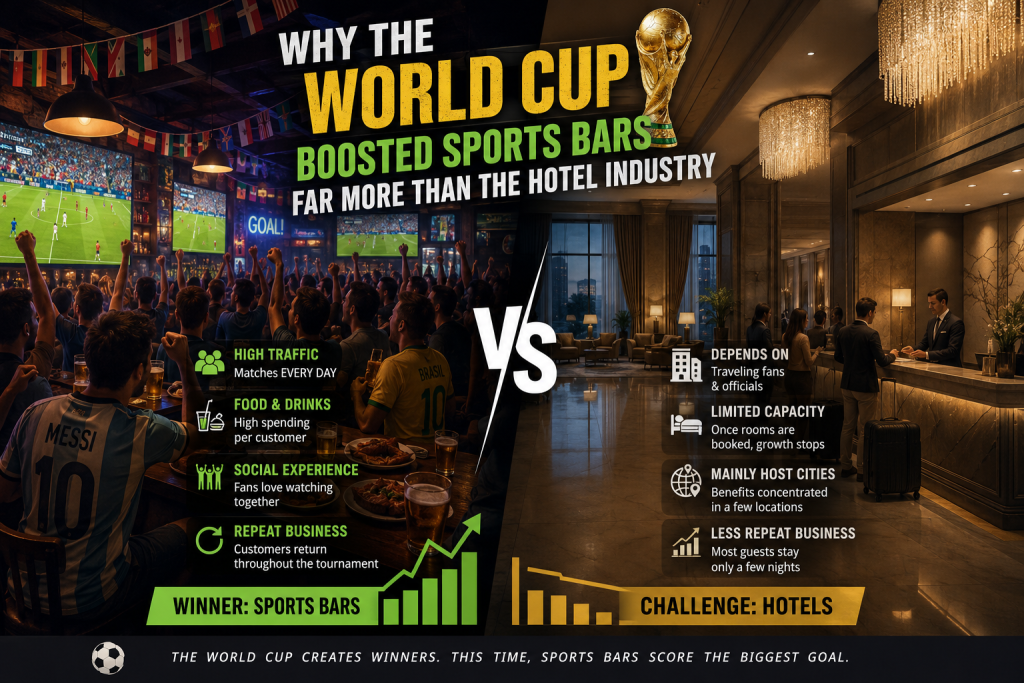
Sports bars create a unique atmosphere impossible to replicate at home.
Large crowds react together.
Every goal becomes a celebration.
Every save feels dramatic.
This emotional experience drives repeat visits throughout the tournament.
Food and Drinks Generate Huge Revenue
Hotels earn money mainly from:
- room bookings
- conference facilities
- restaurants
Sports bars generate income from nearly every customer.
Typical spending includes:
- beer
- cocktails
- soft drinks
- appetizers
- burgers
- pizza
- wings
- desserts
A customer may spend several hours inside.
Many order multiple rounds.
This significantly increases revenue per table.
The Tournament Lasts More Than One Month
The World Cup isn’t a one-day event.
It lasts approximately one month.
During this period:
- daily matches
- afternoon games
- evening matches
- knockout rounds
Fans repeatedly return.
A loyal customer might visit a sports bar:
- 8 times
- 12 times
- even 20 times
Hotels rarely receive the same repeat business from one visitor.
Group Viewing Has Become a Tradition
Families, coworkers, and friends increasingly organize match nights.
Instead of inviting everyone home, they meet at:
- pubs
- sports lounges
- beer gardens
- restaurants
Large groups spend considerably more than individual customers.
Restaurants often prepare special World Cup menus specifically for these events.
Technology Has Improved the Sports Bar Experience
Modern sports bars now offer:
- 4K televisions
- projector walls
- multiple screens
- premium sound systems
- live statistics
- fantasy football contests
- QR ordering
- mobile payment
These upgrades make the experience feel closer to attending the stadium itself.
Hotels Face Capacity Limits
- Hotels have a physical limit.
- Once every room is booked, revenue growth slows.
- Sports bars operate differently.
- A single venue may serve hundreds or even thousands of customers throughout one day.
- One table can be used multiple times.
- This creates much greater earning potential.
The Rise of Local Tourism
- Not every football fan travels internationally.
- Many choose local entertainment.
- This trend became even stronger after the COVID-19 pandemic.
People increasingly enjoy:
- local pubs
- neighborhood restaurants
- city fan zones
This benefits thousands of small businesses.
Corporate Viewing Parties
Many companies organize employee events during the World Cup.
Instead of renting hotel conference rooms, businesses often reserve sports bars.
Packages frequently include:
- buffet meals
- unlimited drinks
- private screens
- branded decorations
These events create substantial revenue.
Host Cities Still Benefit From Hotels
This doesn’t mean hotels lose.
Host cities experience enormous demand.
Hotel occupancy often reaches:
- 90%
- 95%
- sometimes 100%
Luxury hotels especially benefit from:
- FIFA officials
- sponsors
- celebrities
- international media
However, these gains remain concentrated in specific locations.
Sports bars benefit across entire countries.
Sports Bars Benefit Even After Matches End
Many fans continue celebrating after the final whistle.
They remain for:
- discussions
- highlights
- interviews
- post-match analysis
Additional spending continues for hours.
Hotels generally do not experience this same extended customer engagement.
Social Media Encourages Public Viewing
Instagram. TikTok. Facebook. X.
Fans love posting:
- celebrations
- group photos
- reactions
- themed drinks
Sports bars receive free advertising every match day.
Hotels receive much less organic exposure during the tournament.
The Psychology Behind Watching Football Together
Researchers studying sports psychology have found that shared sporting experiences increase emotional intensity.
People naturally seek community during major sporting events.
Watching together creates:
- stronger memories
- higher excitement
- greater loyalty
This explains why many fans prefer bars over watching alone.
Economic Comparison
| Industry | Main Revenue Source | Geographic Benefit |
|---|---|---|
| Hotels | Accommodation | Mainly host cities |
| Sports Bars | Food & Drinks | Worldwide |
| Airlines | Travel | International |
| Restaurants | Dining | Local |
| Merchandise | Products | Global |
Pros and Cons of Sports Bars During the World Cup
Pros
- Massive customer traffic
- Repeat business
- High beverage sales
- Strong social media exposure
- Community engagement
- Multiple matches every day
Cons
- Higher staffing costs
- Increased inventory requirements
- Crowded venues
- Security expenses
- Noise management
What Hotels Can Learn
Hotels can adapt by creating football experiences themselves.
Examples include:
- themed viewing lounges
- rooftop screenings
- match-day buffets
- football packages
- fan events
Hotels combining accommodation with entertainment can compete more effectively.
The Future of Sports Tourism
Future World Cups are expected to become even more digitally connected.
Fans increasingly seek experiences rather than simply watching television.
Businesses that combine:
- entertainment
- food
- technology
- community
will likely continue outperforming traditional hospitality sectors during major sporting events.
Frequently Asked Questions
Why did sports bars benefit more than hotels?
Because billions watched matches locally instead of traveling to the host country.
Do hotels still profit from the World Cup?
Yes. Hotels in host cities often achieve extremely high occupancy rates.
Why are sports bars so popular during football tournaments?
They provide atmosphere, large screens, food, drinks, and a shared viewing experience.
How long does the World Cup economic boost last?
Typically throughout the month-long tournament, with the biggest increases during knockout rounds.
Which businesses gain the most?
Sports bars, restaurants, broadcasters, merchandise retailers, airlines, and host-city hotels.
Does every country experience higher sports bar revenue?
Countries with strong football culture generally see noticeable increases in customer spending.
Why don’t more fans attend matches in person?
Travel, accommodation, and ticket costs make attendance unaffordable for many supporters.
Can small restaurants benefit too?
Yes. Many restaurants offer special menus and viewing events during major matches.
Are sports bars becoming part of sports tourism?
Yes. Many fans now travel domestically to popular viewing venues rather than international stadiums.
Will future World Cups continue this trend?
Most experts believe community viewing experiences will continue growing alongside digital broadcasting.
FIFA World Cup
The FIFA World Cup demonstrates that the biggest economic winners are not always the most obvious ones. While hotels in host cities enjoy strong occupancy, sports bars benefit on a much broader scale by serving millions of local fans seeking a shared match-day experience. Their combination of food, drinks, entertainment, and community creates repeated customer visits throughout the tournament, making them one of the biggest commercial success stories of modern football.
⚠️ Disclaimer and Source Hygiene
This article is intended for informational purposes only. Economic trends may vary by country, city, and tournament. The analysis is based on publicly available research, hospitality reports, tourism studies, and sports industry observations. Businesses should evaluate local market conditions before making investment or operational decisions.
🔔 For more tutorials like this, consider subscribing to our blog.
📩 Do you have questions or suggestions? Leave a comment or contact us!
🏷️ Tags: FIFA World Cup, Sports Bars, Hotel Industry, Sports Tourism, Hospitality Industry, Football Economy, World Cup Business, Sports Marketing, Tourism Trends, FIFA Economics
📢 Hashtags: FIFAWorldCup #SportsBars #Hospitality #Hotels #FootballBusiness #SportsEconomy #Tourism #WorldCup #SportsMarketing #BusinessAnalysis
📚 Sources and References
Primary Sources
- FIFA Economic Impact Reports
- FIFA World Cup Tournament Reports
- UN Tourism (formerly UNWTO)
- Statista (Sports & Hospitality Data)
- Deloitte Sports Business Group
Secondary Sources and Industry Insights
- Hospitality industry market analyses
- Restaurant and bar industry reports
- Tourism economics publications
- Sports marketing research
- Consumer behavior studies related to live sporting events
