


⏲️ Estimated reading time: 9 min
Table of Contents
Sometimes the deepest betrayal comes from the person you would have protected at any cost. This psychological deep dive explores attachment, loyalty, trauma, and emotional recovery revealing why we love so deeply, why betrayal hurts so intensely, and how we rebuild ourselves afterward.
When The One You’d Take a Bullet For Pulls The Trigger. The Paradox Of Love And Betrayal
There is a sentence that hits straight in the chest:
“Sometimes, the person you would take a bullet for is the one who pulls the trigger.”
It is not about physical violence.
It is about emotional vulnerability.
It describes the moment when you lower your guard completely. When you trust without reservation. When you offer loyalty without conditions. And then, unexpectedly, that same person becomes the source of your deepest wound.
This is one of the most painful psychological paradoxes we can experience.
In this long-form psychological analysis, we will explore:
- Why we attach so deeply.
- Why we idealize those we love.
- How betrayal forms.
- What happens in the brain when trust is broken.
- Why loyalty is not always reciprocated.
- How trauma reshapes identity.
- How to heal and rebuild stronger.
This is not just a post about heartbreak.
It is a post about emotional evolution.
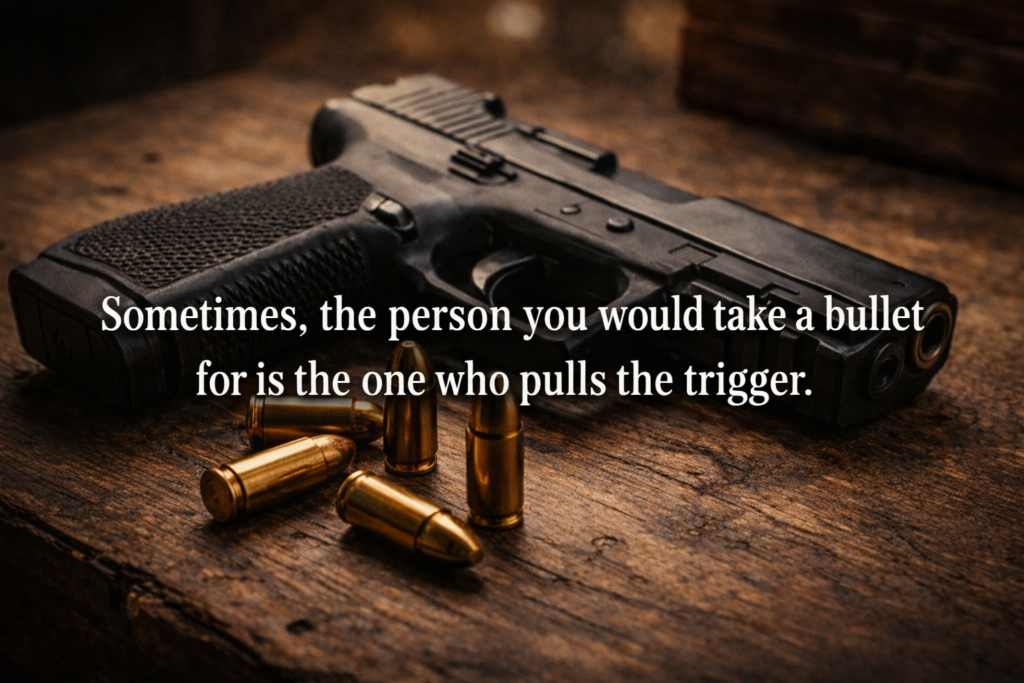
What Does “Taking a Bullet” Mean Psychologically?
To “take a bullet” symbolizes total sacrifice.
Psychologically, it means:
- Putting someone else’s needs above your own.
- Protecting them at emotional cost.
- Forgiving repeatedly.
- Fighting for the relationship alone.
- Staying loyal even when it hurts.
It represents unconditional investment.
When that same person “pulls the trigger,” something inside collapses. Not just because we are hurt. But because the wound comes from the place we felt safest.
That is what makes betrayal uniquely devastating.
Why Do We Love So Deeply That We Become Vulnerable?
Attachment Theory
Attachment patterns form in childhood. The way we were loved shapes the way we love.
There are three primary attachment styles:
- Secure attachment.
- Anxious attachment.
- Avoidant attachment.
People with anxious attachment tend to love intensely. They invest fully. They fear abandonment. They often over-give in order to secure love.
When betrayal happens, their nervous system reacts as if survival itself is threatened.
Because for them, connection equals safety.
Idealization: How We Build Our Own Illusion
When we fall in love, the brain releases dopamine and oxytocin. These chemicals create pleasure, bonding, and attachment.
But they also blur perception.
We start to:
- Ignore red flags.
- Minimize disrespect.
- Excuse emotional inconsistency.
- Justify unhealthy behavior.
We fall in love not only with who the person is.
We fall in love with who we believe they could become.
We attach to potential.
When reality finally reveals itself, we lose two things:
- The person.
- The illusion.
The second loss is often more painful.
Betrayal: The Deepest Emotional Shock
Disappointment hurts.
Betrayal destabilizes identity.
When someone we trusted deeply wounds us, we begin questioning:
- Our judgment.
- Our intuition.
- Our worth.
- Our perception of reality.
We replay conversations in our mind. We look for missed signs. We wonder if we were naive.
Betrayal does not just break the heart.
It fractures self-trust.
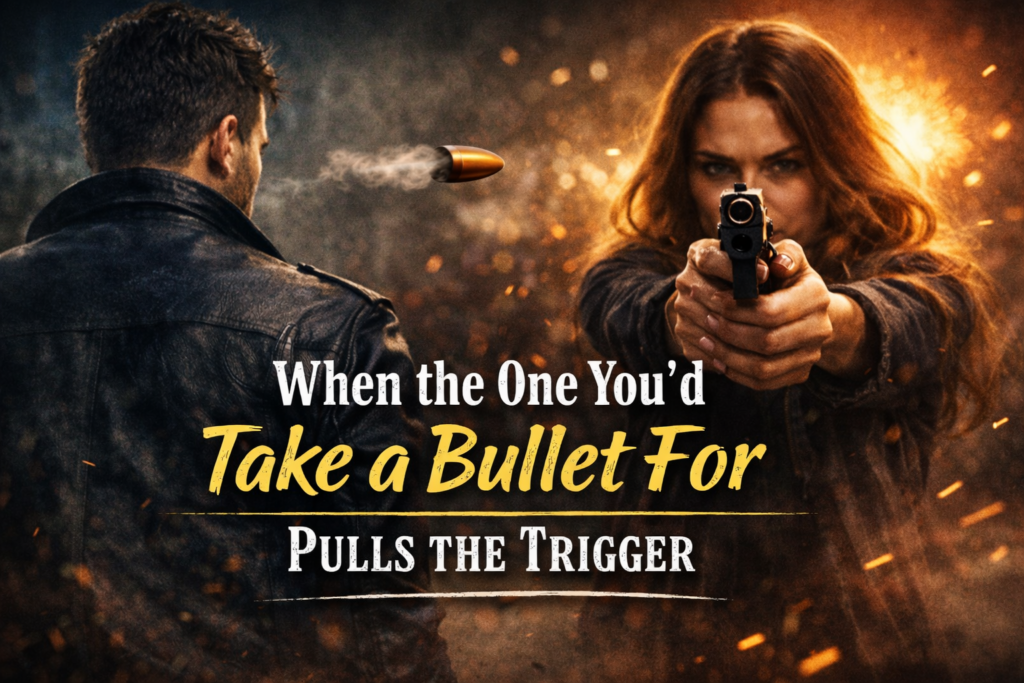
What Happens in the Brain During Betrayal?
Neuroscience shows that emotional pain activates the same neural pathways as physical pain.
The brain reacts to rejection and betrayal as if the body has been physically harmed.
That is why we experience:
- Tightness in the chest.
- A sinking feeling in the stomach.
- Loss of appetite.
- Insomnia.
- Anxiety spikes.
- Emotional numbness.
The nervous system enters survival mode.
Trust was a form of safety. When it collapses, the brain signals threat.
Why Does the Person We Love Become the Emotional Aggressor?
There are several psychological explanations.
1. Projection
Some individuals project their insecurities onto others. Instead of managing their fears, they attack.
2. Fear of Vulnerability
Deep love requires emotional exposure. For emotionally immature individuals, intimacy feels threatening. They sabotage before they feel exposed.
3. Emotional Immaturity
Conflict resolution requires self-awareness. Without it, some people respond with withdrawal, blame, or cruelty.
4. Narcissistic Traits
Individuals with narcissistic tendencies seek admiration, not mutual connection. Once validation fades, they detach or discard.
Relational Trauma: The Invisible Wound
When betrayal comes from someone central to our emotional life, it can create relational trauma.
Symptoms may include:
- Hypervigilance.
- Fear of intimacy.
- Avoidance of emotional closeness.
- Chronic distrust.
- Emotional shutdown.
Some become cold.
Some become clingy.
Some isolate entirely.
The nervous system adapts to prevent future harm.
Self-Blame: Why We Turn Against Ourselves
After betrayal, many people internalize the pain.
They say:
- “I was too much.”
- “I should have seen it coming.”
- “Maybe I wasn’t enough.”
Self-blame creates an illusion of control. If it was our fault, then maybe we can prevent it next time.
But here is the truth:
Trusting someone is not weakness.
Loving deeply is not stupidity.
Being loyal is not failure.
Sometimes you were enough.
Just not for someone capable of reciprocity.
The Hard Lesson About Loyalty
Loyalty is not universal.
Some people stay loyal while you are useful.
Some stay while you serve their emotional needs.
Some stay until they find a better option.
True loyalty is rare because it requires integrity.
Protecting someone does not guarantee they will protect you.
That realization hurts. But it also clarifies.
Identity Collapse After Betrayal
When someone we loved deeply betrays us, we may experience identity confusion.
We ask:
- Who am I without this relationship?
- How did I miss the signs?
- Can I trust my perception again?
Relationships become part of our identity. Losing them feels like losing part of ourselves.
But identity can rebuild stronger.
The Stages of Emotional Recovery
Healing is not linear. But certain stages are common.
Shock
Disbelief. Emotional numbness.
Anger
Directed outward or inward.
Sadness
Grief over what was and what could have been.
Clarity
Recognition of reality without illusion.
Acceptance
Peace without reconciliation.
Rebuilding After the Emotional Gunshot
1: Accept Reality
Stop negotiating with what happened. Accept actions, not promises.
2: Separate Fantasy from Facts
Ask yourself: Who were they consistently, not occasionally?
3: Rebuild Self-Trust
Notice where you ignored intuition. Not to shame yourself. But to grow stronger.
4: Set Boundaries
Boundaries are not walls. They are filters.
They prevent access to people who cannot handle your depth.
The Power of Emotional Boundaries
Healthy boundaries allow you to:
- Say no without guilt.
- Recognize manipulation.
- Protect your energy.
- Walk away sooner.
Emotionally mature people respect boundaries.
Emotionally unstable people test them.
Forgiveness: Necessary or Not?
Forgiveness does not mean reconciliation.
You can forgive internally and still leave permanently.
Forgiveness is about freeing yourself from emotional captivity.
But it must be authentic. Forced forgiveness creates suppression, not healing.
Why This Pain Can Strengthen You
Pain clarifies standards.
After betrayal, many people:
- Develop stronger intuition.
- Value respect more deeply.
- Choose partners more consciously.
- Stop over-sacrificing.
Comfort rarely forces growth.
Pain often does.
When Is It Time to Walk Away?
It is time to leave when:
- Trust is permanently broken.
- Respect is gone.
- You feel anxious more than safe.
- You no longer recognize yourself.
A healthy relationship does not feel like emotional warfare.
The Bitter Beauty of Clarity
Sometimes losing someone reveals that you were fighting alone.
You realize:
- You loved more.
- You invested more.
- You forgave more.
- You tried more.
Clarity is painful. But it is freeing.
You stop romanticizing what was one-sided.
Becoming Strong Without Becoming Cold
One of the greatest risks after betrayal is emotional shutdown.
You might promise yourself:
“I will never trust again.”
“I will never love like that again.”
Protection is natural. But permanent emotional closure prevents future healthy connections.
Strength is not emotional numbness.
Strength is loving wisely without losing yourself.
Frequently Asked Questions
1. Why does betrayal hurt more than a breakup?
Because it destroys trust and emotional safety, not just the relationship.
2. Can I ever trust again?
Yes, but trust begins with rebuilding confidence in your own judgment.
3. Is anger normal after betrayal?
Yes. Anger is a protective emotional response to injustice.
4. Why do I still love someone who hurt me?
Attachment bonds take time to dissolve. Emotional withdrawal is gradual.
5. Should I forgive someone who betrayed me?
Forgiveness is optional. It is for your peace, not their redemption.
6. How long does healing take?
There is no universal timeline. Healing depends on depth of attachment and support systems.
7. How do I stop blaming myself?
Practice self-compassion. Loving deeply was not your mistake.
8. Can betrayal cause trauma?
Yes. It can create relational trauma that impacts future relationships.
9. What if they apologize?
Apologies matter less than consistent behavioral change.
10. Will I ever feel safe again?
Yes. Safety returns when you rebuild trust within yourself.
The Lesson You Didn’t Want but Needed
Sometimes, the person you would take a bullet for is the one who pulls the trigger.
But that does not mean you were foolish.
It means you were capable of deep love.
Not everyone can handle deep love.
Some sabotage it, misuse it, run from it.
The goal is not to stop loving, the goal is to love with awareness.
Do not let betrayal turn you cold.
Let it make you conscious.
Read also: Belgian Workers Find $10 Million in Hidden Gold
⚠️ Disclaimer and Source Hygiene
This article is for educational and informational purposes only. It does not replace professional psychological counseling. If you are experiencing emotional trauma, consider consulting a licensed mental health professional. Concepts discussed are based on attachment theory, neuroscience of emotional pain, and relational psychology research.
🔔 For more tutorials like this, consider subscribing to our blog.
📩 Do you have questions or suggestions? Leave a comment or contact us!
🏷️ Tags: betrayal psychology, emotional trauma, attachment theory, loyalty, trust issues, relationship healing, relational trauma, emotional boundaries, personal growth, self-trust
📢 Hashtags: psychology #betrayal #relationships #attachment #emotionalhealing #trust #loyalty #personaldevelopment #selfgrowth #mentalhealth
