


⏲️ Estimated reading time: 7 min
Table of Contents
🌍 When Humanity Vanishes: What Happens to Earth in the Next 100 Years; If every human vanished in one day, Earth would begin an incredible transformation. Cities would fall silent, nature would reclaim everything, and the planet would heal itself in stages from the first hour to a century without us.
When Humanity Vanishes – The World Without Us
Imagine this: at exactly noon, every human on Earth disappears instantly. No warning, no chaos, just emptiness. Trains keep moving, planes still fly, ovens burn, and heartbeats stop.
But Earth continues to turn. Let’s travel through time and see, step by step, what happens after the final person vanishes.
1 Hour After – The Shock of Silence
The world holds its breath.
Engines idle, conversations end, and the hum of civilization goes mute.
Planes without pilots glide for a short while, then crash. In cities, automatic systems still run traffic lights flicker, computers hum, and subways keep moving until their energy supply fades.
Pets begin to whimper in confusion. In homes and shelters, dogs bark, cats wander, and livestock wait for farmers who will never return.
Electricity continues to flow, powered by automated stations. But already, the human absence is felt a ghostly stillness over every continent.
10 Hours After – Darkness Over Civilization
As the sun sets, millions of lights still glow in the night sky. Entire cities shimmer, but only briefly.
Power plants start to fail where humans once maintained them. Nuclear stations switch to safety modes, but some cooling systems begin to weaken.
Without operators, control rooms beep endlessly.
Automatic generators run until their fuel runs out.
In homes, phones ring unanswered. On highways, driverless vehicles sit idling, engines slowly dying.
Within hours, darkness begins to swallow cities one by one.
100 Hours (4 Days) After – The Silence Deepens
Electricity grids collapse.
No maintenance means transformers overheat, circuits short, and power vanishes.
Refrigerators warm, food rots, and water pumps stop. The air grows thick in cities filled with decay.
In the countryside, animals break free. Cows wander from farms, dogs form packs, and zoo animals escape enclosures.
Fires erupt from unattended stoves and industrial plants. Some cities, like Los Angeles and Tokyo, glow red from spreading flames. But with no one left to fight them, they burn until rain or lack of fuel stops the blaze.
The night sky now shines brilliantly with stars unseen in centuries.
1 Month After – Nature Takes the First Steps
Vegetation begins to reclaim space. Grass pushes through pavement cracks.
Without constant mowing or traffic, weeds sprout everywhere.
In rural areas, forests creep into empty towns.
In cities, rats and pigeons dominate streets once filled with cars.
Nuclear plants, left alone, begin to pose risks. Some melt down after losing coolant water. Contamination zones expand silently.
Domesticated animals suffer the most. Many die without care or food, though some adapt dogs go feral, cats hunt again.
Rain falls through broken roofs. Mold covers walls. Civilization starts to decompose.
6 Months After – Rust and Regrowth
The world’s metal begins to rust.
Bridges, cars, and towers corrode under constant moisture.
Tropical climates see the fastest changes. Jungle vines wrap around abandoned skyscrapers.
Birds nest in traffic lights. Wolves roam through empty highways.
The air becomes cleaner carbon dioxide levels drop slightly as factories and vehicles remain still.
Skies turn bluer than ever before.
Nature thrives. Without human interference, rivers clear, fish populations rebound, and coral reefs begin to recover from pollution.
In six months, the Earth breathes freely again.
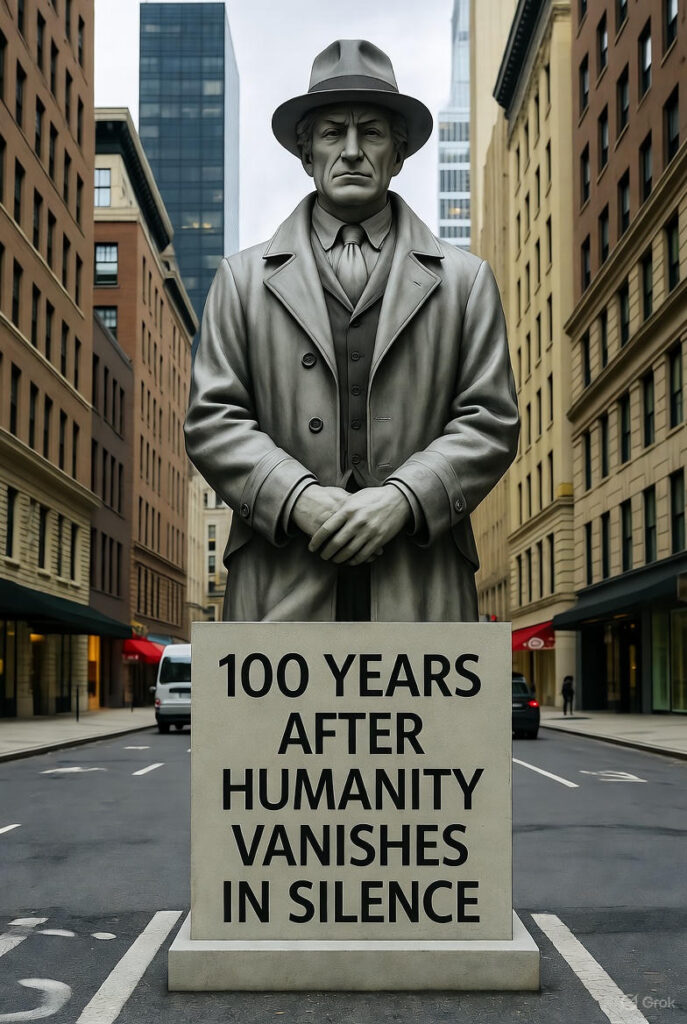
1 Year After – Cities Crumble
Winter comes. Without heating, pipes burst. Buildings freeze and thaw repeatedly, cracking foundations.
Vegetation grows deep into cracks in asphalt and concrete.
Roots split roads apart.
In tropical zones, termites devour wooden homes. In northern regions, snow collapses rooftops.
Wildlife spreads into urban areas. Deer graze in parks. Bears roam cities. Foxes sleep on school playgrounds.
Radio waves fade as satellites drift out of orbit or lose power.
By now, only solar-powered devices still function silently recording a vanished civilization.
5 Years After – Nature Wins
Forests cover suburbs.
Highways are buried under moss, trees, and dirt.
Lions from former zoos rule African cities. Elephants crush abandoned cars while searching for food.
In colder regions, buildings collapse under the weight of nature.
Without maintenance, dams fail. Rivers flood cities like New York and London, washing away concrete walls.
The ocean begins reclaiming coastal areas. Venice is submerged. Miami vanishes beneath tides.
Radio towers topple, and wind turbines stop turning.
Only ruins remain a skeleton of once-glorious civilization.
10 Years After – The Planet Heals
Carbon emissions fall to prehistoric levels.
Global temperature stabilizes slightly.
Animals evolve fast. Wolves crossbreed with dogs, creating new species. Birds migrate to cities now rich in trees and insects.
Cars are dust-covered fossils. Skyscrapers stand like ghosts of human ambition.
The last traces of modern life plastic, metal, glass begin to weather down.
Plastic waste drifts through oceans, slowly breaking apart.
Forests expand, grasslands replace farmland, and deserts cool as vegetation returns.
Earth starts to look wild again just as it was before humanity shaped it.
50 Years After – Civilization Forgotten
Concrete crumbles. Bridges collapse.
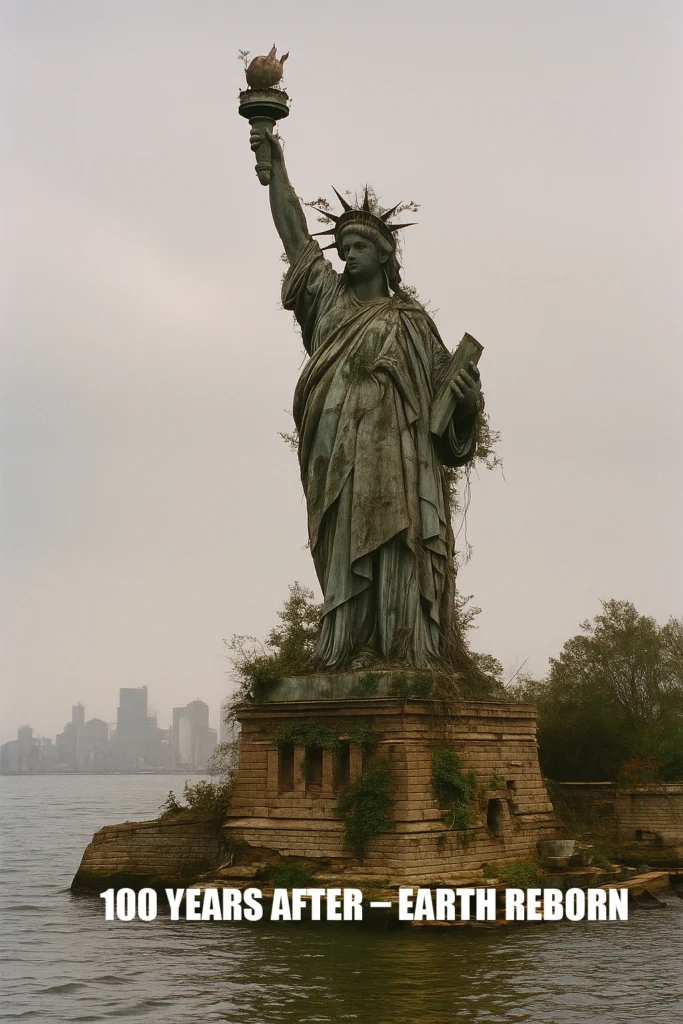
The Eiffel Tower rusts into ruin. The Statue of Liberty’s arm falls into the sea.
Satellites crash through the atmosphere, burning like falling stars.
New species rise where cities once stood boars, coyotes, and birds adapted to steel and glass ruins.
The Great Wall of China erodes into hills.
The pyramids, already ancient, endure but begin to crack.
Nature no longer remembers humans. The Earth has healed its wounds.
100 Years After – Earth Reborn
A century after humanity’s disappearance, our world is unrecognizable.
Cities have turned into forests. Oceans have swallowed coastal lands. The air is pure, the stars dazzling.
Only the strongest structures remain stone monuments, a few nuclear ruins, and fragments of space probes orbiting silently above.
Future species roam freely across the globe, unaware of the beings who once ruled it.
From satellites still in orbit, one could see green continents, blue oceans, and white clouds a living planet renewed.
Earth has survived us and thrived without us.
The Timeline of Earth After Humans
| Time Passed | Major Events | Earth’s State |
|---|---|---|
| 1 Hour | Silence falls; planes crash; systems still running | Human absence begins |
| 10 Hours | Power starts failing; darkness spreads | Cities dim |
| 100 Hours | Fires, blackouts, animal chaos | Civilization collapses |
| 1 Month | Vegetation sprouts; food rots | Nature reclaims space |
| 6 Months | Rust, decay, cleaner air | Early rebirth |
| 1 Year | Frozen pipes, collapsing buildings | Urban ruin |
| 5 Years | Forests spread; dams fail | Flooded world |
| 10 Years | Pollution clears; animals evolve | Wild resurgence |
| 50 Years | Monuments crumble | Earth forgets us |
| 100 Years | Ecosystem fully restored | Planet healed |
Pros and Cons of a World Without Humans
| Pros (for Earth) | Cons (for Civilization) |
|---|---|
| Nature heals rapidly | Knowledge and culture lost |
| Air and water purify | Art and history vanish |
| Wildlife thrives | Cities collapse |
| Ecosystem balance returns | Pets and livestock perish |
| Climate stabilizes | No human legacy survives intact |
Case Study – Chernobyl: A Glimpse of Our Future
Chernobyl offers a real-world example of what happens when humans vanish.
After the 1986 nuclear disaster, people abandoned the region. Within 20 years, nature reclaimed the city of Pripyat. Trees grew through asphalt, animals returned, and wolves became dominant again.
Chernobyl proves how quickly Earth can adapt once humans step away.
In only decades, it transformed from radioactive ruin into one of Europe’s most diverse ecosystems.
A Random Reflection – Echoes in the Dust
If humans disappear, the planet won’t mourn.
But our absence would echo through every silent street and broken monument.
Maybe, after a hundred years, the only memory left will be whispers in the wind remnants of songs, prayers, and stories once told beneath these skies.
Earth, in its infinite patience, would begin again.
And perhaps that’s its final mercy: the planet never needed us to survive it only needed time to heal.
Link Source for this article:
🔔 For more tutorials like this, consider subscribing to our blog.
📩 Do you have questions or suggestions? Leave a comment or contact us!
🏷️ Tags: world without humans, earth after humans, nature reclaims, future of earth, environment, human extinction, planet earth, climate recovery, civilization collapse, what if
📢 Hashtags: #WorldWithoutHumans, #EarthAfterUs, #FutureOfEarth, #NatureReclaims, #PlanetHeals, #CivilizationEnd, #EnvironmentRecovery, #PostHumanWorld, #EarthTimeline, #LifeAfterHumans
Read also: The Final Embrace: The Story of Mike Perdue and His Daughter
