


⏲️ Estimated reading time: 7 min
Table of Contents
Discover the top 10 greatest horror movies ever made from Psycho to Hereditary. Explore how these iconic films changed the horror genre with their unforgettable scares, storytelling, and lasting cultural influence. Perfect list for every horror enthusiast!
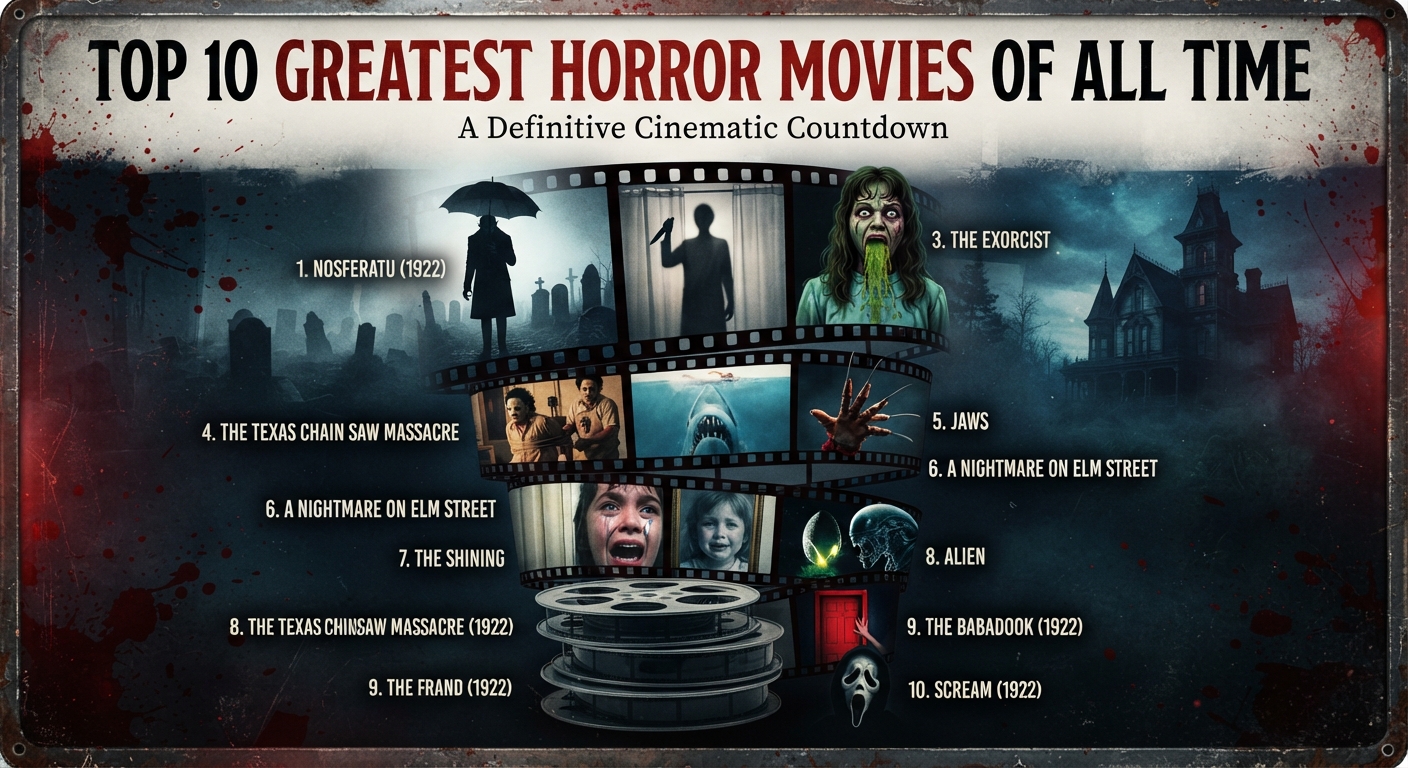
Top 10 Greatest Horror Movies Ever Made. Few genres have the power to stir raw human emotion quite like horror. From psychological thrillers to supernatural terrors, these films have shaped generations of movie lovers, inspiring fear, fascination, and admiration. Let’s explore ten of the most iconic horror films that defined and redefined the genre.
Psycho (1960) – The Birth of Modern Psychological Horror
Alfred Hitchcock’s Psycho remains one of the most influential horror movies in cinematic history. Starring Anthony Perkins as Norman Bates, this black-and-white masterpiece introduced audiences to the twisted psychology of a disturbed motel owner.
The infamous shower scene is still studied in film schools for its direction, editing, and tension. Psycho broke storytelling rules, killed off its leading actress early, and blurred the line between sanity and madness. Hitchcock’s direction transformed horror from monsters to minds a shift that still echoes today.
The Exorcist (1973) – Faith, Fear, and Possession
When The Exorcist hit theaters, audiences fainted, screamed, and fled. William Friedkin’s terrifying story about a young girl possessed by a demon pushed boundaries of realism and faith.
Its graphic scenes and chilling atmosphere sparked controversy and revolutionized horror as serious cinema. The film’s soundtrack, “Tubular Bells,” became synonymous with fear itself. To this day, The Exorcist stands as a haunting exploration of evil, belief, and the fragility of the human soul.
Halloween (1978) – The Shape of the Slasher Era
John Carpenter’s Halloween didn’t invent the slasher film, but it perfected it. The introduction of Michael Myers a silent, unstoppable killer set a standard every horror filmmaker would follow.
Combined with Carpenter’s minimalist yet haunting score, Halloween built tension through patience, lighting, and silence. It taught audiences that the scariest monsters often come home, and that fear hides in the ordinary suburban streets, trick-or-treat nights, and the dark behind your door.
The Shining (1980) – Madness in the Mountains
Stanley Kubrick’s adaptation of Stephen King’s The Shining blends psychological horror and supernatural terror with perfection. Jack Nicholson’s descent into madness inside the haunted Overlook Hotel is unforgettable.
From the eerie twins in the hallway to the phrase “Here’s Johnny!”, every frame is meticulously designed to disorient and disturb. Kubrick used symmetry, sound, and isolation to amplify fear turning a simple story about cabin fever into an exploration of insanity and evil.
The Texas Chainsaw Massacre (1974) – Raw, Real, Relentless
Few films shocked audiences like Tobe Hooper’s The Texas Chainsaw Massacre. Filmed with a gritty, documentary-like realism, it tells of friends stumbling upon a house of horrors and meeting the terrifying Leatherface.
Despite minimal blood compared to later slashers, its oppressive atmosphere made viewers believe they witnessed unspeakable violence. It changed horror forever proving that suggestion can be more horrifying than gore itself.
Get Out (2017) – Modern Horror with a Message
Jordan Peele’s Get Out redefined 21st-century horror by blending social commentary with psychological suspense. Through the story of a Black man visiting his white girlfriend’s family, Peele exposed racial tension in an intelligent and terrifying way.
Every detail from subtle dialogue to symbolic visuals contributes to unease. Get Out earned Peele an Academy Award for Best Original Screenplay and opened the door for a new wave of “social horror” films where fear meets reflection.
Rosemary’s Baby (1968) – Paranoia and the Loss of Control
Roman Polanski’s Rosemary’s Baby is a slow-burn psychological nightmare. Mia Farrow stars as Rosemary, a pregnant woman who suspects her neighbors are part of a Satanic cult.
What makes it horrifying isn’t monsters it’s helplessness. The film plays on fears of trust, isolation, and betrayal, showing how paranoia can become reality. Rosemary’s Baby paved the way for domestic horror stories where evil hides behind smiling faces.
Hereditary (2018) – The Horror of Inheritance
Ari Aster’s Hereditary became an instant classic for its disturbing portrayal of grief and family trauma. Toni Collette’s performance as a mother unraveling after tragedy is chillingly real.
The film’s slow pace, eerie sound design, and surreal imagery build an atmosphere of hopeless dread. Hereditary isn’t just about ghosts or demons it’s about the horrors we inherit, the secrets we hide, and the pain passed down through generations.
Read also: How to Use an Air Conditioner Correctly: Best Settings for
Jaws (1975) – The Monster Beneath the Waves
Steven Spielberg’s Jaws might technically be a thriller, but its impact on horror is monumental. The unseen shark, combined with John Williams’ iconic two-note theme, created one of cinema’s most effective examples of suspense.
Audiences became terrified of the ocean. The film’s success proved that horror didn’t need darkness or ghosts fear could rise from nature itself. Jaws transformed summer blockbusters forever and made Spielberg a household name.
The Silence of the Lambs (1991) – Psychological Horror Meets Crime
Jonathan Demme’s The Silence of the Lambs brought a new sophistication to horror. The film centers on FBI trainee Clarice Starling and the brilliant yet terrifying Hannibal Lecter, played by Anthony Hopkins.
Their tense conversations blur the line between hunter and hunted. With its chilling realism and psychological depth, the film swept the Academy Awards proving horror can be both horrifying and high art.
The Legacy of Horror – Fear That Shapes Generations
These ten films are more than just scary stories they’re milestones in cinematic history. Each redefined what audiences fear, from the shadows of the human mind to monsters that lurk unseen.
What unites them all is their ability to make us feel something primal: vulnerability, tension, dread, curiosity. Horror, at its best, forces us to confront our fears and recognize our humanity through the lens of terror.
Whether you prefer the classic terror of Psycho or the modern anxiety of Hereditary, these masterpieces ensure the genre remains alive, evolving, and endlessly fascinating.
Frequently Asked Questions
Which horror movie is considered the scariest of all time?
Many fans and critics point to The Exorcist as the scariest due to its religious themes, shocking visuals, and emotional intensity.
What is the oldest film on this list?
Psycho (1960) is the oldest here and still one of the most studied films in cinema history.
Are any of these movies based on true stories?
The Texas Chainsaw Massacre was loosely inspired by real-life murderer Ed Gein, though much of it was fictionalized.
What’s a good horror film for beginners?
Get Out or Jaws are excellent starting points they balance suspense, storytelling, and accessibility.
Which director most influenced the horror genre?
Alfred Hitchcock and John Carpenter are often credited with shaping modern horror through psychological and slasher storytelling.
Frightful Reflections – A Final Thought
Horror has never been about cheap scares alone. It’s about emotion fear, guilt, curiosity, and the thrill of the unknown. These masterpieces continue to haunt our imaginations because they reveal the truths we’d rather not face.
The next time you turn off the lights and press play, remember: real horror often lies not in monsters… but in ourselves.
🔔 For more tutorials like this, consider subscribing to our blog.
📩 Do you have questions or suggestions? Leave a comment or contact us!
🏷️ Tags: horror movies, classic films, cinema history, psychological horror, slasher movies, Halloween movies, scary films, Stephen King, Alfred Hitchcock, horror genre
📢 Hashtags: #HorrorMovies, #ClassicCinema, #ScaryFilms, #MovieBuff, #FilmHistory, #Halloween, #Psycho, #TheExorcist, #HorrorGenre, #Cinephile
