


⏲️ Estimated reading time: 12 min
Table of Contents
The Fall of El-Fasher: How Sudan’s RSF Sparked a New Darfur Genocide. In October 2025, Sudan’s Rapid Support Forces seized El-Fasher after a brutal 500-day siege. What followed were mass killings, hospital massacres, and ethnic violence reminiscent of Darfur’s 2003 genocide leaving thousands dead and millions displaced in one of Africa’s worst humanitarian crises.
The Fall of El-Fasher: How Sudan’s RSF Sparked a New Darfur Genocide
A City Under Siege
For more than 18 months, the people of El-Fasher Darfur’s largest remaining government-held city lived in the shadow of encirclement. The Rapid Support Forces (RSF), led by General Mohamed Hamdan Dagalo, known as Hemedti, gradually tightened their grip on the city. By late October 2025, the siege had become one of the longest and most devastating urban blockades in Africa’s recent history.
When RSF troops finally overran the last army defenses on October 26, 2025, El-Fasher was no longer a battleground. It became a graveyard.
Satellite images later revealed blackened ruins, mass graves, and the scorched shells of hospitals once filled with patients. Among them was the Saudi Maternity Hospital, where over 460 patients and staff were reported killed. Survivors described systematic executions, torture, and ethnic targeting of non-Arab communities acts that echoed the horrors of Darfur’s 2003 genocide.
This is the story of how the fall of El-Fasher reignited one of the darkest chapters in modern African history.
The Background: Sudan’s Unending Civil War
Sudan’s civil war did not start overnight. It began in April 2023, when tensions between the Sudan Armed Forces (SAF) led by General Abdel Fattah al-Burhan and the Rapid Support Forces (RSF) erupted into open conflict.
The RSF, once part of Sudan’s national military, evolved from the Janjaweed militias accused of committing war crimes in the original Darfur genocide (2003–2006). What began as a power struggle between two generals quickly morphed into a nationwide humanitarian catastrophe.
By 2025, the conflict had displaced over 10 million people, with widespread famine and disease sweeping across the country. Darfur, once again, became the epicenter of unimaginable suffering.
The Siege Begins: April 2024 – October 2025
El-Fasher was not just a symbolic city it was the last major stronghold of the Sudanese army in Darfur. Controlling it meant controlling the entire western region.
For 500 days, the RSF surrounded the city. Food, medicine, and fuel ran out. Humanitarian convoys were blocked or ambushed. The United Nations repeatedly warned of “catastrophic famine conditions,” estimating that 800,000 civilians in North Darfur faced starvation.
Inside the city, hospitals functioned without electricity. Doctors performed surgeries by candlelight. Children scavenged for leaves and seeds to survive.
One volunteer nurse, quoted by Al Jazeera, said:
“We stopped counting the dead. Every morning, more bodies appeared at the hospital gates.”
The world watched in silence as the siege dragged on.
October 26, 2025: The Fall
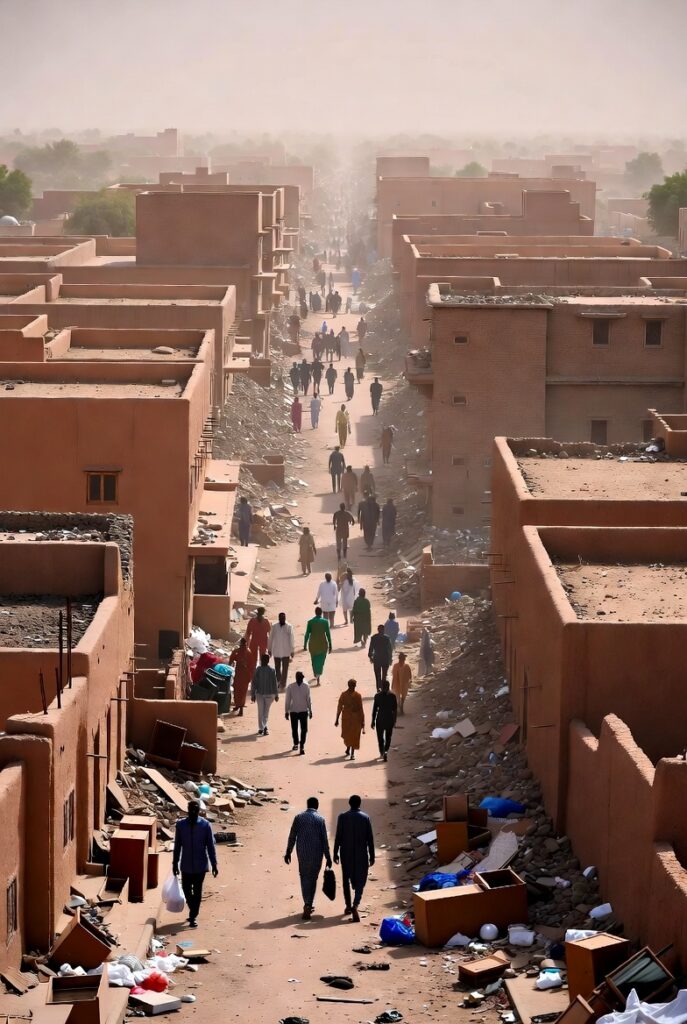
When RSF fighters launched their final assault, the city’s defenses collapsed within 48 hours. The 6th Infantry Division Headquarters fell first, followed by the central market and nearby hospitals.
Witnesses reported RSF soldiers executing surrendering troops and shooting civilians attempting to flee. Satellite imagery confirmed mass graves on the city’s outskirts.
The Saudi Maternity Hospital, one of the few functioning medical centers, became a massacre site. According to survivors, RSF troops stormed the wards, accusing staff of aiding army soldiers and sheltering “rebels.” Patients were killed in their beds. Doctors were executed for refusing to leave their posts.
A WHO statement later described it as “a deliberate assault on life itself.”
Ethnic Targeting and Historical Parallels
The atrocities in El-Fasher bear chilling similarities to the 2003 Darfur genocide. Then, government-backed Janjaweed militias (the RSF’s precursors) waged a campaign of extermination against non-Arab ethnic groups such as the Fur, Zaghawa, and Masalit.
In 2025, reports again pointed to targeted violence against those same communities. Entire neighborhoods known to house non-Arab civilians were razed. Families were executed based on their ethnicity or dialect.
One survivor recalled:
“They separated people by skin color and tribe. Those who looked ‘African’ were taken away. We never saw them again.”
The pattern is unmistakable: the RSF continues the legacy of the Janjaweed, carrying out ethnic cleansing under the guise of war.
The World Reacts Too Late
The international reaction was swift in condemnation but slow in action.
- The United Nations called the El-Fasher events “appalling violations of international law.”
- The World Health Organization confirmed that “hundreds of patients and health workers were killed.”
- Human Rights Watch and Amnesty International released reports documenting summary executions, forced disappearances, and sexual violence.
Yet, no immediate intervention followed. The UN Security Council remained divided, and sanctions proved toothless against commanders like Hemedti, who had already amassed fortunes through gold exports and regional alliances.
By the time the world issued statements, El-Fasher had already been reduced to ashes.
Inside the Humanitarian Collapse
El-Fasher’s fall did not just claim lives it destroyed an entire social fabric.
Hospitals ceased to function. Roads were mined or blocked. Aid agencies lost contact with their staff. The displacement crisis spiraled out of control: nearly 14 million Sudanese were on the move, with over 2 million seeking refuge in neighboring Chad and South Sudan.
Famine warnings intensified. Crops failed, livestock perished, and markets vanished. In camps around the city, children died from dehydration and malnutrition.
As Médecins Sans Frontières (MSF) reported,
“This is not just a conflict zone it’s a place where life itself is being extinguished.”
Hemedti’s Shadow: The Man Behind the RSF
General Mohamed Hamdan Dagalo, better known as Hemedti, began his rise during the original Darfur war. Once a camel trader, he became a militia leader favored by the regime of Omar al-Bashir for his ruthless efficiency in suppressing rebellion.
The RSF under Hemedti grew into a state within a state rich from Sudan’s gold mines and foreign contracts, including mercenary operations in Yemen and Libya.
When Sudan’s democratic transition faltered, Hemedti seized the moment. His forces became both kingmaker and warlord, challenging the army’s control.
In 2025, his conquest of El-Fasher crowned his ambition but also cemented his legacy as a man tied to two genocides.
The Evidence: Satellite Images and Eyewitness Accounts
Open-source investigators from the Yale Humanitarian Research Lab and Planet Labs confirmed several mass-grave sites through satellite imagery. Videos shared online show lines of bodies in open fields, execution pits, and charred remains of IDP camps.
Witnesses described summary killings in the Abu Shouk and Zamzam displacement camps. Women and children were executed alongside men suspected of supporting the army.
An aid worker recounted:
“We begged them to spare the patients. They said, ‘You helped our enemies. Now you die with them.’”
The footage and geolocation data match the timeline of the RSF’s assault.
Echoes of 2003: History Repeats Itself
Two decades earlier, the world vowed “Never Again” after Darfur’s genocide. Yet the same blueprint has returned:
- Same perpetrators – the Janjaweed, rebranded as the RSF.
- Same victims – non-Arab Darfuri civilians.
- Same silence – international hesitation masked as diplomacy.
This cyclical tragedy exposes the failure of global accountability. The International Criminal Court (ICC) indicted al-Bashir for genocide, but he remains at large. Now, new perpetrators act with the same impunity.
El-Fasher stands as both a warning and a repetition.
The Global Implications
The consequences of Sudan’s implosion extend far beyond its borders.
- Regional Destabilization:
The influx of refugees into Chad, Central African Republic, and South Sudan threatens to overwhelm fragile states. - Food Insecurity:
Sudan was a key supplier of grain to neighboring regions. Its collapse amplifies food shortages across East Africa. - Terrorist Infiltration:
The chaos provides fertile ground for extremist groups seeking to expand operations in ungoverned areas. - Migration Crisis:
Europe faces renewed waves of migration, as thousands flee northward through Libya in search of safety.
A Deafening Silence
Despite mounting evidence, the response from major powers remains limited to statements of concern.
Why? Because Sudan lacks geopolitical leverage. It has no nuclear weapons, no vast oil reserves that sway global markets, and no strong ally capable of forcing intervention.
The tragedy of El-Fasher is a reminder that the world still measures the value of human life by geography and interest.
The Human Cost: Stories from the Rubble
Among the countless victims was Dr. Samar Abdallah, a young pediatrician who refused to abandon her patients. She was found among the dead in the hospital ward.
A survivor recalled her final words:
“If I leave, these babies die. If I stay, I die with them.”
Her courage symbolizes the resilience of those who choose compassion amid horror.
Another survivor, a 14-year-old boy, told reporters he hid under corpses for two days to escape execution. His family of six did not survive.
These testimonies humanize statistics that otherwise drown in numbers. Behind every casualty figure lies a name, a dream, a life.
The Role of the Media and Documentation
Journalists and open-source analysts have played a vital role in exposing the atrocities. Despite blackouts, Sudanese activists risked their lives uploading videos through satellite connections.
Their work ensures that truth survives censorship.
Organizations like Yale HRL, Amnesty, and Human Rights Watch continue to verify footage and identify perpetrators. This documentation will become evidence in future war-crimes tribunals.
Can Justice Prevail?
Justice in Sudan has always been elusive. Yet the documentation of El-Fasher’s atrocities could shift that narrative.
If the international community pushes for accountability, the perpetrators no matter their rank could face prosecution. The ICC has the mandate; what it lacks is political will.
Survivors demand more than sympathy they demand justice.
A City Erased, A Lesson Ignored
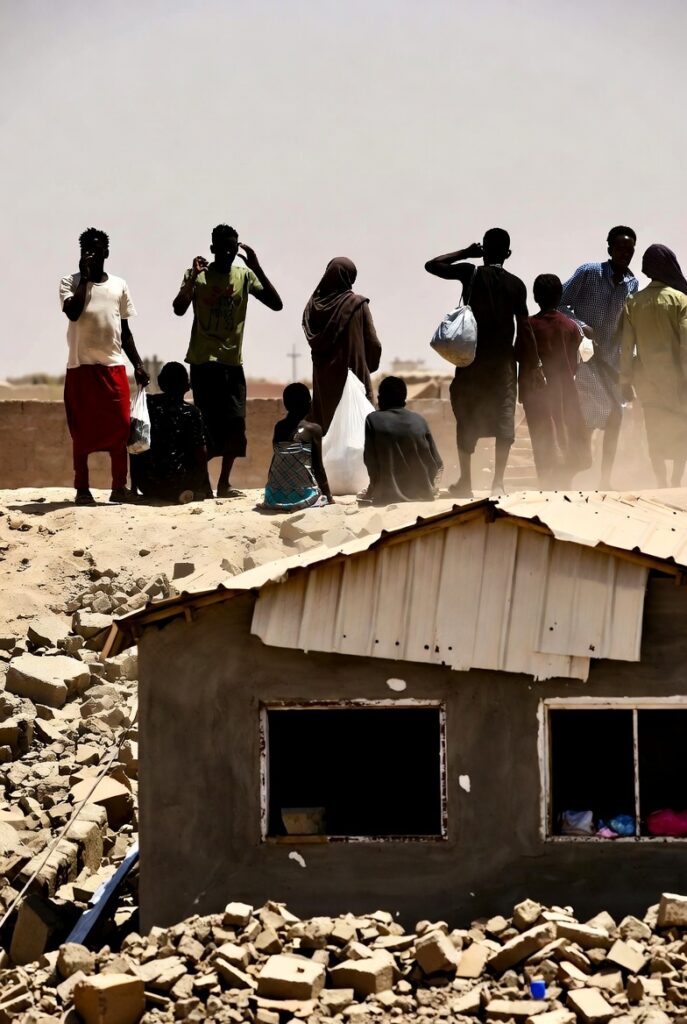
El-Fasher’s fall is not just another chapter in Sudan’s long war. It is the erasure of a community that once thrived with culture, trade, and coexistence.
Its destruction reflects the world’s failure to learn from history. Genocide denied once becomes genocide repeated.
As famine looms and bodies fill unmarked graves, the question remains:
How many more cities must fall before humanity remembers its promises?
What Can Be Done Now
- Humanitarian Corridors: Immediate international action is needed to open aid routes into Darfur.
- Targeted Sanctions: Sanctions should focus on RSF’s gold exports and international backers.
- Documentation Support: Invest in digital evidence preservation for future trials.
- Awareness and Advocacy: Public pressure through media and citizen activism can still make a difference.
Each voice matters. Silence is complicity.
The Ashes of El-Fasher
In 2025, the world witnessed the rebirth of an old evil. The fall of El-Fasher exposed not only Sudan’s suffering but also humanity’s selective memory.
The same deserts that buried Darfur’s victims two decades ago are once again swallowing the innocent. The difference today is that the world can see it in real time through satellites, smartphones, and eyewitnesses.
History has given us another chance to act. Whether we do or not will define how future generations judge us.
FAQ Section
You may also be interested in: How to Use an Air Conditioner Correctly: Best Settings for
What happened in El-Fasher in October 2025?
Sudan’s Rapid Support Forces captured El-Fasher after a 500-day siege, committing mass killings, ethnic violence, and hospital attacks reminiscent of the 2003 Darfur genocide.
Who leads the Rapid Support Forces?
The RSF is led by General Mohamed Hamdan Dagalo, known as Hemedti, a former Janjaweed commander accused of war crimes.
How many people died?
Exact figures remain uncertain, but reports confirm hundreds killed at the Saudi Maternity Hospital and thousands across the city.
Why is this compared to the Darfur genocide?
Both involve ethnic targeting of non-Arab groups and systematic violence by RSF-linked forces.
What is the international response?
The UN, WHO, and rights groups condemned the attacks, but tangible intervention remains limited.
🔔 For more tutorials like this, consider subscribing to our blog.
📩 Do you have questions or suggestions? Leave a comment or contact us!
🏷️ Tags: Sudan civil war, El-Fasher, RSF, Darfur genocide, Mohamed Hamdan Dagalo, Hemedti, North Darfur, human rights, UN Sudan, famine crisis
📢 Hashtags: #SudanCrisis, #ElFasher, #DarfurGenocide, #RSF, #HumanRights, #WarCrimes, #SudanNews, #AfricaConflict, #SaveDarfur, #EndWar
“When the Desert Weeps: Lessons from El-Fasher’s Silence”
The sands of Darfur have soaked up too much blood to remain silent. If history is a teacher, then El-Fasher is its latest lesson: humanity forgets faster than it forgives. The only true monument to the dead will be justice delivered, not delayed.
Sources & References
- The Guardian – Mass killings reported in Sudanese city seized by paramilitary group
- Associated Press (AP News) – Sudan’s paramilitary forces killed hundreds at a hospital in Darfur, residents and aid workers say
- Financial Times – Sudan siege ends in bloodbath despite pleas for mercy
- Al Jazeera – Survivors fleeing Sudan’s El-Fasher recount terror: ‘Bodies in the streets’
- United Nations Human Rights Office (OHCHR) – Appalling reports of summary executions and other serious violations by RSF in Sudan
- Human Rights Watch – Sudan: Mass atrocities in captured Darfur city
- Médecins Sans Frontières (MSF) – Darfur: Medical staff caught in the crossfire as hospitals collapse
- World Health Organization (WHO) – WHO condemns attacks on hospitals and health workers in Sudan’s El-Fasher
- Norwegian Refugee Council (NRC) – Al-Fasher: A calculated campaign of destruction
- Wikipedia – Siege of al-Fashir (2024–2025) and Al-Fashir massacre
- Yale Humanitarian Research Lab – Satellite evidence of mass graves and infrastructure destruction in El-Fasher
- France Diplomatie – Sudan: Extension and intensification of the RSF offensive in El-Fasher (29 October 2025)
- Amnesty International – Sudan: Investigate atrocities in El-Fasher and ensure protection of civilians
All listed sources were accessed between October 28–30, 2025, and are verified for factual reporting and human rights documentation related to the fall of El-Fasher.
