


⏲️ Estimated reading time: 7 min
Table of Contents
Sleep paralysis is one of the most intense and misunderstood experiences the human mind can generate. It does not involve physical pain, yet it often leaves a lasting psychological mark. Those who experience it frequently describe the same terrifying detail: a presence in the room. Often, that presence takes the form of a monster.
Sleep Paralysis Monsters: When the Mind Creates Its Own Enemy
Fear That Feels Real
This is not ordinary fear. It is fear without escape. You are awake, fully aware of your surroundings, yet unable to move, speak, or defend yourself. The mind searches for an explanation. What it creates can be horrifying.
Sleep paralysis monsters are not creatures from another world. They are hallucinations created by the brain during a malfunction in the sleep–wake transition. Understanding them requires understanding how sleep works, how fear operates, and how fragile consciousness truly is.
Understanding Sleep Paralysis
What Sleep Paralysis Really Is
Sleep paralysis is a temporary state where the brain wakes up before the body regains motor control. It usually occurs when falling asleep or waking up, especially during REM sleep.
During this state:
- Consciousness is active
- The body remains immobile
- Breathing feels restricted
- Sensory perception becomes distorted
The experience can last seconds or minutes, but time perception is altered, making it feel much longer.
Why the Body Shuts Down During Sleep
The Purpose of REM Atonia
During REM sleep, the brain paralyzes the body to prevent physical movement while dreaming. This paralysis is called REM atonia.
Its purpose is protective:
- Dreams can involve running, fighting, or falling
- Without paralysis, the body would act out dreams
- Injuries would be inevitable
Sleep paralysis occurs when this paralysis remains active after consciousness returns.
The Brain Trapped Between Two States
Sleep paralysis is neither full sleep nor full wakefulness. It is a neurological overlap where dream imagery bleeds into reality.
In this state:
- Logical reasoning is reduced
- Emotional centers are hyperactive
- Fear responses are amplified
- Hallucinations feel real
The brain is confused. It tries to interpret danger where none exists.
What Are Sleep Paralysis Monsters?
Sleep paralysis monsters are hallucinated entities perceived during episodes of paralysis. They are not imagined voluntarily and cannot be controlled easily.
People around the world describe similar entities:
- Dark humanoid shapes
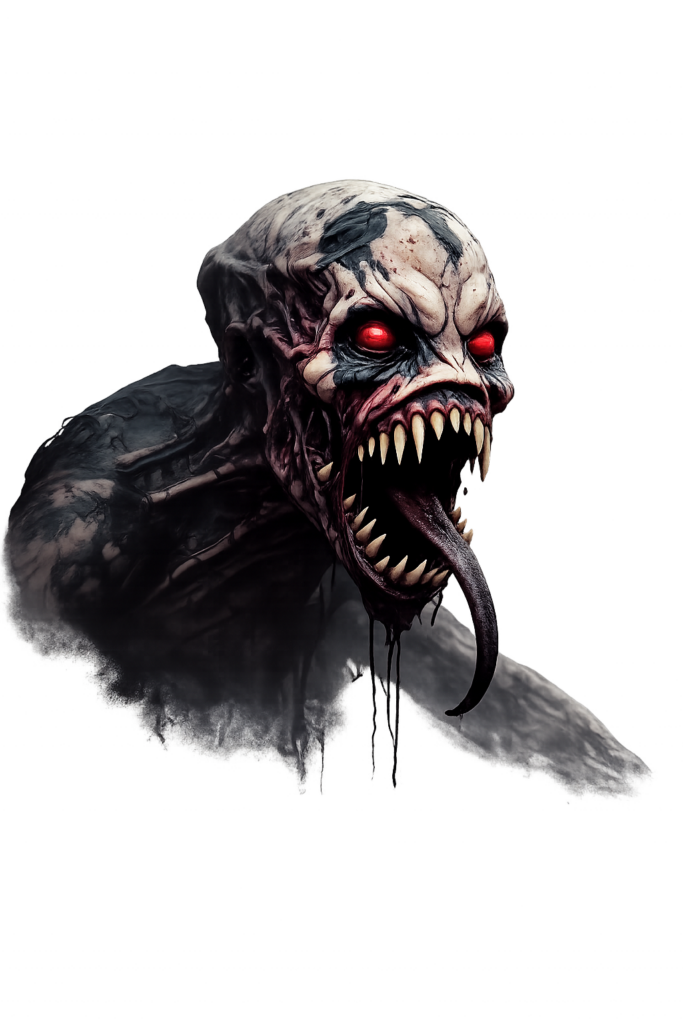
- Shadow figures with glowing eyes
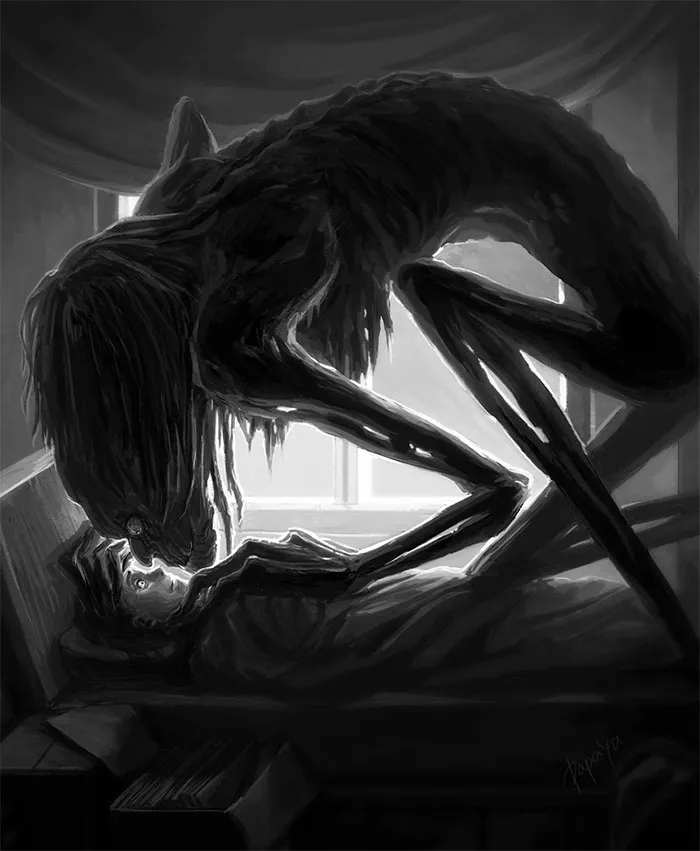
- Creatures sitting on the chest
- Deformed faces staring silently
- Monsters whispering or screaming
The consistency of these descriptions is one of the most fascinating aspects of sleep paralysis.
Why the Brain Creates a Monster
Fear Demands a Source
The human brain is wired to detect threats. When fear is activated without a visible cause, the brain invents one.
During sleep paralysis:
- The body cannot move
- The brain interprets immobility as danger
- The fear system activates instantly
The mind creates a figure to justify the fear. That figure becomes the monster.
REM Sleep and Hyper-Real Hallucinations
REM sleep is characterized by intense brain activity. Visual regions become highly active, while rational filters weaken.
This causes:
- Extremely vivid imagery
- Realistic textures and faces
- Emotional intensity
When REM imagery invades wakefulness, hallucinations become indistinguishable from reality.
The Feeling of a Presence
One of the most common elements of sleep paralysis is the sensation that someone or something is in the room.
This “presence” feels intelligent and threatening. Even without seeing it, the person knows it is there.
This sensation comes from the brain’s threat-detection system activating without external input.
Chest Pressure and Suffocation Sensations
Many people report a heavy pressure on their chest during sleep paralysis. This often leads to the belief that the monster is sitting on them.
Scientifically, this sensation is caused by:
- Shallow breathing
- Muscle paralysis
- Heightened body awareness
- Anxiety-induced tightness
The brain turns physical discomfort into narrative horror.
Cultural Interpretations of Sleep Paralysis Monsters
Across cultures and history, sleep paralysis monsters have taken different forms.
Examples include:
- Demons in medieval Europe
- The Old Hag in Newfoundland
- Kanashibari spirits in Japan
- Witchcraft entities in Africa
- Night demons in Middle Eastern folklore
Despite cultural differences, the experience remains strikingly similar.
Evolutionary Roots of Night Fear
Human brains evolved to fear:
- Darkness
- Predators
- Silent observers
- Loss of control
Sleep paralysis triggers all these instincts simultaneously. The monster reflects ancient survival mechanisms embedded in the brain.
Visual Characteristics of Sleep Paralysis Monsters
Common traits reported worldwide include:
- Pale or decaying skin
- Glowing or empty eyes
- Sharp teeth or distorted mouths
- Long limbs or unnatural proportions
- Shadow-like or smoke-like bodies
These features align with evolutionary fear patterns.
Psychological Impact of Sleep Paralysis Monsters
While not physically dangerous, sleep paralysis can be psychologically distressing.
Possible effects include:
- Fear of falling asleep
- Anxiety disorders
- Nighttime panic attacks
- Insomnia
- Trauma-like responses
Repeated episodes can reinforce fear and worsen sleep quality.
Why Some People Experience Sleep Paralysis More Often
Risk factors include:
- Irregular sleep schedules
- Sleep deprivation
- High stress
- Anxiety and depression
- Trauma history
- Sleeping on the back
These conditions increase neurological instability during sleep transitions.
Sleep Paralysis and Lucid Dreaming
Lucid dreaming involves maintaining awareness during REM sleep. This increases the likelihood of sleep paralysis.
Some people learn to control hallucinations during paralysis. Others find the experience terrifying.
Fear strengthens the hallucination. Calm weakens it.
Can Sleep Paralysis Monsters Be Controlled?
With practice, some individuals learn to manage episodes by:
- Focusing on slow breathing
- Moving small muscles like toes or fingers
- Avoiding panic
- Closing eyes to reduce visual input
Reducing fear often causes the hallucination to fade.
Sleep Paralysis vs Nightmares
Nightmares occur while asleep. Sleep paralysis occurs while awake.
Nightmares end when you wake up. Sleep paralysis begins when you wake up.
This makes sleep paralysis more disturbing for many people.
Why Sleep Paralysis Feels So Real
The brain does not distinguish between internal and external stimuli during paralysis.
If the brain sees danger, it reacts as if it is real.
Logic returns only after full motor control is restored.
Long-Term Effects on the Mind
Most people experience sleep paralysis only occasionally. For others, it becomes recurrent.
Frequent episodes may lead to:
- Chronic anxiety
- Sleep avoidance
- Emotional exhaustion
- Fear conditioning related to bedtime
Early understanding reduces long-term impact.
How to Reduce Sleep Paralysis Episodes
Practical strategies include:
- Maintaining a consistent sleep schedule
- Reducing stress before bedtime
- Avoiding alcohol before sleep
- Improving sleep environment
- Sleeping on the side rather than the back
Healthy sleep reduces neurological misfires.
When to Seek Professional Help
Medical or psychological help is recommended if sleep paralysis:
- Happens frequently
- Causes intense fear
- Disrupts daily functioning
- Is linked to trauma or panic disorders
Sleep specialists can identify underlying causes.
The Scientific Truth About the Monster
Sleep paralysis monsters are not supernatural beings. They are neurological hallucinations.
They are not signs of insanity.
They are not spiritual attacks.
They are not omens.
They are the brain reacting to fear without control.
Why the Experience Leaves Such a Deep Mark
The memory of helplessness is powerful. Being conscious and unable to move triggers primal fear.
The monster becomes a symbol of lost control.
Understanding this reduces its power.
The Moment It Ends
When paralysis ends:
- Muscles reactivate suddenly
- Fear lingers briefly
- The hallucination disappears instantly
The room looks normal again. Reality returns.
The relief is intense.
What Sleep Paralysis Teaches Us
Sleep paralysis reveals something uncomfortable about human consciousness.
The mind creates reality.
Fear shapes perception.
Control is fragile.
For a few seconds, the brain forgets safety and returns to survival mode.
Final Thoughts: Fear Has a Face
Sleep paralysis monsters feel real because the brain makes them real.
They are born from fear, immobility, and imagination working together. They disappear when control returns.
Understanding them does not remove fear entirely, but it gives you power.
You may also be interested in: Tesla Pi Phone: Is Elon Musk’s $789 Phone Real?
⚠️ DISCLAIMER
This article is for informational purposes only and does not replace medical advice. If sleep paralysis causes severe distress or frequent episodes, consult a qualified healthcare professional.
🔔 For more tutorials like this, consider subscribing to our blog.
📩 Do you have questions or suggestions? Leave a comment or contact us!
🏷️ Tags: sleep paralysis, sleep paralysis monsters, REM sleep, hallucinations, fear psychology, human consciousness, nightmares, sleep science, brain activity, night fear
📢 Hashtags: #SleepParalysis, #SleepParalysisMonster, #NightFear, #REMSleep, #Hallucinations, #BrainScience, #HumanMind, #FearPsychology, #SleepScience, #DarkMind
