


⏲️ Estimated reading time: 13 min
Table of Contents
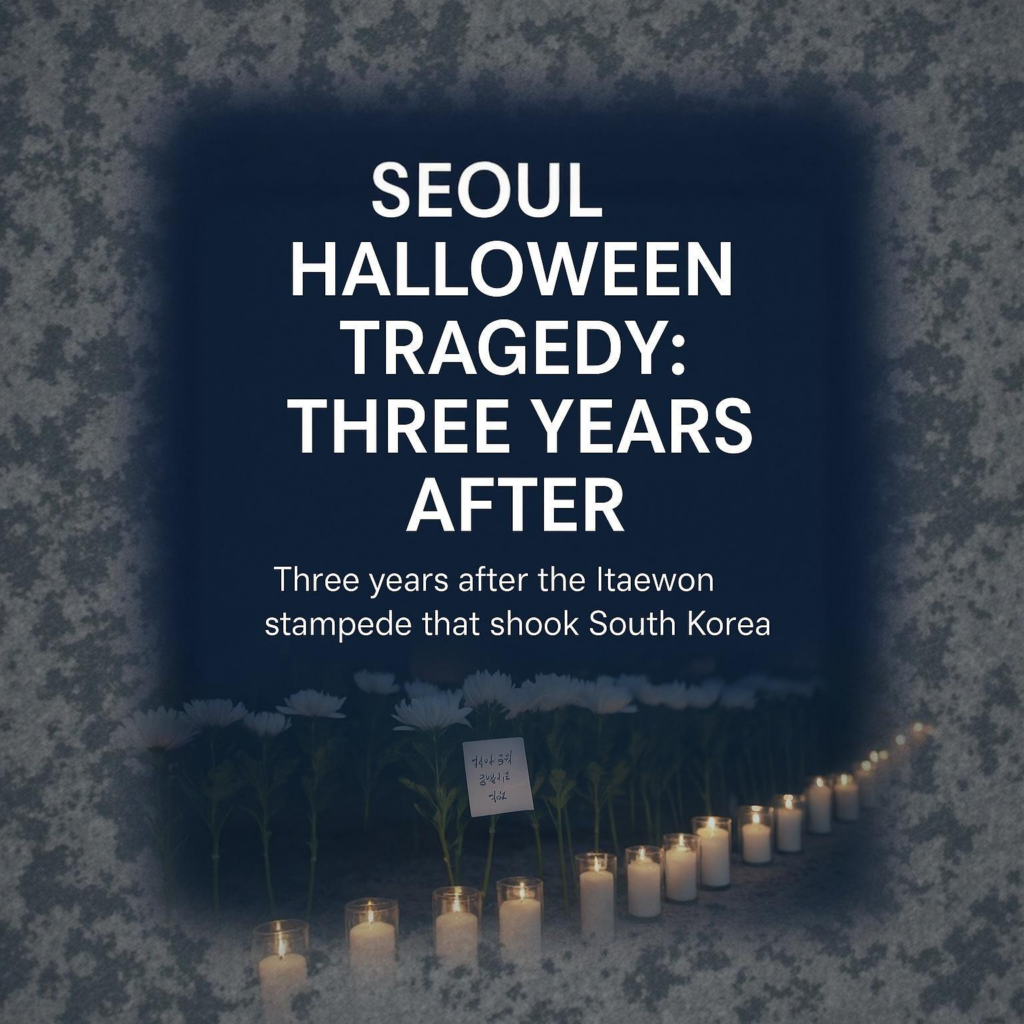
Seoul Halloween Tragedy: Three Years After the Itaewon Stampede That Shook South Korea. Three years after the deadly Halloween stampede in Itaewon, Seoul, South Korea still mourns. The 2022 disaster claimed 159 lives, raising questions about crowd control, emergency response, and public safety. Here’s how the nation has changed and what lessons endure.
Remembering the Night That Changed Seoul Forever
On October 29, 2022, what began as a joyful Halloween celebration in Itaewon, Seoul’s vibrant nightlife district, turned into one of South Korea’s deadliest peacetime disasters. Around 100,000 people had crowded the narrow streets near Exit 1 of Itaewon Station. When the crowd surged downhill into a constricted alley barely four meters wide, panic set in.
Within minutes, hundreds were trapped, pressed, and crushed. The festive music and laughter turned into screams. By midnight, the streets were filled with ambulances and chaos. When dawn came, 159 people mostly young men and women in their twenties were gone.
The Itaewon Halloween stampede marked the darkest Halloween in South Korea’s history. It remains a collective wound that still aches, even three years later.
The Tragic Sequence of Events
Eyewitnesses recalled how the narrow slope behind the Hamilton Hotel became a death trap. The crowd density exceeded six people per square meter well beyond the safe threshold. When people stumbled, a domino effect began. Those in the middle and back continued pushing, unaware of the crisis ahead.
Survivors spoke of being lifted off the ground, unable to move their arms, gasping for air. Some climbed walls or storefronts to escape. Others recorded desperate calls for help on their phones.
Emergency services were overwhelmed. Dozens of calls to 112 (the national emergency hotline) went unanswered for precious minutes. Ambulances struggled to enter the packed streets. Many victims went into cardiac arrest before help arrived.
A Nation in Shock
South Korea awoke the next morning to scenes of grief and disbelief. Across the nation, parents searched hospitals and morgues for their missing children. Flags flew at half-mast as President Yoon Suk-yeol declared a national mourning period.
Itaewon once a symbol of cosmopolitan nightlife became a shrine of sorrow. Thousands of citizens, foreign residents, and tourists brought white chrysanthemums, candles, and handwritten letters.
For many, the pain felt personal. These were not faceless numbers; they were students, artists, soldiers, friends. They were the sons and daughters of a generation that had grown up in a nation known for safety and order.
How Could This Happen?
The key question that haunted the public was simple: how could a disaster like this occur in one of the world’s most organized countries?
Investigations revealed several systemic failures:
- Lack of crowd control planning.
The local Yongsan District Office and police failed to deploy crowd management measures despite knowing tens of thousands would gather. - Insufficient emergency response.
Many of the first calls to emergency hotlines were dismissed as “routine noise complaints.” - Absence of event organizers.
The Halloween gathering was spontaneous, not officially organized meaning no single authority took responsibility for safety. - Delayed coordination.
Rescue operations were hindered by miscommunication among police, fire, and medical services.
Ultimately, a perfect storm of negligence, misjudgment, and poor communication led to a preventable catastrophe.
Aftermath: Investigations and Accountability
In the weeks that followed, public anger mounted. Families of victims demanded accountability. The National Police Agency formed a special investigation unit that questioned dozens of officials.
The investigation identified 23 public officials as negligent. Among them were senior officers from Yongsan Police Station and the district administration. However, many citizens felt the punishments were too lenient.
Opposition parties accused the government of deflecting responsibility, while the administration defended itself, citing structural issues and the lack of precedent for a non-official event of such scale.
The tragedy also spurred global reflection. Countries around the world revisited their crowd-management protocols, learning from Itaewon’s painful lessons.
The Human Cost: Stories of Loss and Bravery
Behind every headline was a life, a dream, and a family torn apart.
- Jiyeon Park, a 24-year-old university student, had been planning to study abroad. Her mother later wrote, “She loved Halloween. Now I cannot see pumpkins or masks without tears.”
- Kim Taewoo, a 21-year-old conscripted soldier, died while trying to pull others to safety.
- Ariana Zahra, an exchange student from Iran, was one of several foreigners who lost their lives. Her classmates in Seoul National University still hold an annual candlelight vigil in her memory.
Amid the despair, acts of heroism emerged. Civilians performed CPR on strangers for hours. Local shop owners opened doors to shelter the injured. These ordinary citizens became symbols of compassion in a moment of horror.
Global Reaction and Mourning
Messages of condolence poured in from across the world. The Eiffel Tower dimmed its lights in solidarity. Leaders from the U.S., Japan, and the U.K. sent statements of sympathy.
International media compared Itaewon to other crowd disasters such as Mecca’s 2015 stampede or the 1989 Hillsborough disaster in England.
For South Korea, however, this tragedy carried unique weight. It happened not during a protest or a sports event but during a night of celebration, exposing how modern urban life can turn fatal within minutes.
Remembering Through Memorials
In November 2022, makeshift altars filled Seoul Plaza and City Hall. Citizens stood in silence, weeping, bowing, leaving letters addressed “To our children.”
A year later, the government unveiled a permanent memorial in Itaewon. Simple yet poignant, it features 159 steel pillars, each engraved with the name of a victim. Families often visit, touching the names and leaving small gifts roses, candy, or notes.
The memorial is now a place not only of mourning but also of reflection on civic responsibility.
Three Years Later: What Has Changed?
By 2025, Seoul’s urban safety culture had evolved dramatically. The government implemented new crowd-management regulations across all major cities.
1. Crowd-density monitoring systems
Using AI-powered cameras and drones, authorities can now track crowd movements in real time, allowing faster intervention.
2. Mandatory event coordination units
Even unofficial or spontaneous gatherings must have designated safety officers coordinating with local police.
3. Emergency-response simulations
Large-city districts now conduct crowd-crush drills twice per year, training responders and volunteers.
4. Improved communication channels
New smartphone alerts warn citizens when crowd density surpasses safe levels.
While progress is clear, many families say the emotional wounds remain open. They continue to demand higher accountability and psychological support for survivors.
Cultural Impact: Fear, Empathy, and Change
The Itaewon tragedy altered how South Koreans view public festivals. Halloween events in 2023 and 2024 were heavily restricted or canceled. Bars and clubs closed early out of respect.
Artists, filmmakers, and musicians began exploring grief and survivor’s guilt in their works. Netflix documentaries and K-dramas revisited the event, raising awareness about mental health and social responsibility.
The phrase “Never again in Itaewon” became a rallying cry. It symbolizes both remembrance and the collective promise to prevent future disasters.
Public Trust and Government Criticism
Despite reforms, trust in public institutions declined sharply after 2022. Many citizens felt their voices were ignored.
The grieving families of the victims established the 159 Memorial Foundation, advocating for transparent investigations and continuous safety audits. They also criticized what they saw as political interference and attempts to minimize responsibility.
International human-rights groups echoed their concerns, urging South Korea to ensure fair treatment and mental-health support for bereaved families.
The government, while apologetic, faced scrutiny over compensation packages and communication missteps. President Yoon’s 2023 apology delivered in tears brought temporary solace but did not erase public resentment.
The Survivors: Living With Trauma
Those who escaped the alley still bear invisible scars. Survivors report chronic anxiety, PTSD, and survivor’s guilt. Many avoid crowded spaces or public transportation.
Counseling services were offered, but victims said they felt isolated after media attention faded. Several survivors have become safety advocates, speaking at schools and conferences to share their stories.
Psychologists emphasize that post-traumatic healing requires long-term community involvement, not just immediate crisis support.
You may also be interested in: How to Fix Received Discarded Packets in Windows 11
Lessons for the World
The Itaewon stampede taught nations valuable lessons about modern crowd safety:
- Crowds can form spontaneously. Cities must prepare for events without formal organizers.
- Crowd behavior is predictable and preventable. Monitoring density and flow is essential.
- Early communication saves lives. Rapid alerts and coordination reduce panic.
- Training and empathy matter. Citizens trained in CPR and basic crowd management can save lives.
These insights have since influenced safety planning for global events from Rio’s Carnival to Tokyo’s fireworks festivals.
Media Ethics and Misinformation
In the immediate aftermath, misinformation flooded social media. False reports about celebrities and blame directed at foreigners spread quickly.
Korean broadcasters later apologized for airing unverified footage. The incident led to new media-ethics guidelines emphasizing accuracy over speed.
Digital platforms like X (formerly Twitter) and YouTube have since collaborated with Korean agencies to moderate crisis-related misinformation more effectively.
Political Repercussions
The tragedy also reshaped South Korea’s political landscape. Opposition parties used it to highlight systemic incompetence. The ruling party promised reforms, though critics accused them of slow implementation.
In 2024, several local elections centered on candidates pledging better disaster management. Citizens demanded transparency, safety funding, and accountability.
The Itaewon disaster became more than a tragedy it became a turning point in Korean civic consciousness.
Global Comparisons: When Crowds Turn Deadly
The Itaewon case stands alongside other devastating stampedes:
- India (2013): 115 pilgrims killed in a temple crowd surge.
- Saudi Arabia (2015): Over 2,000 Hajj pilgrims lost their lives.
- Indonesia (2022): 135 soccer fans died at Kanjuruhan Stadium.
Each tragedy shares the same root causes poor planning, inadequate exits, and delayed emergency response. Yet Itaewon’s context a night of urban festivity remains uniquely haunting.
The Role of Technology in Prevention
South Korea’s rapid tech adoption now plays a key role in preventing another tragedy. AI-powered software monitors crowd density, analyzes movement speed, and detects risk zones.
Smart streetlights in Itaewon automatically change color when density thresholds are exceeded. Loudspeakers broadcast safety messages in multiple languages.
Tech companies collaborate with city authorities to create predictive models based on smartphone location data always with privacy safeguards.
The goal is not surveillance but protection. As one official put it, “If technology can save even one life, it is worth every won.”
Education and Preparedness
Following the disaster, schools introduced new safety modules. Students learn how to recognize crowd crush risks and respond effectively.
Public campaigns teach citizens how to help others during emergencies. Posters in subway stations remind commuters: “Stay calm. Move diagonally. Look for open space.”
This educational shift aims to cultivate a proactive mindset so that prevention becomes instinct, not reaction.
Healing Through Art and Community
Communities across Seoul have turned grief into creation. Murals depict butterflies rising from narrow alleys, symbolizing freedom and remembrance.
Annual concerts and poetry readings commemorate the victims, blending sorrow with hope. Artists donate proceeds to trauma-support organizations.
These cultural efforts serve as therapy for a nation still processing loss, while keeping the victims’ memories alive.
The Families’ Continuing Fight for Justice
Three years later, the families of victims remain united. They organize annual marches demanding truth and institutional reform. Their message is consistent: accountability must be structural, not symbolic.
In 2025, they filed additional petitions seeking the creation of a permanent National Crowd Safety Agency. The proposal is under legislative review.
While some critics call the movement “politicized,” most South Koreans view it as a necessary pursuit of justice.
How Itaewon Looks Today
By 2025, Itaewon has slowly regained life but it feels different. The neon lights still flicker, yet the laughter is softer, the music lower.
The alley where tragedy struck remains partially sealed. Visitors leave flowers and notes. On Halloween night, the area is patrolled heavily, and no large gatherings are allowed.
Local residents describe the atmosphere as “respectful quiet.” Itaewon continues to evolve resilient but forever changed.
The Broader Message to the World
The Itaewon tragedy is more than a South Korean story. It is a global reminder that safety is everyone’s responsibility governments, citizens, and event organizers alike.
As urban life grows denser and social events more spontaneous, the need for vigilance rises. Tragedy can unfold within minutes, but prevention begins long before crowds gather.
The legacy of Itaewon is a lesson carved in pain: public safety must never be an afterthought.
Lessons Remembered
- Anticipate large crowds even without official events.
- Train first responders and citizens alike.
- Use real-time data to manage crowd flow.
- Foster empathy, communication, and preparedness.
These are not abstract policies they are promises to the 159 souls lost that night.
A Final Word
Three years on, Seoul continues to mourn but also to rebuild. The Itaewon stampede remains a symbol of both tragedy and transformation. From grief has come reform, and from silence, awareness.
The victims’ legacy endures in every safety drill, every alert system, every life that will now be saved because the world learned from Itaewon.
FAQ Section
Q1. What caused the Itaewon Halloween tragedy?
A crowd surge in a narrow alley caused people to be crushed and suffocated. Overcrowding and lack of management were key factors.
Q2. How many people died in the Itaewon stampede?
A total of 159 people lost their lives, with over 190 injured.
Q3. Were officials held accountable?
Several local and police officials faced charges, but families criticized the penalties as insufficient.
Q4. What reforms were introduced afterward?
South Korea created new crowd-control regulations, monitoring systems, and safety drills nationwide.
Q5. How is Itaewon commemorating the victims today?
A permanent memorial with 159 steel pillars stands near the site, symbolizing remembrance and resilience.
Reflections of Healing and Hope
The Itaewon Halloween tragedy is now part of South Korea’s collective memory a scar, but also a source of strength. Each October 29, the nation pauses not only to mourn but also to reaffirm its duty to protect life.
In mourning, Seoul found unity. In remembrance, it found purpose. And in change, it found hope.
🔔 For more tutorials like this, consider subscribing to our blog.
📩 Do you have questions or suggestions? Leave a comment or contact us!
🏷️ Tags: Itaewon stampede, Seoul tragedy, South Korea news, Halloween disaster, crowd safety, public safety reforms, national mourning, Itaewon memorial, Yongsan district, Seoul events
📢 Hashtags: #ItaewonTragedy, #SeoulStampede, #HalloweenDisaster, #SouthKoreaNews, #CrowdSafety, #PublicSafety
