


⏲️ Estimated reading time: 7 min
Table of Contents
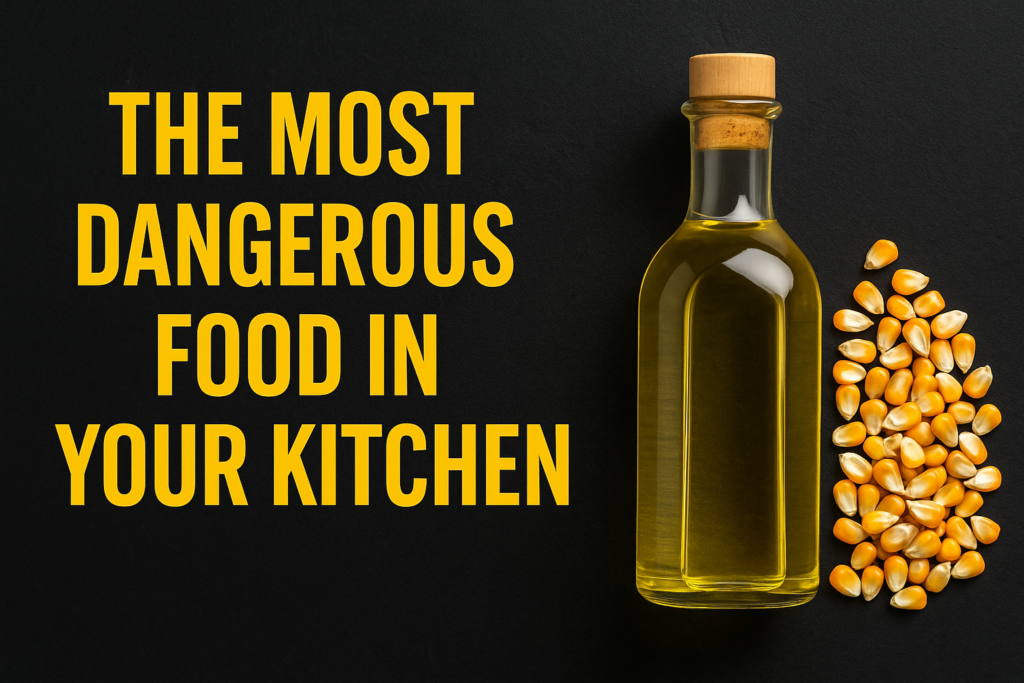
The Most Dangerous Food in Your Kitchen. Industrial seed oils like soybean, corn, and canola oil may be the most dangerous food in your kitchen. Hidden in everyday meals, they fuel inflammation, disrupt hormones, and silently damage your liver, brain, and nervous system.
The Hidden Poison on Your Plate
When most people think of unhealthy foods, they imagine greasy bacon, sugary sodas, or late-night ice cream. But what if the most dangerous food in your kitchen isn’t sweet, salty, or obviously indulgent?
The truth is, the real enemy hides in plain sight inside the bottle of vegetable oil you keep by your stove, the dressing on your salad, and even the “healthy” protein bar in your pantry.
We’re talking about industrial seed oils highly processed oils like soybean, corn, canola, cottonseed, safflower, and sunflower oil. Marketed for decades as “heart-healthy,” these oils are anything but. In fact, evidence now shows they may be the single biggest dietary driver of chronic inflammation, hormonal imbalance, and metabolic disease.
In this article, we’ll break down:
- What industrial seed oils are and how they’re made
- Why they’re more dangerous than sugar or gluten
- The science of how they damage your body
- Hidden sources of seed oils in everyday foods
- Real examples and case studies of recovery after eliminating them
- Healthier fats you should be using instead
By the end, you’ll understand why many nutrition experts call industrial seed oils “the cigarettes of our generation.”
Chapter 1: What Exactly Are Industrial Seed Oils?
Industrial seed oils, sometimes misleadingly called “vegetable oils,” are not truly natural oils. Unlike olive oil or coconut oil, which are simply pressed from fruit or nuts, seed oils go through an intensive chemical and mechanical extraction process.
The most common seed oils include:
- Soybean oil
- Corn oil
- Canola (rapeseed) oil
- Sunflower oil
- Cottonseed oil
- Safflower oil
- Grapeseed oil
They were not a part of the human diet until about 100 years ago, when industrialization made it possible to mass-produce them cheaply. Before then, humans cooked primarily with butter, lard, tallow, and olive oil.
Chapter 2: How Seed Oils Are Made – A Toxic Process
The production of seed oils is a far cry from the simple pressing of olives. Here’s the typical industrial process:
- High-heat mechanical pressing – Seeds are heated to extremely high temperatures, which damages delicate fatty acids and produces toxic byproducts.
- Hexane solvent extraction – A petroleum-based chemical (also used in gasoline production) is applied to pull the remaining oil from the seed.
- Refining – The raw oil is treated with more heat and chemicals to remove impurities.
- Bleaching and deodorizing – The rancid smell and cloudy appearance are “fixed” with bleaching agents and steam distillation.
- Final product – A clear oil with no taste or odor but one that is already oxidized and unstable.
By the time it lands in your bottle, this oil has already undergone more chemical manipulation than many processed foods.
Chapter 3: Why Industrial Seed Oils Are So Dangerous
Let’s break down the core reasons nutrition researchers warn against these oils.
1. They’re High in Omega-6 Fatty Acids
Your body needs a balance of omega-6 and omega-3 fatty acids. Traditional diets had a ratio of about 1:1 or 2:1. Today, thanks to seed oils, most people consume a ratio of 20:1 or even 50:1 in favor of omega-6.
This imbalance drives chronic inflammation, the root cause of many diseases.
2. They Oxidize Easily
Seed oils are made up of polyunsaturated fats (PUFAs), which are chemically unstable. When heated or even just exposed to air they oxidize, creating toxic byproducts like aldehydes that damage DNA, proteins, and cell membranes.
3. They Accumulate in Your Body
Unlike sugar, which is metabolized quickly, seed oils embed themselves in fat tissue, the liver, and even the brain. Studies suggest it can take 1.5–2 years to fully eliminate them after switching to healthier fats.
4. They Damage Mitochondria
Your mitochondria (the energy factories in your cells) are especially sensitive to oxidative damage. When seed oils infiltrate them, energy production slows, leading to chronic fatigue and brain fog.
See also: Netflix in June 2026: 5 Best New Additions You Can’t
5. They Disrupt Hormones
Oxidized oils interfere with cortisol, estrogen, and testosterone regulation. This leads to poor sleep, irritability, and reduced reproductive health.
6. They Drive Modern Disease
Research has linked high seed oil consumption to:
- Heart disease
- Obesity
- Type 2 diabetes
- Non-alcoholic fatty liver disease
- Depression and anxiety
- Alzheimer’s and dementia
Chapter 4: The Symptoms of Seed Oil Overload
How do you know if seed oils are affecting you? Look for these warning signs:
- Constant fatigue despite sleeping enough
- Brain fog and poor focus
- Unexplained weight gain
- Mood swings and irritability
- Restless sleep or insomnia
- Joint pain or stiffness
- Skin flare-ups (acne, eczema, psoriasis)
Because seed oils work silently, many people don’t connect these issues with their cooking oil.
Chapter 5: Hidden Sources of Industrial Seed Oils
Even if you never buy a bottle of canola or corn oil, you may be consuming them daily. They hide in:
- Salad dressings and mayonnaise
- Packaged baked goods (cookies, cakes, muffins)
- Chips, crackers, and snack bars
- Fast food and restaurant meals
- Frozen dinners
- Breakfast cereals and granola
- Plant-based meat substitutes
Check ingredient labels if it says “vegetable oil,” “canola oil,” or “soybean oil,” it’s a red flag.
Chapter 6: A Historical Perspective
Before the 1900s, Americans consumed virtually no seed oils. By the mid-20th century, clever marketing campaigns funded by big agriculture convinced the public that butter and lard were dangerous, while seed oils were “modern and healthy.”
For example:
- Procter & Gamble introduced Crisco in 1911, the first mass-produced hydrogenated vegetable oil.
- In the 1950s, the American Heart Association, backed by seed oil producers, began promoting vegetable oils as “heart-healthy alternatives.”
This dietary shift coincided with the rise of obesity, diabetes, and heart disease rates.
Chapter 7: Case Studies – What Happens When You Quit Seed Oils
Case Study 1: The 90-Day Challenge
A family eliminated all seed oils for 3 months. Within weeks, they reported:
- Better sleep quality
- More stable mood and energy
- Clearer skin
- Reduced joint pain
- Improved bloodwork markers
Case Study 2: Athlete Recovery
A competitive runner suffering from chronic fatigue switched from canola oil to coconut oil and butter. After 6 months, his energy levels returned, and his recovery time between workouts improved.

Chapter 8: What to Use Instead
If you want to protect your health, replace seed oils with stable, nutrient-rich fats:
- Olive oil (extra virgin) – Rich in antioxidants, best for salads and low-heat cooking.
- Coconut oil – Highly stable, great for high-heat cooking.
- Avocado oil – Good for sautéing and baking.
- Butter and ghee – Traditional fats rich in fat-soluble vitamins.
- Beef tallow and lard – Used for centuries, heat-stable.
Switching your oils is one of the simplest health upgrades you can make.
Pros and Cons of Industrial Seed Oils
| Pros | Cons |
|---|---|
| Inexpensive to produce | Chemically extracted with solvents |
| Neutral taste | High in unstable omega-6 fatty acids |
| Long shelf life | Linked to inflammation and chronic disease |
| Widely available | Accumulate in the body for years |
Key Takeaways
- Industrial seed oils are chemically extracted, unstable, and highly inflammatory.
- They’re found in most processed and restaurant foods.
- Excess consumption leads to hormone disruption, brain fog, fatigue, and chronic disease.
- It can take years to detoxify from their buildup.
- Replacing them with natural oils (olive, coconut, butter, tallow) is one of the most powerful ways to reclaim your health.
🔔 For more tutorials like this, consider subscribing to our blog.
📩 Do you have questions or suggestions? Leave a comment or contact us!
🏷️ Tags: industrial seed oils, canola oil dangers, soybean oil, toxic cooking oils, corn oil health risks, inflammation and oils, olive oil vs canola, butter vs margarine, healthy fats, seed oil free diet
📢 Hashtags: #IndustrialSeedOils #ToxicOils #CanolaOil #SoybeanOil #CornOil #HealthTips #Nutrition #CleanEating #HealthyLiving #Inflammation
🔍 A Final Word on Hidden Dangers
Industrial seed oils are not just another dietary fad or passing concern. They represent a fundamental shift in human nutrition one that coincides with rising chronic disease. If you want to reclaim your health, the first and most effective step is simple: ditch the seed oils.
