


⏲️ Estimated reading time: 10 min
Table of Contents
Pearl Harbor 1941: The Surprise Attack That Changed World War II. The 1941 attack on Pearl Harbor became one of the most defining events of the twentieth century. Japan’s surprise assault on the American naval base in Hawaii shocked the world, triggered the entry of the United States into World War II, and reshaped global history for decades to come.
A Morning That Altered the World
On the quiet Sunday morning of December 7, 1941, life at Pearl Harbor moved slowly. Sailors prepared for routine duties. Planes rested on airstrips. Officers made their way toward breakfast. Many considered it an ordinary day, free from tension and marked by the comforting predictability of military routine. Yet within minutes, that peace disappeared as dozens of Japanese aircraft descended from the clouds.
The strike on Pearl Harbor redefined the war, restructured global alliances, and shifted the balance of military power. It also marked a dramatic turn in American history. The United States, previously focused on neutrality, crossed a threshold that pushed the nation into one of the most destructive conflicts ever recorded. The attack became an emotional shock, a strategic reckoning, and a historical pivot.
This long-form exploration examines why Japan launched the attack, how it unfolded, what damage it caused, and how it changed the world forever.
The Global Climate Before the Attack
World War II had already ravaged Europe and Asia before Pearl Harbor. Yet the United States remained outside direct combat. Its political leaders debated neutrality. Its citizens, affected by the Great Depression, felt cautious about sending troops abroad. America supported the Allies with supplies but avoided open involvement.
Japan had different plans. Determined to dominate East Asia and the Pacific, the Japanese Empire expanded aggressively and occupied large parts of China. To counter this expansion, the United States imposed economic sanctions. The most painful of these was the embargo on oil, an essential resource for Japan’s navy, air force, and industrial growth.
With resources fading and diplomatic progress stalled, Japan saw war as a path toward dominance. Military leaders concluded that a decisive blow against the United States Pacific Fleet could secure strategic advantage. In their view, crippling American naval power early would prevent interference with Japan’s expansion toward Southeast Asia.
The stage for Pearl Harbor was set long before any plane took off.
Why Japan Chose Pearl Harbor
Japanese strategists believed that striking Pearl Harbor offered several advantages:
1. Destroying the U.S. Pacific Fleet
Eliminating American battleships and main vessels would reduce the U.S. ability to respond quickly to Japanese operations in the Pacific.
2. Buying Time for Expansion
Japan planned large military campaigns across the Philippines, Malaya, Hong Kong, and the Dutch East Indies. A successful attack would delay American retaliation long enough for Japan to strengthen its defensive perimeter.
3. Psychological Shock
A surprise attack could demoralize the United States and possibly create hesitation among American political leaders.
4. Diplomatic Pressure on the Allies
A powerful Japanese strike could cause Britain and the Netherlands to reconsider their resistance in Asia.
While the strategy seemed bold and precise, it also relied heavily on assumptions that underestimated the industrial strength, willpower, and global influence of the United States.
The Road to December 7: Secret Preparations
Planning for the attack began months earlier. Japanese naval commanders, including Admiral Isoroku Yamamoto, crafted an operation that required secrecy, coordination, and impeccable timing.
A Fleet on a Hidden Journey
Six Japanese aircraft carriers the core of the strike group sailed from northern Japan. They traveled through icy waters far from major shipping routes to avoid detection. The fleet included battleships, cruisers, destroyers, submarines, and supply ships.
Strict Radio Silence
To maintain secrecy, the fleet avoided radio transmissions. This tactic prevented American intelligence units from tracking their location.
Training Pilots for Precision
Japanese aviators practiced hitting moving battleships and airfields. Each pilot understood his target, flight path, and mission objective. Many believed the attack would determine Japan’s future.
Mistaken Diplomacy
While the fleet approached Hawaii, Japanese diplomats in Washington attempted negotiations. Yet Japan planned to deliver a formal warning only moments before the attack. Due to delays and miscommunication, the message reached the U.S. government after the attack began, making the strike appear even more treacherous.
The operation blended boldness, skill, and deception. But it also underestimated America’s response.
The Morning of the Attack
The sun rose over Oahu at 6:30 a.m. The harbor shimmered in calm water. Sailors enjoyed breakfast. Church services were preparing to open. Many considered it a restful day.
The First Wave
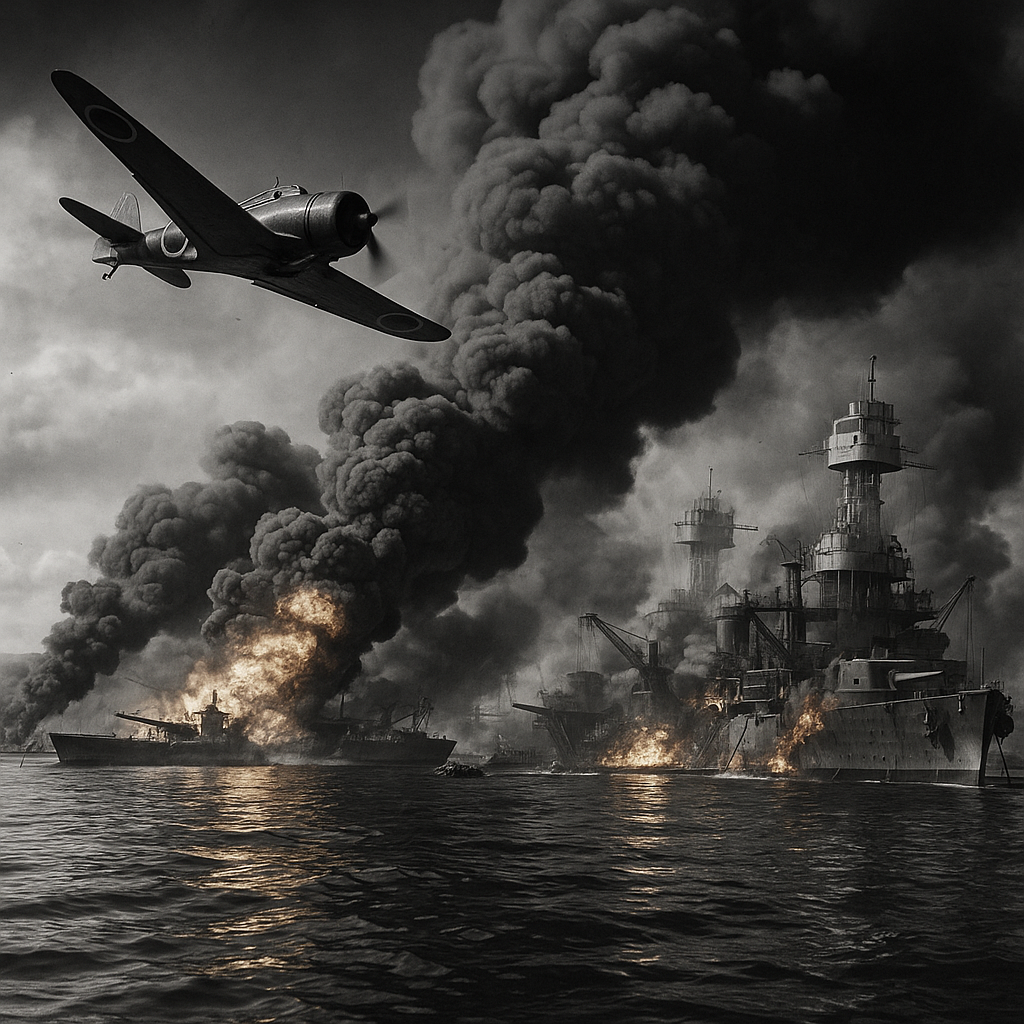
At 7:48 a.m., the first wave of Japanese aircraft began their descent. Dive bombers, torpedo planes, and fighters roared toward the naval base. Their targets included:
- Battleships anchored along Battleship Row
- Airfields full of parked planes
- Submarine bases
- Fuel depots
Explosions erupted almost instantly. Smoke filled the sky as bombs struck USS Arizona, causing a massive detonation that split the ship and killed more than one thousand men. USS Oklahoma capsized after being hit by multiple torpedoes.
Chaos Across the Harbor
Soldiers rushed to posts. Pilots attempted to reach their aircraft. Anti-aircraft guns fired wildly as the attack intensified. Many American weapons had never been loaded because officers believed the chance of an attack on Hawaii was low.
The Second Wave
About an hour later, a second wave of Japanese aircraft arrived to finish the assault. They targeted remaining vessels and anti-aircraft batteries. Flames spread across the harbor. Rescue teams pulled injured sailors from burning ships while bombs continued falling overhead.
The Attack Ends
By 10:00 a.m., the assault concluded. The Japanese fleet turned back toward the Pacific, having lost minimal aircraft compared to the catastrophic damage inflicted upon the U.S. Navy.
The Devastating Consequences
The aftermath shocked the nation. Fires burned long after the planes departed. The destruction was immense.
American Losses
- Over 2,400 military personnel and civilians killed
- Nearly 1,200 wounded
- 19 ships damaged or destroyed
- 188 aircraft destroyed
- Multiple airfields rendered unusable
USS Arizona alone accounted for nearly half of all deaths. The ship remains underwater today as a memorial.
Japanese Losses
Japan suffered significantly fewer casualties:
- 29 planes lost
- 5 midget submarines destroyed
- Fewer than 70 personnel killed
These limited losses reinforced the Japanese belief that the attack had succeeded yet they completely misjudged its political impact.
How America Responded
The shock of the attack united the American people in a way that no military or political campaign had previously achieved.
Roosevelt’s Historic Speech
On December 8, President Franklin D. Roosevelt addressed Congress with the famous statement:
“A date which will live in infamy.”
Congress declared war on Japan almost unanimously. Germany and Italy, Japan’s allies, declared war on the United States shortly afterward. America joined the global conflict on both the Pacific and European fronts.
Industrial Mobilization
Factories converted to wartime production. Citizens volunteered for service. Women entered the workforce in large numbers, symbolized by the iconic figure “Rosie the Riveter.”
A Nation Transformed
The United States shifted from isolation to global leadership. Military forces expanded rapidly. America became a manufacturing powerhouse capable of supporting entire alliances.
The Japanese goal of weakening U.S. morale backfired dramatically.
Strategic Mistakes in Japan’s Plan
Although the attack inflicted massive damage, it failed in ways that proved critical to the outcome of the war.
1. The American Aircraft Carriers Were Not Present
The U.S. Navy’s three Pacific carriers USS Enterprise, Lexington, and Saratoga were away from Pearl Harbor. These ships later played decisive roles at the Battle of Midway.
2. Fuel Depots and Repair Yards Were Untouched
Japan did not destroy:
- Dry docks
- Fuel tanks
- Maintenance facilities
This allowed the United States to repair damaged ships quickly.
3. The Attack United America Instead of Weakening It
Rather than discouraging American involvement, the attack provoked national outrage and mobilization.
4. Long-Term Strategy Ignored U.S. Industrial Power
Japan miscalculated the scale at which the United States could produce aircraft, ships, and weapons.
These strategic flaws ultimately contributed to Japan’s defeat.
Pearl Harbor’s Influence on World War II
The attack transformed the war in several major ways.
A True Global Conflict
With the United States fighting in both Europe and the Pacific, World War II became fully global. American resources strengthened the Allied powers. Industrial production, medical advances, and technological innovation surged.
Turning Points in the Pacific
The attack set in motion key battles:
- Midway (1942)
- Guadalcanal (1942–1943)
- Philippines campaign (1944–1945)
Each battle chipped away at Japan’s control.
Shift in Naval Warfare
Pearl Harbor proved the dominance of aircraft carriers over battleships. Naval aviation became the decisive force in the Pacific.
The Road Toward Japan’s Defeat
Years of intense island-hopping campaigns, strategic bombings, and naval confrontations eventually pushed Japan toward surrender in 1945.
Pearl Harbor was the ignition point for all of these events.
Pearl Harbor in Memory and Culture
The attack shaped global memory, culture, and historical understanding.
Memorials
The USS Arizona Memorial stands as a powerful reminder of the lives lost. Visitors see the remains of the battleship resting underwater.
Films and Literature
Movies like Tora! Tora! Tora! and Pearl Harbor influenced how generations perceive the event. Books, documentaries, and personal letters offer deeper insight into the human experience behind the tragedy.
Annual Commemorations
December 7 is observed each year in the United States as National Pearl Harbor Remembrance Day.
Historical Lessons
Pearl Harbor teaches crucial lessons about:
- preparedness
- intelligence analysis
- diplomacy
- the consequences of underestimating an opponent
These lessons continue to shape military strategies and foreign policies today.
Frequently Asked Questions
1. When did the Pearl Harbor attack happen?
The attack occurred on December 7, 1941, early in the morning.
2. Why did Japan attack Pearl Harbor?
Japan aimed to cripple the U.S. Pacific Fleet and prevent interference with its expansion across Asia and the Pacific.
3. How many casualties resulted from the attack?
Over 2,400 Americans were killed and nearly 1,200 were injured.
4. Which ships suffered the most damage?
USS Arizona exploded and sank, and USS Oklahoma capsized. Several other battleships and destroyers were badly damaged.
5. Did the attack succeed?
While it caused severe damage, it failed strategically because U.S. aircraft carriers survived and American morale strengthened.
6. What was Roosevelt’s reaction?
He delivered the famous “Day of Infamy” speech and secured a declaration of war against Japan.
7. How did the attack change World War II?
It brought the United States into the war, significantly boosting the Allies and altering global power structures.
8. Is Pearl Harbor still active today?
Yes, Pearl Harbor remains an active naval base and an important symbol of American military history.
Reflections on a Turning Point
Pearl Harbor was more than a battle. It was a moment that awakened a nation and reshaped the future. The attack forced the world to confront the brutal realities of war and highlighted the consequences of ambition, miscalculation, and conflict. Its legacy continues to influence diplomacy, strategy, and international relations to this day.
🟦 Disclaimer and Source Hygiene
This article is for informational and educational purposes. It is based on historical research, public archives, academic studies, and widely accepted sources. For professional historical analysis, consult qualified historians and specialized literature.
🔔 For more tutorials like this, consider subscribing to our blog.
📩 Do you have questions or suggestions? Leave a comment or contact us!
🏷️ Tags: Pearl Harbor, World War II, Japan 1941, U.S. Pacific Fleet, Day of Infamy, History Explained, WWII Battles, Franklin Roosevelt, Pacific War, Naval History
📢 Hashtags: #PearlHarbor #WWII #WorldWar2 #PacificWar #HistoryFacts #USHistory #JapanHistory #OnThisDay #WarStudies #HistoricalEvents
See also: How to Use an Air Conditioner Correctly: Best Settings for
