


⏲️ Estimated reading time: 6 min
Table of Contents
Not Everyone Has the Same Heart as You – Psychology Behind Emotional Reciprocity
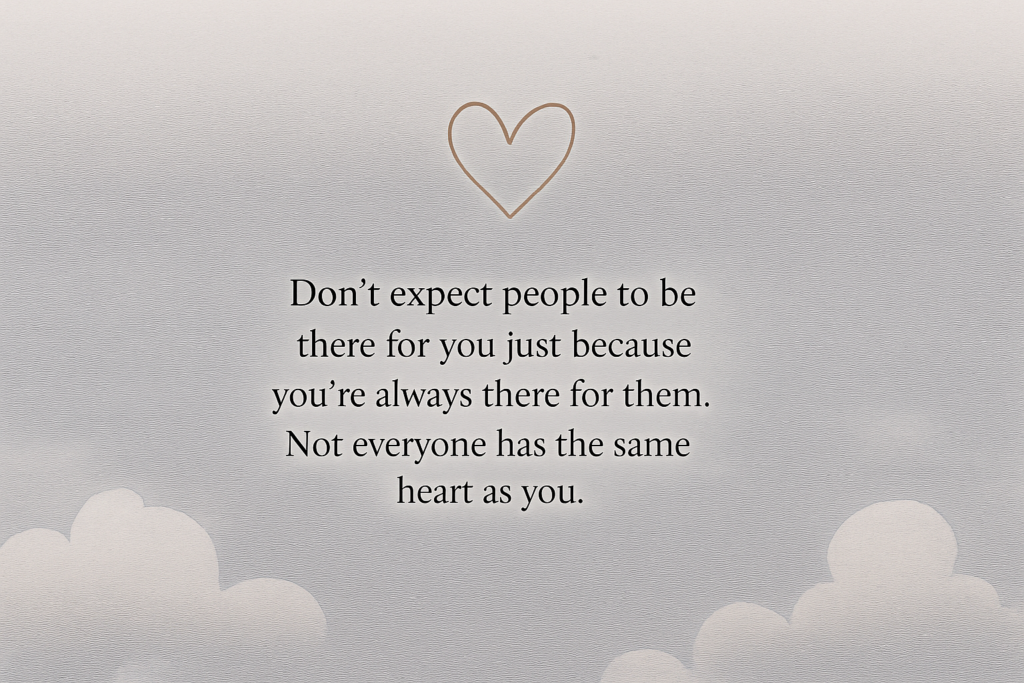
“Don’t expect people to be there for you just because you’re always there for them. Not everyone has the same heart as you.”
Discover the psychology behind why people don’t always reciprocate the same care or loyalty you show them. Learn how empathy, emotional boundaries, and expectations shape relationships and how to protect your heart without losing your kindness.
People
It’s a bitter truth: sometimes, the people you give your all to are nowhere to be found when you need them most. This quote reminds us that emotional reciprocity the expectation that others will return the same care and loyalty we show often leads to disappointment. Understanding why this happens requires looking at the psychology of empathy, attachment, and self-worth.
The Nature of Emotional Reciprocity
In healthy relationships, emotional reciprocity forms the backbone of connection. It means mutual support, care, and validation. But human beings differ in emotional capacity and perception. Some people are more empathetic, while others struggle to identify or respond to emotional needs.
Psychologists describe this imbalance as asymmetric emotional investment when one person gives more emotionally than the other. This doesn’t always mean the other person doesn’t care; it might mean they lack emotional awareness or have different attachment styles.
Why People Don’t Always Give Back
Not everyone processes love, loyalty, or empathy the same way. Here are a few psychological reasons:
- Attachment Styles:
- People with avoidant attachment tend to distance themselves emotionally.
- Those with anxious attachment often over-give, hoping to earn love.
- Securely attached individuals are more balanced, capable of mutual emotional investment.
- Emotional Intelligence:
Emotional intelligence (EQ) determines how well someone perceives and responds to others’ emotions. A person with low EQ might not notice your emotional needs, even if they care deeply. - Personality Differences:
Empaths, for example, feel and absorb others’ emotions more intensely. Narcissistic or self-centered personalities prioritize their own comfort and validation over others. - Upbringing and Trauma:
Childhood environments shape how we give and receive care. A person who never learned consistent love may struggle to mirror it back.
The Hidden Cost of Over-Giving
Constantly being the one who “shows up” can drain your mental health. Psychologically, this behavior is linked to codependency the need to earn love through self-sacrifice. Over time, you may develop emotional exhaustion, resentment, or even depression when your kindness isn’t reciprocated.
A study in Personality and Social Psychology Review found that people who constantly suppress their own needs to meet others’ expectations experience higher stress levels and lower self-esteem. The desire to “be there for everyone” can unconsciously stem from fear of abandonment or rejection.
Learning to Set Boundaries
Setting emotional boundaries doesn’t make you cold; it makes you healthy. Boundaries protect your energy, helping you give from abundance rather than emptiness.
When you notice you’re giving too much, pause and ask:
- “Am I giving out of love or fear?”
- “Do I expect something in return?”
- “Am I okay if this person doesn’t give the same back?”
By asking these, you move from reactive giving to conscious giving a key trait of emotionally mature individuals.
Accepting That People Love Differently
Part of growing emotionally means accepting that others may never love or care like you do and that’s okay. Emotional maturity involves recognizing diversity in human behavior.
Some express love through actions, others through words, and some through presence. Expecting your way of giving to be mirrored perfectly sets you up for disappointment.
Instead of resentment, focus on discernment understanding who deserves your energy.
The Psychology of Expectations
Expectations shape relationships. When we expect people to act like us, we fall into projection bias assuming others think, feel, and act the same way we do. This cognitive bias causes heartbreak when reality doesn’t match our inner narrative.
Learning to expect less from others and more from yourself leads to emotional freedom. Psychologists call this emotional differentiation the ability to stay kind without losing yourself when others don’t reciprocate.
How to Protect Your Heart Without Becoming Cold
- Give selectively. Not everyone deserves your emotional energy.
- Observe consistency, not words. True support is shown through actions.
- Practice self-compassion. Treat yourself with the care you give others.
- Surround yourself with reciprocal energy. Healthy people refill what they receive.
- Release guilt. It’s not selfish to stop overextending. It’s self-respect.
Case Study: Empaths and Burnout
Consider “Anna,” an empathic personality type who always prioritized others. Her pattern of emotional overextension led to burnout and anxiety. Through therapy, Anna learned that her behavior was driven by a subconscious belief: “If I give enough, they won’t leave.” Once she redefined love as mutual and not transactional, her mental health improved, and she built stronger, balanced relationships.
This example mirrors what many givers experience: the need to be everything for everyone until their own well runs dry.
Emotional Maturity: The Real Lesson
The true message behind this quote is not cynicism; it’s wisdom. The more emotionally mature you become, the more you realize that love without boundaries isn’t love it’s self-neglect.
Emotional maturity means giving from strength, not desperation. It means caring without expecting repayment and knowing when to walk away without bitterness.
Pros and Cons of Having a Big Heart
| Pros | Cons |
|---|---|
| Deep empathy and connection | Emotional exhaustion |
| Strong intuition and understanding | Attracting users or manipulators |
| Capacity for forgiveness | Difficulty setting limits |
| Building trust easily | Vulnerability to disappointment |
| Inspiring others through kindness | Feeling taken for granted |
The Message Behind the Quote
The minimalist design of the quote image mirrors its message: simplicity and depth. The calm background reflects emotional peace, while the bold text underlines the strength in setting expectations straight. It’s a quiet reminder that not all hearts beat with the same rhythm and that’s part of what makes human connections complex yet beautiful.
The Balance Between Empathy and Self-Protection
Learning to love without losing yourself is one of life’s hardest lessons. True balance is found when kindness meets self-awareness when your empathy includes you. Only then can your giving heart remain pure, without being broken by unmet expectations.
Link Sources for this article:
🔔 For more tutorials like this, consider subscribing to our blog.
📩 Do you have questions or suggestions? Leave a comment or contact us!
🏷️ Tags: empathy, emotional reciprocity, self-worth, relationships, boundaries, psychology, attachment styles, emotional intelligence, codependency, kindness
📢 Hashtags: #Empathy #Boundaries #EmotionalIntelligence #Relationships #SelfWorth #MentalHealth #Kindness #Psychology #Healing #PersonalGrowth
You may also be interested in: Windows 11 2026 Update: What’s New in 26H2
