


⏲️ Estimated reading time: 8 min
Table of Contents
🇦🇹 National Day of Austria The Celebration of Permanent Neutrality (1955)
Austria’s National Day, celebrated on October 26, honors the country’s declaration of permanent neutrality in 1955. It marks freedom, peace, and independence after years of occupation, symbolizing Austria’s commitment to unity and neutrality on the global stage.
The Meaning Behind Austria’s National Day
Every year on October 26, Austria proudly celebrates its National Day (Nationalfeiertag) a public holiday that stands as a reminder of peace, independence, and the country’s firm decision to remain neutral in international conflicts.
This day is more than a historical commemoration; it’s a celebration of national identity and values that have shaped Austria since the end of World War II.
The Historical Context
After the Second World War, Austria found itself under Allied occupation, divided into zones controlled by the United States, the Soviet Union, Great Britain, and France.
For a decade, the Austrian people longed for sovereignty. That moment finally came in 1955, with the signing of the Austrian State Treaty (Österreichischer Staatsvertrag) in Vienna.
This treaty restored Austria’s independence but there was one essential condition: the country had to remain neutral.
The Declaration of Neutrality
On October 26, 1955, the Austrian Parliament adopted the Federal Constitutional Law on the Neutrality of Austria, declaring that the nation would never join any military alliances and would not allow foreign military bases on its soil.
This act defined Austria’s identity in the Cold War era a peaceful state that sought cooperation, not confrontation. Neutrality became not only a political status but also a moral compass.
National Traditions and Celebrations
Austria’s National Day is observed across the country with pride and joy. The day typically begins with official ceremonies in Vienna, including:
- A flag-raising ceremony at the Federal Chancellery.
- The oath of allegiance by new recruits of the Austrian Armed Forces (Bundesheer).
- The open house events at government buildings, allowing citizens to visit Parliament, ministries, and the presidential palace.
- Military parades and demonstrations, particularly at Vienna’s Heldenplatz.
- Cultural events and concerts highlighting Austria’s music, art, and unity.
Children often participate in activities organized by schools, while cities and towns hold exhibitions that celebrate Austrian innovation, history, and traditions.
The Symbol of Neutrality
Neutrality became Austria’s defining principle. It allowed the country to act as a bridge between East and West, particularly during the Cold War.
Vienna emerged as a hub for international diplomacy, hosting major organizations such as:
- The United Nations Office at Vienna (UNOV)
- The International Atomic Energy Agency (IAEA)
- The Organization for Security and Co-operation in Europe (OSCE)
This diplomatic neutrality gave Austria global respect and influence far beyond its geographic size.
Neutrality in the Modern Era
Although the global landscape has changed, Austria’s neutrality remains a cornerstone of its foreign policy.
Even as an EU member, Austria does not participate in NATO’s military operations, maintaining its independent defense stance.
However, neutrality today also includes active peacekeeping. Austrian soldiers serve under the United Nations in missions that promote stability and humanitarian aid worldwide.
This modern interpretation of neutrality active rather than passive ensures Austria contributes to global peace without compromising its principles.
A Day of Reflection and Pride
For many Austrians, the National Day is not just about flags and parades; it’s a time to reflect on freedom, democracy, and peace.
Schools emphasize civic education, reminding young generations of the sacrifices made to achieve sovereignty.
The day fosters unity among citizens, no matter their political beliefs or backgrounds, under the shared value of neutrality.
Vienna: The Heart of the Celebrations
Vienna, the capital city, becomes the stage for most of the festivities.
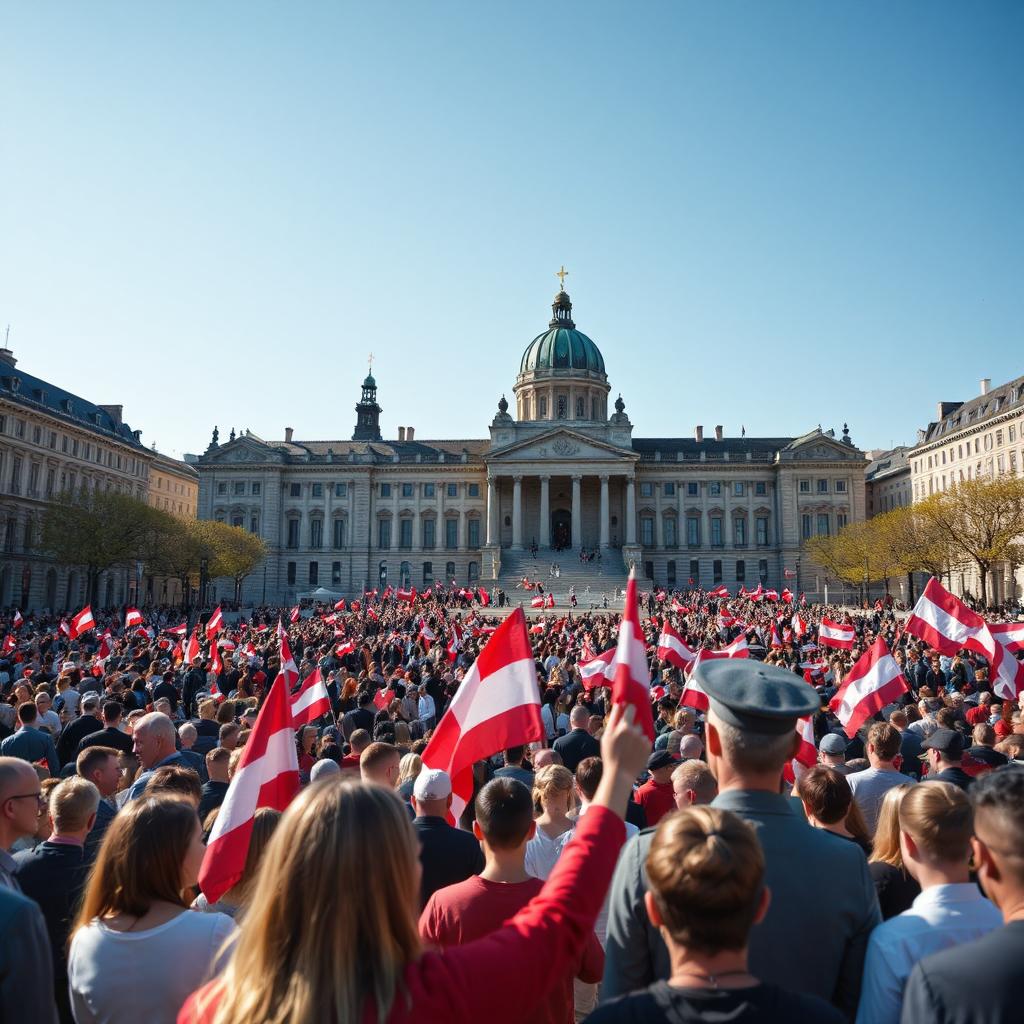
Heldenplatz and the Ringstrasse transform into open-air museums, with military equipment displays, cultural performances, and food stalls offering local specialties.
Citizens and tourists enjoy free public transport in many cities on this day, making it easy to join the celebrations. The Austrian President also delivers an annual address, emphasizing national unity and Austria’s role in maintaining global peace.
The Austrian Flag and National Symbols
The Austrian flag red-white-red waves proudly on every street. It’s one of the oldest national flags in the world, symbolizing freedom and perseverance.
The anthem “Land der Berge, Land am Strome” (“Land of Mountains, Land by the River”) is sung during official events, evoking love and respect for the homeland’s natural beauty and resilience.
From Occupation to Independence
Austria’s journey from 1945 to 1955 was marked by hardship, negotiation, and determination. The ten-year Allied occupation tested the nation’s patience, but the Austrian spirit never broke.
When the State Treaty was signed, it wasn’t just a political agreement it was a rebirth.
That’s why October 26 carries such deep emotional weight. It commemorates the day Austria stood on its own, free from foreign control, determined to chart its peaceful path.
Why Neutrality Matters
Neutrality is often misunderstood as isolation, but Austria has proven the opposite.
It has positioned itself as a mediator, fostering dialogue in global crises.
Austrian diplomacy often plays a key role in humanitarian missions, conflict resolution, and nuclear disarmament talks.
Neutrality, in this sense, is not withdrawal it’s engagement without aggression. It represents the power of peace as a national strategy.
Austria’s Role in the European Union
When Austria joined the European Union in 1995, many questioned whether neutrality would survive.
Yet, Austria managed to maintain its sovereign neutrality, participating in economic and political cooperation while staying out of military alliances.
This balance is a hallmark of Austria’s political maturity integrating with Europe without sacrificing its foundational principles.
The Spirit of Nationalfeiertag in Everyday Life
Beyond official events, the National Day is also about gratitude and community.
Austrians spend the day outdoors, hiking, visiting family, or exploring national landmarks.
Museums and cultural centers offer free entry, encouraging citizens to reconnect with their heritage.
It’s a peaceful, reflective day a blend of history, pride, and quiet joy.
Lessons from Austria’s Example
Austria’s commitment to neutrality is a lesson in how small nations can have big voices.
By prioritizing peace over power, diplomacy over division, Austria has built a reputation as a trusted international partner.
Its story reminds the world that neutrality is not weakness but wisdom in balance the art of living free without fueling conflict.
Fun Facts About Austria’s National Day
- The first official National Day was celebrated in 1965, ten years after the declaration.
- The Austrian Armed Forces open their barracks to visitors on this day.
- Television channels broadcast documentaries about Austrian history and nature.
- Many citizens wear red-white-red ribbons as a symbol of unity.
- The day also promotes physical fitness with public sports events under the motto “Fit Mach Mit” (“Join in and Get Fit”).
A Message of Peace for the World
As global tensions rise and alliances shift, Austria’s stance reminds the world of the value of independence, peace, and dialogue.
Its National Day sends a message beyond borders: that every country can contribute to stability not through might, but through understanding and neutrality.
The Enduring Legacy of October 26
Decades after 1955, the values behind Austria’s neutrality remain as relevant as ever.
They encourage new generations to cherish peace, protect democracy, and engage with the world through respect and diplomacy.
October 26 is not just a historical date; it’s a living symbol of Austria’s national character resilient, independent, and peaceful.
FAQ – Austria’s National Day
Q1: Why does Austria celebrate National Day on October 26?
Because that’s the day in 1955 when Austria declared its permanent neutrality, following the restoration of independence after World War II.
Q2: What does neutrality mean for Austria?
It means Austria does not join military alliances or allow foreign military bases, maintaining a stance of peace and independence.
Q3: How is the National Day celebrated?
With parades, open government buildings, concerts, cultural exhibitions, and military demonstrations, especially in Vienna.
Q4: Is Austria part of NATO?
No. Austria is not a NATO member due to its constitutional neutrality but cooperates with NATO on peacekeeping missions.
Q5: What is the importance of the Austrian State Treaty?
It ended the Allied occupation and restored Austria’s sovereignty, marking the country’s rebirth as a neutral and independent nation.
A Modern Reflection – “Peace Is Freedom’s True Companion”
Austria’s National Day stands as a beacon for all nations: freedom thrives where peace is cherished.
Neutrality is not silence it’s a voice of reason, a commitment to dialogue in a divided world.
Through its enduring dedication to neutrality and diplomacy, Austria continues to inspire countries seeking balance, stability, and harmony.
🔔 For more tutorials like this, consider subscribing to our blog.
📩 Do you have questions or suggestions? Leave a comment or contact us!
🏷️ Tags: Austria, National Day, Nationalfeiertag, neutrality, Austrian history, Vienna, diplomacy, peace, 1955, celebrations
📢 Hashtags: #Austria, #NationalDay, #Nationalfeiertag, #Neutrality, #Vienna, #AustrianHistory, #Peace, #Europe, #October26, #Culture
See also: Belgian Workers Find $10 Million in Hidden Gold
