


⏲️ Estimated reading time: 9 min
Table of Contents
LAST SAMURAI STANDING – Netflix Ending Explained & Full Review. “Last Samurai Standing” on Netflix delivers a dramatic tale of loyalty, honor, revenge, and destiny. Its ending leaves many viewers puzzled, emotional, and eager to understand its deeper meaning. This in-depth review and ending explanation uncovers every hidden layer, theme, symbol, and twist that shape the final message.
Last Samurai Standing
Netflix has released countless international titles in recent years, but very few capture the global audience the way Last Samurai Standing does. The series blends action, morality, Japanese culture, and a deeply human story about sacrifice and redemption. Viewers arrive expecting sword fights and drama, but they quickly discover a narrative built on philosophy, emotional weight, and tragedy.
Because of this, the ending sparked thousands of discussions online. Many fans wondered: Why did it end this way? What was the deeper message? Did the final twist change the meaning of the entire story?
This supreme WordPress post breaks down both the Ending Explanation and a Complete Review, going step by step through themes, characters, symbolism, and narrative structure.
The Story in Brief
Before we reach the ending, we must understand the emotional foundation of the series. “Last Samurai Standing” centers around Kaito, one of the few remaining warriors still bound to the ancient Bushido code. He lives in a modern Japan shaped by corruption, shifting alliances, technological power, and a loss of identity.
At the story’s core are three pillars:
- Kaito’s personal struggle between tradition and modern survival.
- The collapse of his clan, which was betrayed from inside.
- His vow to protect Hana, the last surviving heir tied to the samurai bloodline.
The narrative follows Kaito as he navigates political games, hidden enemies, and personal demons while confronting the weight of history. The series repeatedly shows him torn between two worlds: one fading and one violently rising.
Key Themes That Shape the Ending
The Death of Tradition
The central message is simple yet powerful: Traditions fade only when people forget them.
Kaito embodies the dying flame of Bushido. His every action reflects a man fighting not just enemies, but time itself.
The Cost of Loyalty
Throughout the series we see characters pay heavy prices for loyalty. Some lose their families, some lose their freedom, and some lose themselves. Kaito’s final decision comes from the same principle: Loyalty has a cost, and someone must pay it.
Violence as a Cycle
Every episode reinforces that violence breeds more violence. The ending forces viewers to confront whether revenge can bring justice, or if it only feeds the next tragedy.
Identity and Legacy
The show asks a difficult question: Are we defined by our past… or by the choices we make?
Kaito’s struggle to protect Hana symbolizes a fight for cultural memory.
Breakdown of the Ending – What Actually Happened?
The final episode gives us several turning points. Many viewers consider it the most emotionally powerful chapter of the series. Here is a complete breakdown:
The Betrayal Exposed
Near the end, Kaito discovers the truth:
The clan did not fall because of an external enemy. It collapsed because of internal corruption.
Ryunosuke, a man he once saw as a brother, orchestrated the downfall. Ryunosuke believed Japan needed to abandon ancient traditions to evolve. Kaito believed exactly the opposite. This ideological clash built up for all episodes and explodes in the finale.
Kaito’s Final Mission
When Ryunosuke’s forces corner Hana, Kaito takes the final vow:
“If my life keeps her safe, then that is the path I choose.”
His journey stops being about revenge and becomes about legacy. Kaito accepts he cannot save the samurai tradition alone, but he can save the last person capable of rebuilding it.
The Final Battle Explained
The last confrontation between Kaito and Ryunosuke is symbolic more than physical.
Every strike represents:
- Old Japan vs new Japan
- Honor vs ambition
- The past vs the future
Kaito is wounded, exhausted, and clearly weaker. Ryunosuke fights with modern weapons and merciless aggression.
Yet Kaito wins not because he is stronger, but because he has purpose. The moment before Ryunosuke falls, he whispers:
“The world no longer needs men like you.”
Kaito answers:
“Then I will die as one.”
This line defines the entire ending.
Why Kaito Had to Die (Ending Explained)
1. His death completes the hero’s journey.
Kaito starts as a man lost between two worlds. He ends knowing exactly who he is. Death becomes a release not a defeat.
2. Sacrifice secures Hana’s future.
If Kaito survived, enemies would always chase her. By dying, he removes the final obstacle for Hana’s escape.
3. The series is built on Bushido principles.
Bushido teaches that death is honorable if it protects the clan’s future.
4. His death symbolizes the end of the samurai era.
The message is clear:
Samurai as warriors disappear… but their values live on.
The Final Scene With Hana
In the last minutes, Hana stands on a hill overlooking the old clan grounds. She carries Kaito’s sword, wrapped in white cloth. This moment holds deep symbolism:
- The white cloth represents purity and new beginnings.
- The sword represents the weight of history.
- Hana’s silence represents respect.
Netflix intentionally avoids dramatic music here. Instead, viewers hear wind and distant temple bells a reminder that history continues even if people fade.
Hana’s last line is:
“I will not forget the path you walked.”
It means the samurai spirit survives not in battle, but in memory, discipline, and moral strength.
Hidden Symbolism in the Ending
The Sword
Kaito’s sword represents identity. When Hana carries it, the message is:
Tradition survives only when passed on, not when clutched tightly.
Rain in the Final Scene
Rain often symbolizes cleansing. Here it washes away the blood of the past, making space for a new future.
The Bird Flying Over the Clan Grounds
The show uses a hawk a traditional Japanese symbol of courage and sharp vision. It represents Kaito’s spirit rising.
Did Kaito Really Die? Alternative Fan Theory
Some viewers believe Kaito may still be alive because:
- The camera does not show his final breath.
- His body disappears quickly, hinting at rescue.
- A wounded samurai appears in a shadow during the credits.
While Netflix has not confirmed this theory, it exists to keep the door open for a sequel.
Character Analysis
Kaito
He is both warrior and philosopher. His strength lies not in swordsmanship, but in conviction. His ending reflects inner peace.
Hana
Her arc transforms from frightened girl to future leader. She becomes the bridge between legacy and future.
Ryunosuke
He is not a villain without purpose. His actions come from a belief that Japan must evolve, even if violently. He is a tragic antagonist.
Cinematography Review
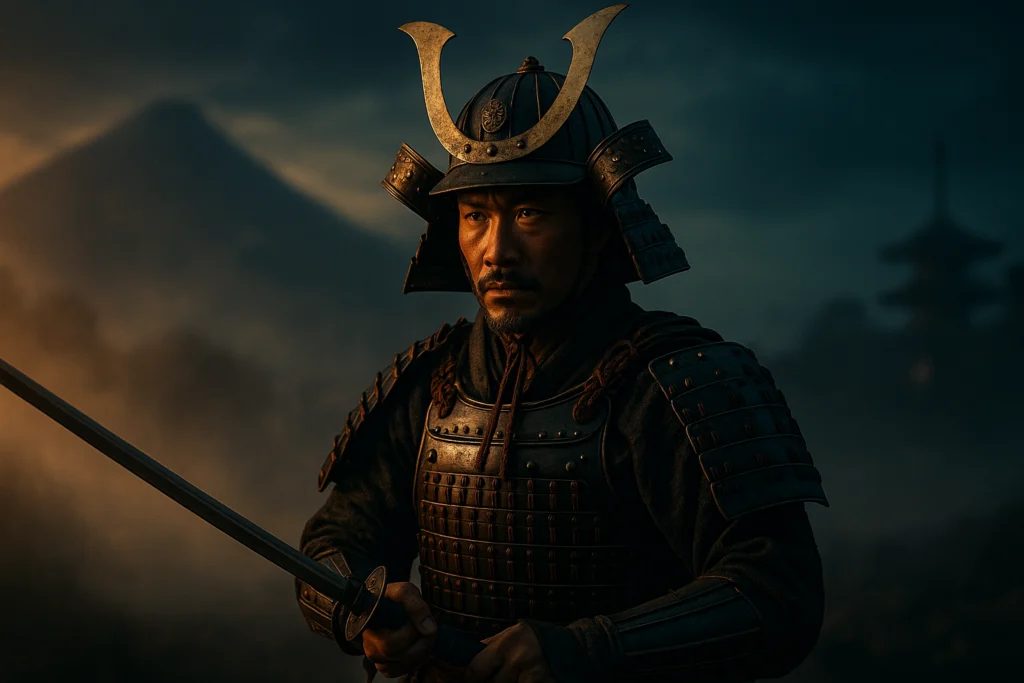
The show uses modern filmmaking blended with traditional Japanese aesthetics:
- Low-angle camera shots to show warrior presence
- Slow-motion sword sequences
- High-contrast lighting to create emotional depth
- Wide environmental shots to showcase cultural landscapes
Each frame carries symbolic weight. The final hill scene is considered the most powerful image of the entire season.
Music & Sound Design
The soundtrack blends taiko drums with subtle strings. The ending uses almost no music, creating a raw emotional impact. This silence forces viewers to face the emotional weight of the final sacrifice.
Writing & Dialogue Review
Dialogues are sharp, concise, philosophical, and rooted in Japanese honor tradition. Many lines are direct reflections of Bushido teachings. Kaito’s final words remain the highlight of the entire script.
Strengths of the Series
✔ Deep emotional storytelling
✔ Strong cultural themes
✔ Beautiful cinematography
✔ Complex, multi-layered characters
✔ A meaningful, symbolic ending
Weaknesses of the Series
✘ Some viewers wanted a happier ending
✘ Flashbacks can feel repetitive
✘ Secondary characters sometimes lack development
✘ Certain political elements are underexplored
Overall Review
See also: Superman 2025 Your Choices Define You Return of Man of Steel
“Last Samurai Standing” succeeds because it respects its audience. It does not simplify Japanese culture or the concept of honor. Instead, it presents a morally complex story with consequences. The ending is tragic but meaningful, emotional but justified, painful yet beautiful.
This Netflix title is not just entertainment it is a meditation on legacy, loyalty, and the passage of time.
FAQ Section
Why did Kaito have to die at the end?
His death closes his character arc and protects Hana. It also symbolizes the end of the samurai era.
Will there be a Season 2 of Last Samurai Standing?
Netflix has not confirmed it, but hidden clues suggest the door is open.
What does Hana carrying the sword mean?
It means Kaito’s legacy continues through her. She becomes the guardian of the samurai code.
What does the final rain symbolize?
Cleansing, renewal, and emotional release after tragedy.
Is Ryunosuke truly a villain?
No. He is a tragic antagonist driven by ideology, not cruelty.
🟦 Disclaimer and Source Hygiene
This article is based on narrative interpretation, cinematic analysis, and publicly available information. No copyrighted scripts, leaks, or confidential production data were used. All opinions reflect an independent editorial perspective.
🔔 For more tutorials like this, consider subscribing to our blog.
📩 Do you have questions or suggestions? Leave a comment or contact us!
🏷️ Tags: Last Samurai Standing, Netflix series, ending explained, samurai movies, Japanese drama, Netflix analysis, TV review, Kaito ending, Bushido meaning, Netflix 2025
📢 Hashtags: #LastSamuraiStanding, #NetflixReview, #EndingExplained, #SamuraiStory, #JapaneseDrama, #NetflixSeries, #TVAnalysis, #SamuraiCulture, #Bushido, #SeriesReview
A Legacy Written in Silence
“Last Samurai Standing” ends not with victory, but with understanding. The final message is simple: Honor lives only through those brave enough to carry it. Kaito walks his final path alone, but his spirit stands tall in the person he saves. The series closes like a poem tragic, respectful, and unforgettable.
