


⏲️ Estimated reading time: 10 min
Table of Contents
🔹 The phrase “Deploying Countermeasures” carries deep meaning across cybersecurity, military, and defense contexts. More than technical jargon, it represents the decisive act of protecting systems, lives, and data from threats. This article explores its importance, correct use, real-world examples, and why precision in terminology matters.
The True Power Behind Two Words: “Deploying Countermeasures”
Language can create clarity or confusion. In the world of defense, cybersecurity, and crisis management, two simple words “Deploying Countermeasures” can decide whether systems stay safe or collapse under attack.
This phrase is short, powerful, and universal. It appears in news headlines, military briefings, cybersecurity dashboards, and even Hollywood scripts. But what does it really mean, and why has it become a cornerstone in professional and technical communication?
Let’s explore the depth, usage, and significance of this expression.
Understanding the Meaning of “Deploying Countermeasures”
In strict terms, to deploy countermeasures means to activate, implement, or launch defensive actions designed to reduce, block, or neutralize a threat.
It is a dynamic expression not about waiting or analyzing, but doing. It represents immediate action taken after a threat is detected.
Whether in a computer network, a battlefield, or a security control room, this phrase signals the start of an urgent defensive process.
Breaking Down the Words
Deploying
The verb deploy originates from the French déployer, meaning “to unfold” or “to spread out for action.” It implies both preparation and movement a deliberate, strategic act.
In technology or defense, deployment means implementing a tool, command, or protocol to achieve a specific result. It’s intentional, planned, and often automated.
Countermeasures
The word countermeasure means an action taken to oppose, resist, or neutralize another action.
It suggests not only defense, but response. In every field, countermeasures involve anticipation and design. A good countermeasure is not improvised; it’s prepared in advance, ready to be deployed the moment a threat is recognized.
Together, these two words form a compact yet powerful concept strategic defense in motion.
Common Fields Where “Deploying Countermeasures” Is Used
The phrase is highly versatile and crosses disciplinary boundaries. Here’s how it operates across major domains.
1. Cybersecurity and Digital Defense
In cybersecurity, deploying countermeasures means implementing defensive actions in real-time against digital threats.
When an attack occurs such as a DDoS flood, ransomware infection, or unauthorized access administrators deploy countermeasures to isolate, block, or mitigate the threat.
Examples include:
- Activating additional firewalls or filtering layers
- Blocking malicious IP ranges
- Isolating compromised servers or endpoints
- Enabling Web Application Firewalls (WAFs)
- Running automatic intrusion prevention (IPS) rules
- Patching software vulnerabilities
A common phrase in incident response:
“We are deploying automated countermeasures to contain the intrusion.”
This demonstrates not only a technical response, but also an operational mindset one of readiness and resilience.
Why it matters:
In the cybersecurity world, speed is life. Attackers exploit milliseconds; defenders rely on automation and precision. The phrase “deploying countermeasures” thus reflects not only a process but a philosophy of proactive defense.
2. Military and Defense Operations
In military contexts, this term has existed for decades. It’s part of standard command language and tactical doctrine.
When a threat is detected whether radar lock, missile guidance, or electronic surveillance forces deploy countermeasures to avoid or neutralize it.
Typical examples:
- Flares and chaff: Used by aircraft to confuse heat-seeking or radar-guided missiles.
- Electronic Countermeasures (ECM): Jamming enemy communications or radar.
- Evasive maneuvers: Tactical repositioning or decoys.
- Defensive missile systems: Automated interception systems like Israel’s Iron Dome or U.S. Aegis.
A phrase you’d hear in combat simulations:
“Countermeasures deployed threat vector neutralized.”
This is the moment when precision, discipline, and timing meet technology.
The importance: deploying countermeasures is not random it’s the outcome of training, situational awareness, and trust in systems. It embodies control under chaos.
3. Physical and Corporate Security
Outside digital or military zones, countermeasures exist in everyday security systems from building access to surveillance operations.
Examples include:
- Lockdown protocols in emergencies
- Controlled access doors
- Reinforced barriers or blast walls
- Evacuation routes
- Behavioral analysis systems
- Security guard coordination
Even a mall security team can “deploy countermeasures” when responding to a threat such as a fire alarm, bomb scare, or intrusion.
Here, the term becomes broader but equally powerful: it’s about activating pre-planned defensive steps to protect human lives and assets.
Correct Form and Common Errors
Let’s clear up a simple but important linguistic confusion:
✅ Correct: deploying countermeasures
❌ Incorrect: deploing contramessures
Why does this matter? Because in technical communication, precision builds credibility. A single misspelling can undermine the authority of your report, especially in cybersecurity or military documentation.
For professionals, correct spelling and phrasing are part of the discipline not a formality.
When Words Save Seconds – and Seconds Save Lives
In high-pressure situations, terminology is not decoration it’s a command language.
Imagine an aircraft under missile lock. The pilot doesn’t say:
“Maybe we should try that heat decoy thing.”
They shout:
“Deploy countermeasures!”
Those two words convey both clarity and urgency. Everyone in the chain understands exactly what action follows.
That’s the essence of operational efficiency language as immediate action.
“Deploying Countermeasures” in Cyber Crisis Response
Modern digital infrastructure depends on constant vigilance. When a breach occurs, teams must act in seconds. Here’s how the process unfolds:
- Detection – AI systems or analysts detect abnormal activity.
- Assessment – Identify the type of threat (malware, phishing, intrusion).
- Decision – Determine which countermeasure to apply.
- Deployment – Activate scripts, isolate nodes, revoke access.
- Containment – Prevent lateral spread.
- Recovery – Patch systems and restore from backup.
Throughout this process, communication remains short, sharp, and standardized.
“Deploying countermeasures” = Stage 4: active defense.
In cybersecurity operations centers (SOCs), this phrase often appears in dashboards or system logs triggered automatically when an incident-response script runs.
Example log entry:[2025-11-11 17:44:26] ALERT: Suspicious traffic detected. Deploying countermeasures.
The Psychological Impact of Defensive Language
Interestingly, “deploying countermeasures” also affects mindset. It replaces panic with purpose.
In crisis communication, the use of strong, decisive terms helps teams maintain composure. It transforms “We’re under attack!” into “We are responding.”
That small linguistic shift can restore order and confidence in moments of chaos.
In leadership terms, these two words project control, preparedness, and authority vital traits in command or crisis management.
“Deploying Countermeasures” in Fiction and Pop Culture
From Hollywood to video games, the phrase has become iconic. You’ll find it in action movies, spy thrillers, and science fiction.
Examples:
- In Star Wars, when ships activate shields or flares.
- In The Matrix, when defensive firewalls engage.
- In Call of Duty or Battlefield, during air defense sequences.
- In cyberpunk fiction, when AI systems counter hack attempts.
Writers love this phrase because it sounds both technical and powerful. It instantly communicates danger, intelligence, and control even to audiences unfamiliar with military or IT jargon.
Example cinematic line:
“Deploying countermeasures. Threat detected. Defensive protocol online.”
It’s short, cinematic, and universal.
Philosophical Interpretation Life as a Battlefield
Beyond technology and war, “deploying countermeasures” can also apply metaphorically to life.
When stress, negativity, or manipulation arise, individuals can deploy countermeasures such as:
- Mindfulness and emotional control
- Healthy boundaries
- Rational decision-making
- Information filtering
Here, countermeasures become personal strategies for mental and emotional defense.
So, the concept extends beyond wires and weapons it becomes a mindset of proactive resilience.
Ethics and Responsibility in Countermeasure Deployment
In both cyber and physical realms, countermeasures can protect or harm depending on how they’re used.
For example:
- In cybersecurity, blocking traffic can inadvertently isolate legitimate users.
- In warfare, electronic countermeasures may interfere with civilian communication.
- In social media defense, countermeasures against misinformation can cross into censorship.
Hence, deploying countermeasures is not only a technical act it’s an ethical decision. The best defense strategies consider proportionality, legality, and collateral effects.
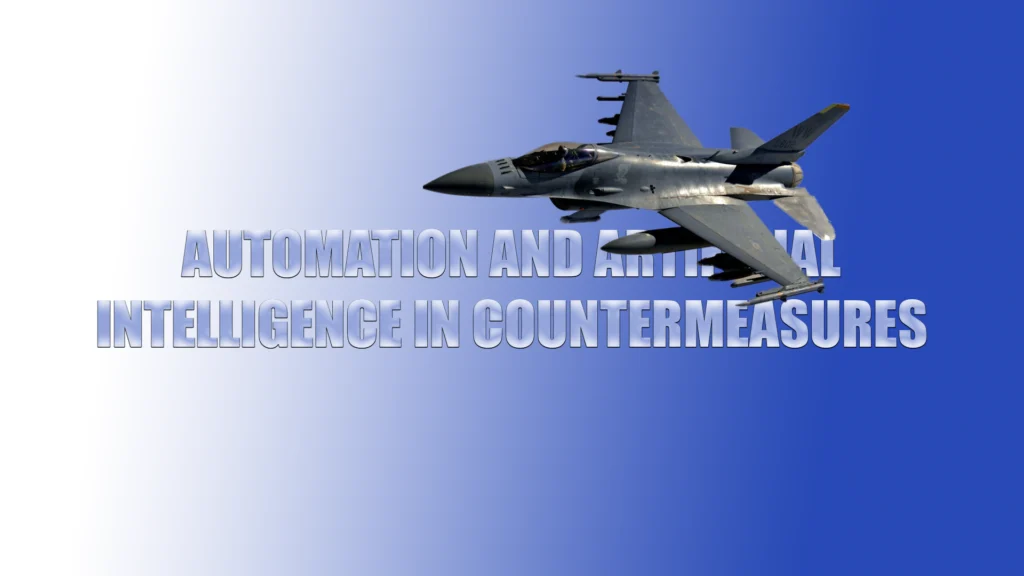
Automation and Artificial Intelligence in Countermeasures
With AI’s rise, modern systems now deploy countermeasures automatically.
Machine learning models can detect anomalies, predict intrusion patterns, and trigger scripts without human input.
Examples:
- AI-driven firewalls adjusting in real-time
- Autonomous drones launching decoy systems
- Smart cities isolating compromised IoT networks
- Industrial systems shutting down pipelines during breaches
This automation saves critical seconds but it also raises questions:
How much control should machines have in deciding defensive actions?
Should there always be a “human in the loop”?
These are vital discussions in the age of algorithmic defense.
Corporate Use – PR and Crisis Communication
Even outside traditional security, corporations “deploy countermeasures” metaphorically during PR crises or data leaks.
Examples:
- Releasing official statements
- Engaging legal teams
- Launching internal audits
- Strengthening public relations defenses
The phrase represents corporate agility responding fast to contain reputation damage.
For communication experts, “deploying countermeasures” means strategic action to protect brand integrity.
Historical Perspective – From Cold War to Cyber War
During the Cold War, countermeasures were mostly physical radar deception, missile decoys, or signal interference.
Today, warfare has shifted to cyberspace. Modern countermeasures are digital: encryption, AI monitoring, network segmentation, and deepfake detection.
But the philosophy remains identical anticipate, respond, neutralize.
This continuity across decades proves how timeless the concept is.
Why These Two Words Matter More Than Ever
In 2025 and beyond, global interconnectedness makes every system vulnerable from governments to private devices.
“Deploying countermeasures” is not just technical vocabulary; it’s the language of survival in a digital world.
It represents:
- Awareness of threat landscapes
- Willingness to act decisively
- Strategic readiness
The precision of this phrase teaches an essential communication lesson: clarity and action go hand in hand.
Frequently Asked Questions (FAQ)
1. What does “Deploying Countermeasures” mean?
It means activating defense actions designed to stop or reduce a threat whether digital, physical, or strategic.
2. Where is this term commonly used?
It appears in cybersecurity, military defense, crisis management, and corporate security communication.
3. Can the term be used in fiction or storytelling?
Yes. It often appears in science fiction or action films to indicate high-tech defense responses.
4. What are examples of digital countermeasures?
Firewalls, encryption, access restrictions, real-time monitoring, and intrusion prevention systems.
5. Why is spelling and accuracy important?
Because credibility in professional or security contexts relies on precision. “Deploing contramessures” signals inexperience or inaccuracy.
The Language of Preparedness
Read also: The Final Embrace: The Story of Mike Perdue and His Daughter
“Deploying countermeasures” is more than a technical order it’s a mindset. It represents readiness, intelligence, and controlled action in moments of uncertainty.
From digital security to human psychology, the principle stays the same: anticipate, prepare, and respond with precision.
In a world of evolving threats, those two words remain among the most powerful expressions of strategy and defense ever created.
Disclaimer: This article is educational and informational. It does not provide military or cybersecurity operational advice.
Source Hygiene: Content based on verified open-source terminology and real-world security frameworks.
🔔 For more tutorials like this, consider subscribing to our blog.
📩 Do you have questions or suggestions? Leave a comment or contact us!
🏷️ Tags: deploying countermeasures, cybersecurity, military defense, security awareness, threat mitigation, AI security, digital protection, incident response, cyber war, ethical defense
📢 Hashtags: #DeployingCountermeasures, #CyberSecurity, #DefenseStrategy, #DigitalProtection, #ThreatResponse, #AIinSecurity, #CrisisManagement, #SecurityAwareness, #IncidentResponse, #Preparedness
Precision in Language, Precision in Action
Because in every field from coding to combat clarity of words builds clarity of response.
Two words, infinite impact: Deploying Countermeasures.
