


⏲️ Estimated reading time: 5 min
Table of Contents
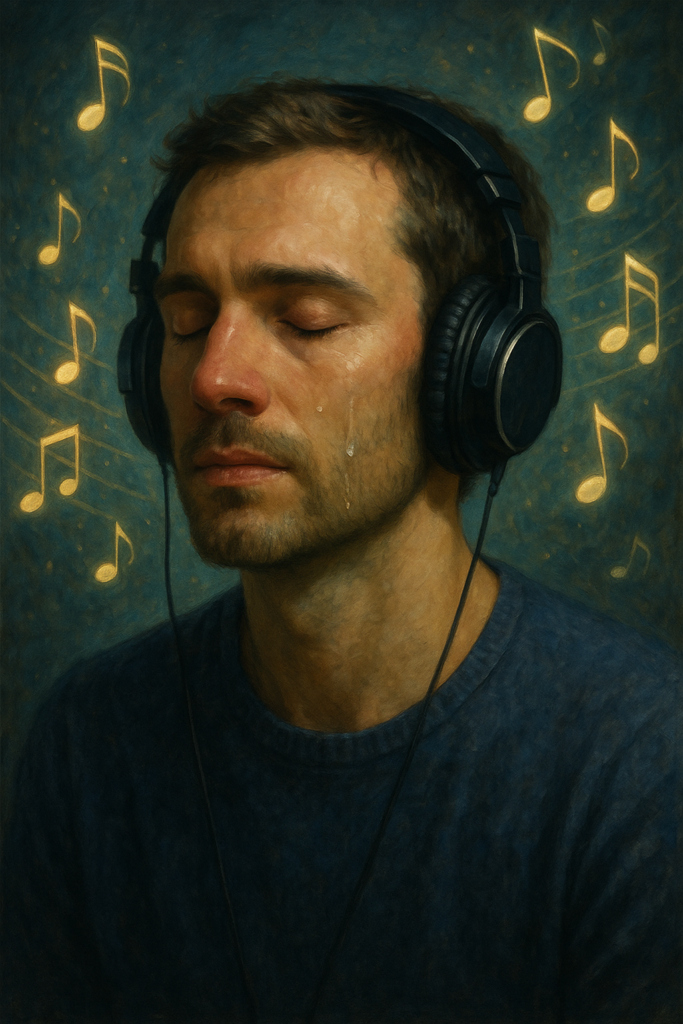
Why Do We Cry at Masterpiece Songs? The Science and Emotions Behind Tears in Music. Have you ever cried while listening to a breathtaking song? It’s not weakness it’s a natural response of both the brain and the soul. Discover why music has the power to bring tears and how this reflects human sensitivity and beauty.
See also: What Does 6 7 Mean? Viral Slang Fully Explained
🎵 Emotions
From ancient tribal drums to modern symphonies and global music festivals, music has always been a universal language. It accompanies us at weddings, funerals, celebrations, and moments of solitude. Sometimes, a single piece of music can make us tear up or cry.
This phenomenon raises fascinating questions:
- Is crying a sign of sadness or of beauty?
- Is there a scientific explanation, or is it simply a mystery of the soul?
- Why do certain songs touch us so deeply, while others pass unnoticed?
In this article, we will explore the phenomenon from multiple perspectives: scientific, psychological, philosophical, and spiritual.
🔹 1. Music and the Brain: The Invisible Connection
🎶 How the Brain Reacts to Music
When we listen to a song, sound waves enter through the ear, are transformed into electrical signals, and processed by the brain. Here’s where the magic happens: music is not just treated as sound, but as emotion.
Key brain areas involved:
- Amygdala – filters emotions and instinctive responses.
- Hippocampus – links music to memory and nostalgia.
- Prefrontal cortex – processes beauty, reward, and meaning.
🧠 The Release of Dopamine
Research published in Nature Neuroscience shows that listening to music triggers the release of dopamine, the same pleasure chemical activated by food, love, or exercise. At the musical climax, we often feel the so-called “musical chills.”
🔹 2. Tears as a Physiological Response
😢 Why Tears Appear
Crying is a natural mechanism of emotional regulation. When music evokes strong emotions, the parasympathetic nervous system is activated, leading to tears as a form of emotional release and reset.
🧊 The Frisson Phenomenon
Frisson (French for “shiver”) describes goosebumps, chills, or a lump in the throat while listening to music. It often happens when a song includes unexpected changes in harmony, rhythm, or intensity, overstimulating the dopamine system.
🔹 3. Music and Personal Memories
⏳ The Power of Nostalgia
Songs can instantly transport us back in time. Music connects with autobiographical memory, making tears not just about the song itself but about who we were and what we lived through.
❤️ Universal Examples
- Adagio for Strings – Samuel Barber, often associated with funerals and solemn moments.
- Hallelujah – Leonard Cohen, a mix of melancholy, love, and hope.
- Nessun Dorma – Puccini, pure vocal beauty that transcends language barriers.
🔹 4. Artistic Sensitivity and Emotional Intelligence
🌟 Who Cries More Easily at Music?
Studies suggest that people with high empathy and artistic openness are more likely to cry at powerful songs. This is not weakness but a sign of emotional intelligence.
🎨 Music as Total Art
Crying at music is a form of catharsis, a cleansing through beauty. It’s the soul’s response to encountering harmony and perfection.
🔹 5. The Difference Between Tears of Sadness and Tears of Beauty
😭 Tears of Sadness
Triggered when music recalls loss, separation, or regret.
😍 Tears of Beauty
Triggered without personal context, purely from contact with something sublime. Tears flow as recognition of artistic perfection.
🔹 6. Philosophical and Spiritual Perspectives
🕊️ Ancient Philosophy
Plato considered music a tool for harmonizing the soul. Tears may represent resonance between the human spirit and cosmic order.
🙏 Religion and Sacred Traditions
In many spiritual practices, crying during music is seen as a direct connection to the divine: Byzantine chants, gospel music, Indian mantras.
🔹 7. Music and Modern Science: Therapeutic Benefits
🧘 Music Therapy
Crying to music provides multiple benefits: reducing anxiety, balancing emotions, even alleviating depression.
🩺 In Hospitals and Psychotherapy
Therapists use carefully chosen playlists to help patients express hidden emotions and heal emotionally.
🔹 8. Famous Masterpiece Songs That Trigger Tears
- Clair de Lune – Debussy
- Requiem – Mozart
- Bohemian Rhapsody – Queen
- Nothing Else Matters – Metallica (orchestral)
- My Heart Will Go On – Celine Dion
- Fix You – Coldplay
- Time – Hans Zimmer
- Can You Hear The Music – Ludwig Göransson
- Interstellar – Hans Zimmer
- Victory – Two Steps From Hell
🔹 9. Why Doesn’t Everyone Cry at Music?
- Different levels of emotional sensitivity.
- Musical education and exposure.
- Cultural background.
- Mood and context at the time of listening.
🔹 10. How to Let Music Heal You
- Listen to emotionally powerful songs in a quiet space.
- Do not hold back tears they are cleansing.
- Use music as meditation.
- Create playlists for different states: nostalgia, relaxation, motivation.
✨ Closing Reflections
Crying to a “masterpiece” song is not a weakness it is a sign of depth, beauty, and inner strength. Music reaches places where words cannot go.
Tears become a language of the soul symbols of purification, release, and connection with something greater than ourselves.
🔔 For more tutorials like this, consider subscribing to our blog.
📩 Do you have questions or suggestions? Leave a comment or contact us!
🏷️ Tags: music, emotions, psychology, crying at music, catharsis, sensitivity, art, spirituality, emotional intelligence, music therapy
📢 Hashtags: #Music, #Emotions, #CryingToMusic, #Masterpiece, #Psychology, #Catharsis, #Sensitivity, #Art, #Spirituality, #MusicTherapy
