


⏲️ Estimated reading time: 7 min
Table of Contents
On November 23, 1996, Ethiopian Airlines Flight 961 was hijacked by three men demanding to fly to Australia. With no fuel for such a journey, the Boeing 767 crashed into the Indian Ocean, killing 125 and leaving 50 survivors.
Ethiopian Airlines Flight 961 – Full Story of the 1996 Hijacking Tragedy
Air disasters often leave a permanent mark in aviation history, but some stand out not only for their scale, but also for the human drama behind them. One such tragedy was the hijacking and crash of Ethiopian Airlines Flight 961 on November 23, 1996.
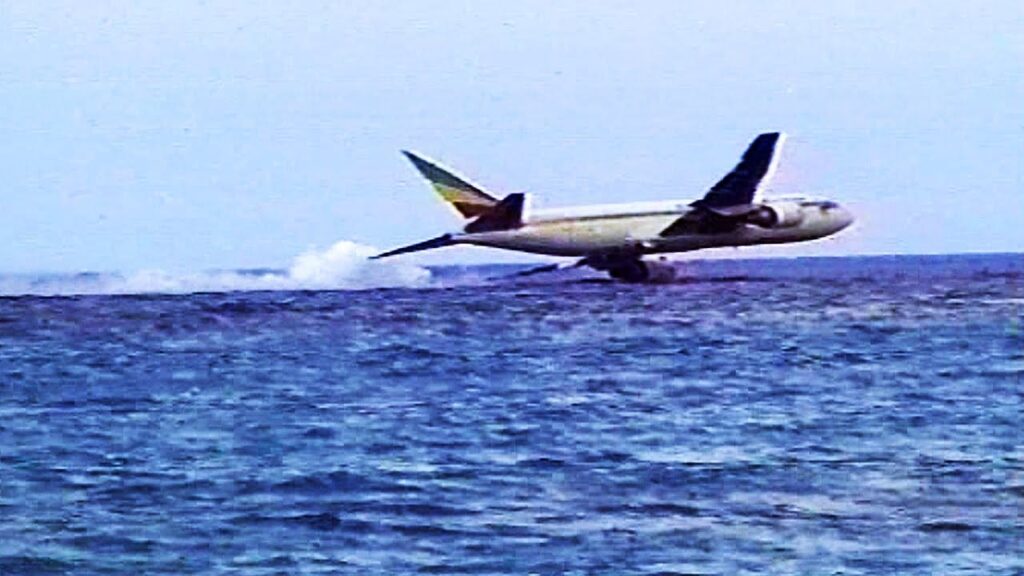
Three young Ethiopians hijacked the Boeing 767-200ER, which was operating a scheduled flight from Addis Ababa (Ethiopia) to Nairobi (Kenya) with stops along the way, and demanded to be flown to Australia. Their unrealistic request led to one of the most infamous ditchings in aviation history, captured on film by beachgoers in the Comoros Islands.
This article will take you through the full story of Flight 961 from the background of the passengers and crew, to the harrowing hijacking, the captain’s struggle, the final crash into the Indian Ocean, and the aftermath that reshaped aviation security.
Background of Ethiopian Airlines Flight 961
Ethiopian Airlines, the national carrier of Ethiopia, had built a reputation as one of Africa’s leading airlines. By the mid-1990s, the airline operated a modern fleet, including several Boeing 767s, which were considered safe and reliable long-haul aircraft.
On November 23, 1996, Flight 961 departed Addis Ababa’s Bole International Airport bound for Nairobi. It was a relatively short regional flight, but on board were 175 people:
- 163 passengers (from over 30 different nationalities)
- 12 crew members
Captain Leul Abate, one of Ethiopian Airlines’ most experienced pilots with over 11,000 hours of flying time, commanded the flight. He was accompanied by First Officer Yonas Mekuria.
For most passengers, it was meant to be an ordinary trip across East Africa. What they didn’t know was that three desperate men would soon change their fate.
The Hijackers: Who Were They?
The hijackers were later identified as:
- Two unemployed high school graduates
- One medical assistant
They were all young men in their 20s, struggling with the harsh realities of life in Ethiopia during the 1990s a period marked by economic hardship and political instability.
Authorities stated that the three men had no ties to any known terrorist organization. Instead, the men followed their dream of starting a new life abroad. To them, Australia symbolized freedom and opportunity.
However, their lack of knowledge about aviation would prove fatal.
The Hijacking Begins
About 15 minutes after takeoff, the three men forced their way into the cockpit, armed with what appeared to be an axe, fire extinguisher, and other improvised weapons. They claimed to have a bomb, though this was later revealed to be fake.
They demanded that the pilots fly the plane to Australia.
Captain Leul calmly explained that the Boeing 767 did not carry enough fuel to make such a long journey across the Indian Ocean. The hijackers refused to believe him, insisting that he was lying.
The crew and passengers were now trapped in a deadly game of misunderstanding and defiance.
The Captain’s Struggle
For hours, Captain Leul tried to reason with the hijackers. He explained that the maximum fuel range of the Boeing 767 was far less than the distance to Australia. But the hijackers, who lacked basic knowledge of aviation, thought the captain was simply trying to avoid obeying their orders.
With no choice, the aircraft was forced to continue flying southward, skirting along the coastlines of Africa.
As the flight dragged on, passengers grew increasingly anxious. Some cried, while others prayed. The crew tried to keep order, but the tension was overwhelming.
The worst fear soon became reality: fuel began to run out.
Running Out of Fuel
After nearly four hours in the air, the Boeing 767’s fuel tanks were empty. One by one, the engines failed, leaving the plane silently gliding over the Indian Ocean.
The hijackers still did not understand the gravity of the situation. Captain Leul had no choice but to attempt a ditching maneuver a controlled crash landing on water.
This was an incredibly risky maneuver, rarely attempted with such a large jet.
The Crash in the Comoros Islands
At around 2:43 PM local time, Flight 961 approached the coast of the Comoros Islands. The crew prepared passengers for impact, urging them to tighten their seatbelts and brace.
See also: Top Famous Restaurants in London
On the ground, tourists on Galawa Beach saw the plane descending unusually low. Some grabbed their video cameras, capturing the last moments before impact footage that would later shock the world.
The Boeing 767 struck the water at a high speed. Unfortunately, because the hijackers interfered with the pilots’ final approach, the plane landed unevenly, with one wing hitting the water first.
The aircraft broke apart on impact.
Casualties and Survivors
Of the 175 people on board:
- 125 were killed
- 50 survived, including Captain Leul and several crew members

Survivors recounted terrifying experiences being thrown against seats, fighting to escape as water rushed in, and clinging to floating debris.
Some passengers drowned because they inflated their life jackets inside the cabin, becoming trapped when the plane filled with water. Others managed to swim to shore or were rescued by boats.
The tragedy remains one of the deadliest hijackings in aviation history.
The Aftermath
The crash of Flight 961 sent shockwaves across the aviation world. Several important lessons were learned:
- Crew Training Saved Lives – The captain and flight attendants gave critical safety instructions that helped some passengers survive.
- Hijacking Protocols Changed – The incident showed that hijackers acting out of desperation could be just as dangerous as organized terrorists.
- Awareness of Life Jacket Use – Airlines improved safety briefings, emphasizing not to inflate jackets inside the cabin during ditching scenarios.
Ethiopian Airlines honored the victims and survivors, while Captain Leul was widely praised for his courage. Despite losing control of the situation, his attempt to ditch the aircraft gave at least 50 people a chance to live.
Global Reactions
Internationally, the crash was a wake-up call. It emphasized the need for stronger airport security and better training for handling hijackings.
Governments condemned the hijackers’ reckless behavior, which had cost so many innocent lives. Aviation experts also studied the incident to improve water landing procedures and survival strategies.
Survivor Stories
One survivor recalled:
“The moment the plane hit the water, everything went dark. I thought I was dead. Somehow, I managed to unbuckle, swim out, and reach the surface.”
Another described how fellow passengers panicked and struggled, but teamwork and calm instructions from flight attendants helped them escape.
Such stories highlight the incredible will to survive even in impossible situations.
The Legacy of Flight 961
Nearly three decades later, Ethiopian Airlines Flight 961 remains etched in aviation history. It is remembered not only for the tragic loss of 125 lives but also for the remarkable survival of 50 passengers, thanks to the crew’s training and quick actions.
The incident is studied in aviation schools worldwide as an example of crisis management, hijacking risks, and ditching procedures.
Above all, it is a reminder of how human error, desperation, and misunderstanding can collide with devastating consequences.
Conclusion
The story of Ethiopian Airlines Flight 961 is one of tragedy, survival, and lessons for the aviation industry. What began as an ordinary flight turned into a nightmare that ended in the waters of the Indian Ocean.
While 125 lives were lost, the survival of 50 passengers stands as a testament to the bravery of the crew and the resilience of the human spirit.
Today, the incident continues to shape airline safety policies and serves as a stark reminder of the consequences of hijacking.
🔔 For more tutorials like this, consider subscribing to our blog.
📩 Do you have questions or suggestions? Leave a comment or contact us!
🏷️ Tags: Ethiopian Airlines, Flight 961, aviation disasters, hijacking, 1996 plane crash, Captain Leul Abate, Comoros Islands, Boeing 767, aviation safety, airline tragedies
📢 Hashtags: #EthiopianAirlines #Flight961 #PlaneCrash #AviationHistory #Hijacking #ComorosIslands #Boeing767 #AviationSafety #AirDisasters #History
