


⏲️ Estimated reading time: 6 min
Table of Contents
What happens when fear becomes law and loyalty is measured by dust on a portrait? This in-depth analysis explores the psychology of totalitarian regimes, extreme control mechanisms, and their lasting impact on individuals, families, and entire societies.
You may also be interested in: Tesla Pi Phone: Is Elon Musk’s $789 Phone Real?
Fear, Loyalty, and Absolute Control: The Psychology of Totalitarian Regimes. When Fear Becomes a System
There are places in the world where fear is not just an emotion.
It is state policy, a governing tool.
It is a way of life.
In certain totalitarian regimes, people can be sentenced to death for acts that seem minor.
For insufficient loyalty, symbolic negligence.
For the wrong perception, a whispered word.
The analyzed text describes an extreme reality in which a thin layer of dust on a leader’s portrait can mean execution and punishment extending across generations .
This post is not about sensationalism.
It is about understanding.
It is about psychology.
It is about how absolute control over the human mind works.
What Is a Totalitarian Regime?
A totalitarian regime is a political system in which the state controls nearly every aspect of citizens’ lives.
Not only the economy.
Not only the military.
But also thinking.
Beliefs.
Emotions.
Loyalty.
A frequently discussed example in political literature is North Korea.
Core Characteristics of Totalitarianism
- Cult of personality
- Information control
- Constant surveillance
- Collective punishment
- Intense propaganda
- Destruction of individuality
In such systems, fear is not accidental. It is engineered.
The Cult of Personality: When the Leader Becomes Religion
In some regimes, the leader is not merely the head of state.
He becomes a sacred figure.
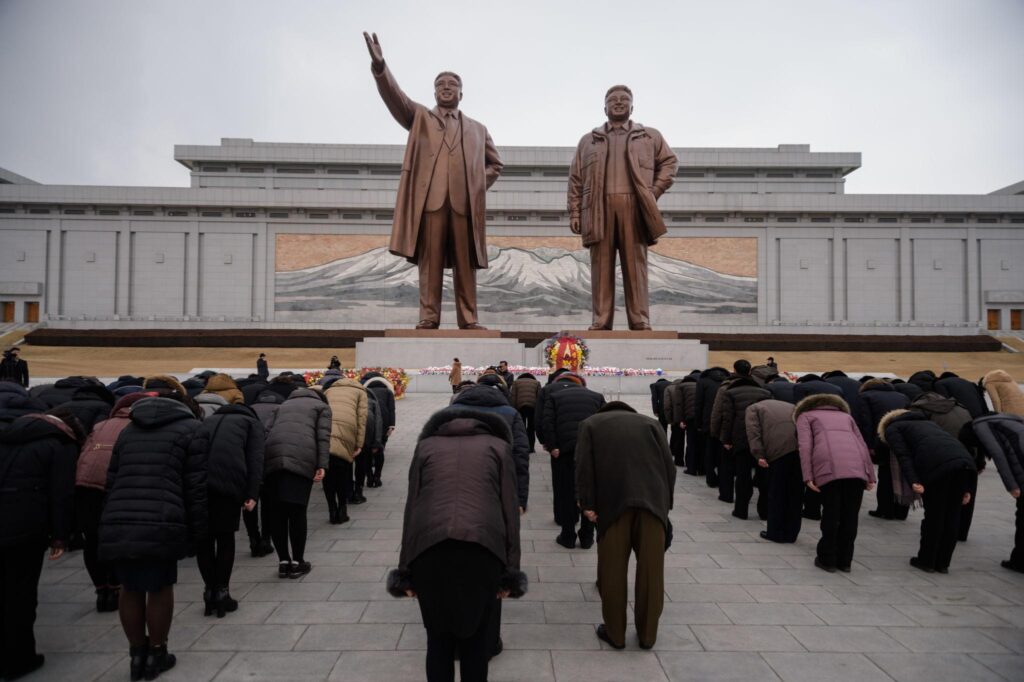
In North Korea, portraits of leaders such as Kim Il-sung, Kim Jong-il, and Kim Jong-un appear in almost every home.
They must remain clean.
Intact. Protected.
The text mentions situations in which inspectors check portraits at night, and the presence of dust can be interpreted as insufficient loyalty .
The Psychology Behind This Mechanism
This is not merely a symbolic ritual.
It is a permanent psychological test.
The message is clear:
Your life depends on how carefully you demonstrate loyalty.
Over time, the individual internalizes fear.
External surveillance becomes unnecessary.
The person becomes their own overseer.
Collective Punishment: Transgenerational Trauma
One of the harshest control methods is punishment extending to three generations.
If one person is considered a traitor, the entire family can be sent to labor camps. Grandparents. Parents. Children.
This strategy creates:
- Permanent fear
- Destruction of trust
- Family fractures
- Total submission
Deep Psychological Impact
When you know your mistake can destroy your children’s lives, your mind freezes.
You stop thinking critically, stop asking questions.
You stop taking risks.
This is the essence of absolute control.
The Priority of Symbol Over Life
The text describes a shocking idea: in case of fire, the priority is saving portraits, not family members .
This represents a reversal of human values.
Naturally, a person protects their child.
In a totalitarian regime, the symbol becomes more important than the child.
What Produces This Inversion?
- Progressive dehumanization
- Forced moral reconditioning
- Transfer of attachment from family to leader
In psychology, this process is called forced ideological restructuring.
Control of the Body and the Abuse of Power
The text references the existence of so-called “satisfaction groups” recruited annually .
Regardless of historical specifics, the core idea remains:
Control over the body is a supreme form of power.
In authoritarian systems:
- The body becomes a political instrument
- Women become symbols of loyalty
- Sexuality is controlled and manipulated
Such dynamics create severe trauma, collective shame, and identity destruction.
Why Do People Accept Such a System?
This is the essential question. The answer is not simple.
1. Informational Isolation
If you do not know another reality exists, you cannot desire it.
2. Constant Fear
A brain under chronic stress does not seek freedom.
It seeks survival.
3. Normalization of Abuse
When you are born into a system, it becomes your normal.
Fear as a Tool of Social Engineering
Fear activates the amygdala.
It reduces critical thinking.
It increases obedience.
Totalitarian regimes use fear strategically:
- Public executions
- Mysterious disappearances
- Exemplary punishments
The goal is not only punishment.
It is the message.
The Silent Trauma of the Citizen
Life under extreme control produces:
- Chronic anxiety
- Paranoia
- Depression
- Loss of personal identity
- Emotional dissociation
Children raised in such environments learn:
- Not to trust
- Not to speak freely
- Not to dream differently
The Difference Between Authority and Tyranny
Healthy authority protects.
Tyranny controls.
Authority has limits.
Tyranny recognizes none.
Authority answers to law.
Tyranny is the law.
What Can We Learn From These Realities?
Even if we live in democracies, the psychological mechanisms remain relevant.
Any society can slide toward excessive control if:
- Criticism is suppressed
- The press is silenced
- Fear becomes a political tool
Civic vigilance is essential.
Frequently Asked Questions
What is a cult of personality?
It is a form of propaganda in which a leader is portrayed as infallible and almost divine.
Why are entire generations punished?
To create extreme fear and prevent any form of opposition.
How does fear affect thinking?
It reduces analytical capacity and increases submissiveness.
Why are symbols so important?
Symbols strengthen emotional attachment to the leader.
Can people rebel?
Theoretically yes, but risks are enormous in totalitarian regimes.
What is transgenerational trauma?
It is the transmission of fear and trauma from one generation to another.
Why is informational isolation effective?
Because it limits comparison and reduces the desire for change.
Is there a way out of such systems?
History shows that change is possible, but it is difficult and painful.
Beyond Fear: Reflections on Freedom
Freedom is not only the right to vote.
It is the right to think without fear, to ask questions, to make mistakes without destroying three generations.
Totalitarian regimes show us what happens when fear replaces humanity.
And the greatest lesson is this:
Fear can control the body.
But true freedom begins in the mind.
⚠️ Disclaimer and Source Hygiene
This article is for informational and educational purposes only. The analysis is based on historical research, psychological studies, and publicly documented accounts of totalitarian systems, including descriptions referenced in the analyzed text . For academic depth, consult recognized historical and political science sources.
🔔 For more tutorials like this, consider subscribing to our blog.
📩 Do you have questions or suggestions? Leave a comment or contact us!
🏷️ Tags: totalitarian regime, North Korea, political psychology, cult of personality, social control, fear and power, collective trauma, ideological manipulation, human rights, political analysis
📢 Hashtags: #Totalitarianism #NorthKorea #Psychology #SocialControl #CultOfPersonality #HumanRights #Fear #Power #History #PoliticalAnalysis
📚 Sources and References
- Historical analyses of totalitarian regimes
- Social psychology research on fear and obedience
- Academic studies on authoritarian systems
🕊️ Secondary Sources and Testimonials
- Testimonies from defectors
- University research on collective trauma
- Contemporary geopolitical analyses
