


⏲️ Estimated reading time: 15 min
Table of Contents
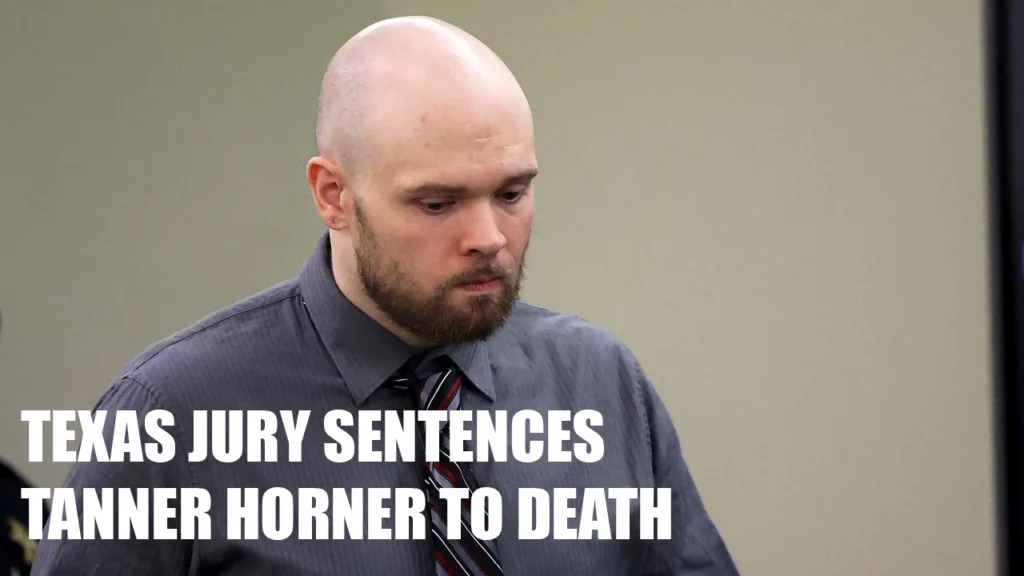
A Texas jury sentenced Tanner Horner to death after nearly two and a half hours of deliberation in the tragic kidnapping and murder case involving 7-year-old Athena Strand. The emotional verdict closes a major chapter in one of Texas’ most widely followed criminal trials while reigniting national debate over justice and capital punishment.
Texas Jury Reaches Death Penalty Verdict
A Texas jury sentenced Tanner Horner to death on Tuesday afternoon after deliberating for approximately two and a half hours in the heartbreaking case surrounding the kidnapping and killing of 7-year-old Athena Strand.
The sentencing marks a major turning point in one of the most emotional and closely watched criminal trials in recent Texas history. Horner had already pleaded guilty to capital murder and aggravated kidnapping earlier in the proceedings. Because of that guilty plea, jurors were not asked to determine guilt or innocence. Instead, their only responsibility was deciding whether Horner should receive life in prison without parole or the death penalty.
The jury ultimately chose execution. The courtroom reportedly became emotional as the verdict was read aloud. Family members of Athena Strand listened closely while prosecutors, defense attorneys, and court officials completed the final stage of the sentencing process.
The verdict immediately generated nationwide headlines. Major media outlets across the United States covered the sentencing due to the disturbing nature of the crime, the age of the victim, and the ongoing public debate surrounding capital punishment.
Who Was Athena Strand?
Athena Strand was a 7-year-old girl from Paradise, Texas. Friends, relatives, teachers, and community members described her as joyful, caring, energetic, and creative.
Her disappearance in November 2022 shocked the local community and quickly attracted national attention. After Athena was reported missing, volunteers joined law enforcement officers in extensive search efforts throughout Wise County. Hundreds of people hoped the young girl would be found safely.
Unfortunately, the search ended in tragedy. Authorities later discovered Athena’s body roughly two days after she disappeared. The heartbreaking discovery devastated her family and deeply affected communities across Texas and beyond.
Throughout the trial, prosecutors repeatedly reminded jurors that Athena was more than a headline. Family members spoke emotionally about the young life that was stolen and the painful future they now face without her. The case became symbolic of every parent’s worst nightmare.
How Investigators Connected Tanner Horner to the Crime
The investigation moved rapidly after Athena Strand disappeared.
Law enforcement agencies from multiple jurisdictions worked together to review evidence, conduct interviews, analyze delivery routes, and examine surveillance footage connected to the area.
Investigators eventually focused attention on Tanner Horner, who was working as a FedEx contract delivery driver at the time. According to testimony presented in court, Horner later admitted involvement in Athena’s kidnapping and death after being questioned by authorities.
Court records and public reporting indicated investigators gathered several forms of evidence during the case, including:
- Digital evidence
- Vehicle data
- Recorded statements
- Forensic findings
- Timeline analysis
- Witness testimony
Prosecutors argued that the evidence clearly demonstrated deliberate criminal behavior rather than an accidental event.
The investigation quickly transformed into a high-profile capital murder case that drew national attention.
Tanner Horner Pleaded Guilty Before Sentencing
One of the most important moments in the trial occurred when Tanner Horner pleaded guilty to capital murder and aggravated kidnapping.
That decision dramatically changed the structure of the case. Instead of conducting a traditional trial focused on guilt, the proceedings immediately shifted into the punishment phase under Texas law. Jurors were then required to answer critical sentencing questions.
Did Horner Represent a Continuing Threat?
Texas law requires jurors in death penalty cases to determine whether a defendant could remain dangerous in the future.
Prosecutors strongly argued that Horner represented an ongoing threat to society. The state pointed to the brutality of the crime, witness testimony, and evidence presented during sentencing. Jurors unanimously agreed with prosecutors on that issue.
Were There Mitigating Circumstances?
Defense attorneys attempted to persuade jurors to spare Horner’s life.
The defense presented testimony involving:
- Mental health struggles
- Developmental disorders
- Childhood trauma
- Bullying experiences
- Family instability
- Neurological conditions
Experts discussed autism spectrum disorder, fetal alcohol spectrum disorder, and emotional development challenges.
Defense attorneys argued that these factors should reduce Horner’s moral responsibility and justify a sentence of life without parole instead of execution. Jurors ultimately rejected that argument.
Emotional Courtroom Testimony Moved Jurors
The sentencing phase included several emotional courtroom moments that captured national attention.
Family members of Athena Strand delivered heartbreaking victim impact statements describing the emotional devastation caused by her death.
Relatives spoke about:
- Missed birthdays
- Lost memories
- Family trauma
- Emotional suffering
- The permanent absence left behind
Courtroom observers reported visible emotional reactions from multiple people inside the courtroom during testimony.
Several media outlets also reported that prosecutors introduced disturbing evidence connected to the crime. Because of the sensitive nature of the material and the age of the victim, many organizations chose not to publish the most graphic details publicly.
Victim impact statements became one of the most emotionally powerful parts of the sentencing proceedings.
Athena’s family repeatedly emphasized the unimaginable pain caused by losing a child in such violent circumstances.
Prosecutors Argued the Crime Deserved the Death Penalty
Wise County prosecutors aggressively pursued capital punishment throughout the sentencing phase. During closing arguments, prosecutors described the crime as horrifying and argued that Horner represented a continuing danger to society. The state focused heavily on several aggravating factors.
Athena Strand’s Young Age
Athena was only 7 years old. Prosecutors argued that crimes involving children represent some of the most serious offenses under Texas law.
The Kidnapping Charge
The murder occurred during the commission of a kidnapping, which elevated the offense to capital murder.
Evidence Presented During Trial
The prosecution relied on forensic evidence, digital evidence, and testimony from investigators and witnesses. Prosecutors argued the evidence showed calculated criminal conduct.
Future Dangerousness
Texas death penalty law requires jurors to evaluate future risk. Prosecutors insisted Horner would remain dangerous regardless of incarceration status. The jury ultimately accepted the prosecution’s position and voted unanimously for death.
Defense Attorneys Asked the Jury for Mercy
- Defense lawyers acknowledged the horrific nature of the crime while arguing against execution.
- They emphasized that Horner would never be released if sentenced to life without parole.
- Defense attorneys attempted to humanize Horner by presenting evidence about his upbringing and mental health history.
- Experts described several developmental and emotional challenges connected to his childhood.
- The defense argued that execution was unnecessary because permanent imprisonment already guaranteed public safety.
- Attorneys repeatedly urged jurors to choose mercy.
- However, jurors unanimously concluded that the mitigating evidence did not outweigh the severity of the crime.
Why the Case Captured National Attention
The Tanner Horner case generated intense national media coverage for several reasons.
The Victim Was a Young Child
Cases involving violence against children often create strong emotional reactions nationwide.
The Suspect Worked as a Delivery Driver
The fact that Horner worked as a delivery driver created additional public concern. Millions of Americans interact daily with delivery personnel, which intensified conversations about trust and safety.
The Case Included Graphic Evidence
Several courtroom reports described portions of the evidence as deeply disturbing.
The Trial Involved the Death Penalty
Capital punishment remains one of the most controversial topics in the American legal system. The verdict reignited debate about whether the death penalty should remain legal in the United States.
Understanding Texas Death Penalty Law
Texas remains one of the most active death penalty states in America.
Capital murder cases in Texas follow a specific legal structure.
After a defendant is convicted or pleads guilty, jurors move into the sentencing phase.
During that phase, jurors must answer important legal questions before imposing execution.
These questions generally include:
- Whether the defendant poses a future danger
- Whether mitigating evidence justifies mercy
Jurors must unanimously agree before a death sentence can be imposed. If jurors fail to reach unanimous agreement, the defendant instead receives life imprisonment without parole. Texas also automatically sends all death penalty cases through an appeals process.
That means Tanner Horner’s legal battle is far from over.
Automatic Appeals Will Follow the Verdict
Although the jury sentenced Horner to death, the appeals process could continue for many years.
Texas law requires automatic appellate review in capital punishment cases.
Appeals may examine several legal areas.
Trial Procedures
Courts review whether proper legal procedures were followed throughout the case.
Constitutional Questions
Defense attorneys may raise constitutional arguments involving sentencing or mental health evidence.
Evidence Challenges
Appellate courts sometimes review whether evidence was properly admitted during trial.
Jury Instructions
Appeals may examine whether jurors received accurate legal guidance before deliberations.
Death penalty appeals often continue for decades.
Because of that process, no execution date is expected anytime soon.
Community Reactions After the Sentence
Reactions spread rapidly after the verdict became public. Many community members expressed support for the jury’s decision and described the sentence as justice for Athena Strand. Social media platforms quickly filled with emotional responses from people across Texas and the United States.
Supporters of the verdict argued that the crime justified the harshest possible punishment under Texas law. Meanwhile, death penalty opponents argued that life imprisonment without parole would have been a more appropriate sentence. The case once again highlighted America’s deeply divided opinions surrounding capital punishment.
The Case Sparked Conversations About Child Safety
Beyond the courtroom, the case also triggered broader conversations about child safety and community awareness. Parents across the country expressed concern after following details from the investigation and sentencing.
Public discussions focused on several topics:
- Child supervision
- Community vigilance
- Emergency communication
- Delivery safety concerns
- Family awareness strategies
Experts emphasized that open communication between parents and children remains essential. At the same time, many professionals cautioned against widespread fear, noting that crimes involving child abduction by strangers remain statistically uncommon.
Delivery Industry Safety Became a Public Discussion
Because Horner worked as a delivery driver, the case also raised questions regarding contractor oversight and hiring practices. Many large delivery companies rely on independent contractors and third-party operators.
Public debate following the trial included concerns involving:
- Background checks
- Contractor accountability
- Employee monitoring
- Hiring standards
- Public safety measures
FedEx previously stated that Horner worked for a contracted service provider rather than directly for the company itself. Nevertheless, the case increased public scrutiny surrounding delivery industry safety policies.
Mental Health Testimony Played a Major Role
Mental health evidence became a central topic during the punishment phase. Defense experts discussed several developmental and psychological conditions connected to Horner’s background. Attorneys argued these conditions affected his emotional development, impulse control, and behavior. Prosecutors responded by arguing that mental health struggles did not excuse violent criminal conduct.
This aspect of the trial generated broader public discussion regarding how courts should evaluate mental health evidence in capital punishment cases. Legal experts often note that such testimony can significantly influence sentencing outcomes. In this case, however, jurors concluded the aggravating circumstances outweighed the mitigating evidence.
Victim Impact Statements Left a Powerful Impression
Victim impact testimony became one of the most emotional portions of the proceedings.
Athena Strand’s family described the overwhelming grief and trauma caused by her death.
Relatives spoke about future milestones Athena would never experience, including birthdays, holidays, school achievements, and family moments. Courtroom observers noted emotional reactions throughout the testimony. Victim impact statements serve an important role during sentencing because they help jurors understand the real-life consequences of violent crimes.
In this case, the statements appeared to leave a lasting impression on many people present inside the courtroom.
Media Coverage Focused on Ethics and Sensitivity
The trial received extensive coverage from both Texas news organizations and national media outlets. Journalists faced difficult ethical decisions regarding how much graphic information should be published publicly.Responsible reporting standards generally encourage media organizations to avoid sensationalizing violent crimes involving children.
As a result, many outlets focused primarily on:
- Legal developments
- Courtroom updates
- Community reaction
- Victim remembrance
- Public safety concerns
Several organizations intentionally avoided releasing graphic evidence details out of respect for Athena Strand and her family.
The Death Penalty Debate Continues Across America
The sentencing reignited one of America’s longest-running legal and moral debates.
Supporters of capital punishment argued that execution represents justice in especially horrific crimes. Many believe the death penalty serves as accountability for extreme acts of violence. Opponents, however, continue raising ethical and constitutional concerns. Critics argue that life imprisonment without parole can protect society without requiring executions.
Others question whether the death penalty effectively deters violent crime. Texas remains central to many national conversations about capital punishment because the state historically carries out more executions than most others. The Tanner Horner case will likely remain part of that broader debate for years to come.
Legal Analysts Discuss the Verdict
Legal experts quickly analyzed the outcome following the sentencing announcement. Many analysts noted that Horner’s guilty plea significantly narrowed the legal battle. Because guilt was no longer disputed, the sentencing phase became entirely focused on punishment.
Commentators also pointed to the emotional power of the victim impact testimony and the prosecution’s focus on future dangerousness.
Defense attorneys attempted to present mitigating evidence related to mental health and childhood trauma. Ultimately, the jury sided with prosecutors and imposed the death penalty.
What Happens Next in the Case?
Now that the sentencing phase has ended, the case enters the appeals stage. Defense attorneys are expected to continue challenging aspects of the proceedings through both state and federal courts.
Meanwhile, Horner will likely be transferred into the Texas death row system. The appeals process could continue for many years before the case reaches a final legal outcome. For Athena Strand’s family, however, the emotional impact of the tragedy will remain long after courtroom proceedings end.
Frequently Asked Questions
Who is Tanner Horner?
Tanner Horner is the former delivery driver who pleaded guilty to the kidnapping and murder of 7-year-old Athena Strand in Texas.
Why was Tanner Horner sentenced to death?
The jury concluded that Horner represented a continuing threat to society and found insufficient mitigating circumstances to spare him from execution.
Who was Athena Strand?
Athena Strand was a 7-year-old girl from Paradise, Texas, whose disappearance and death shocked the nation in 2022.
Did Tanner Horner plead guilty?
Yes. Horner pleaded guilty to capital murder and aggravated kidnapping before the sentencing phase began.
How long did the jury deliberate?
Jurors deliberated for approximately two and a half hours before reaching a unanimous verdict.
What sentence did the jury choose?
The jury sentenced Tanner Horner to death.
Will the case be appealed?
Yes. Texas law requires automatic appeals in death penalty cases.
Could the sentence change during appeals?
It is possible. Appellate courts may review legal and constitutional challenges connected to the trial.
What role did mental health testimony play?
Defense attorneys presented mental health and developmental evidence as mitigating factors during sentencing.
Why did the case receive national attention?
The victim’s age, the shocking circumstances of the crime, and the death penalty proceedings all contributed to widespread media coverage.
A Case That Will Not Be Forgotten
The sentencing of Tanner Horner closes one major chapter in a tragedy that deeply affected families, investigators, jurors, and communities across Texas.
For Athena Strand’s loved ones, no legal verdict can erase the pain caused by her loss. Still, the jury’s decision represents the conclusion of a critical phase in the justice process.
The appeals process will continue, and national debate surrounding the death penalty will remain active.
At the center of the story, however, remains the memory of a young child whose life ended far too soon.
You may also be interested in: Best Steps for Setting Virtual Memory in Windows
⚠️ Disclaimer and Source Hygiene
This article is intended for informational and educational purposes only. Legal cases can evolve through appeals, updated evidence, and future court rulings. Readers should consult official court documents, qualified legal professionals, and authoritative news organizations for the most accurate and current information.
Information included in this article was compiled using publicly available reporting from established media outlets and courtroom coverage.
🔔 For more tutorials like this, consider subscribing to our blog.
📩 Do you have questions or suggestions? Leave a comment or contact us!
🏷️ Tags: Tanner Horner, Athena Strand, Texas death penalty, capital murder case, Texas jury verdict, Athena Strand case, breaking crime news, child kidnapping case, Texas court news, death sentence Texas
📢 Hashtags: #TannerHorner, #AthenaStrand, #TexasNews, #BreakingNews, #CrimeNews, #DeathPenalty, #CourtCase, #JusticeForAthena, #TexasCourt, #TrueCrime
Sources and References
- Associated Press courtroom reporting
- Fort Worth Star-Telegram coverage
- FOX 4 Texas live updates
- WFAA trial reporting
- CBS Texas courtroom coverage
- Court TV legal analysis
Secondary Sources and Testimonials
- Statements from Athena Strand’s family
- Commentary from criminal law analysts
- Public discussions surrounding capital punishment and child safety
