


⏲️ Estimated reading time: 6 min
Table of Contents
Conflicts between adults that involve a child leave deep, often invisible scars. This article explores the real impact of parental disputes on children, the short- and long-term emotional consequences, common parental mistakes, and psychological solutions that can significantly reduce the suffering of the most vulnerable.
When Two Adults Fight Over a Child, Who Truly Suffers? The Conflict You Can’t See, But Can Feel
When two adults fight over a child, the dispute appears, on the surface, to be about custody, rights, or principles.
In reality, the stakes are far deeper.
A child is not a trophy.
Not an argument.
Not an emotional weapon.
And yet, far too often, the child becomes exactly that.
Adult conflicts create a toxic emotional field.
The child lives inside that field.
There is no escape.
There are no emotional defenses.
This article explains, step by step, who truly suffers, why a child suffers even when they seem fine, and what consequences can emerge years later.
Why adults end up fighting over a child
Parental conflicts rarely start purely from love for the child.
Most often, they hide unresolved battles between adults.
The need for control
For some adults, the child becomes an extension of personal power.
Control over the child means control over the former partner.
Unresolved emotional wounds
Painful breakups leave resentment.
The child becomes trapped between anger, jealousy, and revenge.
The fight for validation
Some parents want to prove they are “the better one.”
The child becomes a judge in a toxic competition.
Fear of abandonment
The fear of losing the child triggers extreme reactions.
Reason disappears.
Instinct takes over.
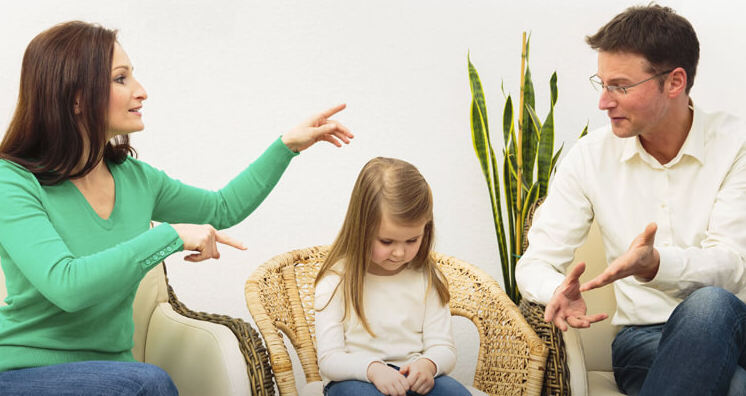
The child caught between two adults – an impossible position
A child does not have an adult’s freedom.
They cannot choose without guilt.
They cannot remain neutral without emotional consequences.
Loyalty conflict
The child feels that any choice betrays someone.
Loving one parent feels like hurting the other.
False responsibility
Many children believe they are the cause of the conflict.
They carry guilt that does not belong to them.
Constant fear
The child lives in emotional alert mode.
They wait for the next argument.
They adjust their behavior to prevent explosions.
How a child’s suffering shows itself
Not all children cry.
Not all become aggressive.
Some suffer silently.
Emotional signs
- persistent anxiety
- sadness without clear cause
- fear of abandonment
- excessive guilt and shame
Behavioral signs
- regression (bedwetting, baby talk)
- anger outbursts
- social withdrawal
- extreme perfectionism
Physical signs
- stomach aches
- headaches
- sleep disturbances
- weakened immune system
Short-term effects on the child
Immediate impact is often underestimated.
“It will pass” is one of the most dangerous illusions.
Declining school performance
The child’s mind focuses on emotional survival.
Learning becomes secondary.
Difficulty concentrating
Thoughts are fragmented.
Attention is constantly disrupted by emotional tension.
Social difficulties
The child becomes either overly withdrawn or overly dependent.
Long-term effects – wounds that surface later
Some consequences do not appear in childhood.
They emerge in adulthood.
Dysfunctional relationship patterns
Children raised in intense conflict often:
- accept toxic relationships
- avoid emotional intimacy
- confuse love with conflict
Attachment issues
Emotional insecurity becomes the norm.
Trust in others is fragile.
Anxiety and depression
Unresolved childhood trauma turns into chronic suffering.
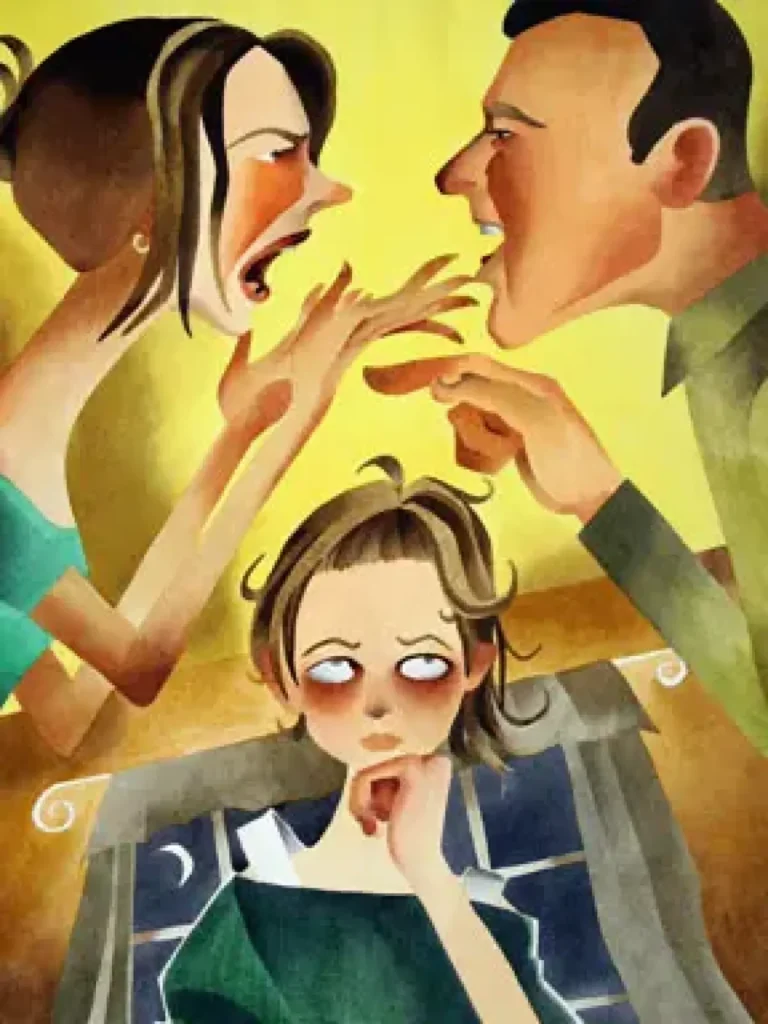
Using the child as a weapon – emotional abuse
Using a child as a messenger or emotional tool is deeply harmful.
Parental alienation
When one adult turns the child against the other.
The child loses a vital emotional bond.
Toxic messages
- “Your father doesn’t love you.”
- “Your mother abandoned you.”
These words create deep psychological fractures.
Why children don’t say how they feel
Many adults assume silence means the child is fine.
That assumption is wrong.
Fear of escalating the conflict
Children censor themselves to protect adults.
Lack of emotional language
Children feel intensely but cannot articulate it.
Normalization of chaos
For some children, conflict becomes “normal.”
The role of the emotionally mature adult
Maturity does not mean winning.
It means protecting the child.
Separating the conflict from the child
Adult issues must stay between adults.
A child is not a mediator.
Mutual respect
Even after separation, respect protects the child’s mental health.
Emotional stability
Children need predictability, not chaos.
What children truly need
Not perfection.
Not ideal parents.
They need:
- emotional safety
- validation
- stability
- unconditional love
When professional help becomes necessary
Ignoring warning signs makes things worse.
Psychological counseling
Therapy helps children understand they are not to blame.
Parental mediation
Helps adults communicate without involving the child.
The real responsibility of adults
A child will grow into an adult.
They will carry the emotional imprint of these conflicts.
The question is not who wins the fight.
The question is what kind of adult the child will become.
The question few adults ask
If this child were you,
how would this conflict shape your life?
Frequently Asked Questions
Do children understand adult conflicts?
Not fully, but they feel the emotional weight deeply.
Is it better for parents to stay together for the child?
No, not if the relationship is toxic and full of conflict.
Can a child be affected even if they don’t witness arguments?
Yes. Emotional tension is felt even in silence.
Is it normal for a child to take sides?
Yes, often due to emotional pressure rather than free choice.
Is parental alienation a real psychological issue?
Yes, it is considered a form of emotional abuse.
Which age is most vulnerable?
All ages, but young children are especially sensitive.
Can long-term effects be healed?
Yes, with therapy and healthy relationships.
What can parents do immediately?
Remove the child from the conflict and take emotional responsibility.
A few thoughts that truly matter
When two adults fight over a child,
the child loses peace.
And peace is the foundation of a healthy life.
⚠️ Disclaimer and Source Hygiene
This article is for informational and educational purposes only and does not replace professional psychological or medical advice. The content is based on psychological research, clinical observations, and established mental health literature.
🔔 For more tutorials like this, consider subscribing to our blog.
📩 Do you have questions or suggestions? Leave a comment or contact us!
🏷️ Tags: parental conflict, child psychology, divorce and children, emotional abuse, parental alienation, family conflict, emotional health, child development, toxic relationships, family therapy
📢 Hashtags: #parentalconflict, #childpsychology, #familyissues, #emotionalabuse, #divorce, #childrenmatter, #mentalhealth, #toxicrelationships, #parenting, #familytherapy
📚 Sources and References
See also: The Young Hero Who Sacrificed Everything for Love: The Story
Clinical psychology literature, attachment theory research, family systems studies, and peer-reviewed mental health publications.
Therapist case studies, family mediation experiences, and contemporary psychological analyses.
