

⏲️ Estimated reading time: 30 min
Table of Contents
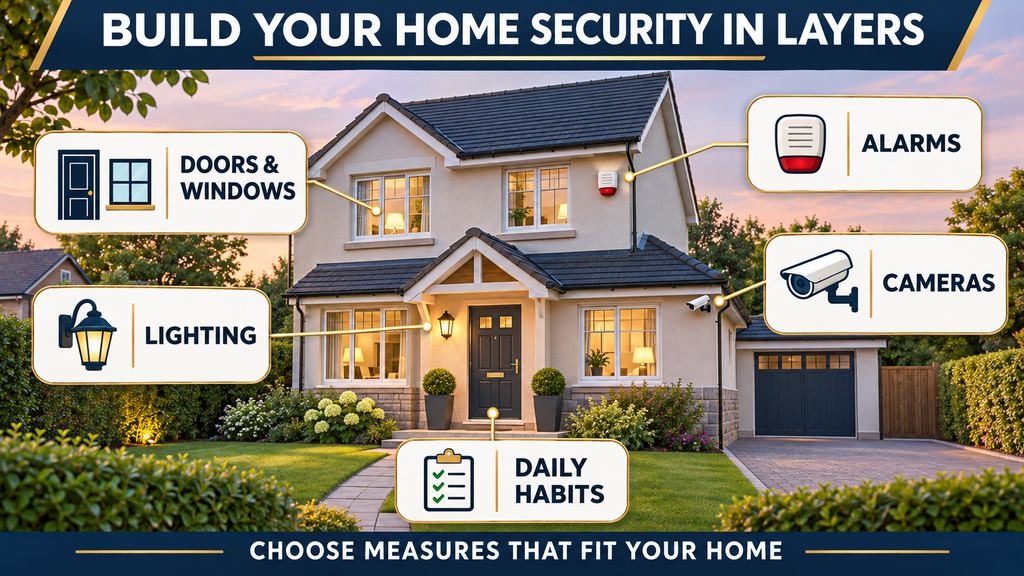
Protecting your home starts with practical habits and thoughtful improvements. Explore effective ways to secure doors, windows, gardens, and connected devices, choose suitable alarms and cameras, prepare for holidays, and build a realistic security routine that helps reduce burglary risks without making everyday life feel complicated.
Home Security Starts With Everyday Decisions
A home should feel comfortable when you return from work, settle down for dinner, or leave for a weekend away. Protecting that feeling does not require turning your property into a fortress. It requires understanding how your household uses the building and where simple changes would help. Perhaps a back door never closes properly. Maybe a spare key has remained outside since your last renovation. Sometimes the problem is an alarm nobody understands. The most useful starting point is a calm review of those details, followed by improvements your family can realistically maintain.
The strategies in this guide combine physical security, practical technology, and everyday organization. They apply to homeowners and, with appropriate permissions, renters. However, every property has different doors, layouts, access arrangements, and local requirements. Treat the examples as planning ideas rather than promises about what will prevent a particular incident. A reputable installer can assess hardware, while your insurer can clarify policy conditions. Throughout the process, remember that protecting people comes first. Security measures should support daily life and safe escape, without creating obstacles during an emergency.
1. Start With a Practical Home Security Assessment
Walk around your property during daylight and consider each entrance as part of one connected system. Look for damaged doors, faulty catches, loose handles, broken lights, and windows that do not close correctly. Then repeat the walk after dark from places where you can safely and lawfully stand. Notice whether you can identify the entrance, see the path, and recognize someone waiting outside. You do not need to imagine elaborate criminal scenarios. Your goal is to identify ordinary maintenance problems and access arrangements that deserve attention before choosing equipment.
Inside, consider how people actually enter and leave. A family might use the garage every day while treating the front door as the main security priority. An upstairs window might overlook an accessible flat roof. In an apartment, the shared entrance may matter as much as the private door. Make a short private record of these observations and group them by urgency. A door that cannot lock belongs ahead of an optional camera upgrade. Keep the record somewhere secure rather than posting photographs of weak points in a public neighborhood group.
Turn your observations into a manageable plan with an owner and a completion date for each task. For example, one adult could arrange a door repair this week, while another updates the emergency contact list. Ask an installer to explain the reason for proposed work in plain language. A useful assessment should identify a specific issue and a suitable remedy, not simply recommend the most expensive package. General police guidance treats doors, windows, gardens, and daily routines as connected parts of home protection. Your own assessment translates that broad approach into priorities for your particular household. [1]
2. Improve Exterior Doors as Complete Systems
A strong lock deserves a door and frame that can support it. When arranging an assessment, ask the professional to inspect the whole installation, including its condition, alignment, hinges, glazing, and locking operation. Explain whether the door sticks during cold weather or needs lifting before it closes. Those details affect whether residents use it correctly. For an older property, repairing a damaged frame may be a more useful first step than adding another device. Avoid choosing hardware solely because its packaging uses dramatic words such as ultimate or unbeatable.
Different door materials need different solutions, and a modification suitable for one installation may damage another. A timber entrance, a metal door, and a multipoint composite door should not automatically receive identical fittings. Ask for products tested to recognized standards that apply in your country and to your insurer’s requirements. Request written details of the proposed components and any installation warranty. If the entrance forms part of a fire protection system, use an appropriately qualified professional. Changes to closers, seals, viewers, or letter openings can have consequences beyond burglary resistance.
Before signing off the work, operate the door yourself several times. Check that it closes smoothly and that each authorized resident can use the locking system. Ask how to recognize wear and what maintenance the manufacturer permits. Keep the invoice and product information with your household records. The value of a professional installation includes this explanation, not only the equipment. Police door guidance emphasizes assessing robust doors, frames, and appropriate hardware together. That principle is more useful than assuming a particular lock can compensate for every other weakness in the entrance. [2]
3. Manage Keys, Codes, and Everyday Locking Habits
Keys often accumulate quietly over several years. A cleaner receives one, a relative keeps another, and a former resident may still have a copy. When moving into a property, ask a locksmith whether changing or rekeying the relevant locks is appropriate. Record who currently needs access and review that list when circumstances change. Store keys in a private place that remains accessible to authorized residents during an emergency. Avoid labels that connect a lost key directly with your address, and do not leave spares in predictable outdoor hiding places.
If you use access codes, give each authorized person a separate code when the system supports it. Temporary access should end when the appointment or arrangement ends. This makes administration easier than repeatedly sharing a household code through messages. However, a code system still needs a clear plan for power problems, forgotten credentials, and residents who find small keypads difficult. Choose access arrangements that work for the people living there. A complicated system that causes frequent lockouts can encourage shortcuts, including leaving a door unsecured while someone waits for assistance.
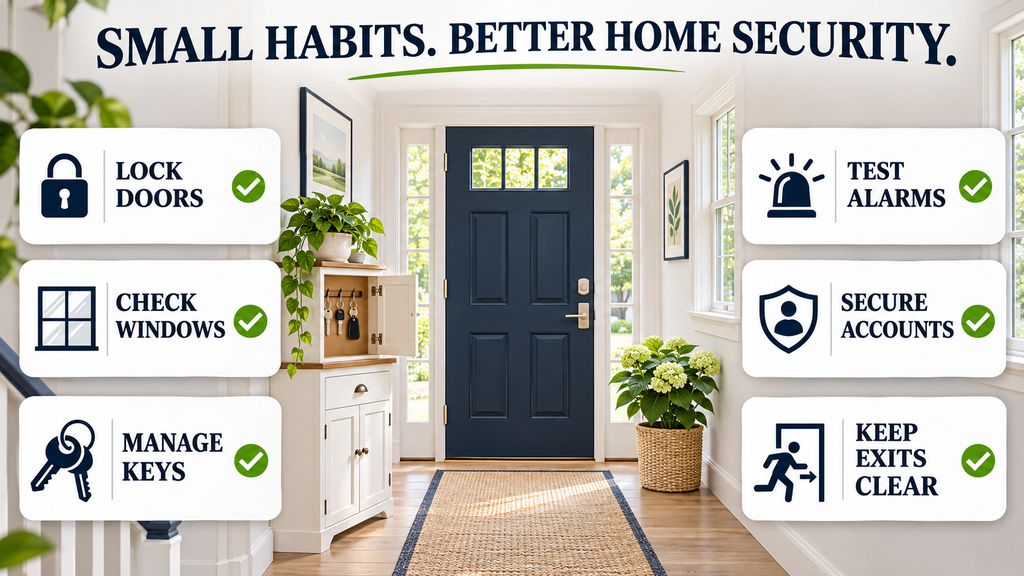
Build the locking routine around an existing habit, such as putting on your shoes before leaving or turning off the kitchen light at night. Confirm what properly locked means for your particular door; closing it may not engage every locking point. Teach the process without relying on assumptions. A visitor helping with childcare may understand a familiar lock differently from yours. Police guidance specifically distinguishes shutting a door from fully securing it, including the correct operation of some multipoint systems. Follow the manufacturer’s instructions and preserve an appropriate means of escape whenever people remain inside. [3]

4. Give Windows and Patio Doors Equal Attention
Windows need an individual assessment because their construction and position vary. A ground-floor kitchen window faces different practical concerns from a bedroom window above a conservatory. Check that each closes correctly and that the locking parts work as intended. Pay particular attention to windows rarely opened, where faults can remain unnoticed. When buying a replacement, discuss tested security performance alongside insulation and ventilation. Ask the installer how the complete unit performs, rather than comparing only the glass or handle. A balanced decision also considers usability, maintenance, and the room’s escape arrangements.
Patio and sliding doors deserve the same care as the main entrance. Ask a qualified professional whether the existing installation needs adjustment, replacement parts, or compatible additional protection. Improvised modifications can interfere with smooth operation and may conflict with the manufacturer’s instructions. For ventilation, choose a planned arrangement instead of assuming that a partly open window is secure. Window restrictors have specific purposes and limitations, which the installer should explain. In particular, do not let an accessory obstruct a required emergency exit or introduce a hazard for children or other residents.
Think about the daily situations that lead to forgotten openings. Someone airs a room before breakfast, answers a call, and leaves without returning upstairs. A simple final check can address that problem. If you use opening sensors, treat their status as helpful information and confirm how accurately they report a window’s condition. An indicator may show that the frame is closed without proving that the lock is engaged. Police window guidance also recommends considering nearby objects that allow access to otherwise less accessible openings. Review the surrounding space as well as the window itself. [4]
5. Use Lighting to Improve Visibility and Daily Safety
Start with the journeys your household makes after dark. You should be able to see the steps, find the door, and identify a visitor without struggling through glare. Examine the front entrance, side passage, and any regularly used rear access. A well-positioned modest light may serve these needs better than a very bright floodlight. Consider the direction of the beam, nearby reflective surfaces, and neighboring windows. Outdoor electrical work should use suitable equipment and a qualified installer where required. Safe installation matters just as much as the brightness printed on the box.
Choose controls that suit the location. A light used for a busy entrance may need a different schedule from one serving a rarely visited side path. Think about whether motion activation would be distracting or whether steady evening illumination would work better. Where cameras are present, check the recorded picture after dark rather than assuming the light improves it. Reflections and uneven exposure can reduce the usefulness of an image. These are practical setup questions, so ask the installer to demonstrate the result under the conditions in which you expect the system to operate.
Maintenance makes lighting dependable. Clean fittings as the manufacturer recommends, replace failed lamps, and check settings after power interruptions. Trim plants if they block the intended view, while considering local wildlife and the needs of neighbors. Indoors, a timer can support a holiday plan, but it should remain one small part of that plan. Do not spend time designing an elaborate imitation of occupancy while leaving a faulty entrance unresolved. The aim is a usable, well-maintained environment. No lighting arrangement can establish that every visitor is harmless or guarantee that a crime will not occur.
6. Maintain Gardens, Gates, Garages, and Outbuildings
Outdoor areas are easier to manage when their purpose is clear. A gate should close properly, a boundary should be maintained, and frequently used paths should remain visible. Review large plants near entrances and decide whether selective pruning would improve everyday observation. You can preserve a pleasant garden without leaving important access points completely hidden. Avoid changes that create injury risks or obstruct emergency services. Boundary height, listed buildings, shared access, and landscaping may involve local requirements, so check what applies before commissioning substantial work around the property.
Storage deserves its own review. Keep ladders, tools, and garden equipment in an appropriately secured space when they are not in use. A shed may contain items with considerable replacement cost, even if each individual purchase seemed inexpensive. Photograph valuable equipment and keep purchase records where practical. Check the doors and windows of detached buildings during normal maintenance. It is easy to replace a broken latch on the house immediately while overlooking one on an outbuilding for months. Include these areas in the same repair list so they receive deliberate attention.
If a garage connects directly to the house, consider both the vehicle entrance and the internal door. Ask an installer to explain safe operation, manual release arrangements, and maintenance requirements without modifying safety features yourself. Keep remote controls and access details under the same household rules as other keys. A garage used as a workshop also needs clear walking routes and appropriate fire precautions. The wider lesson is simple: security planning should follow how the entire property functions. A carefully upgraded front entrance does not remove the need to maintain the other buildings and doors you use every week.
7. Choose an Alarm You Will Actually Use
An alarm should match your household’s routine before it matches a marketing checklist. Explain your property layout, pets, working hours, and nighttime movements to a reputable installer. Ask which areas the proposal covers and which remain outside its scope. Find out whether you can arm an appropriate part of the system while residents are home. If someone regularly comes downstairs at night, the controls should account for that need. Otherwise, a system may produce repeated unwanted activations or remain unused because the family finds it inconvenient.
Understand what happens after an activation. An audible alarm, a phone notification, and a professionally monitored service offer different response arrangements. Ask who receives the alert, how verification works, and what happens when the first contact does not answer. Do not assume any plan guarantees immediate police attendance. Response policies, registration rules, and service conditions vary. Request a written explanation of recurring charges, cancellation terms, battery replacement, and any communications backup. Compare the ongoing service, not only the installation price, before deciding whether the package suits your needs.
Have every authorized user practice the normal controls before depending on the system. Test it according to the provider’s instructions, with the monitoring service informed when necessary. Keep emergency contacts current and resolve recurring faults promptly. An alert should lead to a clear decision rather than confusion about whether a sensor has failed again. If you later extend the property or change how rooms are used, ask whether the coverage should change too. Security equipment is part of a living household, so its settings and maintenance need occasional attention as circumstances evolve.
8. Place Cameras for a Clear Purpose
Before buying cameras, write down the question each one should help answer. You might want to see who rang the doorbell or review activity at your private entrance. This creates a clearer buying decision than simply asking for the highest resolution available. Consider the actual field of view, lighting, storage method, and ease of retrieving a recording. Test the picture using an ordinary visitor who has agreed to help. A useful image at midday does not prove that the same installation will provide clear footage during a rainy evening.
Discuss privacy before installation. Identify whether the planned view includes neighboring property, shared corridors, or public space, and check applicable local rules. Ask the installer about privacy masking and other relevant controls. Recording audio raises additional questions and should not be enabled casually. Within the home, consider the privacy of children, visitors, and household members. A camera can collect more information than you originally intended. Make a deliberate decision about what to record, who may access it, and how long you need to retain it for the stated purpose.
Review the full ownership cost. Some features may require a subscription, and local storage may introduce different maintenance responsibilities. Ask what happens if the internet connection fails or the company stops supporting the product. Understand whether you can export usable footage without an active subscription. Keep account access limited to people who need it and remove former users promptly. Police guidance cautions that CCTV has limitations and does not replace physical security. Think of cameras as tools for observation and review, with clearly understood boundaries, rather than a reason to postpone repairs to doors or windows. [5]
9. Protect Smart Security Accounts and Devices
Connected equipment introduces an additional maintenance task: protecting the accounts that control it. Use a unique, strong password for each important service and enable multifactor authentication where available. A password manager can make this easier to maintain. Secure the associated email account as well, because it may receive reset links and security alerts. Keep recovery information somewhere you can access safely. These are ordinary account protection practices, but they become especially relevant when a service stores household recordings or controls who can enter a property. CISA promotes strong passwords, updates, and safer account settings. [6]
Give other users their own authorized access where the product permits it. Sharing one administrator login makes it harder to remove access cleanly and encourages passwords to spread through messages. Review access after a relationship, tenancy, or service arrangement changes. When buying a previously owned device, follow the manufacturer’s documented transfer process and verify that the former owner no longer controls it. Likewise, reset and remove devices properly before selling them. A physical handover does not necessarily complete an account handover, particularly where a cloud service remains linked to the original owner.
Before purchasing, examine the manufacturer’s support information. Look for clear update arrangements, security guidance, and an understandable privacy policy. Enable supported automatic updates when appropriate, and review notices that require user action. Protect your home router and use its supported security settings. If you separate smart devices onto another network, confirm that the arrangement still allows the system to work correctly. Avoid unfamiliar downloads that promise extra camera features. The FTC advises consumers to secure connected products through account protection, updates, and relevant device settings. Convenience deserves the same attention as hardware quality. [7]
10. Keep Valuables and Personal Records Organized
Start by deciding what would be difficult to replace, rather than thinking only about expensive objects. Family documents, identification, work devices, and sentimental items may cause significant disruption if lost. Store them deliberately instead of letting them collect in visible piles near the entrance. Consider whether a suitable safe would help with specific needs. Ask a professional about the protection rating, capacity, location, and anchoring requirements. A safe is a product with defined capabilities, not a guarantee, and a model intended for one type of protection may not provide another.
Create a private inventory of important possessions using descriptions, photographs, serial numbers where available, and purchase records. Keep a protected copy separate from the devices and papers you are documenting. The inventory can make later conversations with an insurer or police more organized, although it does not establish coverage by itself. For digital files, maintain appropriate backups and test whether you can recover what matters. This is especially useful for a home office, where replacing a laptop may be straightforward while reconstructing work stored only on that machine could take much longer.
Review insurance information before you need it. Ask about relevant limits, excluded items, required security measures, and notification obligations when circumstances change. Avoid assuming that installing a particular product automatically creates a discount or expands coverage. Only the insurer can confirm the terms of your policy. Keep your inventory reasonably current without turning it into a demanding administrative project. Updating records after a significant purchase is often easier than trying to remember everything once a year. The purpose is to reduce confusion and support recovery if something happens, while everyday prevention remains part of the wider plan.
11. Handle Deliveries and Unexpected Visitors Carefully
A practical delivery arrangement reduces the number of parcels left unattended. Consider an available collection point, a compatible secure parcel box, or an agreed handover with a trusted person. Check the delivery company’s options and choose instructions that do not disclose unnecessary access information. Avoid asking a driver to enter a private area unless you have intentionally arranged that service and understand how access works. A sign containing a door code may feel convenient for one delivery but can create a continuing problem after the parcel has arrived.
Unexpected visitors deserve a calm verification process. Use a viewer, intercom, or closed-door conversation to establish why they have come. If someone claims to represent an organization, verify the appointment through contact details you independently know are genuine. You can arrange another time if you need support from a relative or trusted neighbor. Pressure and urgency do not remove your right to check. Police guidance describes distraction burglary and recommends independent verification of callers. Apply that advice without treating someone as suspicious because of their appearance, language, disability, or background. [8]
Make the same routine understandable to everyone in the household. Children should know which adult to contact, and a visiting relative should not feel obliged to make an unfamiliar decision alone. If someone appears to need urgent assistance, you can contact the appropriate emergency service while keeping your own situation safe. Never turn a doorstep disagreement into a confrontation over property. The aim is a respectful, repeatable process that helps people pause, verify, and seek assistance when needed. It should work on a quiet afternoon as well as during a busy evening when the doorbell interrupts dinner.
12. Make a Realistic Plan Before Traveling
Prepare for a trip several days before departure, when there is still time to resolve problems. Confirm that doors and windows operate correctly, check alarm contacts, and arrange any necessary maintenance. Decide who will handle deliveries and who can help if a fault occurs. Give a trusted contact clear, limited instructions rather than relying on a vague request to keep an eye on things. Explain how to reach you and when to contact a service provider. Access should be agreed in advance, including how keys or temporary codes will be managed.
Think about the information your trip makes public. Sharing travel photographs after returning can avoid broadcasting your current absence. Review who can see updates that reveal your address or regular routine. At home, use any lighting timers safely and according to their instructions. Do not leave electrical equipment operating simply to create an impression without considering its suitability for unattended use. A trusted person’s practical assistance may be more useful than complicated automation. Agree on sensible tasks, such as collecting accumulated post where appropriate, without asking anyone to confront visitors or investigate suspicious activity.
On departure day, use one short checklist rather than relying on everyone to remember different tasks. One person can confirm the final status of entrances, alarm settings, and essential arrangements. Keep that check brief enough to complete even when a taxi arrives early or a child needs help. After returning, remove temporary access and ask whether the arrangements worked. Secured by Design provides holiday security advice, including attention to existing locks and professional assessment where needed. Use travel planning as an opportunity to maintain the house, rather than rushing into unfamiliar purchases the night before leaving. [9]
13. Adapt Security to Apartments and Rental Homes
Apartment security includes shared responsibilities that a private house may not have. The building entrance, intercom, lighting, and access procedures influence daily life for every resident. Report a communal door that repeatedly fails to close, and use the building’s agreed process to request repairs. Avoid propping it open for convenience. If you do not recognize someone requesting entry, follow the access policy rather than improvising a confrontation. Deliveries and visitors should have a workable process so that residents do not feel pressured to bypass the arrangements whenever the building becomes busy.
Renters should establish which changes require written permission and who is responsible for installation and maintenance. A reversible device may still affect a door, shared area, or privacy obligation. Explain the actual problem to the landlord, supported by a clear description and, where appropriate, photographs shared privately. Request a suitable repair rather than assuming you must pay for a technology upgrade yourself. Keep written records of the request and response. Local tenancy rights differ, so seek appropriate local advice if the issue remains unresolved or if you are uncertain about what you may change.
Be especially careful around apartment entrance doors that form part of the building’s fire safety arrangements. Do not drill, replace fittings, disconnect closers, or alter seals without suitable professional advice and authorization. A door that seems inconvenient may have an essential safety function. For shared cameras or access systems, clarify who controls recordings and who handles faults. Security becomes more dependable when responsibilities are explicit. A simple agreement about reporting broken equipment may offer more lasting value than several residents independently adding devices that do not work well together or respect the building’s arrangements.
14. Build Helpful Neighborhood Connections
A familiar, respectful neighborhood can make everyday coordination easier. Knowing one or two nearby residents gives you someone to contact about an incorrectly delivered parcel, a broken communal light, or an unexpected problem while you are away. You do not need to share your entire routine or give everyone a key. Start with ordinary conversation and clear boundaries. If an established neighborhood scheme operates locally, learn its purpose and reporting arrangements before joining. The goal is practical communication and mutual consideration, not informal patrols or assumptions about who belongs on a street.
Keep messages factual when reporting a concern. Describe what you directly observed, where it happened, and whether there appears to be an immediate problem. Avoid circulating accusations, private identities, or footage of people simply because they look unfamiliar. Delivery workers, carers, visitors, and tradespeople regularly appear in residential areas for legitimate reasons. A responsible group should discourage speculation and use the appropriate official channels for actual incidents. If you need to share relevant material with police, follow their instructions rather than posting it widely in hopes of identifying someone through comments.
Trust also requires privacy. Obtain permission before passing a neighbor’s phone number to another person, and do not publish details about empty homes in a large group. Agree separately with anyone helping during a holiday about what they may do and whom they should call. A neighbor should never be expected to enter a property where an intrusion may be taking place. Well-defined help is easier to offer and safer to receive. Small, reliable arrangements usually serve a household better than a large messaging group that produces constant alerts without a clear purpose or response process.
15. Maintain Your Security Without Blocking Escape
Treat maintenance as part of the purchase decision. A system that needs frequent attention should have someone responsible for providing it. Check controls and batteries according to the manufacturer’s schedule, arrange servicing where needed, and act on repeated faults. After renovations, review whether sensors, lights, and cameras still cover the intended areas. A new cabinet can change a camera’s view, while a home extension can alter how residents enter and leave. Keep the manual and service details somewhere accessible to authorized users so that a small problem does not become an abandoned system.
Every improvement should also pass a basic escape check. Can residents leave through the appropriate exits without unfamiliar steps or a missing key? Would an additional lock, bar, or piece of furniture interfere with the household’s emergency plan? Consult a qualified professional when the answer is uncertain. NFPA guidance states that security bars on escape doors or windows need an internal emergency release, and it encourages families to practice their escape plan. Choose security equipment and access arrangements that fit applicable local fire requirements and the needs of the people who live there. [10]
Plan around real abilities rather than an ideal user. A person with reduced grip strength may struggle with a small control, while a child may not remember a complicated sequence. Visitors staying overnight also need a simple explanation of essential exits and alarms. Practice calmly and adjust the arrangement when problems appear. A home can support both security and everyday independence when these needs are considered together. The measure of a good installation is not how complicated it looks, but whether it remains usable, maintained, and appropriate during normal life and unexpected situations.
How to Prioritize Home Security on a Budget
Begin with faults that stop existing protection from working. A broken lock, damaged frame, or entrance that will not close deserves attention before an additional subscription service. Next, consider improvements that make daily use easier, such as appropriate lighting or a clearer key arrangement. Technology can follow when it addresses a defined need. This order helps avoid a common spending problem: buying visible equipment while an inconvenient repair remains unresolved. Prices and installation requirements vary widely, so obtain relevant local quotations instead of using a generic online budget as a promise of what your home should cost.
Compare proposals using the same questions. What problem will the work address? What is included in the installation? Who maintains it? What recurring charges apply? How will residents use it, and what happens if something fails? A lower initial price may involve more subscriptions or fewer supported features. Conversely, a costly package may include functions your household will never use. Ask each provider to separate essential work from optional additions. Keep the decision focused on your property and routine, with room to reassess later instead of treating security as one large purchase that must solve everything immediately.
Frequently Asked Questions
What is the best first step to protect a home from burglars?
Start with a private assessment of your property and repair faults that prevent doors or windows from securing properly. Review keys, access permissions, and daily routines at the same time. The best starting point depends on the condition of your home, rather than the popularity of a particular security product.
Should I buy cameras before upgrading my locks?
Base the decision on the problem you need to solve. A camera may help you observe visitors or review an event, but it does not repair a damaged entrance. If existing doors or locks are faulty, arrange appropriate repairs and professional assessment before treating surveillance as the main solution.
Can renters improve home security?
Yes, although permissions and responsibilities vary. Start by reporting faults, organizing authorized access, and following the building’s entry procedures. Before adding or replacing hardware, obtain any necessary approval. Ask the landlord about suitable repairs and avoid changes to fire doors or communal areas without proper authorization.
Is a professionally monitored alarm always necessary?
No single alarm arrangement suits every household. Compare your availability, the property layout, ongoing costs, and the provider’s response process. Understand exactly who receives alerts and what happens next. Monitoring may be useful, but it does not create a universal guarantee of police attendance or prevention.
Are smart locks automatically more secure than traditional locks?
No. Assess the complete door installation, the quality of the product, its support arrangements, and how residents will use it. Connected features also require protected accounts and ongoing updates. A suitable traditional lock may serve some households well, while others may benefit from managed digital access.
How should I manage a spare house key?
Use an arrangement that limits access to authorized people and suits your household’s needs. A trusted person may be an option. If considering a key safe, seek professional advice about tested products, installation, and insurer requirements. Avoid predictable outdoor hiding places and review who retains access over time.
Can I aim a security camera toward a shared entrance?
That depends on the location, building arrangements, and applicable privacy rules. Clarify permissions before installation and consider whether the view can be limited to your legitimate purpose. Shared corridors and neighboring homes require particular care. Ask a qualified local installer or appropriate authority when the rules are unclear.
What should I do if I think someone has entered my home?
Do not enter or search the property to investigate. Move to a safe place and contact the appropriate emergency service if there may be immediate danger or an incident in progress. Follow official instructions. Preserve relevant information when safe, and avoid disturbing potential evidence or confronting anyone over possessions.
Does better home security guarantee an insurance discount?
No. Insurers set their own eligibility rules, policy conditions, and pricing. Ask your insurer whether a proposed change matters to your specific policy before relying on a discount. Also clarify any requirements for using, maintaining, or documenting the equipment so that expectations remain accurate.
How often should a household review its security arrangements?
Follow the maintenance schedules supplied with your equipment and review access when household circumstances change. Moving home, losing a key, finishing renovations, or changing a service provider can justify another check. A short periodic review is also useful for confirming that contacts, permissions, and instructions remain current.
Build a Safer Home One Practical Step at a Time
Protecting your home works best as a series of sensible decisions. Understand the property, resolve faults, manage access, and establish habits everyone can follow. Then choose lighting, alarms, or cameras for specific needs, with clear expectations about their limits. A realistic plan can grow over time without making your home uncomfortable or filling it with equipment you rarely use. The important question is whether each measure serves your household and remains dependable after the excitement of installation has passed.
Begin with one task you can complete today and one issue that needs professional attention. Perhaps you can organize the key list now and arrange a door assessment this week. Keep escape routes, privacy, and accessibility within every decision. Review what works and adapt when life changes. No guide or product can promise a burglary-free home, but thoughtful maintenance and informed choices provide a practical way to manage risk. The aim is a house that remains welcoming, usable, and easier to look after every day.
⚠️ Disclaimer and Source Hygiene
This article provides general educational information and does not replace a property assessment, legal advice, insurance guidance, or fire safety advice. Consult appropriately qualified professionals for your building, location, and circumstances. Information draws on authoritative police, cybersecurity, consumer protection, and fire safety resources reviewed for this article. Requirements and services vary by country. No equipment or routine guarantees that burglary will not occur, and no advertising platform’s approval can be guaranteed. Illustrations and planning examples are editorial suggestions, not evidence of specific incidents or measured outcomes.
Sources and References
[1] Police.uk – Protecting your home from crime: https://www.police.uk/cp/crime-prevention/protect-home-crime/
[2] Police.uk – Door security: https://www.police.uk/cp/crime-prevention/protect-home-crime/door-security-advice
[3] Police.uk – Door and window lock advice: https://www.police.uk/cp/crime-prevention/protect-home-crime/door-window-lock-advice
[4] Police.uk – Window security: https://www.police.uk/cp/crime-prevention/protect-home-crime/window-security/
[5, 8] Police.uk – Keep burglars out of your property: https://www.police.uk/cp/crime-prevention/protect-home-crime/keep-burglars-out-property/
[6] CISA – Online safety tips, including account protection and updates: https://www.cisa.gov/sites/default/files/2025-01/Secure-Our-World-Online-Safety-for-Older-Adults-Tip-Sheet.pdf
[7] Federal Trade Commission – Securing your internet-connected devices at home: https://consumer.ftc.gov/articles/securing-your-internet-connected-devices-home
[9] Secured by Design – Ensure your home is secure whilst on holiday: https://www.securedbydesign.com/guidance/crime-prevention-advice/ensure-your-home-is-secure
[10] National Fire Protection Association – How to make a home fire escape plan: https://www.nfpa.org/education-and-research/home-fire-safety/escape-planning
Secondary Sources and Testimonials
No personal testimonials, customer reviews, or invented case studies were used. Household situations in this article are illustrative planning examples. The recommendations rely on the primary sources above, while product suitability, installation requirements, privacy obligations, and insurance terms require local verification. UK police resources provide useful general prevention principles; their standards and procedures should not be assumed to apply unchanged in other countries.
